
Vincent B. Davis II
Author of The Man With Two Names
About the Author
Series
Works by Vincent B. Davis II
Bodies in the Tiber: An Ancient Rome Political Thriller (The Sertorius Scrolls Book 3) (2020) 33 copies, 1 review
Whom Gods Destroy: A Novel of Ancient Rome (The Sertorius Scrolls Book 4) (2021) 21 copies, 1 review
While Rome Burned: A Novel of the Roman Republic (The Sertorius Scrolls Book 6) (2024) 9 copies, 1 review
Tagged
Common Knowledge
There is no Common Knowledge data for this author yet. You can help.
Members
Reviews

This exciting novel carries us on through the next stages in Sertorius' life. We see him right after the defeat at Arausio, the battle in which he has lived through, among very few, and several other survivors joining him, his friend, Lucius, and lover, Arrea near the town of Arelate. Among these men is Centurion Scrofa, to me one of the most unforgettable characters in Roman fiction, an erstwhile prisoner of the Cimbri, now without thumbs and feeling completely useless. He had been released show more and sent back to the Roman lines as an example of what fate would await for Romans should they still oppose the Cimbri. Sertorius does make it back to Marius' camp with a handful of broken POWs, after being turned away at another fort. Marius has instituted his military reforms. On Marius' orders, the freshly promoted Tribune Sertorius infiltrates the Cimbri camp, disguised as a member of an allied tribe. He proves his worth in single combat, in hunting, and breaks a wild horse even the stable master could not. Upon his return from leave in Rome to visit his family, in Massilia, he does buy a horse and a slave, Apollonius, and also notes a possible insurrection, foiling an assassination attempt. There follow several big battles, finally wiping out the Cimbri, so they are no more threat. We see the beginning of the rift between Marius and Sulla. We do meet again the man who had helped him and the POWs escape, a Lusitanian, whom I feel we'll encounter again. As the book closes, Sertorius, on his way back to Rome again tells us: "I had my life, no war to worry about, a horse and a friend alongside me"--Apollonius, now a freedman--"and a future ahead of me." We shall see how bright it will be in the next installment. I anticipate the continuation eagerly.
This story was amazing; the only thing spoiling it were a few proofing errors. There were some anachronisms: "barrel of potatoes", stirrups, which weren't used by Romans until centuries later, and, my old bugbear, some okay's. There were some wrong word choices. Among them: "alter" instead of altar, shuttered instead of shuddered; heard instead of herd, brows burrowed instead of brows furrowed--the last a favorite, making me smile. I wondered: would Sertorius have such a close relationship with his slave? The author did a marvelous job describing the various battles and the camaraderie among the men.
Highly recommended. show less
This story was amazing; the only thing spoiling it were a few proofing errors. There were some anachronisms: "barrel of potatoes", stirrups, which weren't used by Romans until centuries later, and, my old bugbear, some okay's. There were some wrong word choices. Among them: "alter" instead of altar, shuttered instead of shuddered; heard instead of herd, brows burrowed instead of brows furrowed--the last a favorite, making me smile. I wondered: would Sertorius have such a close relationship with his slave? The author did a marvelous job describing the various battles and the camaraderie among the men.
Highly recommended. show less
The Man With Two Names: A Novel of Ancient Rome (The Sertorius Scrolls) (Volume 1) by Vincent B. Davis II
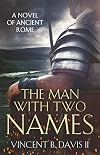
Enjoyable novel, purportedly the memoir of Quintus Sertorius. He termed it a "eulogy to the Roman Republic" and also apologia for his decisions and actions. As a young man, Sertorius leaves his village for Rome, where he hopes the family's patron, Caepio, can help them. The village, Nursia, has fallen on hard times. After disillusioning experiences thrust into the underbelly of Roman politics, he leaves and joins Gaius Marius, now a consul along with Caepio's son, Gaius. Marius is trying to show more reform the army. Sertorius reunites with his brother, a prefect, and Lucius, his best friend from the village, now an aide-de-camp to Marius. When Sertorius admits his ignorance of army life and finds no one will help him learn, he gives up his commission as tribune and becomes an ordinary legionary. A centurion tells him why tribunes per se, are disliked by other ranks and officers after Sertorius asks the man to be brutally honest. Through bravery, he is promoted to centurion. There are descriptions of battles, including a raid on Tolosa, where they plunder much gold. This last is at the instigation of Gaius, who has finagled his way there as the lead of Sertorius' legion--for Gaius' own personal glory. As the novel ends, the men know they will have to fight the Cimbri and Teutones, two fierce tribes.
I'm eager to read the next installment. The author seemed a bit unsure of himself while dealing with the cutthroat politics of Rome and the backstabbing, but he came into his own writing about the military. His strong point was the descriptions of the men--their psychology, their bonding, and close friendships. This all sounded so realistic; the author has been in the military himself and perhaps he used some of his own experiences and fellow soldiers. Any love interest between Sertorius and Arrea, the native girl, fit in seamlessly. The cover shows a legionary in imperial segmented armor.
Highly recommended. show less
I'm eager to read the next installment. The author seemed a bit unsure of himself while dealing with the cutthroat politics of Rome and the backstabbing, but he came into his own writing about the military. His strong point was the descriptions of the men--their psychology, their bonding, and close friendships. This all sounded so realistic; the author has been in the military himself and perhaps he used some of his own experiences and fellow soldiers. Any love interest between Sertorius and Arrea, the native girl, fit in seamlessly. The cover shows a legionary in imperial segmented armor.
Highly recommended. show less
Very enjoyable. As soon as I opened the package from the mail, I read it straight through. Sertorius and Co. go to Greece on a peacekeeping mission, but it turns out to have its own problem. A conspiracy called Cerberus [after the three-headed dog-guardian of Hades] apparently is kidnapping Romans and enslaving them. This group has three leaders, hence their name. The proud Proconsul Titus Didius is just itching for people to kill, enough so he will be awarded a triumph when they return to show more Rome. The author's writing style has improved since his first Sertorius novel in spite of a few typos and other proofreading errors for example:
He should use either "legionary" or "legionnaire" all through the novel, not each term in different places.
At that time, there were no tomatoes in Europe, mentioned here as sold in the agora. They were found in the New World much later.
"Trounced around" should probably be "strutted around", said of the actors on p. 218.
"Worse": in the context the author uses it here [p.213] should probably be either "worse" or "their worst". [p.213]
There are two different characters with the same name: Patrobos, the beggar in the agora and Patrobos the Spartan. Maybe the author could have used a different name for each.
I was much impressed with the guileless legionary, Castor, who I suspect was based upon the author's dedicatee. Besides the big set-piece battle to foil Cerberus, Sertorius does rescue a little girl from a sea storm and does find his son's tutor's niece. He leaves them with a childless Greek couple, who are happy to welcome them. The battle scenes are becoming a blur to me in each Roman military novel I read, and it must be hard for each author to come up with details to differentiate them. I liked the most the character-driven aspects of this novel. I felt these people human. I thank the author for sending me a copy of his novel. show less
He should use either "legionary" or "legionnaire" all through the novel, not each term in different places.
At that time, there were no tomatoes in Europe, mentioned here as sold in the agora. They were found in the New World much later.
"Trounced around" should probably be "strutted around", said of the actors on p. 218.
"Worse": in the context the author uses it here [p.213] should probably be either "worse" or "their worst". [p.213]
There are two different characters with the same name: Patrobos, the beggar in the agora and Patrobos the Spartan. Maybe the author could have used a different name for each.
I was much impressed with the guileless legionary, Castor, who I suspect was based upon the author's dedicatee. Besides the big set-piece battle to foil Cerberus, Sertorius does rescue a little girl from a sea storm and does find his son's tutor's niece. He leaves them with a childless Greek couple, who are happy to welcome them. The battle scenes are becoming a blur to me in each Roman military novel I read, and it must be hard for each author to come up with details to differentiate them. I liked the most the character-driven aspects of this novel. I felt these people human. I thank the author for sending me a copy of his novel. show less
I think this was the author's best novel yet in this series. Just the right amount of excitement.
After eight years away fighting in Greece,
Sertorius returns home to his wife, Arrea, to find out he is tasked by the Senate to recruit new legionaries to fight other Italian tribes who are not citizens and as such lack their rights. He is made a quaestor [a junior magistrate.] He travels to the city of Mutina to fulfil his orders, along with Arrea and freedman and friend, Apollonius. Sulla is show more there and calls his legion "Sulla's Fist", hence the title. He becomes involved in what will be called the Social War. His son Gavius, has joined Sulla's legion and of course, the young man's parents are worried about him. His boyhood friend, Lucius, is in the same legion. Arrea lives with a couple in the city. There will be battles, skirmishes, ambushes, poisoned wine, burning grain, and betrayals. Finally, Sulla and Marius work together for victory. Sertorius identifies a traitor but instead of killing the man, has him go into exile from the Roman Republic, among the Lusitanians. I assume Hispania will loom large in Sertorius's further story.
I liked the different points of view of several of the characters--Sertorius himself, Gavius, Arrea, and Lucius, also the fact they revealed their thoughts and feelings, not merely the action happening to each one. I found the ending most satisfactory and fitting, with its note of hope.
I thank the author for sending me a copy of this book. show less
After eight years away fighting in Greece,
Sertorius returns home to his wife, Arrea, to find out he is tasked by the Senate to recruit new legionaries to fight other Italian tribes who are not citizens and as such lack their rights. He is made a quaestor [a junior magistrate.] He travels to the city of Mutina to fulfil his orders, along with Arrea and freedman and friend, Apollonius. Sulla is show more there and calls his legion "Sulla's Fist", hence the title. He becomes involved in what will be called the Social War. His son Gavius, has joined Sulla's legion and of course, the young man's parents are worried about him. His boyhood friend, Lucius, is in the same legion. Arrea lives with a couple in the city. There will be battles, skirmishes, ambushes, poisoned wine, burning grain, and betrayals. Finally, Sulla and Marius work together for victory. Sertorius identifies a traitor but instead of killing the man, has him go into exile from the Roman Republic, among the Lusitanians. I assume Hispania will loom large in Sertorius's further story.
I liked the different points of view of several of the characters--Sertorius himself, Gavius, Arrea, and Lucius, also the fact they revealed their thoughts and feelings, not merely the action happening to each one. I found the ending most satisfactory and fitting, with its note of hope.
I thank the author for sending me a copy of this book. show less
You May Also Like
Associated Authors
Statistics
- Works
- 11
- Members
- 207
- Popularity
- #106,919
- Rating
- 3.5
- Reviews
- 8
- ISBNs
- 11
- Languages
- 1