
Mark Siegel (1) (1967–)
Author of 5 Worlds Book 1: The Sand Warrior
For other authors named Mark Siegel, see the disambiguation page.
Series
Works by Mark Siegel
Associated Works
Nursery Rhyme Comics: 50 Timeless Rhymes from 50 Celebrated Cartoonists (2011) — Illustrator — 227 copies, 27 reviews
Comics Confidential: Thirteen Graphic Novelists Talk Story, Craft, and Life Outside the Box (2016) — Contributor — 61 copies, 4 reviews
Monk! Thelonious, Pannonica, and the Friendship Behind a Musical Revolution (2018) — Editor., some editions — 57 copies, 2 reviews
Breadcrumbs: Coming of Age in Post-Soviet Poland (2025) — Editor, some editions — 20 copies, 1 review
Tagged
Common Knowledge
- Birthdate
- 1967-06-02
- Gender
- male
Members
Reviews
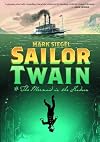
I've been aware of Mark Siegel's Sailor Twain: Or, The Mermaid on the Hudson for quite some time. It was initially released as a webcomic beginning in 2010 with the goal of being collected into a single-volume graphic novel, which it was by First Second in 2012. I have never read any of Siegel's previous works, but I do know him as First Second's editorial director. Despite all of the great buzz I had heard about Sailor Twain, I never quite got around to reading it while it was being show more serialized. Perhaps it's because I've never had a particular interest in mermaids. (This actually strikes me as a little odd considering that I have a great interest in legends and mythology and a tremendous love of water.) Still, I was excited to see review copies of Sailor Twain offered through Library Thing's Early Reviewers program and was thrilled when I was selected to receive one of them. I was looking forward to finally getting around to reading Sailor Twain.
Responsible for the steamliner Lorelei and it's excursions on the Hudson River, Captain Twain runs a tight ship. But things begin to fall apart when Jacques-Henri Lafayette, the ship's owner, mysteriously disappears. Twain is left to deal with the younger Lafayette brother Dieudonné who isn't so much interested in the Lorelei itself as he's interested in the liner's female passengers. Matters become even more tenuous when Twain rescues a wounded mermaid who seems to have a strange connection to the Lafayettes. The mermaid has an odd effect on Twain and he can't help but be drawn to her. His work on the river has already caused him to start to drift away from his ill wife Pearl and their shared dreams. The mermaid's alluring presence only seems to be hastening the seemingly inevitable demise of their relationship.
Siegel's artwork in Sailor Twain is a marvelously fit for the story that he is telling. Done in charcoal, the illustrations are almost seen through a sort of fog. The artwork captures the dirty reality of the engine room just as well as it conveys the otherworldliness of the mermaid and her influence. The mood that Seigel's artwork creates is wonderfully effective as Sailor Twain becomes increasingly ominous and atmospheric as the graphic novel progresses. The younger Lafayette's trysts and dalliances on board the Lorelei are handled tastefully and incorporate a light touch of humor. Perhaps more provocative is the portrayal of Twain's attraction to the mermaid. What begins as mere curiosity evolves into a source of inspiration, eventually leading to desire and obsession. This progression isn't only revealed through Sailor Twain's words, but through its artwork as well.
Although Sailor Twain is a modern narrative, in some ways the story felt like a classic fairytale, especially in its exploration of the mythology and superstitions surrounding the mermaid. The story is somewhat dark and there are lessons to be learned--in the end, everyone is held accountable for their actions. I liked all of the characters a great deal. The younger Lafayette isn't as disgraceful a person as he might first appear. Twain's descent into obsession as he struggles against his impending doom, trading one dream for another, is utterly fascinating. The overture and coda of Sailor Twain seemed a little forced to me, as if attempting to give the story more closure than was absolutely necessary. But overall, Sailor Twain is a well written and engaging graphic novel. I enjoyed it immensely.
Experiments in Reading show less
Responsible for the steamliner Lorelei and it's excursions on the Hudson River, Captain Twain runs a tight ship. But things begin to fall apart when Jacques-Henri Lafayette, the ship's owner, mysteriously disappears. Twain is left to deal with the younger Lafayette brother Dieudonné who isn't so much interested in the Lorelei itself as he's interested in the liner's female passengers. Matters become even more tenuous when Twain rescues a wounded mermaid who seems to have a strange connection to the Lafayettes. The mermaid has an odd effect on Twain and he can't help but be drawn to her. His work on the river has already caused him to start to drift away from his ill wife Pearl and their shared dreams. The mermaid's alluring presence only seems to be hastening the seemingly inevitable demise of their relationship.
Siegel's artwork in Sailor Twain is a marvelously fit for the story that he is telling. Done in charcoal, the illustrations are almost seen through a sort of fog. The artwork captures the dirty reality of the engine room just as well as it conveys the otherworldliness of the mermaid and her influence. The mood that Seigel's artwork creates is wonderfully effective as Sailor Twain becomes increasingly ominous and atmospheric as the graphic novel progresses. The younger Lafayette's trysts and dalliances on board the Lorelei are handled tastefully and incorporate a light touch of humor. Perhaps more provocative is the portrayal of Twain's attraction to the mermaid. What begins as mere curiosity evolves into a source of inspiration, eventually leading to desire and obsession. This progression isn't only revealed through Sailor Twain's words, but through its artwork as well.
Although Sailor Twain is a modern narrative, in some ways the story felt like a classic fairytale, especially in its exploration of the mythology and superstitions surrounding the mermaid. The story is somewhat dark and there are lessons to be learned--in the end, everyone is held accountable for their actions. I liked all of the characters a great deal. The younger Lafayette isn't as disgraceful a person as he might first appear. Twain's descent into obsession as he struggles against his impending doom, trading one dream for another, is utterly fascinating. The overture and coda of Sailor Twain seemed a little forced to me, as if attempting to give the story more closure than was absolutely necessary. But overall, Sailor Twain is a well written and engaging graphic novel. I enjoyed it immensely.
Experiments in Reading show less
 This review was written for LibraryThing Early Reviewers.
Somehow I tripped along since I first put this on my wishlist thinking this graphic novel was about Mark Twain. Negative, Batman. A 19th century riverboat captain (you see?) rescues a wounded mermaid and becomes infatuated with her while keeping her a secret from everyone else on board. Meanwhile, the French owner of the riverboat (who lives on board) is acting mighty strangely. The artwork here is at turns stunning and comical (landscapes and cityscapes are done in a realistic style; people show more slightly more cartoonily--all in gorgeous charcoal), and I enjoyed the story, though it does lose a little coherency in the last section. Recommended for the artwork (I may, in fact, have to scare up a copy for myself for keepsies, as this one came from the library). show less
I was walking through the library one day, and this book was propped up on the shelf in the graphic novels section, its gorgeous cover in shades of blue and green and mystery beckoning to me. I had to check it out and read it immediately. Maybe this book has a siren's song of its own?
Gritty, a little bit gloomy, it reminded me of the depths of the sea, if there was a word to describe how that ocean bottom would feel. Deep and dark, murky and mysterious. Where mermaids dwell. We all know show more mermaids are said to be heartless and soulless and dangerous, seducing people to their deaths. But if they were real, wouldn't we want to meet one? Like fairies and unicorns, they are magical and curious and otherworldly. The illustrations themselves are beautiful, and reminiscent of the industrial era that this story is set in, all smoky and black and dusty.
Riverboat Captain Elijah Twain is an upright, moral, stand up man. No nonsense and serious, he is the last person you would imagine to fall in thrall to a creature such as a mermaid. He is happily married to his lady love, who is bound to a wheelchair, and to land. He is even drawn angular and sharp, no soft edges to him, that would invite such fancifulness, although I feel riverboat captains are by nature romantic figures. In contrast, French nobleman Lafayette falls in love with almost every woman he meets, speaks of the river and the world around him as a poet would, and seems the least responsible human being on earth. The very opposite of Twain. Of the two, Lafayette is a romantic dreamer, while Twain is a pragmatic realist. They go about their lives upon the river, one engaged in many trysts, one bent on business. Until one night Captain Twain finds an injured mermaid on his deck.
What is the deal? Who is this mermaid? Where did she come from? What happens next? You will have to read it to find out!
One note: This book really isn't for kids. There is the obvious nudity of the mermaid, and other more sexy times illustrations. I was surprised at first, because my library had a sticker over the John Irving blurb that states the book contains erotically charged drawings. So, just in case you didn't see that, there are a few sexual drawings.
I have fallen in love with this genre of books that all began with the book Blankets. Sailor Twain was completely different, but just as entertaining and thought provoking. It is a story that draws you in and holds you under until you reach the end. show less
Gritty, a little bit gloomy, it reminded me of the depths of the sea, if there was a word to describe how that ocean bottom would feel. Deep and dark, murky and mysterious. Where mermaids dwell. We all know show more mermaids are said to be heartless and soulless and dangerous, seducing people to their deaths. But if they were real, wouldn't we want to meet one? Like fairies and unicorns, they are magical and curious and otherworldly. The illustrations themselves are beautiful, and reminiscent of the industrial era that this story is set in, all smoky and black and dusty.
Riverboat Captain Elijah Twain is an upright, moral, stand up man. No nonsense and serious, he is the last person you would imagine to fall in thrall to a creature such as a mermaid. He is happily married to his lady love, who is bound to a wheelchair, and to land. He is even drawn angular and sharp, no soft edges to him, that would invite such fancifulness, although I feel riverboat captains are by nature romantic figures. In contrast, French nobleman Lafayette falls in love with almost every woman he meets, speaks of the river and the world around him as a poet would, and seems the least responsible human being on earth. The very opposite of Twain. Of the two, Lafayette is a romantic dreamer, while Twain is a pragmatic realist. They go about their lives upon the river, one engaged in many trysts, one bent on business. Until one night Captain Twain finds an injured mermaid on his deck.
What is the deal? Who is this mermaid? Where did she come from? What happens next? You will have to read it to find out!
One note: This book really isn't for kids. There is the obvious nudity of the mermaid, and other more sexy times illustrations. I was surprised at first, because my library had a sticker over the John Irving blurb that states the book contains erotically charged drawings. So, just in case you didn't see that, there are a few sexual drawings.
I have fallen in love with this genre of books that all began with the book Blankets. Sailor Twain was completely different, but just as entertaining and thought provoking. It is a story that draws you in and holds you under until you reach the end. show less
Siegel’s striking graphic novel tells the story of Captain Twain (no relation to the famous Mark), a steamboat captain and frustrated writer who discovers a wounded mermaid clinging to his ship. He brings her aboard, hiding her in his cabin and nursing her back to health—and becoming dangerously attached to her in the process. As he learns more about the mermaid’s story he becomes convinced that she is somehow related to the disappearance of his ship’s former owner and the strange show more correspondence being carried out between current owner Lafayette (the former owner’s younger, wilder brother) and the mysterious author C.G. Beaverton.
A dramatic, though quiet, story is well-matched to atmospheric pencil and charcoal artwork. Fantastic and gripping. show less
A dramatic, though quiet, story is well-matched to atmospheric pencil and charcoal artwork. Fantastic and gripping. show less
Lists
Awards


You May Also Like


Associated Authors
Statistics
- Works
- 11
- Also by
- 15
- Members
- 1,766
- Popularity
- #14,575
- Rating
- 3.9
- Reviews
- 86
- ISBNs
- 91
- Languages
- 9
