
Timothy Phillips (1)
Author of Beslan: The Tragedy of School No. 1
For other authors named Timothy Phillips, see the disambiguation page.
Works by Timothy Phillips
The Curtain and the Wall: A Modern Journey Along Europe's Cold War Border (2022) 33 copies, 2 reviews
Tagged
Common Knowledge
- Gender
- male
- Education
- University of Oxford (Ph.D. ∙ Russian)
University of Helsinki - Occupations
- translator
- Agent
- Veronique Baxter
- Nationality
- UK
- Birthplace
- Northern Ireland, UK
- Places of residence
- Northern Ireland, UK
London, England, UK - Associated Place (for map)
- UK
Members
Reviews
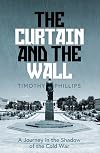
I came across [b:The Curtain and The Wall: A Modern Journey along Europe’s Cold War Border|62889015|The Curtain and The Wall A Modern Journey along Europe’s Cold War Border|Timothy Phillips|https://i.gr-assets.com/images/S/compressed.photo.goodreads.com/books/1664994052l/62889015._SX50_.jpg|98690965] via the Guardian. It’s an engaging, journalistic travelogue set along the edge of the iron curtain. I wasn’t familiar with the northern and eastern extent of this, so the beginning and show more end were particularly informative. Phillips reflects on the history of these border places and their current status, as well as Russia’s current aggression (although the book was written before the invasion of Ukraine) and Europe’s turn against refugees and immigrants. He recounts discussions with local historians and strangers met by chance to compare experiences of the iron curtain across its span.
For me the highlights of the book were historical anecdotes rather than contemporary reflections. Some are amusing, like the nudist beach right next to a security fence dividing East and West Germany, and this comment:
Others are moving, like the premiere of GDR’s first gay film taking place on the same night the Berlin wall fell:
I was also struck by the chapter on Albania, which reminded me of Lea Ypi’s excellent memoir of growing up there during the collapse of communism, [b:Free: A Child and a Country at the End of History|58085227|Free A Child and a Country at the End of History|Lea Ypi|https://i.gr-assets.com/images/S/compressed.photo.goodreads.com/books/1636348840l/58085227._SY75_.jpg|89168998]. Prior to reading the latter, I knew nothing about the particular strangeness of the Albanian regime. Phillips adds some striking details to Ypi’s account:
By visiting settlements along the iron curtain as a tourist, Phillips is able to show how the curtain is remembered, or not, via museums and monuments. Thus the book is observational rather than recounting a detailed history of the iron curtain. I would have liked a little more historical analysis in some places, yet found it enjoyable and thought-provoking nonetheless. Phillips is a very engaging writer and evidently good at interviewing. The inclusion of black and white photos from the trip is also an appealing touch. show less
For me the highlights of the book were historical anecdotes rather than contemporary reflections. Some are amusing, like the nudist beach right next to a security fence dividing East and West Germany, and this comment:
”There is an old Soviet joke about Kremlin propaganda,” he said: “’They lied to use about communism. But everything they said about capitalism was true.’”
Others are moving, like the premiere of GDR’s first gay film taking place on the same night the Berlin wall fell:
The party was strange beyond all imagining. People were dizzy with the success of the film and also with the momentous events going on all around them. After downing a few drinks a group decided to join the throngs walking up to and through the Bornholmer crossing. One was Charlotte von Mahlsdorf, a trangender woman who had played a barmaid in the film. Sometime in the early hours, Dirk recalls Charlotte returning with a West Berlin bottle of beer and a newspaper, like the dove that brought the olive leaf to Noah at the end of the flood. “You realised in that moment,” Dirk says, “that this socialist part of Germany was going to end. You knew it. It was clear. It was over.”
I was also struck by the chapter on Albania, which reminded me of Lea Ypi’s excellent memoir of growing up there during the collapse of communism, [b:Free: A Child and a Country at the End of History|58085227|Free A Child and a Country at the End of History|Lea Ypi|https://i.gr-assets.com/images/S/compressed.photo.goodreads.com/books/1636348840l/58085227._SY75_.jpg|89168998]. Prior to reading the latter, I knew nothing about the particular strangeness of the Albanian regime. Phillips adds some striking details to Ypi’s account:
I learned that by the time the regime fell in the early 1990s, the Sigurimi had files on one million of the country’s 2.8 million citizens, the majority of the adult population – a rate that even exceeded East Germany’s Stasi. Much of the material was collated here [at the former HQ of the Sigurimi]. In a third room a laboratory is preserved where every item of overseas correspondence was tested as it entered Albania, in case it included chemical or biological weapons. An insane apparatus of suspicion, decoupled from any real assessment of risk, blanketed the country for all Hoxha’s time in charge.
The bunkers are an outworking of this too. One of the new facts to become quite well known about communist Albania is that it was the country with the most bunkers per head of the population. There were as many as 750,000 in the end, more than one for every four inhabitants. These were another Hoxha insurance policy, conceived in the late 1960s and pursued rapidly for the next fifteen years.
By visiting settlements along the iron curtain as a tourist, Phillips is able to show how the curtain is remembered, or not, via museums and monuments. Thus the book is observational rather than recounting a detailed history of the iron curtain. I would have liked a little more historical analysis in some places, yet found it enjoyable and thought-provoking nonetheless. Phillips is a very engaging writer and evidently good at interviewing. The inclusion of black and white photos from the trip is also an appealing touch. show less
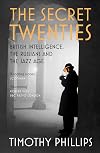
Timothy Phillips has written a gripping account of the secret war between the British intelligence services and the Bolsheviks during the 1920s. Based largely on documents he unearthed in the National Archives, this is a story about far Right politicians (including some open fascists) working hand in hand with security services to combat (with rather limited success) a sometimes-real and sometimes-imaginary "Red Menace". The Zinoviev Letter, the one part of the story with which I was already show more familiar, gets good coverage, but it turns out to be only the proverbial tip of the iceberg. A great story. show less
An interesting journey tracing the route of the now disappeared Iron Curtain and Berlin Wall. The author finds some interesting little anomalies like the nudist beach on the Baltic coast right up against the East German border fence and the huge block of flats on the outskirts of Bratislava with balconies overlooking the border with Austria. A good read.
Lists
Review 4 (1)
Statistics
- Works
- 4
- Members
- 123
- Popularity
- #162,200
- Rating
- 4.0
- Reviews
- 3
- ISBNs
- 13