
Henry Cockburn (2)
Author of Henry's Demons: Living with Schizophrenia, A Father and Son's Story
For other authors named Henry Cockburn, see the disambiguation page.
Works by Henry Cockburn
Tagged
Common Knowledge
- Gender
- male
Members
Reviews

Henry - (after years of hospitalizations) – “There is a tree I sit under in the garden in Lewisham which speaks to me and gives me hope.”
Patrick – (Henry’s father and well known war journalist/correspondent) – “His voices and visions may still call to him, but they are no longer sure of an answer.”
The story of Henry’s life with a schizophrenia diagnosis and subsequent hospitalizations and family turmoil is told from the point of view of both the father, Patrick Cockburn, show more and the son, Henry Cockburn.
The bulk of the plot development is provided by the father (about 80-85%), which makes sense….he’s a writer after all, and having battled his own ignorance and assumptions as to what a schizophrenia diagnoses meant, was better equipped to provide context and explanations. I also suspect that Henry’s writing at the time would have still been too disorganized (mimicking his mind) and/or prone to denial of reality, as his inner world felt so “real.”
There were some diary entries from the mother as well, that were heartbreaking in the depiction of the fatigue that goes alone with caring for a child, who is struggling.
Musings:
Cost - Henry was lucky he had family support and the British National Health Service (NHS) – Helping Henry was incredibly difficult even with the benefit of a public health system, supportive family, and a family with means - stark contrast to those who struggle with schizophrenia here in the US. Parents, often desperate to get help their adult children, bankrupt themselves emotionally, physically, and financially in the process.
Stigma – Many react as if schizophrenia is a death sentence, or have misconceptions that get in the way of providing assistance to families. It “IS” incredibly difficult to treat (medication non-compliance being the main culprit, but then add lack of resources and support, environmental community support deficits, drug use, etc. and the complexity increases), but some can stabilize with the right support system or in their 30s (by then, usually and sadly, too much has been lost). We fear them, yet it’s more likely someone struggling with schizophrenia will kill him/herself than kill someone else.
Spiritual awakenings – makes me wonder how many “visions” are a result of the brain just “hearing” our internal voices.
Interesting: The link between psychoactive component of marijuana and onset of schizophrenia for some – not a big deal for many, but if combined with a genetic predisposition and environmental factors, it can be a trigger for some. 🤔 Need to read more on this, as the book was published in 2011.
Opinions:
I found Patrick Cockburn’s description of auditory hallucinations very clear and straightforward (as his writing in general!)
I liked the book. However, to me it felt somewhat expiatory and descriptive. Don’t get me wrong…don’t envy these parents’ journey, but I wish I had heard more from Henry and how he viewed his illness and the world. Henry was never (may not still be) convinced that he was mentally ill, despite clear evidence that swimming in freezing water, sleeping under branches and bushes and waking up with debris, twigs and insects crawling on his body was not “sane.” Yet, I was fascinated and enthralled by Henry’s inner world where trees spoke to him and one-way communication commanded him to do things that were against his best interest. How disconcerting it must be when they no longer do….why would he “want” to be medicated and have that magic stop? Or was it more “If I accept hearing these voices is wrong then I’m truly mad” and that may have been too much for him to take.
Also….this “Henry” was not much of a danger (no matter how erratic and scary his behaviors and the anxiety and sadness it caused his family) to anyone but himself, but that is not the reality for many other families. You don’t want them to harm themselves but there is “risk” in harming others, even if not intended, when command hallucinations are present. It is a delicate balance. Unlike the Cockburn’s, who were able to “visit” with Henry, while Henry was institutionalized, (and this was harrowing enough!) many families have to “deal” with the outbursts, the self-neglect, the embarrassment and anger, the constant anxiety for their wellbeing, the police knocks on the door, the irrational behaviors, the inherent fears and worries when psychosis is induced and what does it mean at the moment, the aftermath in terms of depression, anxiety, anger, etc. This devastates families! The utter lack of support often leads to the choice of having to kick their son or daughter out because they need to protect the grandchildren from the parent’s onslaught of erratic and disorganized behaviors (or from child welfare agencies that could remove them) or because being in the same home can be impossible to manage.
Sadly, not much has changed in terms of community support or adequate facilities show less
Patrick – (Henry’s father and well known war journalist/correspondent) – “His voices and visions may still call to him, but they are no longer sure of an answer.”
The story of Henry’s life with a schizophrenia diagnosis and subsequent hospitalizations and family turmoil is told from the point of view of both the father, Patrick Cockburn, show more and the son, Henry Cockburn.
The bulk of the plot development is provided by the father (about 80-85%), which makes sense….he’s a writer after all, and having battled his own ignorance and assumptions as to what a schizophrenia diagnoses meant, was better equipped to provide context and explanations. I also suspect that Henry’s writing at the time would have still been too disorganized (mimicking his mind) and/or prone to denial of reality, as his inner world felt so “real.”
There were some diary entries from the mother as well, that were heartbreaking in the depiction of the fatigue that goes alone with caring for a child, who is struggling.
Musings:
Cost - Henry was lucky he had family support and the British National Health Service (NHS) – Helping Henry was incredibly difficult even with the benefit of a public health system, supportive family, and a family with means - stark contrast to those who struggle with schizophrenia here in the US. Parents, often desperate to get help their adult children, bankrupt themselves emotionally, physically, and financially in the process.
Stigma – Many react as if schizophrenia is a death sentence, or have misconceptions that get in the way of providing assistance to families. It “IS” incredibly difficult to treat (medication non-compliance being the main culprit, but then add lack of resources and support, environmental community support deficits, drug use, etc. and the complexity increases), but some can stabilize with the right support system or in their 30s (by then, usually and sadly, too much has been lost). We fear them, yet it’s more likely someone struggling with schizophrenia will kill him/herself than kill someone else.
Spiritual awakenings – makes me wonder how many “visions” are a result of the brain just “hearing” our internal voices.
Interesting: The link between psychoactive component of marijuana and onset of schizophrenia for some – not a big deal for many, but if combined with a genetic predisposition and environmental factors, it can be a trigger for some. 🤔 Need to read more on this, as the book was published in 2011.
Opinions:
I found Patrick Cockburn’s description of auditory hallucinations very clear and straightforward (as his writing in general!)
I liked the book. However, to me it felt somewhat expiatory and descriptive. Don’t get me wrong…don’t envy these parents’ journey, but I wish I had heard more from Henry and how he viewed his illness and the world. Henry was never (may not still be) convinced that he was mentally ill, despite clear evidence that swimming in freezing water, sleeping under branches and bushes and waking up with debris, twigs and insects crawling on his body was not “sane.” Yet, I was fascinated and enthralled by Henry’s inner world where trees spoke to him and one-way communication commanded him to do things that were against his best interest. How disconcerting it must be when they no longer do….why would he “want” to be medicated and have that magic stop? Or was it more “If I accept hearing these voices is wrong then I’m truly mad” and that may have been too much for him to take.
Also….this “Henry” was not much of a danger (no matter how erratic and scary his behaviors and the anxiety and sadness it caused his family) to anyone but himself, but that is not the reality for many other families. You don’t want them to harm themselves but there is “risk” in harming others, even if not intended, when command hallucinations are present. It is a delicate balance. Unlike the Cockburn’s, who were able to “visit” with Henry, while Henry was institutionalized, (and this was harrowing enough!) many families have to “deal” with the outbursts, the self-neglect, the embarrassment and anger, the constant anxiety for their wellbeing, the police knocks on the door, the irrational behaviors, the inherent fears and worries when psychosis is induced and what does it mean at the moment, the aftermath in terms of depression, anxiety, anger, etc. This devastates families! The utter lack of support often leads to the choice of having to kick their son or daughter out because they need to protect the grandchildren from the parent’s onslaught of erratic and disorganized behaviors (or from child welfare agencies that could remove them) or because being in the same home can be impossible to manage.
Sadly, not much has changed in terms of community support or adequate facilities show less
As a parent of an adult daughter with autism and mental illness, and son with autism who died of schizophrenia at age 21, I ate this book up--page by page. First, the book illustrates something most books are too squeamish to approach: mental illness is not fought in a few months or a year or two years, and it is not fought gently. It is sweaty, bloody, tiring, day by day, week by week, month and year and maybe years' fight that leaves all of us often sobbing, praying, losing hope, hoping show more again, sometimes believing, sometimes not, always loving our children, raging at doctors and case managers and cold hearted keepers of services our children need, yet will not give.
Second, this book lets us read Henry Cockburn's defiantly, bravely honest memoir of those years. He explains in Hemingway-like prose that his hallucinations were real, beautiful, and part of his being, his self, and opened him to a new world and new understandings. He shows us that he rejected the meds in order to not lose all of this, even those it meant that he came near death over and over, and later also began to suffer more common, negative hallucinations. Most importantly, this is a valid look at the idea of hallucinations and psychosis as part of one's own being, and belonging to one.
I admit that I wept through this book. I agonized with the Cockburns, and I was surprised to find myself agonizing with Henry--I, with all my trying to understand my children, had never understood them before. This is the greatest gift this book gave me. Thank you Henry--I wish you could meet my daughter as you would be great friends. show less
Second, this book lets us read Henry Cockburn's defiantly, bravely honest memoir of those years. He explains in Hemingway-like prose that his hallucinations were real, beautiful, and part of his being, his self, and opened him to a new world and new understandings. He shows us that he rejected the meds in order to not lose all of this, even those it meant that he came near death over and over, and later also began to suffer more common, negative hallucinations. Most importantly, this is a valid look at the idea of hallucinations and psychosis as part of one's own being, and belonging to one.
I admit that I wept through this book. I agonized with the Cockburns, and I was surprised to find myself agonizing with Henry--I, with all my trying to understand my children, had never understood them before. This is the greatest gift this book gave me. Thank you Henry--I wish you could meet my daughter as you would be great friends. show less
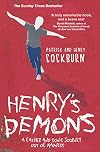
An interesting read this one, if not wholly satisfying. I found it hard to like Henry Cockburn contrary to all those that seem to meet him in the book. His hallucinations combined a lot with popular culture which to me makes him come across as a bit of an annoying attention seeker. Yes I know that he is suffering from a mental disorder but then again so am I and so are thousands of people so I have a right to criticise. On the other hand I did find his story compelling and it was well worth show more a read. It just didn't give me the answers I wanted. show less
A reasonable example of its genre, and with the added interest of Henry's and (uncredited in the authorship) his mother's writing in addition to father Patrick's. A useful addition to family memoirs about schizophrenia because of the minor but repeated emphasis on the deleterious effects of marijuana on people vulnerable to psychosis.
In its best moments, it's absorbing and sad; at worst it's sometimes confused about where to direct its anger. I certainly empathize with the author's show more frustration about the insecurity of secure facilities, though for one I think his vision of the security of pre-community mental health facilities is a romantic one (his son might well have spent his days tied to a bed prior to the advent of medication). Having worked on a unit where a patient kicked his way out through a barred metal door and absconded over a tall fence, I also know that someone bent on escaping will manage to do so unless their right to any freedom is abrogated. In terms of rights, it interests me that Henry seems not to have been tried on older medications (they have higher side effect profiles, but work well for some people), nor, until they began powdering his clozapine, did he appear to really have a successful trial (and given the frequency with which he smokes marijuana, I'm not convinced he's had a totally clean trial yet). I also wonder, given the sometimes manic flavor of his episodes, if he was ever tried on lithium or Depakote, but hey, I'm not a medical doctor and this is idle speculation on my part.
Read with [b:The Center Cannot Hold: My Journey through Madness|1098486|The Center Cannot Hold My Journey Through Madness|Elyn R. Saks|http://photo.goodreads.com/books/1180965774s/1098486.jpg|1085345] for another perspective on British mental health care, and with Hunt's [b:Mental Hospital|1889579|Mental Hospital|Morton Hunt|http://photo.goodreads.com/books/1189830088s/1889579.jpg|1890883] and Rosalynn Carter's [b:Within Our Reach: Ending the Mental Health Crisis|7881535|Within Our Reach Ending the Mental Health Crisis|Rosalynn Carter|http://photo.goodreads.com/books/1312045454s/7881535.jpg|11082879] for an early perspective on the miracle of antipsychotic medication, and a contemporary perspective on the failure of adequate community-based mental health care. show less
In its best moments, it's absorbing and sad; at worst it's sometimes confused about where to direct its anger. I certainly empathize with the author's show more frustration about the insecurity of secure facilities, though for one I think his vision of the security of pre-community mental health facilities is a romantic one (his son might well have spent his days tied to a bed prior to the advent of medication). Having worked on a unit where a patient kicked his way out through a barred metal door and absconded over a tall fence, I also know that someone bent on escaping will manage to do so unless their right to any freedom is abrogated. In terms of rights, it interests me that Henry seems not to have been tried on older medications (they have higher side effect profiles, but work well for some people), nor, until they began powdering his clozapine, did he appear to really have a successful trial (and given the frequency with which he smokes marijuana, I'm not convinced he's had a totally clean trial yet). I also wonder, given the sometimes manic flavor of his episodes, if he was ever tried on lithium or Depakote, but hey, I'm not a medical doctor and this is idle speculation on my part.
Read with [b:The Center Cannot Hold: My Journey through Madness|1098486|The Center Cannot Hold My Journey Through Madness|Elyn R. Saks|http://photo.goodreads.com/books/1180965774s/1098486.jpg|1085345] for another perspective on British mental health care, and with Hunt's [b:Mental Hospital|1889579|Mental Hospital|Morton Hunt|http://photo.goodreads.com/books/1189830088s/1889579.jpg|1890883] and Rosalynn Carter's [b:Within Our Reach: Ending the Mental Health Crisis|7881535|Within Our Reach Ending the Mental Health Crisis|Rosalynn Carter|http://photo.goodreads.com/books/1312045454s/7881535.jpg|11082879] for an early perspective on the miracle of antipsychotic medication, and a contemporary perspective on the failure of adequate community-based mental health care. show less
Awards


Statistics
- Works
- 2
- Members
- 153
- Popularity
- #136,479
- Rating
- 3.7
- Reviews
- 7
- ISBNs
- 20
- Languages
- 1