
Imran Rashid
Author of Offline: Free Your Mind from Smartphone and Social Media Stress
Works by Imran Rashid
Tagged
Common Knowledge
There is no Common Knowledge data for this author yet. You can help.
Members
Reviews
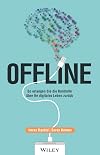
Got this book from the library and I'm glad I did not buy it. I do not regret reading it, but both style and content of this book leave a lot to be desired. In a way this didn't really surprise me, though, as this is a book you certainly can judge by its cover. It doesn't look very High-brow and it isn't and to an extent, that's also a good thing.
You can tell the authors of this book really want to make people become more aware of the dangers of digital life. However, out of seven chapters show more and 200 pages, the authors spend a full 4-5 or 100-140 setting the stage by talking about the evolution and the human brain, impulse control, and the business model of Facebook.
In several instances, the book prides itself on the fact that it "did tons of research" and indeed, the sources at the end of each chapter reach 30 or more sometimes. This isn't an advantage, though. Oftentimes the sources are blog posts or even Wikipedia links. Other times they are academic journals. In some parts of the book, the authors actually do a good job of comparing and contrasting different sources, but at others, the authors are content to lazily summarize each source in one paragraph consecutively.
Most crucially, what the book lacks at the end of the day is simply coherence. It seems strange to me that we should mention the dangers of using your phone in the car with dark patterns of e-commerce or the Cambridge Analytica scandal. Sure, these are all issues worth discussing, and the authors seem very eager to do so. But there is simply no coherence here. If the book had been more focused, it would have offered an in-depth discussion on one or two of these subjects. If the book had been more ambitious, it would have offered a novel theory or taxonomy on how all these phenomena related to our digital life relate to each other. In the introduction, the authors pretend to offer such a thing, which they call DEFRAG. They even go as far as to say that they think this specific new term will be widely discussed in the coming decades. But in reality it is simply a catch-all term for a bloated set of things related to the digital transformation.
Towards the end, the authors give some more practical advice on what you could do to become less dependent on technology. This, I would say, is the most worthwhile part of the book. At the end of the day, neither form nor content of this book is anything remarkable and in many parts its quality is quite low. I'm still glad I read it though as even if you don't learn that many new things, I inevitably became more aware of the ways in which I misuse or overuse technology. show less
You can tell the authors of this book really want to make people become more aware of the dangers of digital life. However, out of seven chapters show more and 200 pages, the authors spend a full 4-5 or 100-140 setting the stage by talking about the evolution and the human brain, impulse control, and the business model of Facebook.
In several instances, the book prides itself on the fact that it "did tons of research" and indeed, the sources at the end of each chapter reach 30 or more sometimes. This isn't an advantage, though. Oftentimes the sources are blog posts or even Wikipedia links. Other times they are academic journals. In some parts of the book, the authors actually do a good job of comparing and contrasting different sources, but at others, the authors are content to lazily summarize each source in one paragraph consecutively.
Most crucially, what the book lacks at the end of the day is simply coherence. It seems strange to me that we should mention the dangers of using your phone in the car with dark patterns of e-commerce or the Cambridge Analytica scandal. Sure, these are all issues worth discussing, and the authors seem very eager to do so. But there is simply no coherence here. If the book had been more focused, it would have offered an in-depth discussion on one or two of these subjects. If the book had been more ambitious, it would have offered a novel theory or taxonomy on how all these phenomena related to our digital life relate to each other. In the introduction, the authors pretend to offer such a thing, which they call DEFRAG. They even go as far as to say that they think this specific new term will be widely discussed in the coming decades. But in reality it is simply a catch-all term for a bloated set of things related to the digital transformation.
Towards the end, the authors give some more practical advice on what you could do to become less dependent on technology. This, I would say, is the most worthwhile part of the book. At the end of the day, neither form nor content of this book is anything remarkable and in many parts its quality is quite low. I'm still glad I read it though as even if you don't learn that many new things, I inevitably became more aware of the ways in which I misuse or overuse technology. show less
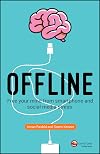
Decent book with some good points. BUT oh man, the repetition. Concepts were beaten to death even going so far as to literally say at the end "We presented the same list in the introduction..." and then proceeding to copy and paste the content from the beginning all over again. I know repetition helps learning but maybe it also helps bulk up a book when you need to get it to print and you haven't quite got enough content also?
Still, it was an inspiring read despite this obvious flaw.
Still, it was an inspiring read despite this obvious flaw.
Statistics
- Works
- 7
- Members
- 39
- Popularity
- #376,656
- Rating
- 3.1
- Reviews
- 2
- ISBNs
- 12
- Languages
- 2