
Moriel Rothman-Zecher
Author of Sadness Is a White Bird: A Novel
Works by Moriel Rothman-Zecher
Associated Works
Fight of the Century: Writers Reflect on 100 Years of Landmark ACLU Cases (2020) — Contributor — 259 copies, 5 reviews
Tagged
Common Knowledge
- Gender
- male
- Education
- Middlebury College, Middlebury, Vermont, USA (BS|Arabic and Political Science)
- Awards and honors
- National Book Foundation, 5 Under 35 Honoree (2018)
- Places of residence
- Yellow Springs, Ohio, USA
- Associated Place (for map)
- Ohio, USA
Members
Reviews
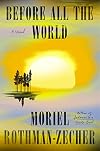
The Publisher Says: A mesmerizing, inventive story of three souls in 1930s Philadelphia seizing new life while haunted by the old.
"ikh gleyb nit az di gantze velt iz kheyshekh."
"I do not believe that all the world is darkness."
In the swirl of Philadelphia at the end of Prohibition, Leyb meets Charles. They are at a former speakeasy called Cricket’s, a bar that welcomes, as Charles says in his secondhand Yiddish, feygeles. Leyb is startled; fourteen years in amerike has taught him that his show more native tongue is not known beyond his people. And yet here is suave Charles—fingers stained with ink, an easy manner with the barkeep—a Black man from the Seventh Ward, a fellow traveler of Red Emma’s, speaking Jewish to a young man he will come to call Lion.
Lion is haunted by memories of life before, in Zatelsk, where everyone in his village, everyone except the ten non-Jews, a young poet named Gittl, and Leyb himself, was taken to the forest and killed.
Then, miraculously, Gittl is in Philadelphia, too, thanks to a poem she wrote and the intervention of a shadowy character known only as the Baroness of Philadelphia. And surrounding Gittl are malokhim, the spirits of her siblings.
Flowing and churning and seething with a glorious surge of language, carried along by questions of survival and hope and the possibility of a better world, Moriel Rothman-Zecher’s Before All the World lays bare the impossibility of escaping trauma, the necessity of believing in a better way ahead, and the power that comes from our responsibility to the future. It asks, in the voices of its angels, the most essential question: What do you intend to do before all the world?
I RECEIVED A DRC FROM THE PUBLISHER VIA NETGALLEY. THANK YOU.
My Review: I fear what I am about to say will doom a very fine read in too many of y'all's eyes: This isn't a standard-English-only novel. The characters sometimes speak Yiddish, sometimes speak as though mentally translating Yiddish into English on the fly, and all of it at the author's preferred energetic pace. The best I can say about those whose reading doesn't often stretch to variants of English is, there are very helpful footnotes.
Oh well. I had to say it despite the fact that most of y'all just clicked over to I Can Has Cheezburger? for a chuckle or two.
If you're still here, let me assure you that there's a lot to love about this story. Leyb/Lion, a gay Jew, is really and truly alive for me; his on-again, off-again love for the surprising Charles, a Black labor-organizing socialist-sympathizing Yiddish-speaking multihyphenate whose precarious identities are beautifully balanced. Their love story, to my gay eye vanishingly light on sex, is only one of the story's love stories. Gittl, a poet/seer of angels, is Leyb/Lion's nowsister who was presumed killed in a Red Army pogrom he avoided by being thrown out of Zatelsk for his faggoty ways. She shows up in Philadelphia, mirabile dictu, and is fêted by the middle-class Jewish community led by a soi-disant Baroness there as a harbinger of socialist paradise...despite almost dying at the hands of the "socialist" Soviets. This lionization ends when Gittl and Charles, um, well.
How this dissonant collection of adherents and believers and practitioners harmonizes their modes of being, their inner identities, and their actions is as one would expect: inconsistently and imperfectly and, all too often, inconsiderately. Every adult has learned to accept that others love in their own ways, or has been carted off to a safe place with lots of lovely pills to manage the aftermath of refusing the lesson. Leyb/Lion and Charles with their utterly amazing intersections of identity are, to no one's surprise, among the most wounded. Charles's belief in the socialist revolution survives the movement's apathy towards acknowledging the hideous harm caused by slavery, and its continuing horrors and cruelties. Leyb/Lion's gayness, well...Jews weren't mad for it then, though I understand there are more accepting branches of Judaism in modern times, and have no reluctance about letting him know he's less than, lower down in their esteem because of it. Gittl's a woman. What else needs be said, that fully explains the horrors she has and will endure before, during, and likely after amerike, philadelphiye, the doctor who slurmed out (of) his amerikanische, toothjutting mouth the horrible, cruel orders to sedate her...are all in Life's past. It is this dissonance, however, that shaved a half-star off my rating. I wasn't as convinced as I thought the author expected me to be that these people would enact the steps they danced to. I was close to believing it for Gittl and less so for Leyb/Lion; Charles, the man made of and for Love, perhaps least of all. It wasn't an existential, "what are you even talking about?" level of dissonance but a quietly uneasy mental drumbeat of "...really...?" throughout the read.
“What will you do before all the world?”
That is the heart of the novel; that is the wisdom the reader is offered by the read. It's not clear to me that the characters *answer* this question. It is clear to me that they live in its words, that they think inside the whorls of that question mark and fall onto the finality of the period at its base. show less
"ikh gleyb nit az di gantze velt iz kheyshekh."
"I do not believe that all the world is darkness."
In the swirl of Philadelphia at the end of Prohibition, Leyb meets Charles. They are at a former speakeasy called Cricket’s, a bar that welcomes, as Charles says in his secondhand Yiddish, feygeles. Leyb is startled; fourteen years in amerike has taught him that his show more native tongue is not known beyond his people. And yet here is suave Charles—fingers stained with ink, an easy manner with the barkeep—a Black man from the Seventh Ward, a fellow traveler of Red Emma’s, speaking Jewish to a young man he will come to call Lion.
Lion is haunted by memories of life before, in Zatelsk, where everyone in his village, everyone except the ten non-Jews, a young poet named Gittl, and Leyb himself, was taken to the forest and killed.
Then, miraculously, Gittl is in Philadelphia, too, thanks to a poem she wrote and the intervention of a shadowy character known only as the Baroness of Philadelphia. And surrounding Gittl are malokhim, the spirits of her siblings.
Flowing and churning and seething with a glorious surge of language, carried along by questions of survival and hope and the possibility of a better world, Moriel Rothman-Zecher’s Before All the World lays bare the impossibility of escaping trauma, the necessity of believing in a better way ahead, and the power that comes from our responsibility to the future. It asks, in the voices of its angels, the most essential question: What do you intend to do before all the world?
I RECEIVED A DRC FROM THE PUBLISHER VIA NETGALLEY. THANK YOU.
My Review: I fear what I am about to say will doom a very fine read in too many of y'all's eyes: This isn't a standard-English-only novel. The characters sometimes speak Yiddish, sometimes speak as though mentally translating Yiddish into English on the fly, and all of it at the author's preferred energetic pace. The best I can say about those whose reading doesn't often stretch to variants of English is, there are very helpful footnotes.
Oh well. I had to say it despite the fact that most of y'all just clicked over to I Can Has Cheezburger? for a chuckle or two.
If you're still here, let me assure you that there's a lot to love about this story. Leyb/Lion, a gay Jew, is really and truly alive for me; his on-again, off-again love for the surprising Charles, a Black labor-organizing socialist-sympathizing Yiddish-speaking multihyphenate whose precarious identities are beautifully balanced. Their love story, to my gay eye vanishingly light on sex, is only one of the story's love stories. Gittl, a poet/seer of angels, is Leyb/Lion's nowsister who was presumed killed in a Red Army pogrom he avoided by being thrown out of Zatelsk for his faggoty ways. She shows up in Philadelphia, mirabile dictu, and is fêted by the middle-class Jewish community led by a soi-disant Baroness there as a harbinger of socialist paradise...despite almost dying at the hands of the "socialist" Soviets. This lionization ends when Gittl and Charles, um, well.
How this dissonant collection of adherents and believers and practitioners harmonizes their modes of being, their inner identities, and their actions is as one would expect: inconsistently and imperfectly and, all too often, inconsiderately. Every adult has learned to accept that others love in their own ways, or has been carted off to a safe place with lots of lovely pills to manage the aftermath of refusing the lesson. Leyb/Lion and Charles with their utterly amazing intersections of identity are, to no one's surprise, among the most wounded. Charles's belief in the socialist revolution survives the movement's apathy towards acknowledging the hideous harm caused by slavery, and its continuing horrors and cruelties. Leyb/Lion's gayness, well...Jews weren't mad for it then, though I understand there are more accepting branches of Judaism in modern times, and have no reluctance about letting him know he's less than, lower down in their esteem because of it. Gittl's a woman. What else needs be said, that fully explains the horrors she has and will endure before, during, and likely after amerike, philadelphiye, the doctor who slurmed out (of) his amerikanische, toothjutting mouth the horrible, cruel orders to sedate her...are all in Life's past. It is this dissonance, however, that shaved a half-star off my rating. I wasn't as convinced as I thought the author expected me to be that these people would enact the steps they danced to. I was close to believing it for Gittl and less so for Leyb/Lion; Charles, the man made of and for Love, perhaps least of all. It wasn't an existential, "what are you even talking about?" level of dissonance but a quietly uneasy mental drumbeat of "...really...?" throughout the read.
“What will you do before all the world?”
That is the heart of the novel; that is the wisdom the reader is offered by the read. It's not clear to me that the characters *answer* this question. It is clear to me that they live in its words, that they think inside the whorls of that question mark and fall onto the finality of the period at its base. show less

This book tells a tragic and ultimately stunning story, and although it is fiction - it speaks important truths to those who would hear them.
It is narrated by Jonathan, 19, currently in an Israeli prison. The narration is in the form of a monologue during which Jonathan reminisces about how he ended up in prison. Addressing his musings to his beloved Arab friend Laith, Jonathan frequently invokes snippets of poems by Palestinian Mahmoud Darwish, whose award-winning work has inspired the show more Palestinian people; "Identity Card" has been turned into a song of protest. Darwish, who died in 2008, is considered to be “the voice of the Palestinian Diaspora . . . the voice of the fragmented soul.”
With Darwish’s poetry, as in other aspects of this story, the author makes us work for the whole. He provides only pieces of the poet’s work; you need to google it to find out the rest. This is also true of the poetry of Yehuda Amichai, an Israeli poet quoted in the book. (Similarly, the ending is one we must construct ourselves along with the author.)
On its surface, this is a coming-of-age story about Jonathan, a Jew who grew up in a mostly non-Jewish town in Pennsylvania. He felt weakness and shame over his inability to respond to anti-semitic bullying. He fantasized about going to Israel and becoming a “warrior”:
“I was sick of being People of the Word. I wanted to be People of the Sword. I wanted tanned arms and campfires, braided folk songs and righteous rifles. I wanted to be like [my grandfather] Saba Yehuda, teeth bared like tiny shields against the stabbing world.”
Surrounded by other Jews at summer camp, he thinks:
“If dinky little Camp Samaria was so full of possibility, I could barely imagine what sort of redemption lay in wait in the actual Land of Milk and Honey and Uzis and Bamba [an Israeli snack] and Eucalyptus Groves and Khaki and Tragedy and Redemption.”
Note: the ideas of both tragedy and redemption form important parts of Jonathan’s psyche.
Jonathan was born in Israel and thus had dual citizenship; his mother was Israeli, and his grandfather still resided in Israel. When the grandfather became terminally ill and requested his daughter to come back so he could know his grandchildren better before he died, Jonathan got his wish to live in Israel. Enlistment to the Israeli Defense Forces is mandatory for all Israeli citizens who have turned 18, so Jonathan could also fulfill his desire to become a "warrior" when he turned 19.
But before that happened, he unexpectedly made two Arab friends, Laith and Nimreen, the twin children of his mother’s friend. That friendship changed everything Jonathan thought he knew and believed. He looked at the twins and “I felt it, like a drop of pomegranate juice spreading through a glass of bright-white milk, changing everything.”
As he later reflected, speaking in his mind to Laith:
“…you and your sister, molten twins, mournful and wild, silly and sacrilegious, sharp and stoned, gentle and beautiful, whose love was burning through my flesh, threatening to scorch and disfigure my past. To engulf my future.”
Jonathan grew to love and desire both Nimreen and Laith. It was perhaps the case that Jonathan was simply bisexual, but this author’s work is steeped in metaphor and symbolism. I saw Jonathan's relationship with both the twins as more of a reflection of his ambivalence about the divide between Israel and Palestine. Both male and female, cool versus fiery, appealed to him for different reasons, and he was torn between the two of them.
Through the twins, and especially Nimreen, Jonathan gains a new perspective on the Arab-Israeli conflict.
For background, it is important to know that the State of Israel was created from a movement at the turn of the 20th century in Eastern Europe by a group of Jewish intellectuals. They were looking for an alternative to living under the threat of increasing anti-Semitism and the violent movements spawned from it. They picked Palestine because of the historical association of Jews with the land. The term "Zionism" was coined in 1885 by the Viennese Jewish writer Nathan Birnbaum, Zion being one of the biblical names for Jerusalem. But unfortunately and inconveniently for the Zionists, the land was already occupied by an indigenous population. Much like European colonizers who came to America, however, the “Natives” were considered expendable.
The Zionists, in their moralistic fervor, seemed oblivious to the fact that even while they were trying to escape racism and injustice, they were expressing it on their own behalf somewhere else. But just as memory and identity have never been easily erased in Jews, nor were they so easily erased in Arabs. As one of Nimreen’s friends says to Jonathan:
“I’m not from Israel. I’m from before Israel, from beneath the Israeli towns and cities built over my homes and orchards and fields. I am an Arab Palestinian, not an Israeli.”
Jonathan, like many American Jews, had a rosy, idealistic view of Israelis that was reinforced by a sense of righteousness because of the horror of the Holocaust. Much of what Nimreen told him about the treatment of Arabs by Israelis was not only new to him, but hard for him to believe.
For example, Nimreen took Jonathan to meet her grandmother Selsabeel Ziad, who told him the appalling story of what happened to her first husband Marwan in 1956. In October of that year, Israel invaded Egypt in what the West called “The Suez Crisis” or the “Second Arab-Israeli War.” The Jews immediately imposed a curfew, enforcing it before notification of it could even be disseminated. Marwan and other shepherds were out with their flocks and returned to the village late. Unarmed and defenseless, they (and hidden bystanders) stood in shock as the Israelis mowed them down. Selsabeel and other woman and children ran away and survived, “in body at least.”
After they left the grandmother’s house, Jonathan said to Nimreen, “But is that what really happened?” Nimreen responded, “How dare you.”
[This account is unfortunately quite true. “The Kafr Qasim massacre” took place in the Israeli Arab village of Kafr Qasim situated on the Green Line, which was at that time the de facto border between Israel and the Jordanian West Bank. The massacre was carried out by the Israel Border Police, who killed Arab civilians returning from work after a curfew imposed earlier in the day of which they were unaware. In total 48 people were shot down, of which 19 were men, 6 were women and 23 were children aged 8–17. Arab sources usually give the death toll as 49, as they include the unborn child of one of the women. In December 2007, President of Israel Shimon Peres formally apologised for the massacre.]
Nimreen also educated Jonathan about the shootings of October, 2000, when Israeli Police killed 13 Palestinians — 12 of them Israeli citizens — who took to the streets to show solidarity with demonstrators in the West Bank and Gaza. For those killings, there was a complete absence of accountability. Nimreen said to Jonathan:
“Ever heard of Israeli Police shooting live bullets at Israeli Ultra Orthodox protestors or Israeli Mizrahim or Israeli Israelis period? We got the message, then. Our parents’ generation’s plan - integrate, keep hour heads down, beg for scraps, be Good Arabs - hasn’t gotten us anywhere. And anyway, whatever strategy we use to survive, our identity is Palestinian. That can’t be taken from us, you know?”
She agreed there are good and bad people on both sides, but “you guys have the checkpoints and the F-16s and M-16s and Q-16s and whatever and . . . and the Most Moral Army in the Universe, which just so happens to be controlling and destroying the lives of fucking millions of people.’”
As the author stated in an article:
“We are so similar. We are all swept up in self-righteousness, we are all afraid and violent and capable of wishing expulsion and death on the other side.
Israel is carrying out a massacre in Gaza.
If Hamas had the capability to kill or expel hundreds or thousands or hundreds of thousands of Israelis, I am often asked, wouldn’t they do so?
My answer is: Yes. I am confident that they would.
In that case, I am asked, why are you focusing primarily on what the Israeli government and military are doing?
My answer is: While the willingness to kill innocents on the other is similar, the capability to do so is not.”
He explains further:
“ . . . both sides may want to kill the other, but one side is immensely powerful, and the other side is not. This is not a conflict, and it is not war. If, God forbid, Hamas got a fleet of F-16s, and if, God willing, Gaza were protected by an Iron Dome, then this would be a two-sided war. But that is not the case, and so this is a massacre. . . .”
Jonathan can’t reconcile all of this in his mind. The Jews are seeking refuge from genocide - how can one not have compassion for them? How can their cause not be just? And yet, what he learns from Nimreen is also inexcusable.
Nimreen quotes more bitter lines from her favorite poet Dawish, and Jonathan asks her: “Does Darwish have any poems that aren’t so political?”
“Nimreen took a deep drag, and when she spoke, her voice was wrapped in a cloud: ‘There is nothing ‘not political’ in Palestine, habibi.’”
Nimreen and Laith both warn Jonathan that if he joins the army, he will not be the same person. But he insists he has no choice.
The result is a nightmare, and the only question is whether or not Jonathan awaken from it.
It is well to contemplate this segment Darwesh’s poem "Identity Card":
"Write down!
I am an Arab
You have stolen the orchards of my ancestors
And the land which I cultivated
Along with my children
And you left nothing for us
Except for these rocks..
So will the State take them
As it has been said?!
Therefore!
Write down on the top of the first page:
I do not hate poeple
Nor do I encroach
But if I become hungry
The usurper's flesh will be my food
Beware..
Beware..
Of my hunger
And my anger!"
Discussion: One can only hope this story will at least challenge some erroneous preconceptions Westerners have about the situation in Israel. As the author writes elsewhere and demonstrates so powerfully in this book:
“We need not look far to recall that the experience of oppression does not make a community moral. . . . Seeking justice means seeking justice for everyone.”
He continues:
“This is not a story of Cruel Israelis or Evil Jews versus Good Palestinians or Noble Arabs, and the answer will not come from simply reversing power structures. It is a story of mutual dehumanization and un-mutual power, and the answer has to come from creating power structures in which human beings’ violent, narrow instincts are checked and our capacity for decency is uplifted. And that is something no bomb, no burning, no rifle, no bullet can ever accomplish.”
Evaluation: This poignant and sobering story is distressingly bleak, because polarization over the region is so passionately adversarial and deep-seated. Nevertheless, the author manages to lends poetic beauty to moral complexity. The story also, importantly, illuminates the ways in which cultural discourse informs perspectives. It would be an outstanding choice for book clubs. show less
It is narrated by Jonathan, 19, currently in an Israeli prison. The narration is in the form of a monologue during which Jonathan reminisces about how he ended up in prison. Addressing his musings to his beloved Arab friend Laith, Jonathan frequently invokes snippets of poems by Palestinian Mahmoud Darwish, whose award-winning work has inspired the show more Palestinian people; "Identity Card" has been turned into a song of protest. Darwish, who died in 2008, is considered to be “the voice of the Palestinian Diaspora . . . the voice of the fragmented soul.”
With Darwish’s poetry, as in other aspects of this story, the author makes us work for the whole. He provides only pieces of the poet’s work; you need to google it to find out the rest. This is also true of the poetry of Yehuda Amichai, an Israeli poet quoted in the book. (Similarly, the ending is one we must construct ourselves along with the author.)
On its surface, this is a coming-of-age story about Jonathan, a Jew who grew up in a mostly non-Jewish town in Pennsylvania. He felt weakness and shame over his inability to respond to anti-semitic bullying. He fantasized about going to Israel and becoming a “warrior”:
“I was sick of being People of the Word. I wanted to be People of the Sword. I wanted tanned arms and campfires, braided folk songs and righteous rifles. I wanted to be like [my grandfather] Saba Yehuda, teeth bared like tiny shields against the stabbing world.”
Surrounded by other Jews at summer camp, he thinks:
“If dinky little Camp Samaria was so full of possibility, I could barely imagine what sort of redemption lay in wait in the actual Land of Milk and Honey and Uzis and Bamba [an Israeli snack] and Eucalyptus Groves and Khaki and Tragedy and Redemption.”
Note: the ideas of both tragedy and redemption form important parts of Jonathan’s psyche.
Jonathan was born in Israel and thus had dual citizenship; his mother was Israeli, and his grandfather still resided in Israel. When the grandfather became terminally ill and requested his daughter to come back so he could know his grandchildren better before he died, Jonathan got his wish to live in Israel. Enlistment to the Israeli Defense Forces is mandatory for all Israeli citizens who have turned 18, so Jonathan could also fulfill his desire to become a "warrior" when he turned 19.
But before that happened, he unexpectedly made two Arab friends, Laith and Nimreen, the twin children of his mother’s friend. That friendship changed everything Jonathan thought he knew and believed. He looked at the twins and “I felt it, like a drop of pomegranate juice spreading through a glass of bright-white milk, changing everything.”
As he later reflected, speaking in his mind to Laith:
“…you and your sister, molten twins, mournful and wild, silly and sacrilegious, sharp and stoned, gentle and beautiful, whose love was burning through my flesh, threatening to scorch and disfigure my past. To engulf my future.”
Jonathan grew to love and desire both Nimreen and Laith. It was perhaps the case that Jonathan was simply bisexual, but this author’s work is steeped in metaphor and symbolism. I saw Jonathan's relationship with both the twins as more of a reflection of his ambivalence about the divide between Israel and Palestine. Both male and female, cool versus fiery, appealed to him for different reasons, and he was torn between the two of them.
Through the twins, and especially Nimreen, Jonathan gains a new perspective on the Arab-Israeli conflict.
For background, it is important to know that the State of Israel was created from a movement at the turn of the 20th century in Eastern Europe by a group of Jewish intellectuals. They were looking for an alternative to living under the threat of increasing anti-Semitism and the violent movements spawned from it. They picked Palestine because of the historical association of Jews with the land. The term "Zionism" was coined in 1885 by the Viennese Jewish writer Nathan Birnbaum, Zion being one of the biblical names for Jerusalem. But unfortunately and inconveniently for the Zionists, the land was already occupied by an indigenous population. Much like European colonizers who came to America, however, the “Natives” were considered expendable.
The Zionists, in their moralistic fervor, seemed oblivious to the fact that even while they were trying to escape racism and injustice, they were expressing it on their own behalf somewhere else. But just as memory and identity have never been easily erased in Jews, nor were they so easily erased in Arabs. As one of Nimreen’s friends says to Jonathan:
“I’m not from Israel. I’m from before Israel, from beneath the Israeli towns and cities built over my homes and orchards and fields. I am an Arab Palestinian, not an Israeli.”
Jonathan, like many American Jews, had a rosy, idealistic view of Israelis that was reinforced by a sense of righteousness because of the horror of the Holocaust. Much of what Nimreen told him about the treatment of Arabs by Israelis was not only new to him, but hard for him to believe.
For example, Nimreen took Jonathan to meet her grandmother Selsabeel Ziad, who told him the appalling story of what happened to her first husband Marwan in 1956. In October of that year, Israel invaded Egypt in what the West called “The Suez Crisis” or the “Second Arab-Israeli War.” The Jews immediately imposed a curfew, enforcing it before notification of it could even be disseminated. Marwan and other shepherds were out with their flocks and returned to the village late. Unarmed and defenseless, they (and hidden bystanders) stood in shock as the Israelis mowed them down. Selsabeel and other woman and children ran away and survived, “in body at least.”
After they left the grandmother’s house, Jonathan said to Nimreen, “But is that what really happened?” Nimreen responded, “How dare you.”
[This account is unfortunately quite true. “The Kafr Qasim massacre” took place in the Israeli Arab village of Kafr Qasim situated on the Green Line, which was at that time the de facto border between Israel and the Jordanian West Bank. The massacre was carried out by the Israel Border Police, who killed Arab civilians returning from work after a curfew imposed earlier in the day of which they were unaware. In total 48 people were shot down, of which 19 were men, 6 were women and 23 were children aged 8–17. Arab sources usually give the death toll as 49, as they include the unborn child of one of the women. In December 2007, President of Israel Shimon Peres formally apologised for the massacre.]
Nimreen also educated Jonathan about the shootings of October, 2000, when Israeli Police killed 13 Palestinians — 12 of them Israeli citizens — who took to the streets to show solidarity with demonstrators in the West Bank and Gaza. For those killings, there was a complete absence of accountability. Nimreen said to Jonathan:
“Ever heard of Israeli Police shooting live bullets at Israeli Ultra Orthodox protestors or Israeli Mizrahim or Israeli Israelis period? We got the message, then. Our parents’ generation’s plan - integrate, keep hour heads down, beg for scraps, be Good Arabs - hasn’t gotten us anywhere. And anyway, whatever strategy we use to survive, our identity is Palestinian. That can’t be taken from us, you know?”
She agreed there are good and bad people on both sides, but “you guys have the checkpoints and the F-16s and M-16s and Q-16s and whatever and . . . and the Most Moral Army in the Universe, which just so happens to be controlling and destroying the lives of fucking millions of people.’”
As the author stated in an article:
“We are so similar. We are all swept up in self-righteousness, we are all afraid and violent and capable of wishing expulsion and death on the other side.
Israel is carrying out a massacre in Gaza.
If Hamas had the capability to kill or expel hundreds or thousands or hundreds of thousands of Israelis, I am often asked, wouldn’t they do so?
My answer is: Yes. I am confident that they would.
In that case, I am asked, why are you focusing primarily on what the Israeli government and military are doing?
My answer is: While the willingness to kill innocents on the other is similar, the capability to do so is not.”
He explains further:
“ . . . both sides may want to kill the other, but one side is immensely powerful, and the other side is not. This is not a conflict, and it is not war. If, God forbid, Hamas got a fleet of F-16s, and if, God willing, Gaza were protected by an Iron Dome, then this would be a two-sided war. But that is not the case, and so this is a massacre. . . .”
Jonathan can’t reconcile all of this in his mind. The Jews are seeking refuge from genocide - how can one not have compassion for them? How can their cause not be just? And yet, what he learns from Nimreen is also inexcusable.
Nimreen quotes more bitter lines from her favorite poet Dawish, and Jonathan asks her: “Does Darwish have any poems that aren’t so political?”
“Nimreen took a deep drag, and when she spoke, her voice was wrapped in a cloud: ‘There is nothing ‘not political’ in Palestine, habibi.’”
Nimreen and Laith both warn Jonathan that if he joins the army, he will not be the same person. But he insists he has no choice.
The result is a nightmare, and the only question is whether or not Jonathan awaken from it.
It is well to contemplate this segment Darwesh’s poem "Identity Card":
"Write down!
I am an Arab
You have stolen the orchards of my ancestors
And the land which I cultivated
Along with my children
And you left nothing for us
Except for these rocks..
So will the State take them
As it has been said?!
Therefore!
Write down on the top of the first page:
I do not hate poeple
Nor do I encroach
But if I become hungry
The usurper's flesh will be my food
Beware..
Beware..
Of my hunger
And my anger!"
Discussion: One can only hope this story will at least challenge some erroneous preconceptions Westerners have about the situation in Israel. As the author writes elsewhere and demonstrates so powerfully in this book:
“We need not look far to recall that the experience of oppression does not make a community moral. . . . Seeking justice means seeking justice for everyone.”
He continues:
“This is not a story of Cruel Israelis or Evil Jews versus Good Palestinians or Noble Arabs, and the answer will not come from simply reversing power structures. It is a story of mutual dehumanization and un-mutual power, and the answer has to come from creating power structures in which human beings’ violent, narrow instincts are checked and our capacity for decency is uplifted. And that is something no bomb, no burning, no rifle, no bullet can ever accomplish.”
Evaluation: This poignant and sobering story is distressingly bleak, because polarization over the region is so passionately adversarial and deep-seated. Nevertheless, the author manages to lends poetic beauty to moral complexity. The story also, importantly, illuminates the ways in which cultural discourse informs perspectives. It would be an outstanding choice for book clubs. show less
What can I say? I probably only understood 2/3 of Before All the World book, but that was enough to make for a riveting reading experience. And I'm more than willing to reread to improve my understanding.
Why the troubles? This absolutely brilliant book is written in
• English
• English compound words that are direct translations from Yiddish
• Yiddish
The Yiddish sections were challenging because I don't speak Yiddish beyond the twenty or so words that have made it into the wider lexicon. show more The English compound words used as translations of Yiddish are like endless puzzles the reader has to work through. Instead of "earlier," we get "in the before moment." When a character appears suddenly, it's "as if throughwallwalking." A "receding" hairline is "backfallish." The beauty of this is that
• it slows the reader down in a good way
• it makes the reader really picture the actions and objects being described
• it creates a rhythm that simply wouldn't exist without the "Yiddishisms."
Before All the World is set in the 1930s and tells the story of three people. Leyb and Gittl are the sole survivors of a pogrom that decimated their village in Russia. At the time, Gittl was reaching adolescence; Leyb was an infant. Both Leyb and Gittl immigrate to the U.S., winding up in Philadelphia (which is transliterated as philadelphiya). Our third character, Charles, is a communist, Yiddish-speaking Black man (yes, there's a back story). Leyb and Charles meet in a semi-secret gay bar. Gittl, who becomes a poet, is sponsored for travel to the U.S. by "the Baroness," a wealthy Philadelphia Jew who likes the idea of having a poet at hand to perform on social occasions. She reconnects with Leyb and meets Charles. She also carries the voices of her murdered siblings with her, so she is never alone.
Given who they are, all three are marginalized in multiple ways, and the novel wrestles with issues of capitalism, antisemitism, racism, and nationalism—but never in a way that feels forced. These are simply the parameters defining the characters' lives.
This novel is genuinely profound in what it asks of its readers and what it offers in exchange. Before All the World is a book to travel through slowly, letting yourself soak in its languages and identities.
I received a free electronic review copy of this title from the publisher via NetGalley; the opinions are my own. show less
Why the troubles? This absolutely brilliant book is written in
• English
• English compound words that are direct translations from Yiddish
• Yiddish
The Yiddish sections were challenging because I don't speak Yiddish beyond the twenty or so words that have made it into the wider lexicon. show more The English compound words used as translations of Yiddish are like endless puzzles the reader has to work through. Instead of "earlier," we get "in the before moment." When a character appears suddenly, it's "as if throughwallwalking." A "receding" hairline is "backfallish." The beauty of this is that
• it slows the reader down in a good way
• it makes the reader really picture the actions and objects being described
• it creates a rhythm that simply wouldn't exist without the "Yiddishisms."
Before All the World is set in the 1930s and tells the story of three people. Leyb and Gittl are the sole survivors of a pogrom that decimated their village in Russia. At the time, Gittl was reaching adolescence; Leyb was an infant. Both Leyb and Gittl immigrate to the U.S., winding up in Philadelphia (which is transliterated as philadelphiya). Our third character, Charles, is a communist, Yiddish-speaking Black man (yes, there's a back story). Leyb and Charles meet in a semi-secret gay bar. Gittl, who becomes a poet, is sponsored for travel to the U.S. by "the Baroness," a wealthy Philadelphia Jew who likes the idea of having a poet at hand to perform on social occasions. She reconnects with Leyb and meets Charles. She also carries the voices of her murdered siblings with her, so she is never alone.
Given who they are, all three are marginalized in multiple ways, and the novel wrestles with issues of capitalism, antisemitism, racism, and nationalism—but never in a way that feels forced. These are simply the parameters defining the characters' lives.
This novel is genuinely profound in what it asks of its readers and what it offers in exchange. Before All the World is a book to travel through slowly, letting yourself soak in its languages and identities.
I received a free electronic review copy of this title from the publisher via NetGalley; the opinions are my own. show less

The title of Moriel Rothman-Zecher’s stunning novel, SADNESS IS A WHITE BIRD, is from Palestinian poet Mahmoud Darwish—“Sadness is a white bird that does not come near a battlefield.” As the universal symbol for peace, a white dove avoiding conflict is indeed a powerful metaphor for this sad story since the central message seems to be that clinging to notions of fear and tribalism can lead only to escalation, death and madness, while communion in all its forms has the potential for show more increased understanding, grace and peace.
Rothman-Zecher frames his story between scenes set in an Israeli prison. Jonathan, an Israeli paratrooper, narrates through a series of letters he writes to his Palestinian friend, Laith. Jonathan meets Laith and his twin sister Nimreen through his mother’s Palestinian friend. The three young adults bond, sharing family histories, intimate secrets, and dreams. Both families experienced traumas brought on by sectarian conflicts. Jonathan’s great uncle and his entire village were deported to death camps from Nazi-occupied Salonika, while Laith and Nimreen’s grandfather was executed by Israeli soldiers for returning after curfew from shepherding during the 1967 war.
The young friends spend time together exploring the countryside, Haifa, and the beach; smoking marijuana while obsessing about political and identity issues. Powerful scenes depict commonplace circumstances that exist in Israel today. While hitchhiking, the three are rejected by a Jewish couple and later ridiculed by a rowdy group of Arabs. Jewish privilege becomes evident at the inevitable checkpoint where Jonathan is passed through but Laith and Nimreen are detained for questioning despite all three being Israeli. In another scene, the trio goes in search of Darwish’s village only to find that its name has been changed and there is little remaining of its original Arab culture.
In the face of conflicting feelings between his bisexual attraction to his two Arab friends and his overarching sense of loyalty to his family and Israel, Jonathan becomes eligible for military service. Against Nimreen’s advice to refuse induction, Jonathan joins the paratroopers determined to preserve and defend the Jewish state, which his grandfather was instrumental in establishing. He naively believes that this will not affect his friendship with Laith and Nimreen. Of course, this turns out to be a mistake and has tragic consequences. “My soldier dream was the fourth member of our group, following the three of us wherever we went.” A heartbreaking accident during a riot strains Jonathan’s grasp of reality and serves as the impetus for the subsequent refusal to follow orders resulting in his incarceration.
This lyrical coming-of-age story balances sadness and confusion with moments of joy and humor. The narrative evokes the nuances of both cultures by employing both Arab and Hebrew dialogue as well as references to Arab and Hebrew literature. One senses that the type of communion these young people experience would be the clearest way forward for Israel. The joy of youth and love juxtaposed against the sad circumstances that persist in Israel today make for a powerful but unsettling read. show less
Rothman-Zecher frames his story between scenes set in an Israeli prison. Jonathan, an Israeli paratrooper, narrates through a series of letters he writes to his Palestinian friend, Laith. Jonathan meets Laith and his twin sister Nimreen through his mother’s Palestinian friend. The three young adults bond, sharing family histories, intimate secrets, and dreams. Both families experienced traumas brought on by sectarian conflicts. Jonathan’s great uncle and his entire village were deported to death camps from Nazi-occupied Salonika, while Laith and Nimreen’s grandfather was executed by Israeli soldiers for returning after curfew from shepherding during the 1967 war.
The young friends spend time together exploring the countryside, Haifa, and the beach; smoking marijuana while obsessing about political and identity issues. Powerful scenes depict commonplace circumstances that exist in Israel today. While hitchhiking, the three are rejected by a Jewish couple and later ridiculed by a rowdy group of Arabs. Jewish privilege becomes evident at the inevitable checkpoint where Jonathan is passed through but Laith and Nimreen are detained for questioning despite all three being Israeli. In another scene, the trio goes in search of Darwish’s village only to find that its name has been changed and there is little remaining of its original Arab culture.
In the face of conflicting feelings between his bisexual attraction to his two Arab friends and his overarching sense of loyalty to his family and Israel, Jonathan becomes eligible for military service. Against Nimreen’s advice to refuse induction, Jonathan joins the paratroopers determined to preserve and defend the Jewish state, which his grandfather was instrumental in establishing. He naively believes that this will not affect his friendship with Laith and Nimreen. Of course, this turns out to be a mistake and has tragic consequences. “My soldier dream was the fourth member of our group, following the three of us wherever we went.” A heartbreaking accident during a riot strains Jonathan’s grasp of reality and serves as the impetus for the subsequent refusal to follow orders resulting in his incarceration.
This lyrical coming-of-age story balances sadness and confusion with moments of joy and humor. The narrative evokes the nuances of both cultures by employing both Arab and Hebrew dialogue as well as references to Arab and Hebrew literature. One senses that the type of communion these young people experience would be the clearest way forward for Israel. The joy of youth and love juxtaposed against the sad circumstances that persist in Israel today make for a powerful but unsettling read. show less
Lists
Awards


You May Also Like
Associated Authors
Statistics
- Works
- 2
- Also by
- 1
- Members
- 185
- Popularity
- #117,259
- Rating
- 4.1
- Reviews
- 14
- ISBNs
- 12