
Katharine Sherman (1915–2009)
Author of The Slave Who Freed Haiti: The Story of Toussaint Louverture
About the Author
Works by Katharine Sherman
Associated Works
Fischer Spassky: The New York Times Report on the Chess Match of the Century (1972) — Foreword — 138 copies, 1 review
Best-in-Books: Speak to the Winds / Far Traveller / Spring on an Arctic Island / Frogman / Men to Match My Mountains (2017) — Contributor — 2 copies
Tagged
Common Knowledge
- Canonical name
- Sherman, Katharine
- Legal name
- Rosin, Katharine Scherman
- Birthdate
- 1915-10-07
- Date of death
- 2009-12-11
- Gender
- female
- Education
- Swarthmore College (BA)
- Relationships
- Scherman, Isaac Harry (father)
- Nationality
- USA
- Birthplace
- New York, New York, USA
- Burial location
- cremated
- Associated Place (for map)
- New York, USA
Members
Reviews
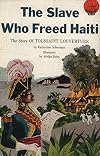
This book was written in the 50s and so has "negroes" and likely a few other not correct comments, but gives both middle school students and adults an incredible, exciting, and inspiring introduction to the man who led the only successful slave revolution ever.
It offers many insights into Toussaint Louverture's military strategies, his thinking about life, his love for Haiti and its people, his plans, and deepest feelings.
Wildly expressive and evocative woodcuts accompany this first show more edition and are as unsparring as the author's words.
After Napoleon sold the Louisiana Territory to the United States: "We were no longer in peril. We owe our safety to the intrepid black slave in Haiti who handed out
muskets to his people and whipped Napoleon's proudest army before it could get anywhere near the United States."
It will be good if Philippe Girard's just published (2016) Toussaint Louverture will confirm and expand on this honor.
And what a horrifying betrayal - one prays for his rescue up to the end! show less
It offers many insights into Toussaint Louverture's military strategies, his thinking about life, his love for Haiti and its people, his plans, and deepest feelings.
Wildly expressive and evocative woodcuts accompany this first show more edition and are as unsparring as the author's words.
After Napoleon sold the Louisiana Territory to the United States: "We were no longer in peril. We owe our safety to the intrepid black slave in Haiti who handed out
muskets to his people and whipped Napoleon's proudest army before it could get anywhere near the United States."
It will be good if Philippe Girard's just published (2016) Toussaint Louverture will confirm and expand on this honor.
And what a horrifying betrayal - one prays for his rescue up to the end! show less

The year is 1954. Katharine Scherman, her husband and a number of other scientists / amateur scientists from the US Northeast paid their own way for a six-week trip to the remote island of Baylot in the Canadian arctic where they live with an Inuit community. Unlike much literature of the Arctic, this is not a story of exploration, physical hardship or overcoming impossible odds - it is a happy and relaxed trip where nothing particularly noteworthy happens - they tramp around with Eskimo's show more in a care-free existence, take trips around the island via dog sled, observe birds and wild-life, listen to Inuit stories and myths, become like family with the natives. Katharine's writing is very vivid and easy to visualize, one becomes "lost in the book", living the day to day life with the Inuit, experiencing the joy of a spring on an Arctic island. It has qualities similar to the classic "Kabloona" by Gontran de Poncins written about 10 years earlier.
I happened to pick this up at a book fair for a dollar, published in 1956 it appears to be the only edition. Judging from the number of copies available on the used market and cheap price and large publisher (Little, Brown) it was probably a popular book in its day (on its release it had TWO separate lengthy advertisement-like reviews with pictures in the New York Times within 3 weeks of each other - Scherman's husband had connections), but has since slipped into obscurity like so many books do; but this book deserves to be read today, it is a historical document of what things were like after the age of missionary settlement, when travel to the north was possible in relative ease and safety, but before the north became the mass tourism destination it is today. It contains a map (on the inside end-boards) and a dozen or so B&W pictures.
Even though this was written before the US environmental movement really started, and way before global warming was even known, she comments on how local people said the Arctic appeared to be getting warmer each year, and concerns about what would happen if the permafrost were to warm. She is also tuned into the difficulties of the Inuit clashing with modern culture. show less
I happened to pick this up at a book fair for a dollar, published in 1956 it appears to be the only edition. Judging from the number of copies available on the used market and cheap price and large publisher (Little, Brown) it was probably a popular book in its day (on its release it had TWO separate lengthy advertisement-like reviews with pictures in the New York Times within 3 weeks of each other - Scherman's husband had connections), but has since slipped into obscurity like so many books do; but this book deserves to be read today, it is a historical document of what things were like after the age of missionary settlement, when travel to the north was possible in relative ease and safety, but before the north became the mass tourism destination it is today. It contains a map (on the inside end-boards) and a dozen or so B&W pictures.
Even though this was written before the US environmental movement really started, and way before global warming was even known, she comments on how local people said the Arctic appeared to be getting warmer each year, and concerns about what would happen if the permafrost were to warm. She is also tuned into the difficulties of the Inuit clashing with modern culture. show less

In the years just after the American Revolution, the tiny mountainous island of Haiti was seething with unrest. A colony of France in those days, it had half a million Negro slaves ad fewer than 40,000 whites. Brutally the French planters beat their black slaves, forcing them to work from dawn to dusk in the cane fields, driving them to starvation and misery. Then into the foreground came a small misshapen figure of a man wearing a yellow turban - Toussaint Louverture, the grandson of an show more African chieftain. Among the oppressed and tortured mass he was one of the few slaves of Haiti who was acquainted with the affairs of history and dedicated to the rights of man. At first the French ridiculed him as 'the monkey in the yellow turban,' but soon they realized this little man was in reality a giant of intellect and leadership. Vividly and dramatically, Katharine Scherman tells the story in The Slave Who Freed Haiti. show less

Review from my 14 year old:
I liked it and it gave me a nice, clear understanding of what was happening during that time period in Russia.
I liked it and it gave me a nice, clear understanding of what was happening during that time period in Russia.
Lists
Sonlight Books (1)
You May Also Like


Associated Authors
Statistics
- Works
- 11
- Also by
- 2
- Members
- 821
- Popularity
- #31,072
- Rating
- 3.7
- Reviews
- 15
- ISBNs
- 17