
Judith Schalansky
Author of Atlas de Islas Remotas. Cincuenta y cinco islas en las que nunca estuve y a las que nunca iré
About the Author
Image credit: Portrait of Judith Schalansky by Petra Kossmann. Taken from http://www.atlas-der-abgelegenen-inseln.de/downloads/23/jschalansky.jpg.
Works by Judith Schalansky
Atlas de Islas Remotas. Cincuenta y cinco islas en las que nunca estuve y a las que nunca iré (2009) 1,140 copies, 45 reviews
Associated Works
The Book of Barely Imagined Beings: A 21st Century Bestiary (2013) — Illustrator, some editions — 582 copies, 10 reviews
Ein Haus mit vielen Zimmern: Autorinnen erzählen vom Schreiben (edition fünf 27) (German Edition) (2015) — Contributor — 2 copies
Tagged
Common Knowledge
- Canonical name
- Schalansky, Judith
- Birthdate
- 1980-09-20
- Gender
- female
- Education
- Freie Universität Berlin (2005|art history)
Fachhochschule Potsdam (2007|communications) - Occupations
- author
book designer
publisher
graphic designer
editor - Organizations
- Fachhochschule Potsdam
- Awards and honors
- Friedrich-Hölderlin-Preis - Förderpreis (2012)
Carl-Amery-Literaturpreis (2022)
Gutenberg Prize of the City of Leipzig (2021)
Warwick Prize for Women in Translation (2021)
Nicolas Born Prize (2020)
Christine Lavant Preis (2020) (show all 15)
Wilhelm Raabe Literature Prize (2018)
Droste-Preis (2015)
Mainzer Stadtschreiberin (2014)
Preis der Literaturhäuser (2014)
Lessing-Preis des Freistaates Sachsen - Förderpreis (2013)
Friedrich-Hölderlin-Preis - Förderpreis (2012)
First Prize, Stiftung Buchkunst's "The Most Beautiful German Books" (2009, 2012)
Type Directors Club's Award for Typographic Excellence (2007)
Silbermedaille des Art Directors Club Deutschland (2007) - Relationships
- Hoppe, Bettina (partner)
- Short biography
- Judith Schalansky (Greifswald, 1980) studeerde Kunstgeschiedenis en Communicatie-design in Potsdam. Ze werkt tegenwoordig als freelance-schrijver in Berlijn.
- Nationality
- Germany
- Birthplace
- Greifswald, Germany
- Places of residence
- Greifswald, Germany
Berlin, Germany - Map Location
- Duitsland
- Associated Place (for map)
- Germany
Members
Reviews

Judith Schalansky studied art history and taught typography before she became a novelist, and her books are elegant design objects, even in paperback. Der Hals der Giraffe is beautifully designed and laid out, and is illustrated with carefully picked engravings that might (or might not) have come from old biology textbooks.
The book is a [Prime of Miss Jean Brodie] for the neue Bundesländer: an account of the schoolmistress-as-sociopath, set in a dying school in a small town in rural show more Pomerania, the top right-hand corner of the former DDR (Schalansky grew up in Greifswald, which is about as far as you can go to the north-east without being in Poland or getting your feet wet). Like her Scottish colleague, the biology teacher Inge Lohmark initially strikes us as an heroic figure, valiantly standing up for her values in a world where that is no longer appreciated, but we soon get the message that she isn't necessarily the ideal role-model of a teacher. By the end of the book, Schalansky has shown us what a monster Lohmark really is, but has done it in such a cunning and witty way that we still, in an odd way, seem to be on her side, despite everything.
Lohmark is middle-aged and in a job that will inevitably disappear in three or four years when the last child has left the school, her daughter has been away on a gap year in California for 15 years, and her marriage amounts to little more than sharing a house. But the main part of her problem seems to be the collapse of the DDR and the disappearance of the value-system she grew up in and which gave her a role and a structure to her life. She clearly isn't a socialist, and she doesn't want the old days back, but she feels adrift. The only solid thing she has to cling onto is her scientific education, with at its core Darwin's elegant and simple theory of evolution by natural selection. With that, she can arm herself against the annoyances of life in the new Germany and face the daily battle at the chalkface. Unfortunately, it turns out that rejecting all thoughts of tender emotions and orienting your life around the principle of the survival of the fittest is not a very good idea, particularly if you are (a) a dinosaur and (b) well beyond reproductive age. And even more dangerous if your headmaster is scheming to make the school "fit for the future". By the end of the book, she seems to be so far off the rails that she is teaching her class about the inheritance of acquired characteristics.
This is certainly a cruel novel: every bit as bitter and satirical as Muriel Spark's. But it's a delight to read. Schalansky moves smoothly backwards and forwards between the outer world of what Lohmark does and says and the inner world in which she aligns her experiences with the great truths of biology. show less
The book is a [Prime of Miss Jean Brodie] for the neue Bundesländer: an account of the schoolmistress-as-sociopath, set in a dying school in a small town in rural show more Pomerania, the top right-hand corner of the former DDR (Schalansky grew up in Greifswald, which is about as far as you can go to the north-east without being in Poland or getting your feet wet). Like her Scottish colleague, the biology teacher Inge Lohmark initially strikes us as an heroic figure, valiantly standing up for her values in a world where that is no longer appreciated, but we soon get the message that she isn't necessarily the ideal role-model of a teacher. By the end of the book, Schalansky has shown us what a monster Lohmark really is, but has done it in such a cunning and witty way that we still, in an odd way, seem to be on her side, despite everything.
Lohmark is middle-aged and in a job that will inevitably disappear in three or four years when the last child has left the school, her daughter has been away on a gap year in California for 15 years, and her marriage amounts to little more than sharing a house. But the main part of her problem seems to be the collapse of the DDR and the disappearance of the value-system she grew up in and which gave her a role and a structure to her life. She clearly isn't a socialist, and she doesn't want the old days back, but she feels adrift. The only solid thing she has to cling onto is her scientific education, with at its core Darwin's elegant and simple theory of evolution by natural selection. With that, she can arm herself against the annoyances of life in the new Germany and face the daily battle at the chalkface. Unfortunately, it turns out that rejecting all thoughts of tender emotions and orienting your life around the principle of the survival of the fittest is not a very good idea, particularly if you are (a) a dinosaur and (b) well beyond reproductive age. And even more dangerous if your headmaster is scheming to make the school "fit for the future". By the end of the book, she seems to be so far off the rails that she is teaching her class about the inheritance of acquired characteristics.
This is certainly a cruel novel: every bit as bitter and satirical as Muriel Spark's. But it's a delight to read. Schalansky moves smoothly backwards and forwards between the outer world of what Lohmark does and says and the inner world in which she aligns her experiences with the great truths of biology. show less
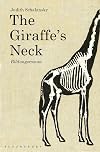
Stuck in the rock
The Giraffe’s Neck: A Novel by Judith Schalansky, translated by Shaun Whiteside (Bloomsbury USA, $26).
Frau Lohmark is a student’s nightmare. Desperately unhappy, burdened with a grim world view, she’s determined to make someone else pay, and her small cruelties mount up.
She teaches biology and, in a dark turn, has decided that the classroom is a good place to demonstrate natural selection’s “survival of the fittest” by refusing to protect her charges from show more bullies. Yeah, she’s not a terribly likable person; certainly no Mr. Chips.
In fact, Frau Lohmark is becoming as much a fossil as those she shows students and the drama that drives this darkly comic novel is in her awareness of this.
When her daughter decides to marry an American, she is pushed closer to understanding the lack of adaptation that has left her in such a fix, but the question then becomes: Can the fossil break out of the rock?
Judith Schalansky’s novel may also be a bit of commentary on the struggle between the new Germany and the “new” new Germany, those who came of age after unification, and their disparate world views. It’s certainly an argument against leaving adaptation out of our evolutionary equation.
Reviewed on Lit/Rant: http://litrant.tumblr.com/post/88265118528/stuck-in-the-rock-the-giraffes-neck-a... show less
The Giraffe’s Neck: A Novel by Judith Schalansky, translated by Shaun Whiteside (Bloomsbury USA, $26).
Frau Lohmark is a student’s nightmare. Desperately unhappy, burdened with a grim world view, she’s determined to make someone else pay, and her small cruelties mount up.
She teaches biology and, in a dark turn, has decided that the classroom is a good place to demonstrate natural selection’s “survival of the fittest” by refusing to protect her charges from show more bullies. Yeah, she’s not a terribly likable person; certainly no Mr. Chips.
In fact, Frau Lohmark is becoming as much a fossil as those she shows students and the drama that drives this darkly comic novel is in her awareness of this.
When her daughter decides to marry an American, she is pushed closer to understanding the lack of adaptation that has left her in such a fix, but the question then becomes: Can the fossil break out of the rock?
Judith Schalansky’s novel may also be a bit of commentary on the struggle between the new Germany and the “new” new Germany, those who came of age after unification, and their disparate world views. It’s certainly an argument against leaving adaptation out of our evolutionary equation.
Reviewed on Lit/Rant: http://litrant.tumblr.com/post/88265118528/stuck-in-the-rock-the-giraffes-neck-a... show less

A quirky mix of essays and stories riffing on things that have been lost to history — species, books, buildings, paintings and films, amongst others. The essays/stories are often at a tangent to the ostensible topic, thus Murnau’s lost first film prompts a story about the elderly Garbo living in New York; a demolished chateau near Greifswald leads us into a memory of the author’s early life, and a lost Caspar David Friedrich painting into the description of her attempt to follow the show more river Ryck from source to sea.
The central idea seems to be that the Second Law of thermodynamics is reflected in all corners of human experience: our attempts to organise information in one place only result in disorder and destruction somewhere else. But an engaging and unpredictable read, anyway. show less
The central idea seems to be that the Second Law of thermodynamics is reflected in all corners of human experience: our attempts to organise information in one place only result in disorder and destruction somewhere else. But an engaging and unpredictable read, anyway. show less
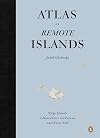
The concept is fascinating: each island is drawn in exquisite detail in black, white, and orange (for cities and roads) and stranded on an expanse of pale blue. The layout evokes the isolation, the constant threat of the ocean. On the facing page is a small bit of factual information about the island: size, population, name, language, latitude & longitude, distances from three nearest land masses, and a timeline of its discovery. Below that is the text of the book, a single paragraph telling show more the story of a single aspect of the island. It is brief, clipped almost, and highly poetic prose that sometimes borders on cliché (“feathered tribe” for example) and I wonder about the translator striking that balance between accessibly poetic and trite. Though the language can get saccharine (an unusual problem in my experience of translations from German, so something I definitely wondered about) the facts are exquisitely chosen.
In some cases she focuses on the people, or a person: a horrifying historical event (hundreds of babies dying of tetanus), or something so surreal as to be unbelievable (Marc Liblin learning Rapa in his dreams as a six year old living in France). Sometimes its an environmental disaster, or surprising geographical feature. Very few are unremarkable – like most books intended for a mass market audience the pieces are dense with sensationalism disguised as fact. And some of these stories are easily verified by internet searching (the tetanus epidemic), and the sensationalism of the telling becomes quickly justified. But others, like the Marc Liblin story, is more or less unverifiable.
As a proponent of lying in creative non-fiction it doesn’t trouble me too much. The idea is the more important thing, and stories can have an emotional truth without having a journalistic truth. She asserts as much in the introduction:
“That’s why the question whether these stories are ‘true’ is misleading. All text in the book is based on extensive research and every detail stems from factual sources. I have not invented anything. However I was the discoverer of the sources, researching them through ancient and rare books and I have transformed the texts and appropriated them as sailors appropriate the lands they discover.” (20)
Of course the Marc Liblin story takes place in the 1960s, so sources would not have been in “ancient and rare books,” and yet the only hits from a google search are other reviews of this book. So what. The story has all the resonance of a Borges story, and for that reason I accept it as an imaginative truth if nothing else.
[Read the whole review: http://alluringlyshort.com/2013/06/15/atlas-of-remote-islands-by-judith-schlanas.... ] show less
In some cases she focuses on the people, or a person: a horrifying historical event (hundreds of babies dying of tetanus), or something so surreal as to be unbelievable (Marc Liblin learning Rapa in his dreams as a six year old living in France). Sometimes its an environmental disaster, or surprising geographical feature. Very few are unremarkable – like most books intended for a mass market audience the pieces are dense with sensationalism disguised as fact. And some of these stories are easily verified by internet searching (the tetanus epidemic), and the sensationalism of the telling becomes quickly justified. But others, like the Marc Liblin story, is more or less unverifiable.
As a proponent of lying in creative non-fiction it doesn’t trouble me too much. The idea is the more important thing, and stories can have an emotional truth without having a journalistic truth. She asserts as much in the introduction:
“That’s why the question whether these stories are ‘true’ is misleading. All text in the book is based on extensive research and every detail stems from factual sources. I have not invented anything. However I was the discoverer of the sources, researching them through ancient and rare books and I have transformed the texts and appropriated them as sailors appropriate the lands they discover.” (20)
Of course the Marc Liblin story takes place in the 1960s, so sources would not have been in “ancient and rare books,” and yet the only hits from a google search are other reviews of this book. So what. The story has all the resonance of a Borges story, and for that reason I accept it as an imaginative truth if nothing else.
[Read the whole review: http://alluringlyshort.com/2013/06/15/atlas-of-remote-islands-by-judith-schlanas.... ] show less
Lists
Sense of place (1)
Evan's Wish List (1)
Awards


You May Also Like


Associated Authors
Statistics
- Works
- 30
- Also by
- 4
- Members
- 2,001
- Popularity
- #12,871
- Rating
- 3.9
- Reviews
- 81
- ISBNs
- 97
- Languages
- 19
- Favorited
- 1