
Wolfgang Herrndorf (1965–2013)
Author of Why We Took the Car
Works by Wolfgang Herrndorf
Tagged
Common Knowledge
- Canonical name
- Herrndorf, Wolfgang
- Birthdate
- 1965-06-12
- Date of death
- 2013-08-26
- Gender
- male
- Occupations
- author
painter
illustrator - Cause of death
- suicide
- Nationality
- Germany
- Birthplace
- Hamburg, Germany
- Places of residence
- Nürnberg, Germany
Berlin, Germany - Place of death
- Berlin, Germany
- Burial location
- Dorotheenstadt Cemetery, Berlin, Germany
- Associated Place (for map)
- Berlin, Germany
Members
Reviews
German artist and novelist Wolfgang Herrndorf (1965-2013)
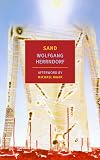
Bizarre, wacky, comical, offbeat, eccentric, quizzical, weird are among the ways reviewers have described Wolfgang Herrndorf’s stunning, highly entertaining crime thriller that has been baffling readers ever since its original publication in 2011.
That being said, I’m here to report good news – this New York Review Books (NYRB) edition contains an illuminating Afterward by German literary scholar Michael Maar. Afterward rather show more than Introduction is most apt since Mr. Maar provides clues to a number of the novel’s puzzles after mentioning that Wolfgang Herrndorf found book reviews written with spoilers highly distasteful.
As a way of respecting the author’s sentiments pertaining to book reviews, other than noting the action takes place in 1972 in and around a North African port city near an oasis where European and American hippies have founded a commune, I will attempt to avoid any spoilers by linking my own comments to quotes taken from Michael Maar’s Afterward.
“Sand has a romanticism of its own, the cool, dark Romanticism of the Gothic tale, but is as sharply contoured as a work by Poe.” ---------- There’s a TV news report of the massacre of athletes from Israel at the Munich Olympics perpetrated by Palestinian terrorists on the heels of the murder of four hippies in a local oasis commune. A sense of danger at every turn contributes to the novel’s tension and suspense. I can picture fans of such authors as Edgar Allan Poe or Heinrich von Kleist relishing each spinning, gyrating twist in Herrndorf’s innovative novel.
“Even the simple question of the identity of the book’s hero turns out to be a knotty one” ---------- A handsome European educated man has completely lost his memory. He takes the name of Carl Gross since a tall, striking blonde by the name of Helen sees Carl Gross is the maker of the suit jacket he’s wearing. But who is he really? In two somewhat humorous scenes we find Carl attempting to determine his past self by walking the streets in a yellow blazer and salmon-colored Bermuda shorts (this is North Africa!) and paying a visit to a psychiatrist on the strength of a flyer promising state-of-the-arts methods and introductory rates. If this sound like a far-out existential tale – bulls-eye.
“Readers of Sand miss something equally important by overlooking the novel’s basic construction, which is as discreet as it is compelling.” --------- The novel is comprised of sixty-eight short chapters that snap back and forth between various players and locales. I initially planned to take my time reading since there are multiple murders and I didn’t want to miss any clues. But the storytelling is totally captivating; I found myself pressing on page after page deep into the night. There’s good reason Sand is called a thriller.
“Herrndorf provides information in a way that is staggered, rhythmicized, slightly delayed, quasi slantwise. But he provides everything we need.” ---------- Each chapter can be viewed as a dot in a connect the dots picture. It might not be apparent on a first reading but every single paragraph is given a distinct purpose. Wolfgang Herrndorf offered any reviewer of his novel one hundred euros for each loose end that reviewer could find. It was a safe bet since the author knew very well there were no loose ends.
“Anyone with a weakness for artfully constructed plots is in for a feast here." ---------- By way of example, the manner in which the character of Helen is presented is remarkable. Before this lady enters the story’s action we learn many things of her background that will ultimately influence unfolding events – as a child she could deal effectively with a dead pet while those around her, even adults, sobbed or became hysterical; she studied theater at Princeton; if she strolled across campus in a tight T-shirt she would have at least three invitations to dinner; she maintained a lifelong friendship with Michelle, a dizzy, idealistic hippie who would eventually join a commune in a North African oasis.
“Herrndorf started off as a painter and carried his ingenuity over into this other discipline: in the shimmering heat of the desert, everything is seen, not merely asserted, and there is nothing without color, sharply drawn shadows, texture.” ---------- How true! Here’s a description from the first chapter: “The eastern walls of the huts blazed pale orange. The hollow, dull rhythm died down as it receded into the alleyways. Shrouded figures, lying in the cool ditches like mummies, awoke, and cracked lips formed words of praise and offering to the one true God. Three dogs dipped their tongues into a dirty puddle. The whole night through the temperature hadn’t sunk below thirty degrees.”
“Epigraphs light the way into each chapter, elusive and misanthropic” ---------- Epigraphs from Herodotus, Nabokov and Basho to Richard Nixon and Scrooge McDuck. One of the fascinating parts of reading each chapter is to go back and reread the epigraph to see how it sets the tone and fits into the unfurling episode almost as if it were a piece in a jigsaw puzzle.
“All bad novels are alike; each great novel is great in its own way.” ---------- There’s no question Michael Maar judges Sand a great novel. The tragedy for the literary world is Wolfgang Herrndorf was diagnosed with a brain tumor in 2010 and took his own life at the young age of forty-eight in 2013. What future great novels we would have had if he was still with us.
Especial thanks goes out to translator Tim Mohr who did a marvelous job rendering Wolfgang Herrndorf’s German into a very readable, vibrant English.
Sand will take its place on my bookshelf in a prominent place awaiting my next reread. I urge you to treat yourself to this New York Review Books edition.
"He tried to remember what he could still remember. It wasn't as if he couldn't remember anything at all. He remembered how the men had talked, how they attacked each other. He remembered a rattan suitcase full of money. And that one man, whom they referred to as Cetrois, had fled into the desert on a moped." - Wolfgang Herrndorf, Sand show less

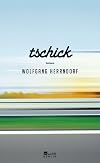
Fourteen-year-old Berlin schoolboy Maik and his Russian-born classmate Tschick find themselves left at a loose end in the summer holidays. Maik's middle-class parents are too busy with their own concerns to worry about their son, whilst Tschick only seems to have his dodgy elder brother as family support. In a "borrowed" Lada, they set off to drive to Wallachia to find Tschick's grandfather. Unfortunately, they omit to take a map, and they haven't "done" Germany yet in their school geography show more lessons, so finding Wallachia doesn't prove to be all that easy.
This is a very funny book, but the joke is exactly the same one as in Catcher in the rye, Adrian Mole, and (nearer to home) Die neuen Leiden des jungen W. -- we are looking at the world of adults from the peculiar perspective of an alienated teenage boy, who is (of course) really just an adult novelist using his disguise as a first-person narrator to poke fun at his contemporaries. Herrndorf does it very well, and adds some 21st century Berlin detail to the usual mix, with references among much else to asylum-seekers, racism, open-cast mining, industrial agriculture, computer games, Beyoncé, a left-over old Nazi (or possibly Communist) and a very discreetly smuggled-in LGBT plotline. Although it is a kind of coming-of-age novel, it always feels more irresponsible and subversive than didactic. I'm not really a fan of "YA" books, but I can see that if I were, this would have a good chance of becoming a favourite. show less
This is a very funny book, but the joke is exactly the same one as in Catcher in the rye, Adrian Mole, and (nearer to home) Die neuen Leiden des jungen W. -- we are looking at the world of adults from the peculiar perspective of an alienated teenage boy, who is (of course) really just an adult novelist using his disguise as a first-person narrator to poke fun at his contemporaries. Herrndorf does it very well, and adds some 21st century Berlin detail to the usual mix, with references among much else to asylum-seekers, racism, open-cast mining, industrial agriculture, computer games, Beyoncé, a left-over old Nazi (or possibly Communist) and a very discreetly smuggled-in LGBT plotline. Although it is a kind of coming-of-age novel, it always feels more irresponsible and subversive than didactic. I'm not really a fan of "YA" books, but I can see that if I were, this would have a good chance of becoming a favourite. show less
I hate that the publisher makes sure I know the circumstances this book was written under; if I dislike a book written by a dying author, that makes me feel like an asshole. If I like it, I'm forever (or at least for a while) going to wonder how much of that is me projecting what I know of the author onto the text.
That said, I definitely wound up liking this a lot more than I expected. It looks really clichéd - two bored young teenage outsiders from Berlin, a rich dork and a dirt-poor show more immigrant, decide to just "borrow" an old car and take off on "holiday" for a few weeks. Because why the hell not, mostly. Turns out that the adult world is a strange and incomprehensible place, and it takes more than just knowing which pedals to push to make your way ... Along the way through the former GDR they bump into various strange people. Or at least they think they're strange, but what do they know?
Again, yeah, you've seen this plot before, and when it's all narrated by one of the 14-year-olds it makes me even more wary. But I ended up scoffing the whole book down in two long reads, because it's just that well done. There's a hunger, a force behind Herrndorf's writing, a sense of humour that refuses to turn into comedy. The situations the boys find themselves in aren't just wacky adventures, though they initially appear that way when filtered through a not-as-smart-as-he-thinks kid's view. There's a new Europe out there, one which consists of layers of lots of old ones, and it takes more than just a hotwired Lada to understand it. Freedom's just another word for nothing, etc. show less
That said, I definitely wound up liking this a lot more than I expected. It looks really clichéd - two bored young teenage outsiders from Berlin, a rich dork and a dirt-poor show more immigrant, decide to just "borrow" an old car and take off on "holiday" for a few weeks. Because why the hell not, mostly. Turns out that the adult world is a strange and incomprehensible place, and it takes more than just knowing which pedals to push to make your way ... Along the way through the former GDR they bump into various strange people. Or at least they think they're strange, but what do they know?
Again, yeah, you've seen this plot before, and when it's all narrated by one of the 14-year-olds it makes me even more wary. But I ended up scoffing the whole book down in two long reads, because it's just that well done. There's a hunger, a force behind Herrndorf's writing, a sense of humour that refuses to turn into comedy. The situations the boys find themselves in aren't just wacky adventures, though they initially appear that way when filtered through a not-as-smart-as-he-thinks kid's view. There's a new Europe out there, one which consists of layers of lots of old ones, and it takes more than just a hotwired Lada to understand it. Freedom's just another word for nothing, etc. show less
‘’Ever since I was a little boy my father had told me that the world was a bad place. The world is bad and people are bad. Don’t trust anyone, don’t talk to strangers, all of that. My parents drilled that into me. When you watched the local news - people were bad. When you saw primetime investigative shows - people were bad. And maybe it was true, maybe ninety-nine percent of people were bad.’’
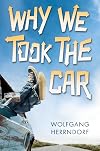
The story starts in the police station with a frightened boy, a battered leg and quite show more a lot of dizziness. Just a few days earlier two boys wanted to go to the most important party of the year. An unlikely duo they were. Mike, a boy from a well-to-do family residing in the Berlin suburbs. His mother is an alcoholic. His father is a scum. Andrej, the new student who becomes a target because of his Russian heritage and his silence. However, the question is one: Why did they take the car?
Because of teenage love that knows no boundaries and is afraid of nothing. Because our partners in crime had to deliver a precious gift to a very special girl. And then, they needed to enjoy the taste of freedom, the carefree summer in the messy world their families have created. During their eventful road trip, they meet a family that adores trivia and Harry Potter, an old man who reminisces on love and war, a strange girl who lives alone in the middle of nowhere. They roam on streets that still bear the signs of the discrimination between the ‘’West’’ and the ‘’East’’, between the Germans and the foreigners, between the world of the adults and the universe of the children.
Wolfgang Herrndorf writes a remarkable journey of two teenage boys who need to overcome obstacles that were created by others. They take the car to see whether anything worthy exists beyond the harsh environment of teachers who seem to have been educated in the Nazi Youth during Hitler’s era, of classmates who have started formulating an excellent textbook on how to become a fully-functioning skinhead, of families that are criminally absent or criminally present. And still, through incidents that are funny and sad and messy, through moments that are heart-pounding fast or the epitome of summer serenity, Herrendorf gives us two boys that are clever and kind and able to find their way. Even in an old, stolen Lada. Rich in beautiful descriptions of the lazy suburbs, written in dialogue and prose that are both hilarious and sharp, Why We Took the Car is one more successful example of European YA Literature. In fact this is exactly how YA SHOULD be...In the end, this is not a journey about discovering yourself but about discovering the true nature of the ones around you and whether you can trust them or not. Most of the times, the answer is not simple…
‘’And just imagine: The bugs go to the bug movies! They make movies on their planet and they’re sitting in some bug cinema watching a movie set on Earth - it’s about two kids who steal a car.’’
My reviews can also be found on https://theopinionatedreaderblog.wordpress.com show less
The story starts in the police station with a frightened boy, a battered leg and quite show more a lot of dizziness. Just a few days earlier two boys wanted to go to the most important party of the year. An unlikely duo they were. Mike, a boy from a well-to-do family residing in the Berlin suburbs. His mother is an alcoholic. His father is a scum. Andrej, the new student who becomes a target because of his Russian heritage and his silence. However, the question is one: Why did they take the car?
Because of teenage love that knows no boundaries and is afraid of nothing. Because our partners in crime had to deliver a precious gift to a very special girl. And then, they needed to enjoy the taste of freedom, the carefree summer in the messy world their families have created. During their eventful road trip, they meet a family that adores trivia and Harry Potter, an old man who reminisces on love and war, a strange girl who lives alone in the middle of nowhere. They roam on streets that still bear the signs of the discrimination between the ‘’West’’ and the ‘’East’’, between the Germans and the foreigners, between the world of the adults and the universe of the children.
Wolfgang Herrndorf writes a remarkable journey of two teenage boys who need to overcome obstacles that were created by others. They take the car to see whether anything worthy exists beyond the harsh environment of teachers who seem to have been educated in the Nazi Youth during Hitler’s era, of classmates who have started formulating an excellent textbook on how to become a fully-functioning skinhead, of families that are criminally absent or criminally present. And still, through incidents that are funny and sad and messy, through moments that are heart-pounding fast or the epitome of summer serenity, Herrendorf gives us two boys that are clever and kind and able to find their way. Even in an old, stolen Lada. Rich in beautiful descriptions of the lazy suburbs, written in dialogue and prose that are both hilarious and sharp, Why We Took the Car is one more successful example of European YA Literature. In fact this is exactly how YA SHOULD be...In the end, this is not a journey about discovering yourself but about discovering the true nature of the ones around you and whether you can trust them or not. Most of the times, the answer is not simple…
‘’And just imagine: The bugs go to the bug movies! They make movies on their planet and they’re sitting in some bug cinema watching a movie set on Earth - it’s about two kids who steal a car.’’
My reviews can also be found on https://theopinionatedreaderblog.wordpress.com show less
Lists
Best Beach Reads (1)
Awards


You May Also Like


Associated Authors
Statistics
- Works
- 11
- Members
- 1,863
- Popularity
- #13,816
- Rating
- 3.9
- Reviews
- 57
- ISBNs
- 94
- Languages
- 12
- Favorited
- 1