
Lina Maslo
Author of Free as a Bird: The Story of Malala
Works by Lina Maslo
Tagged
Common Knowledge
There is no Common Knowledge data for this author yet. You can help.
Members
Reviews
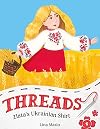
Drawing inspiration from the experiences of her grandparents, Maslo offers a window into the Ukrainian spirit.
It’s 1932, and Communists are going door to door collecting extra taxes and grain. Zlata’s mama starts hiding food, and Papa buries bags of grain. On Zlata’s eighth birthday, her best friend and neighbor, Yeva, and Yeva’s parents come over to celebrate. Zlata wears the blouse her mother made with colors traditionally used in Ukrainian embroidery: red for love, black for show more sadness. The conversation between the girls reveals their parents’ opposing political views. When Yeva’s father informs on Zlata’s family, their food and goods are confiscated, including the birthday blouse. Maslo effectively uses dialogue, a first-person narrative with plenty of helpful historical context, and a controlled palette to create a meaningful, engaging tale. Golden wheat is a recurring image, at first suggesting sustenance, then forbidden food. With spring, wheat symbolizes hope. A stark white page—with a corner of shadow—reveals that Zlata’s papa has been taken. Brown sets the mood for hunger. The girls mend their broken relationship when Yeva explains that her father was taken, too, but that he had rescued the blouse. Reflecting on the importance of holding on to what “made us Ukrainian—our language, our beliefs, our traditions,” the protagonist notes: “Beauty made life bearable.”
A poignant yet accessible entry into Ukraine’s ongoing suffering—and survival. (author’s note, bibliography) (Picture book. 5-8)
-Kirkus Review show less
It’s 1932, and Communists are going door to door collecting extra taxes and grain. Zlata’s mama starts hiding food, and Papa buries bags of grain. On Zlata’s eighth birthday, her best friend and neighbor, Yeva, and Yeva’s parents come over to celebrate. Zlata wears the blouse her mother made with colors traditionally used in Ukrainian embroidery: red for love, black for show more sadness. The conversation between the girls reveals their parents’ opposing political views. When Yeva’s father informs on Zlata’s family, their food and goods are confiscated, including the birthday blouse. Maslo effectively uses dialogue, a first-person narrative with plenty of helpful historical context, and a controlled palette to create a meaningful, engaging tale. Golden wheat is a recurring image, at first suggesting sustenance, then forbidden food. With spring, wheat symbolizes hope. A stark white page—with a corner of shadow—reveals that Zlata’s papa has been taken. Brown sets the mood for hunger. The girls mend their broken relationship when Yeva explains that her father was taken, too, but that he had rescued the blouse. Reflecting on the importance of holding on to what “made us Ukrainian—our language, our beliefs, our traditions,” the protagonist notes: “Beauty made life bearable.”
A poignant yet accessible entry into Ukraine’s ongoing suffering—and survival. (author’s note, bibliography) (Picture book. 5-8)
-Kirkus Review show less

Author/illustrator Lina Maslo tells the moving story of Malala Yousafzai in this beautifully-illustrated picture-book, describing her early exposure to schooling, thanks to her educator father, and her growing commitment to learning, in the face of violent opposition from some extremists in her region of Pakistan. The Taliban's attempt to assassinate her, and her subsequent worldwide campaign for educational access for girls, are also discussed. The book closes with an afterword that gives show more more information about Malala, and that also includes a timeline and a list of sources...
After reading Malala Yousafzai's own autobiographical picture-book, Malala's Magic Pencil, I was curious to see what other authors would do with her story, and requested Free as a Bird: The Story of Malala from the library. I found it informative and deeply moving, and appreciated some of the details - the fact that Malala was named for Pashtun heroine Malalai of Maiwand, for instance - that weren't in the other book. I also really liked the attention paid here to the role of Malala's father, Ziauddin Yousafzai, in encouraging her to struggle for her right to an education. He too was very courageous, as a public figure who took a strong stance in favor of girls' education, and without his influence, Malala would not be the person she is today, so I was glad to see that element of the story included. Maslo's artwork here was as beautiful as her narrative was inspiring, and I was struck by her assured use of vibrant color and stylized form. It's astonishing to think that this was her picture-book debut - I will definitely be on the look-out for more of her work! Recommended to picture-book readers who enjoy biography, or are looking for inspiring stories of people who overcame great obstacles. show less
After reading Malala Yousafzai's own autobiographical picture-book, Malala's Magic Pencil, I was curious to see what other authors would do with her story, and requested Free as a Bird: The Story of Malala from the library. I found it informative and deeply moving, and appreciated some of the details - the fact that Malala was named for Pashtun heroine Malalai of Maiwand, for instance - that weren't in the other book. I also really liked the attention paid here to the role of Malala's father, Ziauddin Yousafzai, in encouraging her to struggle for her right to an education. He too was very courageous, as a public figure who took a strong stance in favor of girls' education, and without his influence, Malala would not be the person she is today, so I was glad to see that element of the story included. Maslo's artwork here was as beautiful as her narrative was inspiring, and I was struck by her assured use of vibrant color and stylized form. It's astonishing to think that this was her picture-book debut - I will definitely be on the look-out for more of her work! Recommended to picture-book readers who enjoy biography, or are looking for inspiring stories of people who overcame great obstacles. show less

Lina Maslo, the author and illustrator who made her debut with Free as a Bird: The Story of Malala, a picture-book biography of Malala Yousafzai, returns to the form in this exploration of the life of the celebrated author C.S. Lewis. From his childhood in Belfast, when, together with his brother Warnie, he dreamt up all sorts of stories about the made-up land of Boxen, through his unhappy days at boarding school, after his mother's death, and his service during World War I, the story show more follows Lewis through his life, leading up to the creation of his most famous work: the children's fantasy novels set in Narnia. Begun as a tale for some of the child evacuees living with him, during World War II, these stories would become famous throughout the world, and would even lead to Lewis meeting his wife, later in life. The book concludes with a detailed afterword giving more information about C.S. Lewis, and a bibliography...
As someone who has loved The Chronicles of Narnia since early childhood, when I first read them, and who also greatly enjoyed Maslo's previous picture-book biography, I picked up Through the Wardrobe: How C. S. Lewis Created Narnia with great interest. Other than the film Shadowlands, which covers Lewis' romance and marriage with Joy Gresham, I have not seen or read anything about his life, so I found this quite informative, and I imagine that young readers will as well. One sees in Narnia the culmination of Lewis' own childhood games of make-believe and storytelling, which I think emphasizes just how important such activities are, for the development of young minds. His unhappy experiences at school, when he was a victim of bullying, clearly also influenced some of his work, such as the early scenes in The Silver Chair. Oddly enough, despite his own negative experiences with more traditional boarding schools, Lewis also seems to have had a distaste for more modern, progressive schools. As someone happiest with a private tutor, perhaps Lewis just didn't care for school at all. In any case, the story here is both informative and engaging, and is paired with appealing, expressive illustrations. Highly recommended to picture-book readers who enjoy biography, and to any child who loves Narnia, or enjoys games of make-believe. show less
As someone who has loved The Chronicles of Narnia since early childhood, when I first read them, and who also greatly enjoyed Maslo's previous picture-book biography, I picked up Through the Wardrobe: How C. S. Lewis Created Narnia with great interest. Other than the film Shadowlands, which covers Lewis' romance and marriage with Joy Gresham, I have not seen or read anything about his life, so I found this quite informative, and I imagine that young readers will as well. One sees in Narnia the culmination of Lewis' own childhood games of make-believe and storytelling, which I think emphasizes just how important such activities are, for the development of young minds. His unhappy experiences at school, when he was a victim of bullying, clearly also influenced some of his work, such as the early scenes in The Silver Chair. Oddly enough, despite his own negative experiences with more traditional boarding schools, Lewis also seems to have had a distaste for more modern, progressive schools. As someone happiest with a private tutor, perhaps Lewis just didn't care for school at all. In any case, the story here is both informative and engaging, and is paired with appealing, expressive illustrations. Highly recommended to picture-book readers who enjoy biography, and to any child who loves Narnia, or enjoys games of make-believe. show less
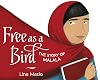
I decided to read this book since I'm also reading the book Malala Yousafzai wrote. This book told the story of her life in detail, but summed it up in a quick way. I really liked that the author did not say she shot or even where she had been shot. The illustrations did show the visuals of where, though it wasn't out right said.
Awards


Statistics
- Works
- 3
- Members
- 169
- Popularity
- #126,056
- Rating
- 4.2
- Reviews
- 12
- ISBNs
- 14