
Katie Henry
Author of Heretics Anonymous
Works by Katie Henry
Tagged
Common Knowledge
- Gender
- female
- Occupations
- playwright
- Nationality
- USA
- Places of residence
- California, USA
New York, New York, USA - Associated Place (for map)
- USA
Members
Reviews
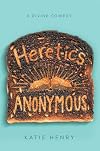
Put an atheist in a strict Catholic school? Expect comedy, chaos, and an Inquisition. The Breakfast Club meets Saved! in debut author Katie Henry’s hilarious novel about a band of misfits who set out to challenge their school, one nun at a time. Perfect for fans of Becky Albertalli and Robyn Schneider.
When Michael walks through the doors of Catholic school, things can’t get much worse. His dad has just made the family move again, and Michael needs a friend. When a girl challenges their show more teacher in class, Michael thinks he might have found one, and a fellow atheist at that. Only this girl, Lucy, isn’t just Catholic... she wants to be a priest.
Lucy introduces Michael to other St. Clare’s outcasts, and he officially joins Heretics Anonymous, where he can be an atheist, Lucy can be an outspoken feminist, Avi can be Jewish and gay, Max can wear whatever he wants, and Eden can practice paganism.
Michael encourages the Heretics to go from secret society to rebels intent on exposing the school’s hypocrisies one stunt at a time. But when Michael takes one mission too far - putting the other Heretics at risk - he must decide whether to fight for his own freedom or rely on faith, whatever that means, in God, his friends, or himself. show less
When Michael walks through the doors of Catholic school, things can’t get much worse. His dad has just made the family move again, and Michael needs a friend. When a girl challenges their show more teacher in class, Michael thinks he might have found one, and a fellow atheist at that. Only this girl, Lucy, isn’t just Catholic... she wants to be a priest.
Lucy introduces Michael to other St. Clare’s outcasts, and he officially joins Heretics Anonymous, where he can be an atheist, Lucy can be an outspoken feminist, Avi can be Jewish and gay, Max can wear whatever he wants, and Eden can practice paganism.
Michael encourages the Heretics to go from secret society to rebels intent on exposing the school’s hypocrisies one stunt at a time. But when Michael takes one mission too far - putting the other Heretics at risk - he must decide whether to fight for his own freedom or rely on faith, whatever that means, in God, his friends, or himself. show less
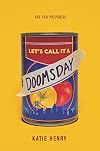
I don't personally get much mileage out of the concept of "books I could have used when I was a teen." This one is, instead, a book that helped me have compassion for the teen I used to be and was a great comfort for the adult I became.
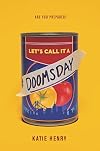
In comparison to other Doomsday preppers, Ellis is “the picture of normalcy. June Cleaver with freeze-dried casseroles. Betty Crocker in a gas mask” (Henry 189).
Ellis thinks the world is ending, and she really can’t think about anything else.
She is a hilarious and anxiety-inducing character, relatable even if you don’t have anxiety...even if you’ve never considered setting a therapy couch on fire in order to bail on your therapist (36). 🔥
Author Katie Henry realistically and show more authentically writes about mental illness without romanticizing anxiety, even though idea of an apocalyptic winter-whiteout of San Francisco is decidedly romantic. While packing her emergency kits for the End, Ellis is forced to unpack her feelings of unworthiness for both her family and the afterlife, fears about relationships and faith, and her identity itself.
One of the ways Ellis deals with her anxiety is delving into etymology, the history and meaning of words, and so I know all my fellow word nerds (and English students/teachers) and going to LOVE this book. This line spoke to me (with its mouth full): “Food is a human need. Books are a human need. It’s cruel to make a person choose” (26). Amazing.
Ellis learns that “All words have power: not just the polite ones,” which is a revelation in and of itself; we should all learn how to tell our intrusive thoughts to back the heck off and let us focus on what we want to survive for (276). Revelations like these are like little apocalypses. After all, the word apocalypse “means to uncover what’s been hidden”—maybe the end of the world can be as small as a step in a new direction (243).
“What are you surviving for? What’s going to make it matter that you’re alive” 253
“Golden Gate Park should be the perfect environment for some light doomsday preaching” 260
Seeing small growth—braving a climb, talking to mom, crying in therapy, believing Tal about perfection
“Maybe good and scary aren’t antonyms” 286
She is such a word geek, bookstagram and English teachers are gonna love her “is there anything that makes your heart jump more, than someone wanting to keep your words?” 287
“What-ifs don’t solve a single thing. I’m done with them” when she’s trying to save Danny 364
There are many things we don’t know, but knowning and believing are different “belief might even be better, because belief is a choice” 385 show less
Ellis thinks the world is ending, and she really can’t think about anything else.
She is a hilarious and anxiety-inducing character, relatable even if you don’t have anxiety...even if you’ve never considered setting a therapy couch on fire in order to bail on your therapist (36). 🔥
Author Katie Henry realistically and show more authentically writes about mental illness without romanticizing anxiety, even though idea of an apocalyptic winter-whiteout of San Francisco is decidedly romantic. While packing her emergency kits for the End, Ellis is forced to unpack her feelings of unworthiness for both her family and the afterlife, fears about relationships and faith, and her identity itself.
One of the ways Ellis deals with her anxiety is delving into etymology, the history and meaning of words, and so I know all my fellow word nerds (and English students/teachers) and going to LOVE this book. This line spoke to me (with its mouth full): “Food is a human need. Books are a human need. It’s cruel to make a person choose” (26). Amazing.
Ellis learns that “All words have power: not just the polite ones,” which is a revelation in and of itself; we should all learn how to tell our intrusive thoughts to back the heck off and let us focus on what we want to survive for (276). Revelations like these are like little apocalypses. After all, the word apocalypse “means to uncover what’s been hidden”—maybe the end of the world can be as small as a step in a new direction (243).
“What are you surviving for? What’s going to make it matter that you’re alive” 253
“Golden Gate Park should be the perfect environment for some light doomsday preaching” 260
Seeing small growth—braving a climb, talking to mom, crying in therapy, believing Tal about perfection
“Maybe good and scary aren’t antonyms” 286
She is such a word geek, bookstagram and English teachers are gonna love her “is there anything that makes your heart jump more, than someone wanting to keep your words?” 287
“What-ifs don’t solve a single thing. I’m done with them” when she’s trying to save Danny 364
There are many things we don’t know, but knowning and believing are different “belief might even be better, because belief is a choice” 385 show less
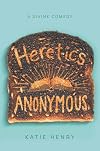
https://iwriteinbooks.wordpress.com/2019/01/19/heretics-anonymous-katie-henry/
I grew up in a very Catholic town, just outside of Boston.
I was definitely not Catholic.
I was raised Jewish and Unitarian Universalist. They are two faiths that still heavily shape my life, now, and faiths that are in so many ways, on the opposite end of the spectrum from Catholicism.
The only Mass I have ever attended was Easter Sunday, my freshman year of high school. I was brought by a boyfriend and his family show more and I was prepped for weeks, beforehand by my mother who is a UU minister and Harvard Divinity School grad (she knows all of the right things to do).
But. Catholicism is still a part of my life.
There have been good moments (I absolutely love listening to my friends talk about the love and magic of their faith) and there have been some bad moments (I was in fourth grade when a bunch of my "friends" cornered me at recess, herded me over to a corner by the gym and discussed their "concerns" with me that I didn't go to church and didn't believe in god and, as a result, they were quite worried about my soul).
Flash forward to Heretics Anonymous.
I wasn't sure what I'd get with the book but it ended with me in tears (good ones). There are moments of the story that resemble Saved (if you were not born in very specific time period, like 1983-1988, it's unlikely you've seen it so linked to it) in a sort of distorted, dark perkiness.
But there are more moments that pull out the questioning, evolving, loving aspects of faith. There is a lot to do with Catholicism's deep history of rebellion and change. And even more to do with faiths in general and the universal focus on forgiveness.
The book is funny and smart and delightfully relevant to so many aspects of human existence. I'm glad I stopped dragging my feet (Monster at the End of This Book style) and dove in.
If you haven't read Heretics Anonymous, I highly recommend it. show less
I grew up in a very Catholic town, just outside of Boston.
I was definitely not Catholic.
I was raised Jewish and Unitarian Universalist. They are two faiths that still heavily shape my life, now, and faiths that are in so many ways, on the opposite end of the spectrum from Catholicism.
The only Mass I have ever attended was Easter Sunday, my freshman year of high school. I was brought by a boyfriend and his family show more and I was prepped for weeks, beforehand by my mother who is a UU minister and Harvard Divinity School grad (she knows all of the right things to do).
But. Catholicism is still a part of my life.
There have been good moments (I absolutely love listening to my friends talk about the love and magic of their faith) and there have been some bad moments (I was in fourth grade when a bunch of my "friends" cornered me at recess, herded me over to a corner by the gym and discussed their "concerns" with me that I didn't go to church and didn't believe in god and, as a result, they were quite worried about my soul).
Flash forward to Heretics Anonymous.
I wasn't sure what I'd get with the book but it ended with me in tears (good ones). There are moments of the story that resemble Saved (if you were not born in very specific time period, like 1983-1988, it's unlikely you've seen it so linked to it) in a sort of distorted, dark perkiness.
But there are more moments that pull out the questioning, evolving, loving aspects of faith. There is a lot to do with Catholicism's deep history of rebellion and change. And even more to do with faiths in general and the universal focus on forgiveness.
The book is funny and smart and delightfully relevant to so many aspects of human existence. I'm glad I stopped dragging my feet (Monster at the End of This Book style) and dove in.
If you haven't read Heretics Anonymous, I highly recommend it. show less
Lists
Awards


You May Also Like


Associated Authors
Statistics
- Works
- 5
- Members
- 707
- Popularity
- #35,839
- Rating
- 4.0
- Reviews
- 30
- ISBNs
- 38
- Languages
- 1