
Emily Franklin
Author of The Lioness of Boston
About the Author
Series
Works by Emily Franklin
Associated Works
When I Was a Loser: True Stories of (Barely) Surviving High School (2007) — Contributor — 38 copies, 2 reviews
Frankly Feminist: Short Stories by Jewish Women from Lilith Magazine (HBI Series on Jewish Women) (2022) — Contributor — 9 copies, 1 review
Tagged
Common Knowledge
- Gender
- female
- Education
- University of Oxford
Sarah Lawrence College
Dartmouth College - Occupations
- Staff member on NPR's Car Talk
- Agent
- Tracy Fisher
Kim Witherspoon (Inkwell Management) - Nationality
- USA
- Places of residence
- Boston, Massachusetts, USA
London, England, UK - Associated Place (for map)
- USA
Members
Reviews
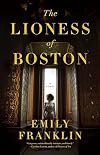
Isabella Stewart Gardener was a New Yorker who lived in Boston after her marriage to a local Brahmin. Ostracized by the society matrons for her brash ways, Isabella sought to find and make her own path. Slowly she began a life of collecting—plants, books, art, and always men&mdashculminating in the creation of the Isabella Stewart Gardener Museum.
The epigraph to this novel is a quote by ISG herself: "Don't spoil a good story by telling the truth", and in the author's notes, Franklin show more admits to having followed that maxim much more faithfully than history itself. The author fabricated all of the many letters included in the novel, as well as attendance at events, meetings with famed literati, etc. in the spirit of telling a good story. Perhaps she succeeded, but I was too busy trying to suss out fact from fiction to care. I prefer my historical fiction to embellish history but not fabricate it. Others love the "spirit" of the book and are willing to overlook historical errors that I am not. Your mileage may vary. show less
The epigraph to this novel is a quote by ISG herself: "Don't spoil a good story by telling the truth", and in the author's notes, Franklin show more admits to having followed that maxim much more faithfully than history itself. The author fabricated all of the many letters included in the novel, as well as attendance at events, meetings with famed literati, etc. in the spirit of telling a good story. Perhaps she succeeded, but I was too busy trying to suss out fact from fiction to care. I prefer my historical fiction to embellish history but not fabricate it. Others love the "spirit" of the book and are willing to overlook historical errors that I am not. Your mileage may vary. show less

Laney and her mother drive from the west coast to the east while listening to mix tapes. Each one holds a special set of memories and after years of distance, caused by her mother's illness, Laney finally opens up about her life and loves during that missed decade. Mixed tapes may be a thing of the past, but I loved the Side A and B that started each new section. The book feels episodic since we are viewing small chunks of her life at a time, but it all ties together with her friendships and show more relationships. A perfect book to read during a road trip.
It certainly got me thinking about the songs that are tied to specific moments in my life. Blur's "Tender" reminds me of the first year my husband and I were dating, "Sweet Baby James" instantly transports me to a James Taylor concert with my Dad, The Beatles "Fool on a Hill" and KT Tunstall's "Through the Dark" for my semester in London. I'm singing the lyrics of Salt-N-Pepa's "Shoop" while standing in line for a haunted house with friends. Amy Winehouse belts "Back to Black" from my car stereo during my first year as a reporter at a daily newspaper. Counting Crows "Round Here" and Elliott Smith's "Between the Bars" are on a loop from my senior year in high school. Other songs take me back to trips I've taken, like Sophie B. Hawkins' "As I Lay Me Down" (a jr. high trip to Florida) or Jump Little Children's "Cathedrals" (Europe wanderings). Each memory is a vivid reminder of the power music has in our lives. show less
It certainly got me thinking about the songs that are tied to specific moments in my life. Blur's "Tender" reminds me of the first year my husband and I were dating, "Sweet Baby James" instantly transports me to a James Taylor concert with my Dad, The Beatles "Fool on a Hill" and KT Tunstall's "Through the Dark" for my semester in London. I'm singing the lyrics of Salt-N-Pepa's "Shoop" while standing in line for a haunted house with friends. Amy Winehouse belts "Back to Black" from my car stereo during my first year as a reporter at a daily newspaper. Counting Crows "Round Here" and Elliott Smith's "Between the Bars" are on a loop from my senior year in high school. Other songs take me back to trips I've taken, like Sophie B. Hawkins' "As I Lay Me Down" (a jr. high trip to Florida) or Jump Little Children's "Cathedrals" (Europe wanderings). Each memory is a vivid reminder of the power music has in our lives. show less
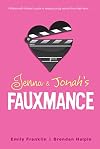
I prefer my teen romance novels vampire and werewolf free, thank you very much. I also like them (as with all fiction) to multi-fasceted characters, rather than utterly bland Mary Sue stand-ins, who for no justifiable reason attract every human and/or supernatural being of the opposite sex within 100 miles. Which is at least part of why I so enjoyed Jenna & Jonah's Fauxmance. Well that and the fact that it was as light and tasty as cotton candy on a sunny spring day. So when you finish show more slogging through "War and Peace", and find yourself with a bit of a sweet-tooth, Jenna & Jonah is a tasty choice. show less
Isabella Stewart Gardner moves to Boston as a young wife with her husband, Jack, and attempts to make her way in the social milieu. She is a opinionated woman who doesn't always fit in, and as written by Franklin, struggles with feeling left out and less than quite a bit before she begins to make her own group of friends and find her way of making her mark through collecting.
This biographical fiction covers the years 1861 to 1903 when the now-famous Isabella Stewart Gardner Museum was open show more to the public. Interspersed is the Prologue and "Intermezzos" written by Isabella in 1924 to an unnamed friend with instructions to burn letters and leave everything in the museum untouched, as well as reflecting on events from a more mature perspective. The beginning chapters, focusing on only four years, are the most detailed and cohesive; after that, I began to feel like I was just reading vignettes in each chapter, glimpses of a life and imagined letters rather than a whole, complete story. I suppose that's part of the difficulty in writing about Isabella herself - she did indeed burn letters, but left the museum as she had curated it to the city of Boston as her legacy.
Franklin chooses to focus a lot on Isabella's imagined desires, whether for a child, or friendship, or in an affair, and I found myself impatient in the repetition of her feelings of lacking when she seems to me such a bold figure who didn't really care what other people thought. Because less time is spent on her later years, this woman is less clear than the youthful one unsure of her place in society. There's also no mention of her husband Jack's paying someone to fight the Civil War in his place, the fact that some of the art she acquired was smuggled, or the moral questions of whether national treasures should become part of a personal collection (indeed, the actual accumulation of the art is described mostly in letters, without a lot of details given). These, to me, would have made much more interesting reading. show less
This biographical fiction covers the years 1861 to 1903 when the now-famous Isabella Stewart Gardner Museum was open show more to the public. Interspersed is the Prologue and "Intermezzos" written by Isabella in 1924 to an unnamed friend with instructions to burn letters and leave everything in the museum untouched, as well as reflecting on events from a more mature perspective. The beginning chapters, focusing on only four years, are the most detailed and cohesive; after that, I began to feel like I was just reading vignettes in each chapter, glimpses of a life and imagined letters rather than a whole, complete story. I suppose that's part of the difficulty in writing about Isabella herself - she did indeed burn letters, but left the museum as she had curated it to the city of Boston as her legacy.
Franklin chooses to focus a lot on Isabella's imagined desires, whether for a child, or friendship, or in an affair, and I found myself impatient in the repetition of her feelings of lacking when she seems to me such a bold figure who didn't really care what other people thought. Because less time is spent on her later years, this woman is less clear than the youthful one unsure of her place in society. There's also no mention of her husband Jack's paying someone to fight the Civil War in his place, the fact that some of the art she acquired was smuggled, or the moral questions of whether national treasures should become part of a personal collection (indeed, the actual accumulation of the art is described mostly in letters, without a lot of details given). These, to me, would have made much more interesting reading. show less
Lists
Awards


You May Also Like


Associated Authors
Statistics
- Works
- 24
- Also by
- 5
- Members
- 1,265
- Popularity
- #20,290
- Rating
- 3.5
- Reviews
- 69
- ISBNs
- 105
- Languages
- 1