
Joy Sorman
Author of Tenderloin
About the Author
Image credit: Joy Sorman lors du forum « Animal ? » organisé par France Culture le 13 janvier 2018
Works by Joy Sorman
Tagged
Common Knowledge
- Legal name
- Sorman, Joy
- Other names
- Sorman, Joy
- Birthdate
- 1973-12-28
- Gender
- female
- Education
- Ecole Bossuet, Paris, France
Lycée Janson-de-Sailly, Paris, France
Capes de philosophie (1997) - Occupations
- Professeur de philosophie
Auteur
Chroniqueuse - Organizations
- Lycée de Montbéliard, Doubs, France
- Relationships
- Sorman, Guy (father)
- Nationality
- France
- Birthplace
- Paris, France
- Map Location
- France
- Associated Place (for map)
- Paris, France
Members
Reviews
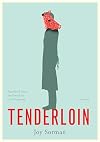
3.5 Admirable writing and translation. However, this is not for the faint of heart/stomach or the vegetarian. It's almost a fairytale in which our hero, Pim sets out to be the best butcher in the world, in the French tradition. After high school he signs on for an apprenticeship and quickly devotes his full self to his goal - "Pim imagines himself a knight in shining meat." (20) To his credit, he is devoted, meticulous, an avid, engaged learner, and he quickly ascends among other students. show more To really know the profession, he learns all facets: the slaughterhouse (pretty graphic in its process description), and he lives for a time on a farm with a breeder of cows. No task or encounter is beneath him and he truly has a love and appreciation for the animals he will assemble (disassemble?) into food. He also has a great respect for the French culinary tradition and wants to prepare only the best cuts. He reaches another goal of leaving his Normandy home region and setting up shop in Paris. Ultimately he may be a little too obsessed and it is unclear if he has given too much to his aspirations by the end. "Will this ravenous obsession yield to madness or ecstasy?" (book blurb) Not meant to be a realistic narrative, the book is more an exploration of artisan labor, and a look at the symbiotic relationship between humans and animals. It could also be read as a modern verison of Sinclair's "The Jungle" to question the scale of consumption in our world. Lots to talk about, but lots that wouldn't want to be talked about. Tripe, anyone? show less

First of all, I love that Goodreads classifies Tenderloin as "Weird Fiction". I struggled to classify it in my own collection, but I eventually decided it falls under "Horror". The gruesome descriptions of meat and Pim's mindset toward the end are what ultimately did it for me. I spent much of this story debating if I am supposed to leave as a vegan or a cannibal and that alone made this novel fantastically horrific.
Tenderloin is a quick read that will take you on a journey of show more understanding not only the literal process of meat processing, but the spiritual side of it as well. Tenderloin gets you thinking not only about how humanity began eating meat, but how the process has changed over time and what that means.
If you need something weird on your plate that you can't get out of your mind, and you don't mind visual descriptions of meat, this book is for you!
Thank you, LibraryThing, for a copy of Tenderloin! show less
Tenderloin is a quick read that will take you on a journey of show more understanding not only the literal process of meat processing, but the spiritual side of it as well. Tenderloin gets you thinking not only about how humanity began eating meat, but how the process has changed over time and what that means.
If you need something weird on your plate that you can't get out of your mind, and you don't mind visual descriptions of meat, this book is for you!
Thank you, LibraryThing, for a copy of Tenderloin! show less
 This review was written for LibraryThing Early Reviewers.
An utterly original story of a butcher named Pim, as we follow him from the start of his apprenticeship through many stages of his career. The Breton farms, markets, and slaughterhouses that keep France stocked in meat are prominent features and richly described. It was quite an adventure to follow Pim through becoming thoroughly obsessed with his chosen trade and the animals that provide it; I only wish it had been longer and perhaps covered more about his fellow apprentices, who were show more unceremoniously left behind after the first part of the story. show less
This review was written for LibraryThing Early Reviewers.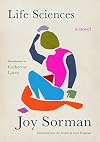
Medicine and doctors spin and weave around a girl's pain in a tale, which questions intentions and the limits of modern science.
It started in the Middle Ages as a woman in her mid-thirties suddenly suffered a constant, tingling pain on her skin. From generation to generation, the illness continues from mother to daughter, each time bringing new and/or different symptoms. Ninon, an average teen girl, is aware of the curse she will inherit from her mother, but when it hits, the knowledge show more doesn't offer any relief. Like those before her, she tries to find medical assistance, but like those before her, the doctors can't seem to find a solution. With test after test and treatment after treatment, not only does she realize that modern medicine might not be capable of helping, but there are times, she's sure it's not even its true goal.
This book comes from a well-known and talented French author and has been translated into English. It's not a light book but steers with an obvious and clear purpose. The questions surrounding society's trust in modern medicine and science, how the medical world views women's health issues, and the, at times, true intentions behind medicine's greed and ambition at patients' expense are explored, allowing a darker side of all of this to come to light. And one that, unfortunately, women can and do see glimpses of themselves.
I tend to read mostly fiction, which makes the more dry and direct flow of this book stick out to me quite a bit. This isn't written in a story form, meaning it doesn't hover around dialogue, scenes or world building in that sense, but rather takes a drier and concreter look at Ninon and her experiences. It begins with a foreword, which is interesting to read, from Catherine Lacey, and then, dives into the historical explanation of when the disease first appeared in Ninon's ancestors. It takes the form of a told account rather than sliding into a more personal tone and does flow smoothly and clearly.
Embracing hard-won realizations and exploring emotions, Ninon's experiences with her disease and the medical world leave more than a little food for thought. The ending does offer that needed ray of hope and allows even the darker shadows, which cannot be ignored, to not necessarily win the upper-hand.
I received an ARC, am giving it 3.5 stars while rounding up, and found the read thought provoking. show less
It started in the Middle Ages as a woman in her mid-thirties suddenly suffered a constant, tingling pain on her skin. From generation to generation, the illness continues from mother to daughter, each time bringing new and/or different symptoms. Ninon, an average teen girl, is aware of the curse she will inherit from her mother, but when it hits, the knowledge show more doesn't offer any relief. Like those before her, she tries to find medical assistance, but like those before her, the doctors can't seem to find a solution. With test after test and treatment after treatment, not only does she realize that modern medicine might not be capable of helping, but there are times, she's sure it's not even its true goal.
This book comes from a well-known and talented French author and has been translated into English. It's not a light book but steers with an obvious and clear purpose. The questions surrounding society's trust in modern medicine and science, how the medical world views women's health issues, and the, at times, true intentions behind medicine's greed and ambition at patients' expense are explored, allowing a darker side of all of this to come to light. And one that, unfortunately, women can and do see glimpses of themselves.
I tend to read mostly fiction, which makes the more dry and direct flow of this book stick out to me quite a bit. This isn't written in a story form, meaning it doesn't hover around dialogue, scenes or world building in that sense, but rather takes a drier and concreter look at Ninon and her experiences. It begins with a foreword, which is interesting to read, from Catherine Lacey, and then, dives into the historical explanation of when the disease first appeared in Ninon's ancestors. It takes the form of a told account rather than sliding into a more personal tone and does flow smoothly and clearly.
Embracing hard-won realizations and exploring emotions, Ninon's experiences with her disease and the medical world leave more than a little food for thought. The ending does offer that needed ray of hope and allows even the darker shadows, which cannot be ignored, to not necessarily win the upper-hand.
I received an ARC, am giving it 3.5 stars while rounding up, and found the read thought provoking. show less
Awards


You May Also Like
Associated Authors
Statistics
- Works
- 15
- Members
- 141
- Popularity
- #145,670
- Rating
- 3.4
- Reviews
- 14
- ISBNs
- 33
- Languages
- 2


