
Works by Marcy Pusey
Parenting Children of Trauma: The Foster-Adoption Guide to Understanding Attachment Disorder (2019) 21 copies, 1 review
Tagged
Common Knowledge
There is no Common Knowledge data for this author yet. You can help.
Members
Reviews
Parenting children of trauma : a foster-adoption guide to understanding attachment disorder by Marcy Pusey
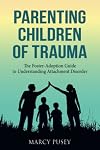
Therapist and foster-adoptive mom Marcy Pusey addresses various types of attachment disorder, why children with that may be triggered by a parental figure showing consistent love, and assures parents that they are not alone in experiencing a difficult situation.
As I begin fostering, I am reading a variety of books to help address the types of behaviors and challenges I might face as a foster (and maybe eventually adoptive) parent. This was one a therapist recommended for me to learn about show more attachment disorders. It was... fine. The first part details the types of disorders one might encounter, including reactive attachment disorder (RAD), Disinhibited Social Engagement Disorder (DSED), PTSD and complex PTSD, and Acute Stress Disorders, and other adjustment disorders. This was difficult to read, even though it was primarily just a list of bullet points (they read as if they were lifted directly from DSM-V, though DSED isn't currently categorized in that) and describing the type of feelings and behaviors experienced by children with these disorders, and why they would have trouble attaching. The next part leans in hard to the impacts that dealing with a child with attachment disorder (AD) can have - on you, your marriage, and your kids without AD. And the last couple of chapters offer some resources and a lot of caveats that, well, there is no long-term cure.
Pusey comes at it from the perspective of someone in counseling and as a Christian, and she leans into faith in Jesus as one of the potential helps for a child with attachment disorder, at one point getting so preachy that even I as a fellow Christian felt a little turned off. The book is published by Pusey's own publishing company and has some spelling errors. I personally would have liked more time spent on the experiences of a child and more practical examples of what I as a foster parent could do to validate a child's experiences and love them anyways. But unfortunately there just aren't a lot of options for books addressing these topics and trauma-informed parenting. The main takeaways I'll have are that I am not alone, parenting a kid with AD may look a little different, and lots of love will never be a cure-all. For that, it was a useful, if imperfect read. Guardedly recommended. show less
As I begin fostering, I am reading a variety of books to help address the types of behaviors and challenges I might face as a foster (and maybe eventually adoptive) parent. This was one a therapist recommended for me to learn about show more attachment disorders. It was... fine. The first part details the types of disorders one might encounter, including reactive attachment disorder (RAD), Disinhibited Social Engagement Disorder (DSED), PTSD and complex PTSD, and Acute Stress Disorders, and other adjustment disorders. This was difficult to read, even though it was primarily just a list of bullet points (they read as if they were lifted directly from DSM-V, though DSED isn't currently categorized in that) and describing the type of feelings and behaviors experienced by children with these disorders, and why they would have trouble attaching. The next part leans in hard to the impacts that dealing with a child with attachment disorder (AD) can have - on you, your marriage, and your kids without AD. And the last couple of chapters offer some resources and a lot of caveats that, well, there is no long-term cure.
Pusey comes at it from the perspective of someone in counseling and as a Christian, and she leans into faith in Jesus as one of the potential helps for a child with attachment disorder, at one point getting so preachy that even I as a fellow Christian felt a little turned off. The book is published by Pusey's own publishing company and has some spelling errors. I personally would have liked more time spent on the experiences of a child and more practical examples of what I as a foster parent could do to validate a child's experiences and love them anyways. But unfortunately there just aren't a lot of options for books addressing these topics and trauma-informed parenting. The main takeaways I'll have are that I am not alone, parenting a kid with AD may look a little different, and lots of love will never be a cure-all. For that, it was a useful, if imperfect read. Guardedly recommended. show less
Statistics
- Works
- 6
- Members
- 48
- Popularity
- #325,719
- Rating
- 4.1
- Reviews
- 1
- ISBNs
- 7