
Scott Freeman (3)
Author of Saving Tarboo Creek: One Family’s Quest to Heal the Land
For other authors named Scott Freeman, see the disambiguation page.
Works by Scott Freeman
Tagged
Common Knowledge
There is no Common Knowledge data for this author yet. You can help.
Members
Reviews
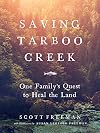
Intertwined with anecdotes about the author's family efforts to restore a stream on their property in the Pacific Northwest are reflections about ecology, humanity's impact on the land, global warming and those that try to take care of nature. It is not an overly optimistic book, the author stresses that new generations (starting with that of his own children) will live a dramatically different life unless the population as a whole undergoes drastic lifestyle changes. However, Freeman also show more highlights possible actions to mitigate ecological impact, by his own example (one that is in turn inspired by a relative who was a pioneer of the American conservation movement) and ending the book with advice on how readers can help prepare a better future for their children. Not only is this an excellent book for whoever cares about the environment and wants to learn more about practical actions to take better care of it, but it might even speak to those who don't feel that concerned, as Freeman does an excellent job explaining why a healthy salmon, or beaver, or frog is important to the whole community.
The copy I reviewed was an advance reading copy and therefore was missing some of the final illustrations, but I often wished the book included a map of the revitalized area, which would have helped visualize the narrative better. show less
The copy I reviewed was an advance reading copy and therefore was missing some of the final illustrations, but I often wished the book included a map of the revitalized area, which would have helped visualize the narrative better. show less
 This review was written for LibraryThing Early Reviewers.
Saving Tarboo Creek: One Family’s Quest to Heal the Land begins when the Freemans bought eighteen acres along Tarboo Creek with the intention of restoring it so that it once again will be home to salmon and a diverse and healthy forest. This book is a combination of memoir and exploration of restoring the land. Scott Freeman is a biology lecturer at the University of Washington, so he brings a scientist’s mind to this endeavor and that sensibility fills the book with the spirit of show more inquiry that made is engaging from beginning to end.
With that kind of inquiry, the process of choosing which trees to plant is not just finding out what used to grow there and replicating the past. The climate is changing, so it is important to choose trees that can thrive now and in the coming warmer and drier climate of the future. The biologist’s mind notes the growth of the forest, the success or failure of some species and notices the unseen, things like the soil and the fungi and how they work to help feed the trees.
The book is illustrated by Freeman’s wife who is also the granddaughter of Aldo Leopold, the author of A Sand County Almanac whom many consider the father of wildlife ecology. He developed the concept of the land ethic. The Freemans try to live that life in an ethical relationship between people and the land. It’s a family tradition.
I confess, the reason I entered the drawing for this book, is that I thought it would be a great book for a friend of mine who volunteers to plant trees. I thought it would be okay, but I had no idea how much I would enjoy it myself. Freeman’s writing style is excellent. He explains the science with clarity and an ear for the beauty of language.
Freeman notes the challenges of the future, population growth, mass extinction, climate change, but without hyperbole and with recognition that we can change if we choose. He notes the hypocrisy of asking developing countries to do as we say, not as we did and suggests that we stop seeing our problems in such binary terms. That perhaps we can do well economically and conserve the environment.
This book is beautifully written and I recommend it enthusiastically.
Saving Tarboo Creek will be published on January 3rd. I received an advance reading copy from the publisher through a Shelf Awareness drawing.
https://tonstantweaderreviews.wordpress.com/2017/12/16/9781604697940/ show less
With that kind of inquiry, the process of choosing which trees to plant is not just finding out what used to grow there and replicating the past. The climate is changing, so it is important to choose trees that can thrive now and in the coming warmer and drier climate of the future. The biologist’s mind notes the growth of the forest, the success or failure of some species and notices the unseen, things like the soil and the fungi and how they work to help feed the trees.
The book is illustrated by Freeman’s wife who is also the granddaughter of Aldo Leopold, the author of A Sand County Almanac whom many consider the father of wildlife ecology. He developed the concept of the land ethic. The Freemans try to live that life in an ethical relationship between people and the land. It’s a family tradition.
I confess, the reason I entered the drawing for this book, is that I thought it would be a great book for a friend of mine who volunteers to plant trees. I thought it would be okay, but I had no idea how much I would enjoy it myself. Freeman’s writing style is excellent. He explains the science with clarity and an ear for the beauty of language.
Freeman notes the challenges of the future, population growth, mass extinction, climate change, but without hyperbole and with recognition that we can change if we choose. He notes the hypocrisy of asking developing countries to do as we say, not as we did and suggests that we stop seeing our problems in such binary terms. That perhaps we can do well economically and conserve the environment.
This book is beautifully written and I recommend it enthusiastically.
Saving Tarboo Creek will be published on January 3rd. I received an advance reading copy from the publisher through a Shelf Awareness drawing.
https://tonstantweaderreviews.wordpress.com/2017/12/16/9781604697940/ show less
“Planting a tree is a way to apply hope. In restoration is the preservation of the world.”
“An ecosystem is a tapestry; climate change pulls at the threads.”
“In just the past thousand years, our increased population and ability to alter habitats around the globe has hit the earth like an asteroid.”
Tarboo Creek, in Washington’s Olympic Peninsula, was once a thriving salmon run but over time, due to erosion, development and neglect, it became a damaged trickle. The Freeman family, show more authors of this book, decided to purchase a large plot of land that the Tarboo traversed and then to restore this creek to it's former glory, making it habitable for the spawning salmon. It was a huge under-taking but one filled with many rewards, for all involved.
The author packs a lot into these 200 pages and your level of interest in nature, biology and ecology, will determine what you will take out of this. It gets very detailed, (my eyes came close to glossing over a time or two) but I learned a whole lot about trees and tree restoration, the hardy lives of salmon and the impact of deforestation and climate change on our planet. I feel it is a timely and important read. show less
“An ecosystem is a tapestry; climate change pulls at the threads.”
“In just the past thousand years, our increased population and ability to alter habitats around the globe has hit the earth like an asteroid.”
Tarboo Creek, in Washington’s Olympic Peninsula, was once a thriving salmon run but over time, due to erosion, development and neglect, it became a damaged trickle. The Freeman family, show more authors of this book, decided to purchase a large plot of land that the Tarboo traversed and then to restore this creek to it's former glory, making it habitable for the spawning salmon. It was a huge under-taking but one filled with many rewards, for all involved.
The author packs a lot into these 200 pages and your level of interest in nature, biology and ecology, will determine what you will take out of this. It gets very detailed, (my eyes came close to glossing over a time or two) but I learned a whole lot about trees and tree restoration, the hardy lives of salmon and the impact of deforestation and climate change on our planet. I feel it is a timely and important read. show less
It took me a little while to get into this book, but I really enjoyed it once I did. It's inspiring to read a personal conservation story (and as another midwesterner transplanted to the Pacific NW, the author was very relatable). The book finishes with a call to a more sustainable and down-to-earth way of living. I will be recommending this to others.
This review was written for LibraryThing Early Reviewers.Statistics
- Works
- 1
- Members
- 68
- Popularity
- #253,410
- Rating
- 4.1
- Reviews
- 14
- ISBNs
- 139
- Languages
- 3
