

Simone Atangana Bekono
Author of Confrontations
About the Author
Works by Simone Atangana Bekono
Prince Julian Manevra 1 copy
Associated Works
Tagged
Common Knowledge
- Legal name
- Atangana Bekono, Simone
- Birthdate
- 1991
- Gender
- female
- Nationality
- Netherlands
- Places of residence
- Dongen, The Netherlands
Members
Reviews
3.75⭐️
“Here the idea persists that if you admit that you’ve done something wrong and then show remorse because you’ve had a difficult childhood, or a trauma, or are different from the rest, you will rehabilitate better. That’s a word I find really ridiculous, rehabilitate. As if there’s such a thing as a possibility that you could ‘return to a former condition.’ That’s what it says in the dictionary. Return to a former condition. As if time allows, as if time pauses and show more will wait for you while you get your shit in order. Time does what it wants and you fight against it.”
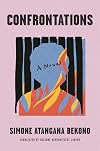
Confrontations by Simone Atangana Bekono (translated by Suzanne Heukensfeldt Jansen) revolves around sixteen-year-old Salomé Atabong, daughter of a Cameroonian father and a Dutch mother, living in the Netherlands sentenced to six months in juvenile detention for a violent act, the details of which are gradually revealed. The narrative follows Salome as she comes to terms with the consequences of act of the violence she committed, her resistance to being “rehabilitated”, her equations with her family members, and her friction with the psychologist she perceives as racist on account of insensitive remarks made while a participant in a reality show some years. Complicating matters further for her are her father’s terminal diagnosis and the treatment meted out to her and her fellow detainees by the authorities of “the Donut” as they refer to the detention facility.
With sparse yet poetic prose, sharp writing, and complex characters, this novel is an intense read. The author does a remarkable job of depicting Salomé’s complexity and confusion. Her underlying anger toward the world around her is palpable, as is her pain. In the course of her journey of self-exploration, Salome ponders over the circumstances that led her to act the way she did, attempting to analyze her motivations, her sense of self-worth and her plans for the future. The story touches upon themes such as racism and racial identity, societal expectations and stereotyping, bullying and violence, detention and rehabilitation of minors and terminal illness, among others. The narrative is a tad disjointed and constantly switches between past and present (often abruptly), which takes a bit of time to get used to but overall, I found this to be a powerful, thought-provoking read.
Many thanks to Bloomsbury USA for the digital review copy via NetGalley. All opinions expressed in this review are my own. show less
“Here the idea persists that if you admit that you’ve done something wrong and then show remorse because you’ve had a difficult childhood, or a trauma, or are different from the rest, you will rehabilitate better. That’s a word I find really ridiculous, rehabilitate. As if there’s such a thing as a possibility that you could ‘return to a former condition.’ That’s what it says in the dictionary. Return to a former condition. As if time allows, as if time pauses and show more will wait for you while you get your shit in order. Time does what it wants and you fight against it.”
Confrontations by Simone Atangana Bekono (translated by Suzanne Heukensfeldt Jansen) revolves around sixteen-year-old Salomé Atabong, daughter of a Cameroonian father and a Dutch mother, living in the Netherlands sentenced to six months in juvenile detention for a violent act, the details of which are gradually revealed. The narrative follows Salome as she comes to terms with the consequences of act of the violence she committed, her resistance to being “rehabilitated”, her equations with her family members, and her friction with the psychologist she perceives as racist on account of insensitive remarks made while a participant in a reality show some years. Complicating matters further for her are her father’s terminal diagnosis and the treatment meted out to her and her fellow detainees by the authorities of “the Donut” as they refer to the detention facility.
With sparse yet poetic prose, sharp writing, and complex characters, this novel is an intense read. The author does a remarkable job of depicting Salomé’s complexity and confusion. Her underlying anger toward the world around her is palpable, as is her pain. In the course of her journey of self-exploration, Salome ponders over the circumstances that led her to act the way she did, attempting to analyze her motivations, her sense of self-worth and her plans for the future. The story touches upon themes such as racism and racial identity, societal expectations and stereotyping, bullying and violence, detention and rehabilitation of minors and terminal illness, among others. The narrative is a tad disjointed and constantly switches between past and present (often abruptly), which takes a bit of time to get used to but overall, I found this to be a powerful, thought-provoking read.
Many thanks to Bloomsbury USA for the digital review copy via NetGalley. All opinions expressed in this review are my own. show less
If it were as simple as leaving the devil over ‘there’ and allowing it to remain where it is, exploration of foreign lands would not exist.
Societies in general are complex, and to a noticeable extent, forcibly enmeshed, because differences, although appreciated, often expose shadowed ghosts. This is especially true when displacement results in homogenous environments becoming more diverse.
If violence isn’t the answer, bullying should be punishable, and because it isn’t, retaliation show more shouldn’t be surprising. With intensity, readers are introduced to Salomé Atabong, a mixed-race Dutch girl of Cameroonian descent. A high-achieving student at a private school, she is further stripped of agency when sentenced to detention at a juvenile facility.
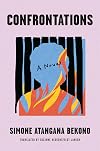
An English translation, 'Confrontations,' addresses intergenerational trauma caused by race-based alienation and gender-based injustice. Set in circular surroundings, it’s a coming-of-age story that critiques structural violence and the support systems that allow it to escalate when aimed at girls and women.
Written in lyrical prose by Simone Atangan Bekono, it offers an unfiltered exploration of how silence functions as a form of criminalization and how violence acts as a reflexive act of resistance. This title will challenge those who deny the existence of institutionalized microaggressions.
Structured mainly as a non-linear, present-tense internal dialogue, the author employs a reflective tone to evoke a sense of isolation, uses bold images to symbolize freedom and assimilation, applies achromatic colors to express resilience and trauma, and metaphorically portrays isolated natural environments as the body politic responsible for enacting harmful immigration policies.
With less emphasis on teen angst, this work offers an intimate look into juvenile incarceration as a clear example of disposability, and readers will identify alienation and marginalization as forms of tactical oppression. Unique in its stream-of-consciousness presentation of rational anger, it also accurately depicts systemic attacks against women of color.
Reframing anger as agency and reclaiming space, this honest critique of structural sexism also redefines violence as the absurdity linked to refusing to see racialization as supremacist behavior.
An impactful and emotionally raw depiction of institutional indifference, readers prone to misinterpreting their contributions to reactive rage, and others doubtful of the impact of racism on personal identity will not find an embedded social justice message in this work.
Dense yet broad, readers unfamiliar with stylistically disruptive character arcs or those seeking neatly resolved problems might feel restricted. Conversely, those craving realist fiction and others driven by indignation and defiance will breeze through this 179-page debut. show less
Societies in general are complex, and to a noticeable extent, forcibly enmeshed, because differences, although appreciated, often expose shadowed ghosts. This is especially true when displacement results in homogenous environments becoming more diverse.
If violence isn’t the answer, bullying should be punishable, and because it isn’t, retaliation show more shouldn’t be surprising. With intensity, readers are introduced to Salomé Atabong, a mixed-race Dutch girl of Cameroonian descent. A high-achieving student at a private school, she is further stripped of agency when sentenced to detention at a juvenile facility.
An English translation, 'Confrontations,' addresses intergenerational trauma caused by race-based alienation and gender-based injustice. Set in circular surroundings, it’s a coming-of-age story that critiques structural violence and the support systems that allow it to escalate when aimed at girls and women.
Written in lyrical prose by Simone Atangan Bekono, it offers an unfiltered exploration of how silence functions as a form of criminalization and how violence acts as a reflexive act of resistance. This title will challenge those who deny the existence of institutionalized microaggressions.
Structured mainly as a non-linear, present-tense internal dialogue, the author employs a reflective tone to evoke a sense of isolation, uses bold images to symbolize freedom and assimilation, applies achromatic colors to express resilience and trauma, and metaphorically portrays isolated natural environments as the body politic responsible for enacting harmful immigration policies.
With less emphasis on teen angst, this work offers an intimate look into juvenile incarceration as a clear example of disposability, and readers will identify alienation and marginalization as forms of tactical oppression. Unique in its stream-of-consciousness presentation of rational anger, it also accurately depicts systemic attacks against women of color.
Reframing anger as agency and reclaiming space, this honest critique of structural sexism also redefines violence as the absurdity linked to refusing to see racialization as supremacist behavior.
An impactful and emotionally raw depiction of institutional indifference, readers prone to misinterpreting their contributions to reactive rage, and others doubtful of the impact of racism on personal identity will not find an embedded social justice message in this work.
Dense yet broad, readers unfamiliar with stylistically disruptive character arcs or those seeking neatly resolved problems might feel restricted. Conversely, those craving realist fiction and others driven by indignation and defiance will breeze through this 179-page debut. show less

Other than her name seems to suggest Simone Atangana Bekono is a Dutch writer who grew up in the Netherlands. She is one of the most promising new talents, who has already won several prizes for her new poetry and prose work. Her first novel was short-listed for the most prestigious literary proze in the Netherlands, the Libris Literatuurprijs, in 2021.
Zo hoog de zon stond is a short novel. It has an immediate, gripping start. As the simple storty enfolds, there is a dwindling confusion, show more which is central to the story. Dream-like states and alternative states of reality are pack and parcel of fiction throughout literary history. Still, Atangana Bekono approach seems totally original and new, as her story seems to be set in a virtual reality, although this is never explicitly stated.
What makes this short novel so great is that she catches just the right tone to make the excitement, or even addictive attraction to virtual reality real, almost tangible. The novel also catches the tension between of the gap between reality of growing up or living in the Netherlands and a seemingly more glamorous reality elsewhere, although once again there might no be such a gap, all is subtle suggestion.
This was my first reading of a work by Simone Atangana Bekono and I will certainly read more. show less
Zo hoog de zon stond is a short novel. It has an immediate, gripping start. As the simple storty enfolds, there is a dwindling confusion, show more which is central to the story. Dream-like states and alternative states of reality are pack and parcel of fiction throughout literary history. Still, Atangana Bekono approach seems totally original and new, as her story seems to be set in a virtual reality, although this is never explicitly stated.
What makes this short novel so great is that she catches just the right tone to make the excitement, or even addictive attraction to virtual reality real, almost tangible. The novel also catches the tension between of the gap between reality of growing up or living in the Netherlands and a seemingly more glamorous reality elsewhere, although once again there might no be such a gap, all is subtle suggestion.
This was my first reading of a work by Simone Atangana Bekono and I will certainly read more. show less

Vlucht; Dans; Vondst is a small booklet that brings together three very short stories by three new Dutch authors: "Vlucht" by Daphne Huisden, "Dans" by Yael van der Wouden and "Vondst" by Simone Atangana Bekono. The three stories were commissioned on the occasion of an art festival.
Without the context of the festival or an explanatory introduction it is not very clear what the idea behind the stories is and whether they construe a unity. The stories are quite absurd. Each is too short to show more give a good idea of its author. Neither do these fictional stories convey a coherent idea, either in separate form nor together. show less
Without the context of the festival or an explanatory introduction it is not very clear what the idea behind the stories is and whether they construe a unity. The stories are quite absurd. Each is too short to show more give a good idea of its author. Neither do these fictional stories convey a coherent idea, either in separate form nor together. show less
Lists
Awards


You May Also Like
Associated Authors
Statistics
- Works
- 10
- Also by
- 1
- Members
- 132
- Popularity
- #153,554
- Rating
- 3.1
- Reviews
- 12
- ISBNs
- 21
- Languages
- 2