
Lydia Kiesling
Author of The Golden State
About the Author
Image credit: pulled from author's website, lydiakeisling.com
Works by Lydia Kiesling
Tagged
Common Knowledge
- Gender
- female
- Awards and honors
- National Book Foundation, 5 Under 35 Honoree (2018)
- Nationality
- USA
- Birthplace
- USA
- Places of residence
- San Francisco, California, USA
- Map Location
- USA
Members
Reviews
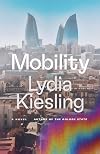
Life did not make sense if it did not have a forward direction, an upward direction, an uplift.
Bunny is a diplomat's daughter, spending her childhood in far-flung places like Athens, Yerevan, and now Baku, Azerbaijan. She's fifteen, an ordinary girl who now attends a boarding school in Connecticut during the year but this summer is stuck in Baku with her older brother and her father, both too busy to spend much time with her. And so she explores the city, develops a crush on the freelance show more journalist with an apartment in the same building, watches soap operas in languages she doesn't understand with another neighbor and is dragged to various embassy events as the country's oil boom explodes and journalists, opportunists and political operatives move in. But Bunny's more concerned with the things a teenager should be concerned with; she remains largely uninterested in the geopolitical jostling.
A decade later and Bunny's living in Texas, working in an administrative job at an oil company. The same influences are at work, but Bunny is earning a living and taking care of her Mom.
Then again, as some of the women reminded their peers during their meetings, "diversity, equity, and inclusion" didn't just mean of skin tones and genders--it meant of ideas! All ideas should be welcome. Ideas, it seemed, were the true diversity, and sometimes seemed to matter more than the other kinds. It was important that no one feel left out, especially the men.
In Mobility, Lydia Kiesling shows how geopolitics and greed mean that when developing nations find oil, the wealth generated is not kept by that country, but is passed around to large oil corporations and various opportunists, and she tells this story through the very ordinary life of an American woman. Kiesling has a rare talent for not only writing about the most ordinary routines, but in making those mundane things fascinating. Bunny works as a proofreader, she attends meetings introducing new computer programs, she attends a wedding of a girl she knew from school, she stays with her mother as her mother fails to move forward after her divorce, she lives in a condo in Texas and is pleased to have a job that pays the rent. It's all so ordinary and familiar (I've worked as a proofreader, I've sat through far too many dull meetings, I've gone to weddings for people I've largely lost touch with) that it should be boring. But by burrowing into the ordinary, Kiesling makes it worthwhile, while all the time subtly reinforcing the larger themes.
This is the second novel by Lydia Kiesling that I've read. I loved her debut novel, The Golden State and found that she's continued to develop as a writer with this new book. I'm excited to see what she writes next. show less
Bunny is a diplomat's daughter, spending her childhood in far-flung places like Athens, Yerevan, and now Baku, Azerbaijan. She's fifteen, an ordinary girl who now attends a boarding school in Connecticut during the year but this summer is stuck in Baku with her older brother and her father, both too busy to spend much time with her. And so she explores the city, develops a crush on the freelance show more journalist with an apartment in the same building, watches soap operas in languages she doesn't understand with another neighbor and is dragged to various embassy events as the country's oil boom explodes and journalists, opportunists and political operatives move in. But Bunny's more concerned with the things a teenager should be concerned with; she remains largely uninterested in the geopolitical jostling.
A decade later and Bunny's living in Texas, working in an administrative job at an oil company. The same influences are at work, but Bunny is earning a living and taking care of her Mom.
Then again, as some of the women reminded their peers during their meetings, "diversity, equity, and inclusion" didn't just mean of skin tones and genders--it meant of ideas! All ideas should be welcome. Ideas, it seemed, were the true diversity, and sometimes seemed to matter more than the other kinds. It was important that no one feel left out, especially the men.
In Mobility, Lydia Kiesling shows how geopolitics and greed mean that when developing nations find oil, the wealth generated is not kept by that country, but is passed around to large oil corporations and various opportunists, and she tells this story through the very ordinary life of an American woman. Kiesling has a rare talent for not only writing about the most ordinary routines, but in making those mundane things fascinating. Bunny works as a proofreader, she attends meetings introducing new computer programs, she attends a wedding of a girl she knew from school, she stays with her mother as her mother fails to move forward after her divorce, she lives in a condo in Texas and is pleased to have a job that pays the rent. It's all so ordinary and familiar (I've worked as a proofreader, I've sat through far too many dull meetings, I've gone to weddings for people I've largely lost touch with) that it should be boring. But by burrowing into the ordinary, Kiesling makes it worthwhile, while all the time subtly reinforcing the larger themes.
This is the second novel by Lydia Kiesling that I've read. I loved her debut novel, The Golden State and found that she's continued to develop as a writer with this new book. I'm excited to see what she writes next. show less
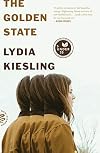
Daphne leaves her unsatisfying administrative job at a San Francisco university to spend a few days with her one-year-old daughter in the California high country. Immigration issues have stranded her husband in Turkey, and a tragic occurrence at her job has left her disoriented. Packing up the house left to her by the recent deaths of her mother and grandparents, she deals with her memories, cares for her daughter, and tries to reconnect with the community she hasn't seen since childhood. show more But there's a lot going on under the surface in this rural town. Daphne finds a friend of sorts in Alice, a somewhat mysterious older woman travelling the area alone.
What impressed me about this book was Lydia Kiesling's ability to write about the everyday tasks of our lives with truth, insight and sly humor. She can write about the tedious yet oddly absorbing and sometimes terrifying routine of caring for a young toddler in a way that brings back my memories of those days. She describes the utterly mundane tasks of an average office job, and also the unwarranted importance given to those tasks, and even the guilt when what seems a simple, meaningless decision goes horribly wrong. But that's not all -- Kiesling also writes about some of the most prominent issues facing us today: our problematic immigration system and the threat of right-wing political radicalism. And she also includes the developing friendship between Daphne and older, somewhat cranky Alice, which goes in several unexpected directions, and even Daphne's adjustment to the grief of losing her mother and grandparents and thus her connection to the area. So many threads to Daphne's story, but they are all thoughtfully and intelligently written and make up a book that really does seem like a slice of life and not just a story. show less
What impressed me about this book was Lydia Kiesling's ability to write about the everyday tasks of our lives with truth, insight and sly humor. She can write about the tedious yet oddly absorbing and sometimes terrifying routine of caring for a young toddler in a way that brings back my memories of those days. She describes the utterly mundane tasks of an average office job, and also the unwarranted importance given to those tasks, and even the guilt when what seems a simple, meaningless decision goes horribly wrong. But that's not all -- Kiesling also writes about some of the most prominent issues facing us today: our problematic immigration system and the threat of right-wing political radicalism. And she also includes the developing friendship between Daphne and older, somewhat cranky Alice, which goes in several unexpected directions, and even Daphne's adjustment to the grief of losing her mother and grandparents and thus her connection to the area. So many threads to Daphne's story, but they are all thoughtfully and intelligently written and make up a book that really does seem like a slice of life and not just a story. show less
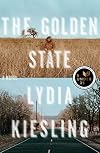
The Golden State by Lydia Kiesling is a recommended debut novel about a young mother on the edge of a breakdown.
Daphne has a 16 month old daughter, Honey, a Turkish husband, Engin, who has been denied reentry to the USA by immigration officials, and a good university job at the Al-Ihsan Foundation for the Study of Islamic Societies and Civilizations in San Francisco when she suddenly decides to pack up a few things for her and Honey, flee San Francisco, and head to the high desert of show more Altavista, California. She inherited a mobile home there that she rarely visits, but her uncle has kept it in good repair. Stressed out by Engin's absence and haunted by the death of a student who was traveling on Institute funds, she thinks she needs an escape, a break to a quiet, simple life. Daphne is on the edge of a breakdown.
The novel follows 10 days in Daphne's life. Parenting alone with a 16 month old, trying to Skype with Engin to maintain their relationship, and filling the time during what feels like endless days, in an environment that is even more isolating for her is a dubious choice that may serve only to increase Daphne's isolation and loneliness. She meets a neighbor, Cindy, who is part of an anti-government, anti-immigration secessionist group, and meets a 92-year-old woman, Alice, who speaks a little Turkish and is visiting Altavista with a plan.
What worked was the raw emotion she captures in Daphne character. You can feel her honesty as she worries about Engin and Honey, and tries to be a good parent. She is struggling to find her way in her isolation. Mothers will recall many of Daphne's struggles with Honey and should be able to relate to the tantrums, the meal choices, nap time woes, and what can feel like endless boring routines involved in caring for a very young child who can't express themselves.
As for the writing - readers will have to be willing to overlook many long, run-on sentences with few commas. Kiesling's writing style may require some readers to pause and reread what they just read due to the aforementioned long run-on sentences. I did so several times, and, honestly, her writing style did begin to grate. The novel also begins to drag a bit as nothing much happens until very late in the narrative. The ending wasn't entirely successful for me.
Disclosure: My review copy was courtesy of Farrar, Straus and Giroux.
http://www.shetreadssoftly.com/2018/09/the-golden-state.html show less
Daphne has a 16 month old daughter, Honey, a Turkish husband, Engin, who has been denied reentry to the USA by immigration officials, and a good university job at the Al-Ihsan Foundation for the Study of Islamic Societies and Civilizations in San Francisco when she suddenly decides to pack up a few things for her and Honey, flee San Francisco, and head to the high desert of show more Altavista, California. She inherited a mobile home there that she rarely visits, but her uncle has kept it in good repair. Stressed out by Engin's absence and haunted by the death of a student who was traveling on Institute funds, she thinks she needs an escape, a break to a quiet, simple life. Daphne is on the edge of a breakdown.
The novel follows 10 days in Daphne's life. Parenting alone with a 16 month old, trying to Skype with Engin to maintain their relationship, and filling the time during what feels like endless days, in an environment that is even more isolating for her is a dubious choice that may serve only to increase Daphne's isolation and loneliness. She meets a neighbor, Cindy, who is part of an anti-government, anti-immigration secessionist group, and meets a 92-year-old woman, Alice, who speaks a little Turkish and is visiting Altavista with a plan.
What worked was the raw emotion she captures in Daphne character. You can feel her honesty as she worries about Engin and Honey, and tries to be a good parent. She is struggling to find her way in her isolation. Mothers will recall many of Daphne's struggles with Honey and should be able to relate to the tantrums, the meal choices, nap time woes, and what can feel like endless boring routines involved in caring for a very young child who can't express themselves.
As for the writing - readers will have to be willing to overlook many long, run-on sentences with few commas. Kiesling's writing style may require some readers to pause and reread what they just read due to the aforementioned long run-on sentences. I did so several times, and, honestly, her writing style did begin to grate. The novel also begins to drag a bit as nothing much happens until very late in the narrative. The ending wasn't entirely successful for me.
Disclosure: My review copy was courtesy of Farrar, Straus and Giroux.
http://www.shetreadssoftly.com/2018/09/the-golden-state.html show less
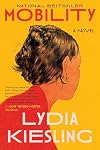
Kiesling’s novel has an unusual focus: a young woman at loose ends. Her temporary work placement at a Texas engineering firm fortuitously provides a route to employment in the oil/energy industry. The book is something of a coming-of-age story, but not quite as much as is advertised, mainly because the central character is incapable of genuine transformation. The raw material just isn’t there.
The reader first meets Elizabeth “Bunny” Glenn in Baku, Azerbaijan in the summer of 1998 show more where her father has recently been stationed as a member of the US Foreign Service. The girl’s mother has returned to Texas to look after her ailing mother, taking the youngest child, “Small Ted”, with her. Fifteen-year-old Bunny remains in Baku with John, her older brother, and their dad.
At no point did I find Bunny likeable or sympathetic. However, the greater problem for me was that she isn’t even interesting. We’re led to believe that either puberty or too much time away from family—among her peer group at an elite New England private school—transformed the once bright, curious, and motivated child into a self-absorbed, boy-crazy adolescent. While her motivated brother joins a running club in Baku, Bunny wanders the streets, pores over fashion magazines, experiments with cosmetics, and surreptitiously smokes. Her mother had been understandably reluctant to leave her unsupervised.
Kiesling follows her protagonist from her teenaged years through to age 68 (the year 2051) when Bunny’s daughter Pamela is about to give birth. The novel provides the reader with a snapshot of the oil industry, its corrupt practices and dark partnership with the US government, the narratives (propaganda) it generates about itself, and the ways in which it has had to pivot and rebrand itself in response to the times. Feminism, climate change (particularly the apocalyptic flooding of recent years), geopolitics, and events of international significance (including Covid) are also explored.
Kiesling’s writing is generally strong and her reach is ambitious. I was interested enough to complete the book, but I did not love it. I’ve already mentioned the problem of Bunny—a dull, superficial, and essentially amoral character, who seems to be adrift for much of the novel. As I said, she didn’t engage me, and I think it was audacious of Kiesling to place this character and her banal existence at the centre of the book. But there are other problems, too. I understand the importance of setting the scene, bringing rather exotic Azerbaijan to life and impressing upon the reader just how much a place changes when major corporations discover its rich resources, but too much detail about Baku’s unusual architecture has been included here. I wish an editor had reined Kiesling in. While Mobility is a stimulating read, its 368-page page count would have benefited from being trimmed by at least a quarter.
Thank you to the publisher and Net Galley for providing me with an advanced reader copy. show less
The reader first meets Elizabeth “Bunny” Glenn in Baku, Azerbaijan in the summer of 1998 show more where her father has recently been stationed as a member of the US Foreign Service. The girl’s mother has returned to Texas to look after her ailing mother, taking the youngest child, “Small Ted”, with her. Fifteen-year-old Bunny remains in Baku with John, her older brother, and their dad.
At no point did I find Bunny likeable or sympathetic. However, the greater problem for me was that she isn’t even interesting. We’re led to believe that either puberty or too much time away from family—among her peer group at an elite New England private school—transformed the once bright, curious, and motivated child into a self-absorbed, boy-crazy adolescent. While her motivated brother joins a running club in Baku, Bunny wanders the streets, pores over fashion magazines, experiments with cosmetics, and surreptitiously smokes. Her mother had been understandably reluctant to leave her unsupervised.
Kiesling follows her protagonist from her teenaged years through to age 68 (the year 2051) when Bunny’s daughter Pamela is about to give birth. The novel provides the reader with a snapshot of the oil industry, its corrupt practices and dark partnership with the US government, the narratives (propaganda) it generates about itself, and the ways in which it has had to pivot and rebrand itself in response to the times. Feminism, climate change (particularly the apocalyptic flooding of recent years), geopolitics, and events of international significance (including Covid) are also explored.
Kiesling’s writing is generally strong and her reach is ambitious. I was interested enough to complete the book, but I did not love it. I’ve already mentioned the problem of Bunny—a dull, superficial, and essentially amoral character, who seems to be adrift for much of the novel. As I said, she didn’t engage me, and I think it was audacious of Kiesling to place this character and her banal existence at the centre of the book. But there are other problems, too. I understand the importance of setting the scene, bringing rather exotic Azerbaijan to life and impressing upon the reader just how much a place changes when major corporations discover its rich resources, but too much detail about Baku’s unusual architecture has been included here. I wish an editor had reined Kiesling in. While Mobility is a stimulating read, its 368-page page count would have benefited from being trimmed by at least a quarter.
Thank you to the publisher and Net Galley for providing me with an advanced reader copy. show less
Lists
Awards


You May Also Like


Statistics
- Works
- 2
- Members
- 343
- Popularity
- #69,542
- Rating
- 3.7
- Reviews
- 15
- ISBNs
- 17