
Trifonia Melibea Obono
Author of La Bastarda
Works by Trifonia Melibea Obono
Associated Works
New Daughters of Africa: An International Anthology of Writing by Women of African Descent (2019) — Contributor — 115 copies, 1 review
Tagged
Common Knowledge
- Birthdate
- 1982-11
- Gender
- female
- Nationality
- Equatorial Guinea
- Birthplace
- Afaetom, Evinayong, Equatorial Guinea
- Associated Place (for map)
- Evinayong, Equatorial Guinea
Members
Reviews
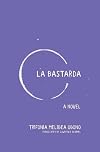
Billed as the first novel by an Equatorial Guinean woman to be translated into English, I was already interested. Then I saw that it was published by Feminist Press, and about an orphaned teen searching for identity in her rigid culture -- well, I hit pre-order immediately, scarce book budget be damned. And I had to read it as soon as it arrived.
Okomo's choices in life are extremely limited. Her mother died while giving birth, so she lives with her grandfather, his two wives, and many of show more their offspring. She is forbidden from knowing who her father is. Now that she's reached the age of menses, she's supposed to be interested in two things: hairdos and makeup, so that she can attract a man and procreate.
Meanwhile, mysterious possibilities exist in the margins, even if at first Okomo doesn't really understand what they are or what makes them indecent -- her uncle, described as a man-woman, and Dina, who goes everywhere with two other girls, spending lots of time in the forest and seeming to possess secret knowledge.
For a long while it seems that all of these characters who refuse to fall in with the restrictive norms of Fang culture and destined to be crushed by them. And there is a moment when everything looks bleak for them. But the story doesn't stop there. Instead, they all take a long, deep look at the toxicity of the culture that is trying to stomp them into place -- and reject it themselves. While their solution isn't a utopia, it's affirming that in the end they refuse to compromise on who they are. show less
Okomo's choices in life are extremely limited. Her mother died while giving birth, so she lives with her grandfather, his two wives, and many of show more their offspring. She is forbidden from knowing who her father is. Now that she's reached the age of menses, she's supposed to be interested in two things: hairdos and makeup, so that she can attract a man and procreate.
Meanwhile, mysterious possibilities exist in the margins, even if at first Okomo doesn't really understand what they are or what makes them indecent -- her uncle, described as a man-woman, and Dina, who goes everywhere with two other girls, spending lots of time in the forest and seeming to possess secret knowledge.
For a long while it seems that all of these characters who refuse to fall in with the restrictive norms of Fang culture and destined to be crushed by them. And there is a moment when everything looks bleak for them. But the story doesn't stop there. Instead, they all take a long, deep look at the toxicity of the culture that is trying to stomp them into place -- and reject it themselves. While their solution isn't a utopia, it's affirming that in the end they refuse to compromise on who they are. show less

storytelling in different parts of the world looks and sounds different, and i suppose that is how it should be. i had trouble relating to the way this story was told, in short bursts, with no detail and no development. the story itself is important for both westerners and equatorial guineans alike to hear, but it's probably more palatable (in style, not in content) to the people in equatorial guinea. for me, the lack of embellishments (by which i mean any detail at all in either language or show more story) was a real drawback. this is straight up what happened, with no commentary, no real explanation, no emotional content, no character development. it doesn't matter what the reader thinks of the characters or the action or anything, because the point of this is just to tell of the existence of queer people. there's no real character development or explored love story between dina and okomo because we don't need to care or even believe in them, we just need to know they exist. in that way, and the straightforward and sparse way that only what happened next is relayed, it's probably more related to a folktale than a novel, which is fine if that's what you're looking for. i wanted more detail about just about everything, and found it generally unsatisfying. but it also tells a perspective that i'd never heard before - it's only the first book translated into english by a woman from equatorial guinea (and only the second book overall) and for that i was so excited and ready to be exposed to something new. which i was, and for that, i'm grateful. i find it hard to rate because of these conflicting feelings about it but in the end don't feel like i learned all that much about the culture or place, and nothing at all about the characters. show less
3.5 stars
This novella is the first book by an Equatorial Guinean woman to be translated into English. It's a very important book, one that tells the story of Okomo, a girl living with her grandparents since the death of her mother and who searches for her father, having been branded "la bastarda" for being born out of wedlock, and finding a place for herself as a lesbian in a society that reacts to her identity by either cloaking it with invisibility and ignoring its existence or trying to show more change it through violence.
The plots to books as short as this one can't really be discussed without giving too much away. However this was a fantastic read exploring gender norms, sexism, homophobia and community. show less
This novella is the first book by an Equatorial Guinean woman to be translated into English. It's a very important book, one that tells the story of Okomo, a girl living with her grandparents since the death of her mother and who searches for her father, having been branded "la bastarda" for being born out of wedlock, and finding a place for herself as a lesbian in a society that reacts to her identity by either cloaking it with invisibility and ignoring its existence or trying to show more change it through violence.
The plots to books as short as this one can't really be discussed without giving too much away. However this was a fantastic read exploring gender norms, sexism, homophobia and community. show less
This is a really great queer, feminist novella. The entire story is less than 100 pages, but it never felt rushed. There's a happy ending (although there's still a lot of unhappiness as well). I'm a big fan of short, translated literature from other cultures and this basically checked all the boxes for me.
Lists
Awards


You May Also Like
Associated Authors
Statistics
- Works
- 4
- Also by
- 1
- Members
- 127
- Popularity
- #158,247
- Rating
- 3.4
- Reviews
- 7
- ISBNs
- 5
- Languages
- 1