
Amina Akhtar
Author of Almost Surely Dead
Works by Amina Akhtar
Tagged
Common Knowledge
- Birthdate
- unknown
- Gender
- female
- Education
- New York University
- Agent
- Chris Bucci
- Nationality
- USA
- Places of residence
- New York, New York, USA
- Associated Place (for map)
- New York, USA
Members
Reviews
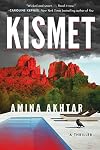
There are some books that you know, from the first few pages, are your sort of book, in the same way that you recognise when you've met one of those rare individuals whose company you will enjoy because you share a way of looking at the world. For me, Kismet was one of those books. Here's what I wrote when I was only 15% in:
"I think this is going to be fun. I like the storytelling style - light touches, swift impressions, a bit of humour, a bit of angst. The set up of a newly self-empowered show more American Born Pakistani woman, raised in New York by her abusive, predatory aunt and now following her new, rich white friend and Life Coach to Sedona to become part of the 'Wellness through crystals, yoga and mediation' culture, provides fertile ground. And those ravens..."
To my surprise, the book had a lot more to it than I'd expected and was a lot stranger than the publisher's summary suggested.
At the start, I thought I was reading a well-observed, low-key satire giving an American-born Pakistani woman's take on being the only brown woman living in a town obsessed with mystical energies and wellness but where, despite Rumi quotes on the wall and the ubiquitous use of namaste (usually mispronounced) as a greeting, explaining that you are Muslim and Pakistani and not Hindu and Indian earns you suspicion (Are you one of the bad Muslims?) and confusion (There's a difference?).
O.K, the opening scene did involve the discovery of predated, dismembered body parts, displayed like a piece of art within decomp smelling distance of a hiking trail, but I was more focused on our heroine, Ronnie's, discomfort at being in the outdoors and having to hike up hill than I was with the whole severed head thing.
It was only when I got to the first passages in the Before timeline that described Ronnie's life with the tyrannical, unloving aunt who raised her after the sudden death of both Ronnie's parents, that I realised that this wasn't going to be just a comedy of manners. Ronnie was more than a mirror to hold up to a town that didn't recognise either its privilege or its prejudice. She was a woman with scars and secrets and a lot of practice in hiding both from the people around her.
Then there were the ravens amping up the woo-woo factor into something that you'd expect to find in a horror novel rather than a thriller. If the ravens work for you, the book will work for you. If you can open your imagination wide enough to let the ravens in, you're in for a great read. If they just press your WTF? button and get in your way, this probably isn't the book for you. What I liked most about the ravens was that I started off seeing them as possible portents or maybe signs of mental illness and ended up seeing them as, well, ravens. You know - smart birds with sharp beaks and wicked talons that mob animals and people that they don't like.
Kismet is a decent thriller that ticks the boxes for a serial killer story: highish body count, gruesome and varied ways of killing, tension around who the next victim will be and tantalising hints at who the killer is. The pacing works and the ending is a doozy.
It's also an amusing satire: a witty fun read, that holds that holy trinity of unconscious entitlement, cultural insulation and racism up to the light and makes fun of it without diminishing its inherent nastiness or its violent consequences.
Best of all though, Kismet is an unashamedly gothic book. It thinks big, dark, bold thoughts and dares you to keep up.
I had a great time with this book. I hope it finds an audience who will love it as much as I do. show less

So the overall plot of this book is an interesting magical-realism psychological thriller well worth the time and effort. But my absolute favorite thing about this book is the way the author absolutely reams the “white women with vocal fry and quirky attitudes milk the stories of dead and missing women for podcasts and cash” genre, using a podcast investigation into the main character’s disappearance to both drive the narrative AND zoom in on the worst of the exploitative true crime show more podcast genre. Incredible. Worth it just for that, but the whole book is solid. show less
I enjoyed Amina Akhtar's 'Kismet', a clever, witty gothic thriller that kept me turning the pages, so I was keen to try 'Almost Surely Dead', especially as it was described as a psychological thriller with some supernatural elements.
The opening scene, which was an attempt on the life of the main character, Dunia Ahmed, was beautifully done: immediately immersive, exciting, tense and intriguing. If this opening had been a series pilot, I'd have signed up to binge-watch the next three episodes show more immediately.
I liked the interweaving of the story of five-year-old Dunia with the Dunia in her thirties timeline. The 'voice' given to young Dunia was engaging and the events, filtered through the perceptions of a child, were intriguing.
Initially, I thought the addition of a present-day podcast taking a retrospective view of the events being described in the older Dunia story was a good way of increasing the tension by planting doubt and foreshadowing. Personally, I dislike true crime podcasts and this podcasting pair reminded of all the reasons I don't listen to them.
For the first third of the book, things were going reasonably well. There'd been a second attempt on Dunia's life, she was surrounded by people who were hard to trust and everything I learned about her childhood suggested that I'd be bumping into the supernatural or at least the very strange, pretty soon.
By the halfway mark, things were going less well. For me, the tension dissipated. I should have been turning pages more eagerly than I was. Partly, that was because I wasn't invested in the grown-up version of Dunia. There didn't seem to be much about her to hold onto. She was passive, dependent and insecure. That matched well with her backstory but it didn't make me cheer her on. Shortly before I abandoned the book, Dunia was taking self-defence classes and telling herself she was a survivor, not a victim. But I didn't believe her. Maybe, in the second half of book, she comes into her power and takes control of her life but I wasn't sure that I'd believe that either.
The podcast also started to irritate me. To me, it felt like a tease that was interupting the story and slowing it down. The effect on me was to lower the tension in the story.
I hesitated to set the book aside when I had less than half of it to go. I'd have liked to have found out if was right in my guesses about what was going on and who the bad guys were but I found that I didn't care enough about what happened to Dunia to stick around and find out.
This is a book with a lot of potential and your reading experience may be different than mine. If you read it and enjoy it, please share your thoughts here or send me a link to your review. show less
The opening scene, which was an attempt on the life of the main character, Dunia Ahmed, was beautifully done: immediately immersive, exciting, tense and intriguing. If this opening had been a series pilot, I'd have signed up to binge-watch the next three episodes show more immediately.
I liked the interweaving of the story of five-year-old Dunia with the Dunia in her thirties timeline. The 'voice' given to young Dunia was engaging and the events, filtered through the perceptions of a child, were intriguing.
Initially, I thought the addition of a present-day podcast taking a retrospective view of the events being described in the older Dunia story was a good way of increasing the tension by planting doubt and foreshadowing. Personally, I dislike true crime podcasts and this podcasting pair reminded of all the reasons I don't listen to them.
For the first third of the book, things were going reasonably well. There'd been a second attempt on Dunia's life, she was surrounded by people who were hard to trust and everything I learned about her childhood suggested that I'd be bumping into the supernatural or at least the very strange, pretty soon.
By the halfway mark, things were going less well. For me, the tension dissipated. I should have been turning pages more eagerly than I was. Partly, that was because I wasn't invested in the grown-up version of Dunia. There didn't seem to be much about her to hold onto. She was passive, dependent and insecure. That matched well with her backstory but it didn't make me cheer her on. Shortly before I abandoned the book, Dunia was taking self-defence classes and telling herself she was a survivor, not a victim. But I didn't believe her. Maybe, in the second half of book, she comes into her power and takes control of her life but I wasn't sure that I'd believe that either.
The podcast also started to irritate me. To me, it felt like a tease that was interupting the story and slowing it down. The effect on me was to lower the tension in the story.
I hesitated to set the book aside when I had less than half of it to go. I'd have liked to have found out if was right in my guesses about what was going on and who the bad guys were but I found that I didn't care enough about what happened to Dunia to stick around and find out.
This is a book with a lot of potential and your reading experience may be different than mine. If you read it and enjoy it, please share your thoughts here or send me a link to your review. show less
Anya St. Clair is clawing her way to the top of the fashion industry as a writer. She needs to be just a little bit thinner and prettier to make it to the next level, being invited to the most exclusive parties and fashion shows with front row access. The person she simultaneously puts on a pedestal and identifies as a rival is the flawless and beautiful Sarah Taft. Success and fame come to Sarah effortlessly while Any works hard to fall short. Anya wants to be her best friend, be her, and show more destroy her all that the same time. To claw her way to the top, she has to take the cutthroat nature of industry literally.
#FashionVictim is kind of like You meets The Devil Wears Prada with the dark humor and social commentary of American Psycho. Everything is pitch perfect, hilarious, and biting. Anya St. Clair seems like a struggling fashion writer at first. Her name is never recognized or found on a list right away and her seat is never in the front. She's tagged in hideous Instagram pictures and constantly teased about her weight. I thought I knew what to expect until she had visions of an assistant with a shard of glass in her eye that turned into a real murder. Anya decides to solve her work problems with murder. Toss in her very unhealthy love/hate obsession with Sarah, the woman whose every move is front page fashion news, and things couldn't be more uncomfortable.
As she spirals out of control, Anya still completely follows the fashion industry and their ridiculous expectations. She doesn't really fit in, but she's willing to break herself to do so. Over the course of the novel, Anya's troubled background and delusions become more apparent. It starts with small comments like her recognizing the sound of bones breaking to more obvious things like being annoyed with typical police questioning. Her delusions include hallucinating her victims around her and considering the police investigator an interested suitor. The story bounces from her normal work experiences to her creating obsessive collages to her carrying out her planned murders. It plays out like a slasher film from the perspective of the killer with a large dose of black humor. Every detail drew me in and proved to be different than other killers.
The fashion industry comes out looking pretty terrible here. Everything is extremely superficial and nothing is based on merit. People only care about weight, fashion labels, and accessories. Conversations are riddled with backhanded comments, cruel gossip, and vapid subjects. All out screaming is only acceptable at very top along with outright abusive treatment. The book also touches on institutionalized racism within the industry that has companies not wanting to be branded "ethnic" and hiring one person of color per department to basically not be sued. When the body count piles up, most people aren't bothered. Sarah makes particularly cruel comments about the murder victims, which makes me root more for Anya even though she's a literal murderer.
I read #FashionVictim in a day because the story just grabbed me and ran. The world of fashion felt alien and cruel, not too different from Anya's twisted mind. With both, certain people have no value and are treated accordingly whether that's screaming and basically being treated like a slave or murder. This book worked for me on every level. It's a biting commentary of the fashion industry that brings in pitch black comedy. I would love to see it as film because it's untreaded waters and could be super fun. Highly recommended. show less
#FashionVictim is kind of like You meets The Devil Wears Prada with the dark humor and social commentary of American Psycho. Everything is pitch perfect, hilarious, and biting. Anya St. Clair seems like a struggling fashion writer at first. Her name is never recognized or found on a list right away and her seat is never in the front. She's tagged in hideous Instagram pictures and constantly teased about her weight. I thought I knew what to expect until she had visions of an assistant with a shard of glass in her eye that turned into a real murder. Anya decides to solve her work problems with murder. Toss in her very unhealthy love/hate obsession with Sarah, the woman whose every move is front page fashion news, and things couldn't be more uncomfortable.
As she spirals out of control, Anya still completely follows the fashion industry and their ridiculous expectations. She doesn't really fit in, but she's willing to break herself to do so. Over the course of the novel, Anya's troubled background and delusions become more apparent. It starts with small comments like her recognizing the sound of bones breaking to more obvious things like being annoyed with typical police questioning. Her delusions include hallucinating her victims around her and considering the police investigator an interested suitor. The story bounces from her normal work experiences to her creating obsessive collages to her carrying out her planned murders. It plays out like a slasher film from the perspective of the killer with a large dose of black humor. Every detail drew me in and proved to be different than other killers.
The fashion industry comes out looking pretty terrible here. Everything is extremely superficial and nothing is based on merit. People only care about weight, fashion labels, and accessories. Conversations are riddled with backhanded comments, cruel gossip, and vapid subjects. All out screaming is only acceptable at very top along with outright abusive treatment. The book also touches on institutionalized racism within the industry that has companies not wanting to be branded "ethnic" and hiring one person of color per department to basically not be sued. When the body count piles up, most people aren't bothered. Sarah makes particularly cruel comments about the murder victims, which makes me root more for Anya even though she's a literal murderer.
I read #FashionVictim in a day because the story just grabbed me and ran. The world of fashion felt alien and cruel, not too different from Anya's twisted mind. With both, certain people have no value and are treated accordingly whether that's screaming and basically being treated like a slave or murder. This book worked for me on every level. It's a biting commentary of the fashion industry that brings in pitch black comedy. I would love to see it as film because it's untreaded waters and could be super fun. Highly recommended. show less
Awards

You May Also Like


Associated Authors
Statistics
- Works
- 3
- Members
- 539
- Popularity
- #46,219
- Rating
- 3.2
- Reviews
- 30
- ISBNs
- 16