

Judea Pearl
Author of The Book of Why: The New Science of Cause and Effect
About the Author
Judea Pearl is a professor of computer science and statistics at UCLA, winner of the 2011 Turing Award, and the author of three classic technical books on causality. He lives in Los Angeles, California. Dana MacKenzie is an award-winning science writer and the author of The Big Splat, or How Our show more Moon Came to Be. He lives in Santa Cruz, California. show less
Image credit: Judea Pearl at the 2013 Conference on Neural Information Processing Systems. Better Than Bacon
Works by Judea Pearl
I Am Jewish: Personal Reflections Inspired by the Last Words of Daniel Pearl (2004) 250 copies, 3 reviews
Probabilistic Reasoning in Intelligent Systems: Networks of Plausible Inference (1988) 146 copies, 1 review
The Book of What 1 copy
The Book of Who 1 copy
Tagged
Common Knowledge
- Birthdate
- 1936-09-04
- Gender
- male
- Education
- Technion (B.S.) (electrical engineering) (1960)
Newark College of Engineering (electrical engineering) (1961)
Rutgers University (physics)
Polytechnic Institute of Brooklyn (Ph.D.) (electrical engineering) (1965) - Occupations
- electrical engineer
computer scientist - Organizations
- IEEE (Fellow ∙ 1988)
American Association of Artificial Intelligence (Fellow ∙ 1990)
National Academy of Engineering (1995)
Spanish Academy of Engineering (Corresponding Member ∙ 2002)
American Academy of Arts and Sciences (2012)
Cognitive Science Society (Fellow ∙ 2011) (show all 7)
University of California, Los Angeles - Awards and honors
- Lakatos Award (2001)
Allen Newell Award (2003)
Benjamin Franklin Medal (Computers and Cognitive Science, 2008)
David E. Rumelhart Prize (2011)
Turing Award (2011)
Harvey Prize (2012) - Relationships
- Pearl, Daniel (son)
- Nationality
- Israel
USA - Birthplace
- Tel Aviv, Palestine
- Associated Place (for map)
- Tel Aviv, Palestine
Members
Reviews
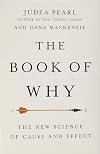
This is an engaging, well articulated discussion of causal inference - what it is, what the available tools are (RCTs, IVs, matching, etc), how they have changed over the years, and how they could be improved. The bits that tell the history of causal inference are especially illuminating; I learned a lot of stats in grad school but very little about the struggles and accidents that produced the tools I learned. Pearl helps put much of that into context.
Now, Pearl's intended audience is show more clearly the machine learning community. Much of what he says will not sound particularly Earth-shattering to people in (or from) the social sciences. "You can't learn causality from data alone, you need a model!" is one of the book's core messages. It's hard to see an economist or political scientist disagreeing with it. You come up with a theory, you think up its observable implications, you test them. Even Pearl's proposal that we use mediation analysis won't sound exactly novel. Social scientists have been doing that, they just don't use that name for it (they call it "testing the theory's microfoundations"). Now, having abandoned political science and lived among the machine learning people for four years now, I can see how Pearl's message is important to his intended audience. And social scientists should read the book too because it intelligently discusses the limitations of tools like RCTs and matching.
In the end what Pearl proposes - that we use our knowledge of how the world works in order to formulate and test hypotheses - may turn out to be (deservedly) influential in the machine learning community, but it won't help fix the core problem with the social sciences, i.e., that social scientists can always twist their hypotheses - not to mention the very questions they ask - to accomodate their pet world views. And when the Democrat/Republican ratio is 6:1, as it is in political science, we can't trust that people will keep each other honest - they won't. Pearl discusses in passing the possibility that some day we may have machine learning algorithms capable of producing their own causal models. Maybe then the social sciences will be worth the money they cost taxpayers. show less
Now, Pearl's intended audience is show more clearly the machine learning community. Much of what he says will not sound particularly Earth-shattering to people in (or from) the social sciences. "You can't learn causality from data alone, you need a model!" is one of the book's core messages. It's hard to see an economist or political scientist disagreeing with it. You come up with a theory, you think up its observable implications, you test them. Even Pearl's proposal that we use mediation analysis won't sound exactly novel. Social scientists have been doing that, they just don't use that name for it (they call it "testing the theory's microfoundations"). Now, having abandoned political science and lived among the machine learning people for four years now, I can see how Pearl's message is important to his intended audience. And social scientists should read the book too because it intelligently discusses the limitations of tools like RCTs and matching.
In the end what Pearl proposes - that we use our knowledge of how the world works in order to formulate and test hypotheses - may turn out to be (deservedly) influential in the machine learning community, but it won't help fix the core problem with the social sciences, i.e., that social scientists can always twist their hypotheses - not to mention the very questions they ask - to accomodate their pet world views. And when the Democrat/Republican ratio is 6:1, as it is in political science, we can't trust that people will keep each other honest - they won't. Pearl discusses in passing the possibility that some day we may have machine learning algorithms capable of producing their own causal models. Maybe then the social sciences will be worth the money they cost taxpayers. show less
So Dr. Pearl won the Turing Prize, which I think means he convinced a computer that he's human or something. The first part of the book is fascinating and informative. The author was involved directly in a lot of the history and it shows. Sometimes it almost shows too much, as in the author is almost bragging at times, but he does it in a way that doesn't really get annoying.
The second part of the book where he goes into great detail about causal diagrams and their manipulations is cool, show more but not entertaining reading for me. I skipped around a lot in the last part of the book. Still worth the read, at least the first part. show less
The second part of the book where he goes into great detail about causal diagrams and their manipulations is cool, show more but not entertaining reading for me. I skipped around a lot in the last part of the book. Still worth the read, at least the first part. show less
This book is not a casual one. It is packed full of path diagrams with formulas attached to them. The author tries to explain as much as he can about a few concepts of statistics that you need to know in order to understand what he's talking about. It's mainly aimed at scientists and engineers/programmers that need to have a good grasp of causality, correlation, inference and other statistical methods used to model real world problems. I enjoyed the book, but I dont think I truly understood show more more than 2/3. I will probably get back to it at some later point if I ever have to deal with causal diagrams. It stretched my understanding of statistical mathemathics and there were multiple points in the book where I had to give it my all to grasp what it was saying. Good read for exercising our mental reasoning models. show less
Look, Judea Pearl is clearly a genius and a maverick. His work will keep on blending into science as a form of best practice. However, Judea has not successfully reconciled his thoughts with modern machine learning models and associated achievements.
Ch 1-9: 4 Stars
Ch 10: 2 Stars
I will cite two passages that I disagree with.
First Passage:
"One aspect of deep learning does interest me: the theoretical limitations of these systems, primarily limitations that stem from their inability to go show more beyond rung one of the Ladder of Causation. This limitation does not hinder the performance of AlphaGo in the narrow world of go games, since the board description together with the rules of the game constitutes an adequate causal model of the go-world. Yet it hinders learning systems that operate in environments governed by rich webs of causal forces, while having access merely to surface manifestations of those forces. Medicine, economics, education, climatology, and social affairs are typical examples of such environments."
Retort:
I won't say much here apart from highlighting the importance of setting constraints. I would speculate to say that AlphaGo would not perform better by including transparent causal models. The models underpinning AlphaGo and other programs are designed to look back in time and infer causality without it being explicitly stated. The agent is set up to improve the score in free-complexity and would naturally be most inclined to pick up the causal root if it provides for the best explanatory power. In fact, I have argued that we should always treat the highest correlation that repeats as the "causal factor" because we can always take a step further back making the analysis more intractable - i.e. the butterfly effect in chaos theory.
Further, medicine, economics, education, climatology, and social affairs are so difficult to study that even attempted causal models are letting us down. For all these fields it is important to either intervene to study the effects or make use of a serendipitous natural experiment. In intervention studies, simple correlation models, pushing Y-hat performance are in fact the best tools to use to determine the counterfactual. Setting my strawman aside, these complex fields have for millennia been approached intuitively with human-level pattern recognition which is largely embedded in corollary experience and only transmutes to causation once we get the full view of the system or witness system iteration and that is exactely what AlphaGo does. If you see smoke for the first time and you view it from across the mountainside you wouldn't know if the fire caused the smoke or if the smoke caused the fire, but see the process in full view you would get a better idea. With this knowledge, you can strategise. I can't carry the smoke with me to a new location to create fire, but I can carry the fire with me to create smoke, and by that doing, communicate with a neighbouring tribe. If our AI models are provided with a broad enough dataset, they would identify the causal factors. Pure causation would never be achieved without intervention, however, casual responses would be quantifiable using machine learning and expeditable using transfer learning.
As great a feat as AlphaGo was, have a look at what is being achieved in Dota, this is a highly involved deeply causally strategic game where machines now beat humans. Because these are opaque black-box models, as humans, we would not know what is driving certain effects. This becomes a large concern. Machine learning is fundamentally free market driven, it survives on the invisible hand and it disregards morality so we might find it hard to blanketly implement these models. So this is the conflict: deep learning is more precise but this is traded off against a lack of visibility. And history knows what side we actually favour. As a result, instead of fighting the current developments, we should rather see if we can develop models that are more understandable with similar accuracy or seek to develop objectives that align these models with human interest. Of course, I am not the first to say that last sentence and that is in fact what many researchers set out to do.
I will finish this post with the last little hypothetical I disagree with, just because this issue is already solved for in NLP.
When my house robot turns on the vacuum cleaner while I am still asleep (Figure 10.3) and I tell it, “You shouldn’t have woken me up,” I want it to understand that the vacuuming was at fault, but I don’t want it to interpret the complaint as an instruction never to vacuum the upstairs again. show less
Ch 1-9: 4 Stars
Ch 10: 2 Stars
I will cite two passages that I disagree with.
First Passage:
"One aspect of deep learning does interest me: the theoretical limitations of these systems, primarily limitations that stem from their inability to go show more beyond rung one of the Ladder of Causation. This limitation does not hinder the performance of AlphaGo in the narrow world of go games, since the board description together with the rules of the game constitutes an adequate causal model of the go-world. Yet it hinders learning systems that operate in environments governed by rich webs of causal forces, while having access merely to surface manifestations of those forces. Medicine, economics, education, climatology, and social affairs are typical examples of such environments."
Retort:
I won't say much here apart from highlighting the importance of setting constraints. I would speculate to say that AlphaGo would not perform better by including transparent causal models. The models underpinning AlphaGo and other programs are designed to look back in time and infer causality without it being explicitly stated. The agent is set up to improve the score in free-complexity and would naturally be most inclined to pick up the causal root if it provides for the best explanatory power. In fact, I have argued that we should always treat the highest correlation that repeats as the "causal factor" because we can always take a step further back making the analysis more intractable - i.e. the butterfly effect in chaos theory.
Further, medicine, economics, education, climatology, and social affairs are so difficult to study that even attempted causal models are letting us down. For all these fields it is important to either intervene to study the effects or make use of a serendipitous natural experiment. In intervention studies, simple correlation models, pushing Y-hat performance are in fact the best tools to use to determine the counterfactual. Setting my strawman aside, these complex fields have for millennia been approached intuitively with human-level pattern recognition which is largely embedded in corollary experience and only transmutes to causation once we get the full view of the system or witness system iteration and that is exactely what AlphaGo does. If you see smoke for the first time and you view it from across the mountainside you wouldn't know if the fire caused the smoke or if the smoke caused the fire, but see the process in full view you would get a better idea. With this knowledge, you can strategise. I can't carry the smoke with me to a new location to create fire, but I can carry the fire with me to create smoke, and by that doing, communicate with a neighbouring tribe. If our AI models are provided with a broad enough dataset, they would identify the causal factors. Pure causation would never be achieved without intervention, however, casual responses would be quantifiable using machine learning and expeditable using transfer learning.
As great a feat as AlphaGo was, have a look at what is being achieved in Dota, this is a highly involved deeply causally strategic game where machines now beat humans. Because these are opaque black-box models, as humans, we would not know what is driving certain effects. This becomes a large concern. Machine learning is fundamentally free market driven, it survives on the invisible hand and it disregards morality so we might find it hard to blanketly implement these models. So this is the conflict: deep learning is more precise but this is traded off against a lack of visibility. And history knows what side we actually favour. As a result, instead of fighting the current developments, we should rather see if we can develop models that are more understandable with similar accuracy or seek to develop objectives that align these models with human interest. Of course, I am not the first to say that last sentence and that is in fact what many researchers set out to do.
I will finish this post with the last little hypothetical I disagree with, just because this issue is already solved for in NLP.
When my house robot turns on the vacuum cleaner while I am still asleep (Figure 10.3) and I tell it, “You shouldn’t have woken me up,” I want it to understand that the vacuuming was at fault, but I don’t want it to interpret the complaint as an instruction never to vacuum the upstairs again. show less
Lists
Awards


You May Also Like


Associated Authors
Statistics
- Works
- 14
- Members
- 1,718
- Popularity
- #14,951
- Rating
- 3.7
- Reviews
- 14
- ISBNs
- 40
- Languages
- 5
- Favorited
- 1