
Michael Bennett (17) (1964–)
Author of Better the Blood
For other authors named Michael Bennett, see the disambiguation page.
Series
Works by Michael Bennett
Tagged
Common Knowledge
- Legal name
- Bennett, Michael Te Arawa
- Birthdate
- 1964
- Gender
- male
- Occupations
- filmmaker
writer - Awards and honors
- British Council/Writers Foundation Award (2005)
New Zealand Film Commission Writers Award - Nationality
- New Zealand Maori
- Places of residence
- Auckland, New Zealand
- Map Location
- New Zealand
Members
Reviews
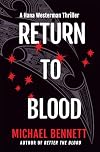
As in the first book, Better the Blood, Michael Bennett continues to immerse readers in Māori culture through his strong mysteries and compelling characters. In Return to Blood, Hana Westerman proves that, although she may have left the Auckland Police Force, she certainly hasn't stopped being a detective dedicated to the pursuit of true justice.
Helping her father teach local youth how to pass their driving tests is an important step to a brighter future for these young people, but it's not show more enough to keep Hana focused when a body is found on the beach. When the recent discovery is added to an old crime in which a man was unjustly convicted, there's no stopping her. Hana is one of those characters I can't resist cheering for even though her single-mindedness often puts herself and others in dangerous situations.
The occasional chapter in the voice of a young Māori woman named Kiri adds poignancy to the story as she tells us of her life gone wrong. Another thing that I admire about the hardcover edition of Return to Blood is the fact that the Māori words Bennett uses are explained right on the same page. I appreciated not having to flip back and forth to the back of the book to learn what the words meant.
There are many things to learn in Return to Blood. Hana's relationships with her father, daughter, and cousin. Her daughter's relationship with her best friend. Hana's true calling as a police officer. Then there's the mouth-watering mention of Samoan coconut cream doughnuts and Bennett's often lyrical language: "A kilometre further north along the coast the big trees start, their early morning silhouettes like a line of old men marching along in arthritic pain, vertebrae twisted and hunched by the centuries of wind." Story, setting, culture, character... I can't wait for the next book in this series. Whatever you do, don't deny yourself the pleasure of meeting Hana Westerman. show less
Helping her father teach local youth how to pass their driving tests is an important step to a brighter future for these young people, but it's not show more enough to keep Hana focused when a body is found on the beach. When the recent discovery is added to an old crime in which a man was unjustly convicted, there's no stopping her. Hana is one of those characters I can't resist cheering for even though her single-mindedness often puts herself and others in dangerous situations.
The occasional chapter in the voice of a young Māori woman named Kiri adds poignancy to the story as she tells us of her life gone wrong. Another thing that I admire about the hardcover edition of Return to Blood is the fact that the Māori words Bennett uses are explained right on the same page. I appreciated not having to flip back and forth to the back of the book to learn what the words meant.
There are many things to learn in Return to Blood. Hana's relationships with her father, daughter, and cousin. Her daughter's relationship with her best friend. Hana's true calling as a police officer. Then there's the mouth-watering mention of Samoan coconut cream doughnuts and Bennett's often lyrical language: "A kilometre further north along the coast the big trees start, their early morning silhouettes like a line of old men marching along in arthritic pain, vertebrae twisted and hunched by the centuries of wind." Story, setting, culture, character... I can't wait for the next book in this series. Whatever you do, don't deny yourself the pleasure of meeting Hana Westerman. show less
Set in present-day New Zealand, Return to Blood is worth reading, not just for its plot and characters, but for its depiction of a society that has embraced indigenous culture. Maybe "embraced" is too generous a word, but the interactions, the inclusion of ritual and community structures are genuine.
Return to Blood is a two-timeline mystery. Hana Westerman, a Maori and a former member of the Auckland Criminal Investigation Bureau, has resigned from law enforcement and moved back to the small show more coastal village where she was raised. When a young woman's skeletonized remains are discovered in the dunes by Hana's daughter, Hana can't help but want to pursue the case, even though she shouldn't be. Hana's desire to investigate is inspired not only by her daughter's discovery of the remains, but also by a similar case more than twenty years ago in the same location. Someone was tried and convicted for that murder, but the new discovery opens up the possibility that the wrong man was convicted and that there may be more remains waiting to be discovered.
The plotting is excellent—and the characters are every bit as satisfying. Besides Hana, readers meet her former colleagues, who are understandably uncomfortable with her interest in the case; Hana's daughter Addison and Addison's nonbinary house mate (and perhaps partner) PLUS1, an aspiring rap/turntable duo; Eru, Hana's father, who has strong memories of the first murder and who is convinced the wrong man was convicted; a cousin bitter that Hana has returned and her son who desperately wants to move on to a life more glamorous and wealthy than anything that's possible at home.
I hadn't realized when I began this book that it was the second in a series. I am very much hoping there will be a third, and a fourth, and a fifth, and.... I had no trouble following Return to Blood because Bennett is deft at providing contextual information without beating readers over the head with it. Muticulturalism, a complex plot, and characters a reader is eager to meet—all of these mean I'm looking forward to more. I also want to say that, if you're a reader of mysteries and don't know this series, you're in for a treat. Get going!
I received a free elevtronic review copy of this title from the publisher via NetGalley; the opinions are my own. show less
Return to Blood is a two-timeline mystery. Hana Westerman, a Maori and a former member of the Auckland Criminal Investigation Bureau, has resigned from law enforcement and moved back to the small show more coastal village where she was raised. When a young woman's skeletonized remains are discovered in the dunes by Hana's daughter, Hana can't help but want to pursue the case, even though she shouldn't be. Hana's desire to investigate is inspired not only by her daughter's discovery of the remains, but also by a similar case more than twenty years ago in the same location. Someone was tried and convicted for that murder, but the new discovery opens up the possibility that the wrong man was convicted and that there may be more remains waiting to be discovered.
The plotting is excellent—and the characters are every bit as satisfying. Besides Hana, readers meet her former colleagues, who are understandably uncomfortable with her interest in the case; Hana's daughter Addison and Addison's nonbinary house mate (and perhaps partner) PLUS1, an aspiring rap/turntable duo; Eru, Hana's father, who has strong memories of the first murder and who is convinced the wrong man was convicted; a cousin bitter that Hana has returned and her son who desperately wants to move on to a life more glamorous and wealthy than anything that's possible at home.
I hadn't realized when I began this book that it was the second in a series. I am very much hoping there will be a third, and a fourth, and a fifth, and.... I had no trouble following Return to Blood because Bennett is deft at providing contextual information without beating readers over the head with it. Muticulturalism, a complex plot, and characters a reader is eager to meet—all of these mean I'm looking forward to more. I also want to say that, if you're a reader of mysteries and don't know this series, you're in for a treat. Get going!
I received a free elevtronic review copy of this title from the publisher via NetGalley; the opinions are my own. show less
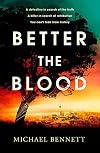
BETTER THE BLOOD is one of those novels that I'd been hearing whispers about for quite a while, and should have made it to the top of the reading pile more quickly than my poor priority setting allowed. On the one hand I'm now regretting the delay, but on the upside, maybe I've cunningly given myself a slightly shorter wait until the next in the series is released. (No idea if a series is planned, but if there was ever a cast of characters, and a style and approach that deserved it, it's show more here.)
If, like me, you've always envied what seems like New Zealand's more integrated society, their embracing of Ma¯ori language, and acceptance of their First Nation's culture and beliefs, and felt a longing for something similar here, the storyline in BETTER THE BLOOD might come as a bit of an eye-opener. There are land rights issues, the Te Tiriti o Waitangi (treaty of Waitangi) isn't universally regarded as fair or the right thing, and there's plenty of tension between First Nations and colonising societies. Tension that was personally heightened years ago, when a Ma¯ori policewoman acted on the side of the authorities in a bitter, and contentious land rights protest over a sacred place.
The story in BETTER THE BLOOD harks back to two points in the past, both of which culminate with New Zealand's first serial killer in Auckland. A photograph taken in 1863 of a Ma¯ori chief hanging dead from a sacred tree, his arms and legs bound, a series of white English soldiers in the foreground, looks like what it is - a sick trophy photograph. In more recent history, the same place - Mount Suffolk - is the location for a peaceful protest land rights protest where Hana Westerman, then a very new recruit, was ordered to help break up the protest, arresting and manhandling an older Ma¯ori woman in the process. Move forward to the current day and Westerman is still a cop, has a teenage daughter, Addison; an ex-husband in the force, DI Jaye Hamilton; and a lot of regrets over that protest, and the fractured relationship with her community that came from it.
There's a number of storylines in BETTER THE BLOOD, including the serial killer, an investigation complicated for Westerman by the threat to her career that she endures when a young, privileged, nasty piece of work rapist ties her up in an alleged assault. Her ex is incredibly supportive though, and they have a good relationship despite their split many years ago. Their daughter has gone backwards and forwards between both homes, living with Hamilton and his now partner with some success, eventually going back to her mother's when she gets herself into some trouble of her own. The family connections are interwoven with the police connections, as the investigation of what becomes a bizarre series of killings instantly pulls Westerman in. The first victim, a man with a questionable past, is found in a secret walled room, hanging, with his legs and arms bound. There's a shape marked out in blood near his body, and the only reason he's discovered quickly is the killer has sent a video of the crime site to Westerman. A subsequent suicide is then pulled into the investigation after another video, and two spiral's carved into what's quickly turned into a crime scene, and Westerman is struggling to find the connection until the photo from 1863 is discovered. She soon realises that there's a connection between the people in this photo and the Ma¯ori concept of 'utu', or reciprocation.
"A system has been forced on us that is not interested in balance. A legal system transplanted here from 20,000 miles away. A set of laws that exist not to provide equality and recompense and honour and balance, but to ensure one side flourishes and the other is kept in the gutter. This we have accepted, like lambs."
"The time of the lamb is over."
The problem for the investigation team is that the discovery of the motive has lead them straight to the perpetrator, although not how to find him, and he's closer than they realise. It's also clearly shown there are going to be more victims and the way they have been selected. The problem for Westerman and her team is they are racing to catch up, identify and protect the people the perpetrator already has in his sights.
It sounds complicated and at points the storyline is. It's also moves at a very fast pace, and there are reasons for the connections which become more complex, and more believable as the story progresses. There's also some very helpful, and informative footnotes to explain some of the Ma¯ori terminology and the impact of the beliefs. At the heart of it all though is a ruthless killer, with a motivation that is simultaneously repulsive and totally understandable. The entire novel casts some bright light into a dark past and comes up with shadows of all sorts of depth and complexity.
Needless to say - cannot recommend this book highly enough. It's exactly the sort of perspective, and subject matter that good crime fiction can do very well. BETTER THE BLOOD is really good crime fiction.
https://www.austcrimefiction.org/review/better-blood-michael-bennett show less
If, like me, you've always envied what seems like New Zealand's more integrated society, their embracing of Ma¯ori language, and acceptance of their First Nation's culture and beliefs, and felt a longing for something similar here, the storyline in BETTER THE BLOOD might come as a bit of an eye-opener. There are land rights issues, the Te Tiriti o Waitangi (treaty of Waitangi) isn't universally regarded as fair or the right thing, and there's plenty of tension between First Nations and colonising societies. Tension that was personally heightened years ago, when a Ma¯ori policewoman acted on the side of the authorities in a bitter, and contentious land rights protest over a sacred place.
The story in BETTER THE BLOOD harks back to two points in the past, both of which culminate with New Zealand's first serial killer in Auckland. A photograph taken in 1863 of a Ma¯ori chief hanging dead from a sacred tree, his arms and legs bound, a series of white English soldiers in the foreground, looks like what it is - a sick trophy photograph. In more recent history, the same place - Mount Suffolk - is the location for a peaceful protest land rights protest where Hana Westerman, then a very new recruit, was ordered to help break up the protest, arresting and manhandling an older Ma¯ori woman in the process. Move forward to the current day and Westerman is still a cop, has a teenage daughter, Addison; an ex-husband in the force, DI Jaye Hamilton; and a lot of regrets over that protest, and the fractured relationship with her community that came from it.
There's a number of storylines in BETTER THE BLOOD, including the serial killer, an investigation complicated for Westerman by the threat to her career that she endures when a young, privileged, nasty piece of work rapist ties her up in an alleged assault. Her ex is incredibly supportive though, and they have a good relationship despite their split many years ago. Their daughter has gone backwards and forwards between both homes, living with Hamilton and his now partner with some success, eventually going back to her mother's when she gets herself into some trouble of her own. The family connections are interwoven with the police connections, as the investigation of what becomes a bizarre series of killings instantly pulls Westerman in. The first victim, a man with a questionable past, is found in a secret walled room, hanging, with his legs and arms bound. There's a shape marked out in blood near his body, and the only reason he's discovered quickly is the killer has sent a video of the crime site to Westerman. A subsequent suicide is then pulled into the investigation after another video, and two spiral's carved into what's quickly turned into a crime scene, and Westerman is struggling to find the connection until the photo from 1863 is discovered. She soon realises that there's a connection between the people in this photo and the Ma¯ori concept of 'utu', or reciprocation.
"A system has been forced on us that is not interested in balance. A legal system transplanted here from 20,000 miles away. A set of laws that exist not to provide equality and recompense and honour and balance, but to ensure one side flourishes and the other is kept in the gutter. This we have accepted, like lambs."
"The time of the lamb is over."
The problem for the investigation team is that the discovery of the motive has lead them straight to the perpetrator, although not how to find him, and he's closer than they realise. It's also clearly shown there are going to be more victims and the way they have been selected. The problem for Westerman and her team is they are racing to catch up, identify and protect the people the perpetrator already has in his sights.
It sounds complicated and at points the storyline is. It's also moves at a very fast pace, and there are reasons for the connections which become more complex, and more believable as the story progresses. There's also some very helpful, and informative footnotes to explain some of the Ma¯ori terminology and the impact of the beliefs. At the heart of it all though is a ruthless killer, with a motivation that is simultaneously repulsive and totally understandable. The entire novel casts some bright light into a dark past and comes up with shadows of all sorts of depth and complexity.
Needless to say - cannot recommend this book highly enough. It's exactly the sort of perspective, and subject matter that good crime fiction can do very well. BETTER THE BLOOD is really good crime fiction.
https://www.austcrimefiction.org/review/better-blood-michael-bennett show less

3 stars for the thriller. I knew from the prologue what the plot would be.
5 stars for the way Maori heritage was written. From the cruel, bloody colonial era to the unfair, complex struggles 21st century Maori have to live with, the entire book was filled with what this means for the people involved.
There is no black and white, only the painful reality that Maori people still struggle. Hana is not a truly sympathetic main character and the killer is not a cold-blooded monster. Everyone show more deals with this differently, from Hana to the killer, and the shared heritage caused different life decisions in different people. show less
5 stars for the way Maori heritage was written. From the cruel, bloody colonial era to the unfair, complex struggles 21st century Maori have to live with, the entire book was filled with what this means for the people involved.
There is no black and white, only the painful reality that Maori people still struggle. Hana is not a truly sympathetic main character and the killer is not a cold-blooded monster. Everyone show more deals with this differently, from Hana to the killer, and the shared heritage caused different life decisions in different people. show less
Lists
Awards


Statistics
- Works
- 5
- Members
- 361
- Popularity
- #66,479
- Rating
- 3.8
- Reviews
- 24
- ISBNs
- 154
- Languages
- 7
- Favorited
- 1