

Jamil Jan Kochai
Author of The Haunting of Hajji Hotak and Other Stories
About the Author
Works by Jamil Jan Kochai
Associated Works
Tagged
Common Knowledge
- Birthdate
- 1992
- Gender
- male
- Birthplace
- Peshawar, Pakistan
- Places of residence
- Sacramento, California, USA
Members
Reviews
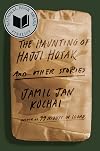
This book was both an amazing collection of stories with beautiful writing and a bit of a puzzle that I loved putting together (and taking notes on/flipping back to check details). The only other collection I've read that comes close is another I just recently finished, 8 Lives of a Century-Old Trickster, in which its stories were also all related to a single character's life. I'm aware that this concept has to have been done before, obviously, but it's difficult for me to imagine right now show more that someone could do it better than Jamil Jan Kochai in The Haunting of Hajji Hotak.
Representation:
- most of the characters are Afghan
- a few of the characters are disabled and have depression
Content warnings:
- suicide mention (Return to Sender)
- rape (Return to Sender, A Premonition, The Tale of Dully's Reversion)
- csa mention (Return to Sender)
- incest—cousins; cultural (Bakhtawara and Miriam)
- starving (Hungry Ricky Daddy)
- depression (Occupational Hazards)
This collection contains twelve stories that eventually connect together to paint a picture of an Afghan family, from the memories and experiences that shaped them in Afghanistan to their contemporary lives in the United States. Each story passes on the narration to a different character in the family, although it's never obvious as to who exactly is telling the story and when everything is happening. Much of the enjoyment I got from the collection was piecing together the overall picture of the family from the characters' points of view, although I can also see how this might be confusing to people, too.
My favorites were definitely "Playing Metal Gear Solid V: The Phantom Pain" and "Return to Sender," although "Hungry Ricky Daddy" and the very last (titular) story also come close. A few of these are written in very unconventional formats, some being just lists ("Occupational Hazards"). But I find myself thinking about these stories more often than the ones from any other collection I've read before—haunting me, I suppose. The way that they're put together is so fascinating, and the stories themselves so beautiful and heartbreaking, that it's difficult not to think about them when I'm trying to write and outline for my own works.
I definitely recommend this one! show less
Representation:
- most of the characters are Afghan
- a few of the characters are disabled and have depression
Content warnings:
- suicide mention (Return to Sender)
- rape (Return to Sender, A Premonition, The Tale of Dully's Reversion)
- csa mention (Return to Sender)
- incest—cousins; cultural (Bakhtawara and Miriam)
- starving (Hungry Ricky Daddy)
- depression (Occupational Hazards)
This collection contains twelve stories that eventually connect together to paint a picture of an Afghan family, from the memories and experiences that shaped them in Afghanistan to their contemporary lives in the United States. Each story passes on the narration to a different character in the family, although it's never obvious as to who exactly is telling the story and when everything is happening. Much of the enjoyment I got from the collection was piecing together the overall picture of the family from the characters' points of view, although I can also see how this might be confusing to people, too.
My favorites were definitely "Playing Metal Gear Solid V: The Phantom Pain" and "Return to Sender," although "Hungry Ricky Daddy" and the very last (titular) story also come close. A few of these are written in very unconventional formats, some being just lists ("Occupational Hazards"). But I find myself thinking about these stories more often than the ones from any other collection I've read before—haunting me, I suppose. The way that they're put together is so fascinating, and the stories themselves so beautiful and heartbreaking, that it's difficult not to think about them when I'm trying to write and outline for my own works.
I definitely recommend this one! show less
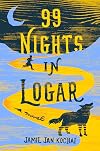
I received this ARC from Viking via Goodreads Giveaways in exchange for an honest review. This does not affect my opinion of this book in any way. All quotes are taken from the uncorrected proof and are subject to change.
November 8th update: I finally figured out how to translate the mystery Pashto chapter thanks to Google Lens, but it didn't really answer my question. I'm gonna get someone to doublecheck it for me to make sure the translation was legit or not, but I'm slightly disappointed. show more But hey, at least I know what it kinda says! Better than nothing! update over
June 4th update: I've decided to up my rating from 2 to 3 stars, the reason being that I've just been thinking about this book a lot, and (while I still don't know what that one chapter said), this book really stuck with me, especially after I read the Hobbit, and realized what that weird dream about food was all about. update over
This book was a bit of a trip. I feel like I spent 99 nights just trying to read it.
Obligatory Summary
Marwand is a 12 year old traveling from America to Afghanistan, his homeland, right in the middle of relative peace during the Afghan-American war in the early 2000s following 9/11. There he meets his extended family—his aunts and uncles and cousins, his grandmother and grandfather—hearing their tales of love, war, and innocence lost. He also meets the family dog, Budabash, who bites off the tip of his finger and, several days later, runs away.
Marwand and his buddies go on the hunt, against their older relatives orders, and find themselves trapped in a strange battle with incurable land-induced seasickness, unending hunger, and abandoned mazes that end in darkness.
The Writing (and Worldbuilding?) and Characters
It kind of pains me to rate this so low. It really wasn't that bad, to be completely honest with you, and I've rated worse books higher, but its particular sins made this reading experience unnecessarily difficult, and so that greatly influence my ultimate review.
This book seemed to take this quote to heart. The narrator was so unreliable, the divide between magical realism and straight up fantasy so blurry, I had such a hard time making sense of anything.
A strength of the book was the immersion and the characters. While I got confused a lot about the terminology, being a white girl from the USA, and that terminology was explained once, if at all, I did get the hang of things and actually appreciated the conversational feel the immersion gave the novel. I loved all the characters and felt that they added some realism to the story (for the most part). I really liked Marwand's family and their dynamic, especially his buddies, Zia, Gulbuddin, and Dawood. They all brought something unique to the story. Jawed the Thief was iconic. He gave it such a storybook, fairytale quality and seemed to be the only person who knew what was going on. I sure didn't.
The plot was paced oddly but in a way that felt like natural tangents and asides, like Marwand was with me regaling me with his strange tale. It reminded me a lot of The Life of Pi in that way.
Another book it reminded me of was The God of Small Things, which isn't a compliment. That book was so confusing and strange, which such a weird and actually quite disgusting ending, that I had no idea what any of it meant. And so was the case with this book, but significantly less disgusting (though the blatant animal abuse didn't help). I was trying to piece together the meaning but was at such a loss. I'm entirely unsure what any of it was supposed to mean, and if some events even happened or not.
Now here comes the biggest sin, and I'm not sure if it'll be this way in the fully released version, but I'm rating what I was given.
That 3 page reveal of a secret that had been hinted at for the entire book, that I was so extremely anticipating. It wasn't in English. No translation was given. The next chapter doesn't reference it or explain anything. It's all in Pashto and I CANNOT READ PASHTO. I have a friend who reads Urdu, but she obviously cannot help me. If anyone here reads Pashto (my friend is pretty sure it's Pashto), please help me. I wanna know what freaking happened to the uncle. (I'd translate it all myself that would take a million years.)
Conclusion
This is being referred to as a middle grade novel and I have to wonder if the people calling it that have ever read middle grade novels before. Or ever been 12. Just because the protagonist is 12 all throughout, and just because the back of the book says it's a "coming-of-age" doesn't mean this is middle grade by any means. This is literary fiction in all its messy glory.
Honestly this was a 4 star book bogged down by 1 star issues until what was good was only annoying in its decency when what was bad took center stage. I think Jamil Jan Kochai is very promising and I'm intrigued by what else he has to offer (as long as it's all in a language I can actually read).
Read this review and more on my blog here! show less
November 8th update: I finally figured out how to translate the mystery Pashto chapter thanks to Google Lens, but it didn't really answer my question. I'm gonna get someone to doublecheck it for me to make sure the translation was legit or not, but I'm slightly disappointed. show more But hey, at least I know what it kinda says! Better than nothing! update over
June 4th update: I've decided to up my rating from 2 to 3 stars, the reason being that I've just been thinking about this book a lot, and (while I still don't know what that one chapter said), this book really stuck with me, especially after I read the Hobbit, and realized what that weird dream about food was all about. update over
This book was a bit of a trip. I feel like I spent 99 nights just trying to read it.
"During the whole length of the battle, I was scared of hiding and becoming caught. Of running and being hit. Of shooting and becoming a killer. And all my fears warred inside of me, until they massacred one another, so that it wasn't courage that let me fight, but the death of my fear."
Obligatory Summary
Marwand is a 12 year old traveling from America to Afghanistan, his homeland, right in the middle of relative peace during the Afghan-American war in the early 2000s following 9/11. There he meets his extended family—his aunts and uncles and cousins, his grandmother and grandfather—hearing their tales of love, war, and innocence lost. He also meets the family dog, Budabash, who bites off the tip of his finger and, several days later, runs away.
Marwand and his buddies go on the hunt, against their older relatives orders, and find themselves trapped in a strange battle with incurable land-induced seasickness, unending hunger, and abandoned mazes that end in darkness.
The Writing (and Worldbuilding?) and Characters
It kind of pains me to rate this so low. It really wasn't that bad, to be completely honest with you, and I've rated worse books higher, but its particular sins made this reading experience unnecessarily difficult, and so that greatly influence my ultimate review.
"It's okay to change a story a little if you make it better. And heroes and love, they always make things better. Otherwise, you know, what's the point?"
This book seemed to take this quote to heart. The narrator was so unreliable, the divide between magical realism and straight up fantasy so blurry, I had such a hard time making sense of anything.
A strength of the book was the immersion and the characters. While I got confused a lot about the terminology, being a white girl from the USA, and that terminology was explained once, if at all, I did get the hang of things and actually appreciated the conversational feel the immersion gave the novel. I loved all the characters and felt that they added some realism to the story (for the most part). I really liked Marwand's family and their dynamic, especially his buddies, Zia, Gulbuddin, and Dawood. They all brought something unique to the story. Jawed the Thief was iconic. He gave it such a storybook, fairytale quality and seemed to be the only person who knew what was going on. I sure didn't.
"Even ghosts need company," Jawed said.
The plot was paced oddly but in a way that felt like natural tangents and asides, like Marwand was with me regaling me with his strange tale. It reminded me a lot of The Life of Pi in that way.
Another book it reminded me of was The God of Small Things, which isn't a compliment. That book was so confusing and strange, which such a weird and actually quite disgusting ending, that I had no idea what any of it meant. And so was the case with this book, but significantly less disgusting (though the blatant animal abuse didn't help). I was trying to piece together the meaning but was at such a loss. I'm entirely unsure what any of it was supposed to mean, and if some events even happened or not.
"Ever since that night on the road beneath the mulberry tree, all day and night all I can think about is how God will punish me. Or. How He won't. That scares me too. That scares me more. But Marwand, the cows weren't scared. They were dying, and they knew they were dying, but they were at peace. There was no hate in them. No doubt. They just breathed until they couldn't. The waters rose until it stopped. I was the only one floating."
Now here comes the biggest sin, and I'm not sure if it'll be this way in the fully released version, but I'm rating what I was given.
That 3 page reveal of a secret that had been hinted at for the entire book, that I was so extremely anticipating. It wasn't in English. No translation was given. The next chapter doesn't reference it or explain anything. It's all in Pashto and I CANNOT READ PASHTO. I have a friend who reads Urdu, but she obviously cannot help me. If anyone here reads Pashto (my friend is pretty sure it's Pashto), please help me. I wanna know what freaking happened to the uncle. (I'd translate it all myself that would take a million years.)
Conclusion
This is being referred to as a middle grade novel and I have to wonder if the people calling it that have ever read middle grade novels before. Or ever been 12. Just because the protagonist is 12 all throughout, and just because the back of the book says it's a "coming-of-age" doesn't mean this is middle grade by any means. This is literary fiction in all its messy glory.
Honestly this was a 4 star book bogged down by 1 star issues until what was good was only annoying in its decency when what was bad took center stage. I think Jamil Jan Kochai is very promising and I'm intrigued by what else he has to offer (as long as it's all in a language I can actually read).
"It's a terrible, terrible thing, my little bird. It's like waking up one morning without a limb or an organ. Without your lungs. Your liver. Your skin."
Read this review and more on my blog here! show less
12 year old Marwand has travelled to Logar in his homeland of Afghanistan, from his new home in the United States. He lives with extended family in a typical Afgan compound which is guarded by the family 'wolf-like' dog Budabash. Marwand approaches Budabash with insufficient caution and the dog bites off the end of his finger and then escapes the compound. The older boys of the extended family set out to search for Budabash and in the re-telling of their adventures over 99 nights, you get to show more understand some of the local culture and fears as well as being introduced to other characters in the area.
The premise of the book is good and I enjoyed the story. It offers a fascinating glimpse into a different culture and way of life. Mistreatment of animals is described openly in the book, which some readers may find upsetting. This didn't really surprise me as I am familiar with the books written by Penn Farthing and the work carried out by his charity Nowzad.
However, I found the ending of the book extremely disappointing. The last chapter is written entirely in Arabic (at least, I am guessing that is the language). I can't read that so I was left wondering what the ending really was. Perhaps it was the author's intention to leave things open like that, so that you make up your own mind about what happens next?
Thank you to Netgalley for an advance copy of this book in exchange for an honest review. show less
The premise of the book is good and I enjoyed the story. It offers a fascinating glimpse into a different culture and way of life. Mistreatment of animals is described openly in the book, which some readers may find upsetting. This didn't really surprise me as I am familiar with the books written by Penn Farthing and the work carried out by his charity Nowzad.
However, I found the ending of the book extremely disappointing. The last chapter is written entirely in Arabic (at least, I am guessing that is the language). I can't read that so I was left wondering what the ending really was. Perhaps it was the author's intention to leave things open like that, so that you make up your own mind about what happens next?
Thank you to Netgalley for an advance copy of this book in exchange for an honest review. show less
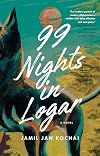
Like a cross between the movie "Forbidden Games" and Mark Twain Kochai documents everyday life in Afghanistan. The exploits of a group of young boys as seen by the young protagonist Marwand take us to the periphery of events that tell a story of disruption and devastation in his part of the world. Everything, as always in the mind of a child, whether mundane or deeply significant, is seen as larger-than-life and heroic. Somehow, as a result this captures culture and affecting historical show more vividly without ever lecturing the reader. Kochai is an insider bequested a great gift. So sad that the country has been again, recently been efectively cut off from the outside world. One can at least hope they've have a reprieve from endless war and factionalism. The people are alive and well if Kochai's narrative is any indication. show less
Lists
Awards


You May Also Like
Associated Authors
Statistics
- Works
- 5
- Also by
- 7
- Members
- 246
- Popularity
- #92,612
- Rating
- 3.8
- Reviews
- 10
- ISBNs
- 25
- Languages
- 2