
Genevieve Hudson
Author of Boys of Alabama
Works by Genevieve Hudson
Associated Works
Tagged
Common Knowledge
- Places of residence
- Portland, Oregon, USA
- Associated Place (for map)
- Oregon, USA
Members
Reviews
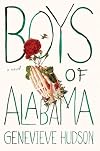
Read all in one go on a long plane ride. Headache inducing. But also quite good.
"Atmospheric" is an adjective that nine times out of ten is so miserably misapplied you would think that reviewers were raised on a diet of pure Hemingway with nary an adverb to be found. But this is the real atmospheric deal. Hudson does a superb job capturing the feeling of the American south -- physically and psychically -- and that feeling is what drives this story, rather than the plot or even necessarily show more the characters. It's hazy, un-straighforward, very very humid.
Also impressive: Hudson's ability to criticize if not condemn religion and masculinity culture without discounting their appeal or resorting to didactic heavy-handedness. Narrator Max is at times uncomfortably aware of how morally untenable his new friends are, how conditional their friendship with him is, but works hard to suppress this awareness because, at the end of the day, they make him feel good, simple as. Other characters are similarly complex, sometimes admirable and sometimes despicable, off-putting, just plain annoying. I didn't particularly like any of them, but I never got the sense that were cardboard cut-outs, piloted not by their own motivations but the authors.
The magical elements were not so well executed. Max is the only character who is explicitly shone to have supernatural patterns, while other magical elements are depicted as either ambiguous or false, and nothing much comes of his power except as a source of connection (with love interest Pan) or of conflict (with literally everyone else). As a sort of metaphor for or externalization of Max's relationship with his sexuality, it mostly works, but it's underutilized and a little jarring vis a vis the surface story.
The only real issue I have with the story, and the reason I don't think it deserves five stars, is that the ending is very sudden to the point it feels unearned, a little unsophisticated, like a losing chess-player who flips the board rather than admit defeat. After two hundred pages of vacillation Max makes what we're meant to understand as the wrong choice, but when push comes to shove he doesn't have to pay as much for it as he thinks he will. So what's the point, then? It's unsatisfying, thematically not very coherent, less a moment of grace than a revelation that's it's been a shaggy dog story the whole time. So anti-climactic it's surprising. show less
"Atmospheric" is an adjective that nine times out of ten is so miserably misapplied you would think that reviewers were raised on a diet of pure Hemingway with nary an adverb to be found. But this is the real atmospheric deal. Hudson does a superb job capturing the feeling of the American south -- physically and psychically -- and that feeling is what drives this story, rather than the plot or even necessarily show more the characters. It's hazy, un-straighforward, very very humid.
Also impressive: Hudson's ability to criticize if not condemn religion and masculinity culture without discounting their appeal or resorting to didactic heavy-handedness. Narrator Max is at times uncomfortably aware of how morally untenable his new friends are, how conditional their friendship with him is, but works hard to suppress this awareness because, at the end of the day, they make him feel good, simple as. Other characters are similarly complex, sometimes admirable and sometimes despicable, off-putting, just plain annoying. I didn't particularly like any of them, but I never got the sense that were cardboard cut-outs, piloted not by their own motivations but the authors.
The magical elements were not so well executed. Max is the only character who is explicitly shone to have supernatural patterns, while other magical elements are depicted as either ambiguous or false, and nothing much comes of his power except as a source of connection (with love interest Pan) or of conflict (with literally everyone else). As a sort of metaphor for or externalization of Max's relationship with his sexuality, it mostly works, but it's underutilized and a little jarring vis a vis the surface story.
The only real issue I have with the story, and the reason I don't think it deserves five stars, is that the ending is very sudden to the point it feels unearned, a little unsophisticated, like a losing chess-player who flips the board rather than admit defeat. After two hundred pages of vacillation Max makes what we're meant to understand as the wrong choice, but when push comes to shove he doesn't have to pay as much for it as he thinks he will. So what's the point, then? It's unsatisfying, thematically not very coherent, less a moment of grace than a revelation that's it's been a shaggy dog story the whole time. So anti-climactic it's surprising. show less

This book features a quadruple-whammy of otherness. The struggle with sexual identity, supernatural powers, immigrant status and atheism all combine to make the main character "a stranger in a strange land," trapped in a small Alabama town. Utilizing this otherness in stark contrast to the prevailing milieu makes for an interesting read and a blistering critique of those that would smother the uniqueness of youth. Most troubling is its portrayal of the destructive power our society risks show more exacting in its demand that we fit it.
Warning - SPOILER ALERT.
In the final scene, the relentless ache to conform is pitted against that which would otherwise heal. There is a glimmer of hope: Perhaps in reaching out we can validate our resilience and our humanity. Perhaps, as Faulkner suggests, we can not only endure but prevail. An important book. show less
Warning - SPOILER ALERT.
In the final scene, the relentless ache to conform is pitted against that which would otherwise heal. There is a glimmer of hope: Perhaps in reaching out we can validate our resilience and our humanity. Perhaps, as Faulkner suggests, we can not only endure but prevail. An important book. show less
Max and his family have relocated from Germany to Alabama and Max is feeling like a fish out of water but is determined to somehow fit in with his overly religious school. Football seems to be the thing that will do it but not because he has any talent for it…but because he can run fast enough to keep from being killed on the field. Max has another gift…he touches dead animals or withered plants and they return to life. Max thinks of it as a curse. It works on animals, bugs…everything show more he’s ever dared to touch… but the question remains…will it work on dead people? That is a major part of the story’s suspense….and you just wait for it happen. Of course there are pitfalls to this “gift”…migraines… cravings for gobs of sugar as well as fear and guilt. Max is tempted to give it a try on people as he is troubled by his love for his dead classmate, Nils. He is also drawn to Pan, a witchy boy who wears dresses and believes in auras and incantations. Pan is the only person who knows about Max’s power…and he desperately wants Max to try it out…and eventually will demand it of Max as an onerous test of loyalty. I guess good descriptive words for this book would be brutal, potent, sad and passionate. The story is a little too heavy on the religious theme... but then the setting is the deep south and a boys school run by one of the local churches show less
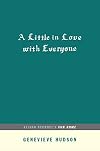
Can one be in love with a book?
Like have an ongoing relationship with it in which you spend time with it, learn new things from it, appreciate and value it, grow from it?
And I’m not talking about being in love with a book like some of those women are in love with, like, bridges or the Eiffel Tower. (You know you watched that show too, don’t lie.)
I feel as bibliophiles, we are touched by books, especially those handful of favorites. Our understanding of them, ourselves, and others evolves show more each time we read them – and we read them many, many times over.
I think I had my first romance of this type with "A Midsummer Night’s Dream." I mean, I had many favorite childhood books such as "A Wrinkle in Time," "Island of the Blue Dolphins," and (like every other young, eager-to-be-grown-up white girl?) all the Judy Blume books, but this one was different. Perhaps it was because it was the first time I really understood Shakespeare. Or maybe it was spritish Puck. I don’t know but for some reason, I just loved it.
But my longest and most in-depth book relationship is probably with "On the Road." There is something about the way Jack Kerouac turned a phrase that perfectly captures my own desire for freedom and getting lost and finding my own way in the midst of an anxious and overactive mind. I can’t imagine how many times I’ve read it and will read it again.
I’ve never met another person whose heart melts for "The Grapes of Wrath" as mine does. Damn, I love those Joads. "Jane Eyre" and "The Color Purple" and "The Awakening" and "Native Son"…I have ongoing relationships with these stories and each time I revisit them, I pick up something new. I see a glimmer of some layer that I had previously missed. Perhaps it’s some small detail or the way a previously ordinary passage stands out to me when I read it again years later.
But books certainly don’t have to be canonical “classics” to steal your heart. And just because one pulls at my heartstrings doesn’t mean it automatically will for you. In my adulthood, I sat down with "Life is So Good" by George Dawson and fell head over heels. I am full of gratitude every time I read it.
This is what I love about reading. I can get lost in almost any book with a rise and fall, a couple of complicated characters, and a setting I can envision. Simple, right?
But with really good books, I mean books that I really fall in love with, I don’t only want an escape. I want it to have meaning in my real life. I want to be there with it, with all it offers. I will stick with it through good and bad. I will visit and revisit it. I will read specific passages over and over and ruminate on them from different perspectives. I keep it for years…on my writing table for inspiration, next to the bed to annotate the margins when the feeling strikes, or even on the highest shelf of my wall of books because I know I will never part with it.
That’s the power of a really great f*cking book. It endures. I give and it gives back. Over and over again.
I think this is the type of relationship that Genevieve Hudson has with Alison Bechdel’s "Fun Home." And likewise, it’s the relationship I am growing with Hudson’s "A Little in Love with Everyone."
Simply put: I adore this book. It is a slim, adorable volume of only 142 pages which includes a kick-ass bibliography but by goddess, it packs a punch. It has all the facets I look for in a lasting book relationship and then some; I’ve already read it three times. And yes, it keeps on giving.
The book is genre-defying in that it is part history lesson, part memoir, part biography, part book review, part manifesta, and all homage to Bechdel. How Hudson included such variety in this one little book is a testament to her writing skills and is just, well, interesting as hell. Her examination of Bechdel and "Fun Home" is imbued with a curiosity and understanding that is enlightening and refreshing. While I have read "Fun Home" and really enjoyed it, it’s been a little while and sometime I’d like to read it again and then re-read "A Little in Love with Everyone"; just to see "Fun Home" through Hudson’s eyes.
As I mentioned above, Hudson is just a good writer. Her instincts are magical. She gives you glimpses into her life growing up questioning and exploring her sexuality and then eventually, her coming out as a lesbian. While using "Fun Home" and Bechdel’s life as a backdrop, Hudson examines not only her own life experiences but also topics such as embodiment, gender, truth, visibility, self-acceptance, and more. Her vulnerability spoke to me and I appreciated her risk-taking throughout the book.
"I wanted to make out with S by accident. I wanted us to end up kissing without anyone having to consciously make the decision to kiss or be held accountable for it. I wanted the kissing to just start happening." (p. 3)
Clearly, any book that waxes poetic on the power of reading and storysharing to change lives automatically scores points with me. But Hudson does this really well, just sort of dropping bell hooks and Dorothy Allison and Maggie Nelson throughout. She also points to bookish details in Bechdel’s cartoons, such as specific book covers being drawn in panels where Bechdel is having sex or hearing life-changing news. The influence of amazing literature by womxn on Bechdel and on Hudson and their writing is gratifying and exhilarating.
"In the corner of one panel, Bechdel has drawn the book 'Sappho Was a Right-On Woman,' filling in the small queer details that had begun to infuse her life." (p. 21)
Of course, the reader will understand her admiration of "Fun Home" and Bechdel more generally, but Hudson also explains her appreciation for reading lists provided by other authors. What I love is that in doing so, Hudson herself leaves us with her own illuminating reading list (the titles of which I quickly added to my own TBR list).
As bibliophiles (and the author clearly is), we get the importance of reading but Hudson teeters on the edge of full-fledged librarianhood when she discusses the importance of telling, sharing, and archiving our own stories. BIPOC, queer people, disabled people, women, and people of other underrepresented populations must tell their own stories.
Representation matters. Voice matters. And having heroes in whom you can see yourself is imperative.
"There was no one to talk to about what I was going through. The only thing that seemed to know anything was books. In books, everything seemed to have happened to everybody already. There was peace in that, a kind of solidarity. Literature holds power." (p. 125)
I love this about Hudson’s book. Clearly Hudson found in Bechdel stories in which she could see herself, in which she received validation and clarification, and in which she witnessed hope and celebration.
Hudson has paid it forward with "A Little in Love with Everyone" and she will undoubtedly inspire and comfort others as Bechdel did for her. show less
Like have an ongoing relationship with it in which you spend time with it, learn new things from it, appreciate and value it, grow from it?
And I’m not talking about being in love with a book like some of those women are in love with, like, bridges or the Eiffel Tower. (You know you watched that show too, don’t lie.)
I feel as bibliophiles, we are touched by books, especially those handful of favorites. Our understanding of them, ourselves, and others evolves show more each time we read them – and we read them many, many times over.
I think I had my first romance of this type with "A Midsummer Night’s Dream." I mean, I had many favorite childhood books such as "A Wrinkle in Time," "Island of the Blue Dolphins," and (like every other young, eager-to-be-grown-up white girl?) all the Judy Blume books, but this one was different. Perhaps it was because it was the first time I really understood Shakespeare. Or maybe it was spritish Puck. I don’t know but for some reason, I just loved it.
But my longest and most in-depth book relationship is probably with "On the Road." There is something about the way Jack Kerouac turned a phrase that perfectly captures my own desire for freedom and getting lost and finding my own way in the midst of an anxious and overactive mind. I can’t imagine how many times I’ve read it and will read it again.
I’ve never met another person whose heart melts for "The Grapes of Wrath" as mine does. Damn, I love those Joads. "Jane Eyre" and "The Color Purple" and "The Awakening" and "Native Son"…I have ongoing relationships with these stories and each time I revisit them, I pick up something new. I see a glimmer of some layer that I had previously missed. Perhaps it’s some small detail or the way a previously ordinary passage stands out to me when I read it again years later.
But books certainly don’t have to be canonical “classics” to steal your heart. And just because one pulls at my heartstrings doesn’t mean it automatically will for you. In my adulthood, I sat down with "Life is So Good" by George Dawson and fell head over heels. I am full of gratitude every time I read it.
This is what I love about reading. I can get lost in almost any book with a rise and fall, a couple of complicated characters, and a setting I can envision. Simple, right?
But with really good books, I mean books that I really fall in love with, I don’t only want an escape. I want it to have meaning in my real life. I want to be there with it, with all it offers. I will stick with it through good and bad. I will visit and revisit it. I will read specific passages over and over and ruminate on them from different perspectives. I keep it for years…on my writing table for inspiration, next to the bed to annotate the margins when the feeling strikes, or even on the highest shelf of my wall of books because I know I will never part with it.
That’s the power of a really great f*cking book. It endures. I give and it gives back. Over and over again.
I think this is the type of relationship that Genevieve Hudson has with Alison Bechdel’s "Fun Home." And likewise, it’s the relationship I am growing with Hudson’s "A Little in Love with Everyone."
Simply put: I adore this book. It is a slim, adorable volume of only 142 pages which includes a kick-ass bibliography but by goddess, it packs a punch. It has all the facets I look for in a lasting book relationship and then some; I’ve already read it three times. And yes, it keeps on giving.
The book is genre-defying in that it is part history lesson, part memoir, part biography, part book review, part manifesta, and all homage to Bechdel. How Hudson included such variety in this one little book is a testament to her writing skills and is just, well, interesting as hell. Her examination of Bechdel and "Fun Home" is imbued with a curiosity and understanding that is enlightening and refreshing. While I have read "Fun Home" and really enjoyed it, it’s been a little while and sometime I’d like to read it again and then re-read "A Little in Love with Everyone"; just to see "Fun Home" through Hudson’s eyes.
As I mentioned above, Hudson is just a good writer. Her instincts are magical. She gives you glimpses into her life growing up questioning and exploring her sexuality and then eventually, her coming out as a lesbian. While using "Fun Home" and Bechdel’s life as a backdrop, Hudson examines not only her own life experiences but also topics such as embodiment, gender, truth, visibility, self-acceptance, and more. Her vulnerability spoke to me and I appreciated her risk-taking throughout the book.
"I wanted to make out with S by accident. I wanted us to end up kissing without anyone having to consciously make the decision to kiss or be held accountable for it. I wanted the kissing to just start happening." (p. 3)
Clearly, any book that waxes poetic on the power of reading and storysharing to change lives automatically scores points with me. But Hudson does this really well, just sort of dropping bell hooks and Dorothy Allison and Maggie Nelson throughout. She also points to bookish details in Bechdel’s cartoons, such as specific book covers being drawn in panels where Bechdel is having sex or hearing life-changing news. The influence of amazing literature by womxn on Bechdel and on Hudson and their writing is gratifying and exhilarating.
"In the corner of one panel, Bechdel has drawn the book 'Sappho Was a Right-On Woman,' filling in the small queer details that had begun to infuse her life." (p. 21)
Of course, the reader will understand her admiration of "Fun Home" and Bechdel more generally, but Hudson also explains her appreciation for reading lists provided by other authors. What I love is that in doing so, Hudson herself leaves us with her own illuminating reading list (the titles of which I quickly added to my own TBR list).
As bibliophiles (and the author clearly is), we get the importance of reading but Hudson teeters on the edge of full-fledged librarianhood when she discusses the importance of telling, sharing, and archiving our own stories. BIPOC, queer people, disabled people, women, and people of other underrepresented populations must tell their own stories.
Representation matters. Voice matters. And having heroes in whom you can see yourself is imperative.
"There was no one to talk to about what I was going through. The only thing that seemed to know anything was books. In books, everything seemed to have happened to everybody already. There was peace in that, a kind of solidarity. Literature holds power." (p. 125)
I love this about Hudson’s book. Clearly Hudson found in Bechdel stories in which she could see herself, in which she received validation and clarification, and in which she witnessed hope and celebration.
Hudson has paid it forward with "A Little in Love with Everyone" and she will undoubtedly inspire and comfort others as Bechdel did for her. show less
Lists
Awards


You May Also Like
Associated Authors
Statistics
- Works
- 3
- Also by
- 1
- Members
- 171
- Popularity
- #124,898
- Rating
- 3.4
- Reviews
- 7
- ISBNs
- 8
- Favorited
- 1