
Alice Robb
Author of Why We Dream: The Transformative Power of Our Nightly Journey
About the Author
Alice Robb has written for New York, Ella, the BBC, the Atlantic, the New York Times: Wired, Time, and the Washington Post, among other publications. She was formerly a staff writer at the New Republic.
Image credit: Alice Robb
Works by Alice Robb
Hoi Moon 1 copy
Tagged
Common Knowledge
- Gender
- female
Members
Reviews
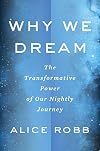
Dreams have intrigued me for decades. Hence, it's no surprise that I loved Robb's meticulously researched book that skillfully integrates scientific data, history, riveting anecdotes and first-person experiences into a highly-readable narrative. Most of us spend a third of our lives sleeping. By some estimates, we experience more than 87,000 dreams between the ages of 15 and 75. There's convincing evidence that dreams can serve as helpful dress rehearsals for real-life challenges, inspire show more new ideas and help us strike a better emotional balance. Why, then, is there such cultural contempt for dreams? Why are dreams scornfully dismissed by so many as frivolous? Most readers will likely finish the book convinced that if we pay attention to dreams, we can have a better understanding of what our brains are trying to process. Robb presents compelling evidence that dreams can play a role in problem-solving and help us to unleash creativity. She also delves into strategies for helping individuals to experience "lucid" dreams, where they are aware they are dreaming and in some cases can even steer the plot of their dreams. My only criticism -- and it's minor -- is that there are a few sections in this otherwise exceptional book that would be have flowed better with perhaps fewer anecdotes or examples. Still, "We We Dream" is a book that should be read by anyone who has even a tenuous interest in the topic. And as the author states near the end, have no fear that acquiring a lot of knowledge about this fascinating topic will take the fun out of dreaming. As Robb writes: "the fundamental weirdness of dreams is as delightful and, in many ways, as enigmatic as ever." Sweet dreams, fellow LibraryThing members! show less
Why We Dream has two interwoven strands. The first is a useful summary of the latest thinking in neuroscience on the importance of sleep and of dreaming in particular. The second discusses how we can use dreams to gain insight and make changes to our lives through methods including dream interpretation and lucid dreaming.
The author is aware that these might be seen as the preserve of cranks and has defends herself against the accusation by producing a book that is rigorously show more researched.
Dreams help us absorb what we’ve learnt through the day, from the emotionally charged to the banal (I remember when I was learning to type how I’d dream of moving my hands on the keyboard). There’s a fascinating chapter on nightmares and their evolutionary role which I unwisely read just before falling asleep one night and…you guessed it.
There are insights into interpreting dreams and how this varies – and the common factors – across cultures. The author talks about keeping a dream diary and how it can actually help you remember more of your dreams (I’ve had this experience in the past).
All of this was interesting and well written but not entirely new to me as I’ve read other books such as Matthew Walker’s Why We Sleep which cover some of the same ground. What I really wanted to know was how to have lucid dreams.
The author discusses the scientific research which suggests it is possible to not only be aware that your are dreaming but to control events within the dream. At the end of the book she describes attending a retreat with a lucid dreaming ‘expert’.
My own thought after reading this chapter was that training to be a lucid dreamer is quite hard work. Techniques include meditation, dream diaries and setting alarms to wake up several times a night (during what you hope is your optimum dream time). It all sounds quite exhausting and as someone who has struggled with insomnia, I’m not inclined to mess with my sleep cycle.
While I was reading the book I often found myself wondering if I would dream that night, and what I would remember. I started keeping a dream diary again. I even sought out a couple of podcasts on lucid dreaming. Then I realised all this thinking about dreaming was keeping me awake at night.
So much of our lives now are colonised by productivity hacks, by wanting every aspect of our day to be more useful and fulfilling. Sleep is the final refuge. The last thing I want to do is start trying to optimise my sleep.
Who wants a lucid dream anyway? It’s like a choose-your-own adventure and there’s a reason why they have never really taken off. If I believe the unconscious mind is more powerful than anything available to us consciously, why hand over the reins?
Fortunately for me, I don’t meet the criteria the author lists for people who, research suggests, are most likely to have lucid dreams (high performance athletes, people with good spatial awareness and low susceptibility to motion sickness) so it seems I’m safe.
While lucid dreaming is not for me, Why We Dream provides a fascinating overview of the importance of dreaming and is written in an accessible and engaging style.
*
I received a copy of Why We Dream from the publisher via Netgalley.
Read more of my reviews on my blog https://katevane.com/blog show less
The author is aware that these might be seen as the preserve of cranks and has defends herself against the accusation by producing a book that is rigorously show more researched.
Dreams help us absorb what we’ve learnt through the day, from the emotionally charged to the banal (I remember when I was learning to type how I’d dream of moving my hands on the keyboard). There’s a fascinating chapter on nightmares and their evolutionary role which I unwisely read just before falling asleep one night and…you guessed it.
There are insights into interpreting dreams and how this varies – and the common factors – across cultures. The author talks about keeping a dream diary and how it can actually help you remember more of your dreams (I’ve had this experience in the past).
All of this was interesting and well written but not entirely new to me as I’ve read other books such as Matthew Walker’s Why We Sleep which cover some of the same ground. What I really wanted to know was how to have lucid dreams.
The author discusses the scientific research which suggests it is possible to not only be aware that your are dreaming but to control events within the dream. At the end of the book she describes attending a retreat with a lucid dreaming ‘expert’.
My own thought after reading this chapter was that training to be a lucid dreamer is quite hard work. Techniques include meditation, dream diaries and setting alarms to wake up several times a night (during what you hope is your optimum dream time). It all sounds quite exhausting and as someone who has struggled with insomnia, I’m not inclined to mess with my sleep cycle.
While I was reading the book I often found myself wondering if I would dream that night, and what I would remember. I started keeping a dream diary again. I even sought out a couple of podcasts on lucid dreaming. Then I realised all this thinking about dreaming was keeping me awake at night.
So much of our lives now are colonised by productivity hacks, by wanting every aspect of our day to be more useful and fulfilling. Sleep is the final refuge. The last thing I want to do is start trying to optimise my sleep.
Who wants a lucid dream anyway? It’s like a choose-your-own adventure and there’s a reason why they have never really taken off. If I believe the unconscious mind is more powerful than anything available to us consciously, why hand over the reins?
Fortunately for me, I don’t meet the criteria the author lists for people who, research suggests, are most likely to have lucid dreams (high performance athletes, people with good spatial awareness and low susceptibility to motion sickness) so it seems I’m safe.
While lucid dreaming is not for me, Why We Dream provides a fascinating overview of the importance of dreaming and is written in an accessible and engaging style.
*
I received a copy of Why We Dream from the publisher via Netgalley.
Read more of my reviews on my blog https://katevane.com/blog show less
Succinct, well-researched, and often riveting, [Why We Dream] offers a thorough look at just that: the purpose of dreaming. Robb begins with how dreams were thought about in ancient cultures, their place in, for example, spirituality and religion, and then moves us quickly forward into the industrial age and early discoveries about dreams and dreaming before moving into the modern age. Beyond expected (brief) discussions of Freud and Jung (and others), the psychological and psychiatric, show more there is a tantalizing review of fascinating the discoveries made related to sleep research and brain science (i.e. REM sleep). All of this comes together in a discussion around the purpose/s of dreaming; which are many and fascinating: aids to memory and learning, diagnosis, threat simulation, healing, self-preservation, emotional health, creativity, problem-solving, coping with death or trauma and so on. The book more or less ends on a current note, with discussions of lucid dreaming and the culture around it.
This is an excellent book, and I have certainly not covered here all that the 215 page book contains, but I have one personal beef with it, and that is author’s injection of herself into the book. Clearly, to write such a book, one must have a deep interest in the subject, but I would have preferred it without her personal experiences (perhaps I thought it self-indulgent) I did skip the intro because of this, and read lightly over the end when she discusses her involvement in lucid dream retreats. However, this now confessed, I realize her interest and passion informs the energetic narrative of the book which makes the book such a generally riveting read. So there. show less
This is an excellent book, and I have certainly not covered here all that the 215 page book contains, but I have one personal beef with it, and that is author’s injection of herself into the book. Clearly, to write such a book, one must have a deep interest in the subject, but I would have preferred it without her personal experiences (perhaps I thought it self-indulgent) I did skip the intro because of this, and read lightly over the end when she discusses her involvement in lucid dream retreats. However, this now confessed, I realize her interest and passion informs the energetic narrative of the book which makes the book such a generally riveting read. So there. show less
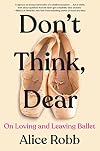
It is well known that ballet is a strenuous, competitive art form. Female dancers, in particular, are expected to attend demanding classes and conform to rigid physical standards. As a young girl studying at the famous School of American Ballet, author Alice Robb was subject to all the familiar pressures, but when she was told she must discontinue her studies, she was bereft. In an effort to understand what happened to her, as well as the continual hold the ballet has on her subconscious show more mind, she shares her own story as well as those of famous ballerinas such as Margot Fonteyn and Misty Copeland.
Robb is at her best when writing about herself and her friends; her discussions of legendary dancers often devolve into book reports. Still, this book provides a stirring look at an elite world.
I received an electronic pre-publication copy of this book via NetGalley in exchange for an honest review. I was not compensated in any way. show less
Robb is at her best when writing about herself and her friends; her discussions of legendary dancers often devolve into book reports. Still, this book provides a stirring look at an elite world.
I received an electronic pre-publication copy of this book via NetGalley in exchange for an honest review. I was not compensated in any way. show less
Lists
Awards

You May Also Like
Associated Authors
Statistics
- Works
- 3
- Members
- 215
- Popularity
- #103,624
- Rating
- 3.4
- Reviews
- 11
- ISBNs
- 19
- Languages
- 2