
Dina Anastasio
Author of Who Was Steve Irwin?
About the Author
Dina Anastasio was an editor and writer for Sesame Street Magazine for several years. She is the mother of Trey Anastasio of the band Phish. Anastasio has published more than 200 trade, text, poetry, and activity books for children of all ages, as well as many activity books and articles for show more parents. In 1995, Anastasio wrote a book to accompany a television series, Virtual Reality Rangers. She's also done some work for the Sesame Street website, including "Make your own lunchbox". Anastasio is a member of The Authors Guild. Dina Anastasio has written several high interest/low reading level books for ESL students and reluctant readers and appreciates the challenge of helping these students develop a lifelong love of reading. (Bowker Author Biography) show less
Works by Dina Anastasio
The Big Fat Hat 1 copy
Beginnings 1 copy
Arrows 1 copy
Spaghetti en de rode Smaragd 1 copy
Meet Big Bird's Orchestra 1 copy
The Camera 1 copy
Hiding in the Sea 1 copy
The Mona Lisa Mystery 1 copy
Wig is Wet 1 copy
Winter Holidays 1 copy
Tagged
Common Knowledge
- Birthdate
- 1941
- Gender
- female
- Occupations
- children's book author
magazine editor - Organizations
- Sesame Street
- Nationality
- USA
- Birthplace
- New York, New York, USA
- Places of residence
- New York, New York, USA
Cork, County Cork, Ireland - Associated Place (for map)
- USA
Members
Reviews

This is book 4 of 4 in a series of junior novelizations of episodes of the Fox show Space: Above and Beyond that aired in 1995. Despite only being on air for one season I really enjoyed the show. I was a more realistic near-future take on a typical alien invasion story that had well fleshed-out characters. The over-arching story had interesting layers with the In-Vitro and A.I. both shaping the world this story takes place in during the A.I. Wars before the main story even takes place, and show more the enemy we will come to know as the Chigs will be a mysterious threat that we are challenged to unlock.
The Enemy is the seventh episode of the show and details the groups mission to resupply a strange planet where humans have been at war with the Chigs since the very first days, but very few seem to come out alive. As soon as they land, they start to see why even if they don't understand it. The Enemy feels like a throwback to a Star Trek episode dealing with fear and/or mind control on the human mind. It was an okay story, but missed opportunities to really dive into characters' backstories or to play with what was real or not. show less
The Enemy is the seventh episode of the show and details the groups mission to resupply a strange planet where humans have been at war with the Chigs since the very first days, but very few seem to come out alive. As soon as they land, they start to see why even if they don't understand it. The Enemy feels like a throwback to a Star Trek episode dealing with fear and/or mind control on the human mind. It was an okay story, but missed opportunities to really dive into characters' backstories or to play with what was real or not. show less

This is book 2 of 4 in a series of junior novelizations of episodes of the Fox show Space: Above and Beyond that aired in 1995. Despite only being on air for one season I really enjoyed the show. I was a more realistic near-future take on a typical alien invasion story that had well fleshed-out characters. The over-arching story had interesting layers with the In-Vitro and A.I. both shaping the world this story takes place in during the A.I. Wars before the main story even takes place, and show more the enemy we will come to know as the Chigs will be a mysterious threat that we are challenged to unlock.
Dark Side of the Sun is the third episode which details Shane's past with the A.I. and how she is forced to overcome her crippling trauma to save her squad when a mission goes south fast. It's good to see Shane's character arc transform from trauma-survivor to bad-ass through the story, but I felt everything else was just an obvious vehicle to deliver that story. Regardless, it's a good read, especially for fans of the show. show less
Dark Side of the Sun is the third episode which details Shane's past with the A.I. and how she is forced to overcome her crippling trauma to save her squad when a mission goes south fast. It's good to see Shane's character arc transform from trauma-survivor to bad-ass through the story, but I felt everything else was just an obvious vehicle to deliver that story. Regardless, it's a good read, especially for fans of the show. show less
How Did You Make That Web? (Winnie the Pooh's Thinking Spot, Vol. 13: Animal Builders) by Dina Anastasio

I've been enjoying this series more since the last few volumes started to focus on animals. This one shows the interesting things they can make, from spider webs to nests to bee hives. Too bad beavers didn't make the cut; I love those industrious little guys!
Publishing trivia side note:
I purchased this entire series secondhand earlier this year from several different sources. After they showed up in their various packages and I opened them I was disappointed to find that this series was show more published in three different sizes. The books I've reviewed up till now -- volumes 1-12 -- have all been 7" x 7", but this one expands to 8" x 8", and the next two I own come in at a whopping 9" x 9". So instead of sitting nicely on my bookshelf as a perfect complete set, it sort of grows an awkward tail. I wonder which size provided the best sales for the publisher and why they felt the need to change it up so much? And are there more size variants out there? The contents of each size are the same, by the way, with none of them adding special content . . . just 15 or 32 square inches of paper.
(My Pooh Project: I love Winnie the Pooh, and so does my wife. Having a daughter gave us a chance to indoctrinate her into the cult by buying and reading her every Pooh book we came across. How many is that? I’m going to count them this year by reading and reviewing one every day and seeing which month I finally run out. Track my progress here:
https://www.goodreads.com/review/list/23954351-rod-brown?ref=nav_mybooks&she... ) show less
Publishing trivia side note:
I purchased this entire series secondhand earlier this year from several different sources. After they showed up in their various packages and I opened them I was disappointed to find that this series was show more published in three different sizes. The books I've reviewed up till now -- volumes 1-12 -- have all been 7" x 7", but this one expands to 8" x 8", and the next two I own come in at a whopping 9" x 9". So instead of sitting nicely on my bookshelf as a perfect complete set, it sort of grows an awkward tail. I wonder which size provided the best sales for the publisher and why they felt the need to change it up so much? And are there more size variants out there? The contents of each size are the same, by the way, with none of them adding special content . . . just 15 or 32 square inches of paper.
(My Pooh Project: I love Winnie the Pooh, and so does my wife. Having a daughter gave us a chance to indoctrinate her into the cult by buying and reading her every Pooh book we came across. How many is that? I’m going to count them this year by reading and reviewing one every day and seeing which month I finally run out. Track my progress here:
https://www.goodreads.com/review/list/23954351-rod-brown?ref=nav_mybooks&she... ) show less
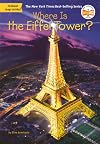
March 31, 1889, marked a triumphant day for France, as its 'Tricolore,' blue, white, and red flag was displayed atop the newly erected, bold, and beautiful Eiffel Tower, an astounding 934 feet in the air. This marvel of artistry and architecture would, at that time, hold the title of the world's tallest structure! Gustave Eiffel was properly impressed by his tower and its distinct beauty, but its critics, however - and there were many - called it a 'monstrosity,' a 'giant ugly show more smokestack.'
Gustave wasn't the only one who appreciated this modern wonder, as others reveled in its great size and uniqueness, but unfortunately, there were also a great many who questioned what the iron thing even was. Some French people were so put off by it that they wrote letters to the editor protesting the tower. France was a country patterned with gorgeous, old stone buildings and historical monuments, and the new tower's detractors felt it just didn't fit in. Little did they know that the Eiffel Tower would go on to become one of the most famous landmarks in the world!
Where Is the Eiffel Tower? is another installment of the lovely Who HQ series of books, that we have grown to love so much in my household. As an avid history buff at the ripe old age of seven, my son really appreciates this wonderful series, as do I. Among many other fascinating details about the Eiffel Tower and the European French Republic, this book shares with us the details of Gustave's early life and his ascent into an engineer and inventive businessman.
As a clever young boy, he found himself bored by school, and his grades reflected his disinterest. With his parents owning a successful coal transporting company, he would much prefer to watch the ships loading and unloading coal at the canal port in Dijon, France. Eventually, he met the right teachers who helped him to foster an appreciation for literature, history, and science, and his grades soared. It was at college that Gustave met his first true love: metal.
Gustave's fondness for this revolutionary building material came with an abundance of curiosity, as he began to investigate how he could bend, shape, and use the element innovatively. After enrolling in engineering school, and working as an unpaid apprentice at his brother-in-law's iron foundry to learn all he could, he went on to open his own company: Société des Établissements Eiffel. His team consisted of engineers, architects, and designers, and from 1879 to 1883 they would work on their most famous project of that time, creating the metal framework inside the USA's Statue of Liberty.
After adding such an important element to the fabric of American society, Gustave went on to producing a structure equally as majestic for his homeland. The Eiffel Tower was introduced to the French people and the world, by maintaining the entry point to the Exposition Universelle. This Internationally celebrated fair held in Paris hosted exhibits from all over the world, with some 61,000 exhibitors, that displayed products, artwork, and held performances of dance, music, and theatre. A few of the more popular American offerings were Thomas Edison's electric lights, and tin-foil phonograph, Alexander Graham Bell's line of telephones, and a Wild West show put on by Buffalo Bill.
The abundantly successful fair went on for three months, and after its completion, Paris officials called to have the Eiffel Tower removed. At once clever and determined, Gustave Eiffel was narrowly able to keep his tower a part of the city's skyline. Where is the Eiffel Tower? lays out for us how his resourceful mind was able to save one of the world's most iconic structures, and assist in modern communication for his beloved country, allowing for millions of tourists and dilettantes to continue to enjoy its beauty more than a century later.
Not unlike other volumes in the Who HQ series, this informative book treats us to detailed sketches that depict the various buildings and sites discussed within, which help to give the reader a well-rounded and visually accurate perspective. So if architecture and history are your (peach) jam, and your littles love non-fiction as much as my lad does, be sure to pick this one up for you and the kids!
To see the bookmark I was inspired to make upon reading this book, please visit my blog post on peachybooks.ca here: https://peachybooks.ca/2021/06/18/book-review-where-is-the-eiffel-tower-by-dina-... show less
Gustave wasn't the only one who appreciated this modern wonder, as others reveled in its great size and uniqueness, but unfortunately, there were also a great many who questioned what the iron thing even was. Some French people were so put off by it that they wrote letters to the editor protesting the tower. France was a country patterned with gorgeous, old stone buildings and historical monuments, and the new tower's detractors felt it just didn't fit in. Little did they know that the Eiffel Tower would go on to become one of the most famous landmarks in the world!
Where Is the Eiffel Tower? is another installment of the lovely Who HQ series of books, that we have grown to love so much in my household. As an avid history buff at the ripe old age of seven, my son really appreciates this wonderful series, as do I. Among many other fascinating details about the Eiffel Tower and the European French Republic, this book shares with us the details of Gustave's early life and his ascent into an engineer and inventive businessman.
As a clever young boy, he found himself bored by school, and his grades reflected his disinterest. With his parents owning a successful coal transporting company, he would much prefer to watch the ships loading and unloading coal at the canal port in Dijon, France. Eventually, he met the right teachers who helped him to foster an appreciation for literature, history, and science, and his grades soared. It was at college that Gustave met his first true love: metal.
Gustave's fondness for this revolutionary building material came with an abundance of curiosity, as he began to investigate how he could bend, shape, and use the element innovatively. After enrolling in engineering school, and working as an unpaid apprentice at his brother-in-law's iron foundry to learn all he could, he went on to open his own company: Société des Établissements Eiffel. His team consisted of engineers, architects, and designers, and from 1879 to 1883 they would work on their most famous project of that time, creating the metal framework inside the USA's Statue of Liberty.
After adding such an important element to the fabric of American society, Gustave went on to producing a structure equally as majestic for his homeland. The Eiffel Tower was introduced to the French people and the world, by maintaining the entry point to the Exposition Universelle. This Internationally celebrated fair held in Paris hosted exhibits from all over the world, with some 61,000 exhibitors, that displayed products, artwork, and held performances of dance, music, and theatre. A few of the more popular American offerings were Thomas Edison's electric lights, and tin-foil phonograph, Alexander Graham Bell's line of telephones, and a Wild West show put on by Buffalo Bill.
The abundantly successful fair went on for three months, and after its completion, Paris officials called to have the Eiffel Tower removed. At once clever and determined, Gustave Eiffel was narrowly able to keep his tower a part of the city's skyline. Where is the Eiffel Tower? lays out for us how his resourceful mind was able to save one of the world's most iconic structures, and assist in modern communication for his beloved country, allowing for millions of tourists and dilettantes to continue to enjoy its beauty more than a century later.
Not unlike other volumes in the Who HQ series, this informative book treats us to detailed sketches that depict the various buildings and sites discussed within, which help to give the reader a well-rounded and visually accurate perspective. So if architecture and history are your (peach) jam, and your littles love non-fiction as much as my lad does, be sure to pick this one up for you and the kids!
To see the bookmark I was inspired to make upon reading this book, please visit my blog post on peachybooks.ca here: https://peachybooks.ca/2021/06/18/book-review-where-is-the-eiffel-tower-by-dina-... show less
Lists
Awards


You May Also Like


Associated Authors
Statistics
- Works
- 134
- Members
- 5,101
- Popularity
- #4,901
- Rating
- 3.8
- Reviews
- 26
- ISBNs
- 261
- Languages
- 5
- Favorited
- 1