
Cyndi Brannen
Author of Entering Hekate's Garden: The Magick, Medicine & Mystery of Plant Spirit Witchcraft
About the Author
Cyndi Brannen is a witch and spiritual teacher dedicated to Hekate, her two sons and living the coastal life in rural Nova Scotia. She is a trained energetic healer, psychic and herbalist. Cyndi teaches The Sacred Seven: A Course in Applied Modern Witchcraft. To discover more about her teaching and show more writing visit keepingherkeys.com show less
Works by Cyndi Brannen
Entering Hekate's Garden: The Magick, Medicine & Mystery of Plant Spirit Witchcraft (2020) 119 copies, 3 reviews
Tagged
Common Knowledge
- Birthdate
- 06-06
- Gender
- female
- Education
- Dalhouse University
University of New Brunswick (PhD) - Occupations
- psychologist
author
teacher - Organizations
- The Covina Institute
Open Circle Institute
The Coven of the Crossroads - Places of residence
- Halifax, Nova Scotia, Canada
- Map Location
- Canada
Members
Reviews
Entering Hekate's Garden: The Magick, Medicine & Mystery of Plant Spirit Witchcraft by Cyndi Brannen
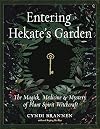
I wanted to give the author another chance, but this book has almost all the problems I had with Keeping Her Keys, plus a few more. It cherry-picks and distorts both mythology and archaeology to present UPG (unverified personal gnosis) as fact. Then it uses that UPG (presented as fact) as the foundation for page after page of flowery reverence reminiscent of cult fervor (the modern definition of cult, not the Ancient Greek one).
The prologue, written as if by Medea, pits men against women, show more Hekate against "false" religions and "destructive" civilization, and bizarrely, witches (i.e. descendants of Hekate) against humans. (I guess Medea, the author, and other witches aren't human?!?!?!?!?!)
And all that's not even getting into questionable herbal information like that it's safe to ingest certain diluted essential oils (don't eat essential oils!) or the recipes for burning or otherwise using incredibly toxic herbs. show less
The prologue, written as if by Medea, pits men against women, show more Hekate against "false" religions and "destructive" civilization, and bizarrely, witches (i.e. descendants of Hekate) against humans. (I guess Medea, the author, and other witches aren't human?!?!?!?!?!)
And all that's not even getting into questionable herbal information like that it's safe to ingest certain diluted essential oils (don't eat essential oils!) or the recipes for burning or otherwise using incredibly toxic herbs. show less
The book's ideas are okay if you're interested in an almost monotheistic devotion to Hekate. The view of Hekate as an all-powerful source of energy infusing everything, using her epithets as foci for specific energetic aspects, referring to her as My/Our Lady, and capitalizing her pronouns are all too reminiscent of Christian practices for my taste. But it obviously works fine for the author and others, and normally I enjoy reading about others' practices even if they won't directly impact show more my own.
I did get a couple tangential ideas from the first half of the book, and I appreciated the author's emphasis on personal development.
However, in this book you have to wade through:
-an absurd number of comma splices;
-sentences you need to re-read because they're missing words or include extraneous words that don't belong (these proofreading issues constantly stalled my reading experience);
-REPETITION of words, phrasings, quotes, and ideas on every other page. Seriously, half this book is just a repeat of itself;
-random unsourced claims with no discussion, leaving you wondering what to do with that information (e.g. Hekate is also associated with the number 7: okay, literally a 1-sentence idea that isn't returned to at all);
-discussion of ideas before she actually introduces them (e.g. she first mentions a salt strophalos, which the reader has supposedly built, several sections before she actually discusses what a strophalos is and how to make it);
-direct contradictions like claiming "Hekate will support our witchcraft, whether it's for nefarious purposes or for the highest good" after 244 pages of structuring her thesis on kindness being one of the three core guiding Hekatean principles;
-the author's personal, unsupported interpretations as solid parts of Hekatean devotion (e.g. she says throughout to modify your practice according to your preferences, but then says she associates Wednesday with Hekate "for no reason except that I am a Gemini and Wednesday (Mercury's day) is my favorite day of the week" and continually references Wednesday as a definite Hekatean day after that);
-the rapid downhill tumble of the second half of the book, bypassing any sort of logic or cohesion whatsoever.
Brannen tries to do too much with this book (introducing both general magickal concepts and Hekate) and ends up only touching at the most surface level of those topics, leaving the reader not only wanting but needing more. Honestly, reading Hekate's entry on Theoi.com and any other introduction to magickal practices and then putting the pieces together yourself will be more beneficial. show less
I did get a couple tangential ideas from the first half of the book, and I appreciated the author's emphasis on personal development.
However, in this book you have to wade through:
-an absurd number of comma splices;
-sentences you need to re-read because they're missing words or include extraneous words that don't belong (these proofreading issues constantly stalled my reading experience);
-REPETITION of words, phrasings, quotes, and ideas on every other page. Seriously, half this book is just a repeat of itself;
-random unsourced claims with no discussion, leaving you wondering what to do with that information (e.g. Hekate is also associated with the number 7: okay, literally a 1-sentence idea that isn't returned to at all);
-discussion of ideas before she actually introduces them (e.g. she first mentions a salt strophalos, which the reader has supposedly built, several sections before she actually discusses what a strophalos is and how to make it);
-direct contradictions like claiming "Hekate will support our witchcraft, whether it's for nefarious purposes or for the highest good" after 244 pages of structuring her thesis on kindness being one of the three core guiding Hekatean principles;
-the author's personal, unsupported interpretations as solid parts of Hekatean devotion (e.g. she says throughout to modify your practice according to your preferences, but then says she associates Wednesday with Hekate "for no reason except that I am a Gemini and Wednesday (Mercury's day) is my favorite day of the week" and continually references Wednesday as a definite Hekatean day after that);
-the rapid downhill tumble of the second half of the book, bypassing any sort of logic or cohesion whatsoever.
Brannen tries to do too much with this book (introducing both general magickal concepts and Hekate) and ends up only touching at the most surface level of those topics, leaving the reader not only wanting but needing more. Honestly, reading Hekate's entry on Theoi.com and any other introduction to magickal practices and then putting the pieces together yourself will be more beneficial. show less
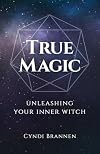
This was more than just a witchy how-to. Although it would be excellent for new practitioners, that doesn't mean it can't be useful for those who are more experienced with their craft. This is very much a self-help geared towards personal transformation, with the ultimate goal of unlocking your inner magic. The chapters are broken down well, and easy to read. Each step comes with information and exercises/rituals to help you get more in touch with yourself. A great witchy self-help book overall.
Entering Hekate's Garden: The Magick, Medicine & Mystery of Plant Spirit Witchcraft by Cyndi Brannen

These Wiccan books are kind of a guilty pleasure for me, as I'm not a Wiccan. I approach them as sort of meditations on nature, which this volume does very well. I also like that it has recipes and how to advice from things like gardening, cooking, making incense, and candles. I'm a sucker for herb lore, which is really the heart of this book. I'm looking forward to planting and getting to know some of these mysterious plants.
You May Also Like


Statistics
- Works
- 5
- Members
- 312
- Popularity
- #75,594
- Rating
- 3.6
- Reviews
- 9
- ISBNs
- 12
- Languages
- 1