
Miriam Cohen
Author of Will I Have a Friend?
About the Author
Miriam Cohen is Evalyn Clark Professor in the Department of History and professor in the Women's Studies Program at Vassar College. Her book, Workshop to Office: Two Generations of Italian Women in New York City, was a finalist for the Thomas Znaniecki Prize of the American Sociological show more Association. She has published numerous articles on the history of social welfare. Series editor Carol Berkin is a well-known women's historian and the author of many popular and scholarly books, including Civil War Wives. She is Professor of History Emerita at the Graduate Center of the City University of New York and she is a member of the Society of American Historians. show less
Series
Works by Miriam Cohen
Associated Works
Now I am Six! A Collection of Stories All About Being Six for Beginning Readers (1999) — Contributor — 170 copies, 4 reviews
The American Family in Social-Historical Perspective, Second Edition (1978) — Contributor — 17 copies
Tagged
Common Knowledge
- Birthdate
- 1926-10-14
- Gender
- female
- Occupations
- children's book author
- Nationality
- USA
- Places of residence
- Brooklyn, New York, USA (birthplace)
- Associated Place (for map)
- New York, USA
Members
Reviews
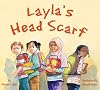
I like how the kids are very curios but at the same time you can tell which kids have been engrained with biases. I personally have witnessed it and have had to take a step back and think of a way to address it without placing my own opinions. I had a kid talk about how they liked trump as a minority, because they said English is the only language to be spoken. I was in shock.
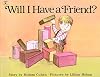
Jim asks Pa if he will have a friend at school; Pa smiles, "I think you will." But Jim doesn't find a friend right away. It takes most of the day, but after rest time, Paul shows Jim a small toy car, and then other kids invite them to play. While Pa and Jim are walking home, Jim reports happily that he does have a friend. Simply charming, a straightforward story to help children know what to expect at preschool or school, and alleviate worries.
See also: A Friend for Henry
See also: A Friend for Henry
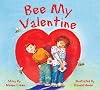
Summary: This is a charming story about a class of first graders experiencing Valentines Day for the first time. They are all not quite sure why we celebrate Valentines Day, and they mostly care about ending up with the most Valentines Day cards at the end of the class. Throughout the book, they begin to understand this holiday. They start to show love for the friends around them, and they pass out Valentines day cards.
Comments: The reason I chose this book is because I love Valentines Day show more because it's my birthday! I really enjoyed reading this book and learning about how children experience Valentines Day and how classrooms celebrate. It made me wonder if some people do not celebrate Valentine's Day, and what happens with them when classrooms are celebrating/participating in themes activities. show less
Comments: The reason I chose this book is because I love Valentines Day show more because it's my birthday! I really enjoyed reading this book and learning about how children experience Valentines Day and how classrooms celebrate. It made me wonder if some people do not celebrate Valentine's Day, and what happens with them when classrooms are celebrating/participating in themes activities. show less
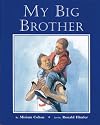
The main message of this book is to show that brotherly love is real, even when one brother cannot be physically present.
I enjoyed this book for many reasons. I liked that this author challenges readers to look at the struggles of military families. For example, in the case of the boy in this book, he is separated from his beloved big brother who joins the army. This type of separation is hard to imagine, especially considering the dangerous circumstances of the military. I like that the show more author makes the younger brother's emotions very real. He misses his brother, and wants more than anything for him to return. I like that the author does not shy away from these real emotions. This is a real struggle that many people go through, and this author respects that struggle in her writing.
I also like this book because of its cyclical nature. For example, in the beginning of the book, the oldest brother is doing "brotherly" things. He helps his little brother wash the car, play basketball, etc. However, when he leaves, he tells his younger brother that he "is the big brother now." Now, this "younger brother" becomes the big brother to his younger siblings. He plays basketball with the siblings, washes his older brother's car, etc. I like this cyclical aspect because it shows character growth and shows how the younger brother copes and remembers his oldest brother. The younger brother had to fill the shoes of the oldest brother, and this became a way that he came to terms with the fact that his brother was gone. He went through the same activities, only from a different role. show less
I enjoyed this book for many reasons. I liked that this author challenges readers to look at the struggles of military families. For example, in the case of the boy in this book, he is separated from his beloved big brother who joins the army. This type of separation is hard to imagine, especially considering the dangerous circumstances of the military. I like that the show more author makes the younger brother's emotions very real. He misses his brother, and wants more than anything for him to return. I like that the author does not shy away from these real emotions. This is a real struggle that many people go through, and this author respects that struggle in her writing.
I also like this book because of its cyclical nature. For example, in the beginning of the book, the oldest brother is doing "brotherly" things. He helps his little brother wash the car, play basketball, etc. However, when he leaves, he tells his younger brother that he "is the big brother now." Now, this "younger brother" becomes the big brother to his younger siblings. He plays basketball with the siblings, washes his older brother's car, etc. I like this cyclical aspect because it shows character growth and shows how the younger brother copes and remembers his oldest brother. The younger brother had to fill the shoes of the oldest brother, and this became a way that he came to terms with the fact that his brother was gone. He went through the same activities, only from a different role. show less
Lists
Awards


You May Also Like


Associated Authors
Statistics
- Works
- 51
- Also by
- 4
- Members
- 5,672
- Popularity
- #4,362
- Rating
- 3.8
- Reviews
- 214
- ISBNs
- 228
- Languages
- 4
- Favorited
- 1