
Kristen Arnett
Author of Mostly Dead Things
About the Author
Image credit: Author Kristen Arnett at the 2019 Texas Book Festival in Austin, Texas, United States. By Larry D. Moore, CC BY-SA 4.0, https://commons.wikimedia.org/w/index.php?curid=84550338
Works by Kristen Arnett
7-Elesbian: A Memoir 1 copy
Associated Works
We Are the Baby-Sitters Club: Essays and Artwork from Grown-Up Readers (2021) — Contributor — 60 copies, 1 review
Tagged
Common Knowledge
- Birthdate
- 1980-12-16
- Gender
- female
- Occupations
- librarian
- Agent
- Serene Hakim
- Nationality
- USA
- Birthplace
- Orlando, Florida, USA
- Places of residence
- Orlando, Florida, USA
- Map Location
- USA
Members
Reviews

4.75 stars. i could not put this down. i wasn't ever sure what i was supposed to think or what i thought was going to happen or if any of the characters in sammie's nuclear family were okay at all (like as people). arnett kept me asking questions the entire time but not so many that i was frustrated. it just constantly kept me reading and wondering and thinking about these characters and what was happening. i liked this so much.
i knew that sammie was unreliable - my favorite kind of narrator show more - but i think she ended up being far more unreliable than i expected. that was a fun surprise. arnett really kept the reader on their toes with what to believe and what was happening. i think one of my main questions is if what happened at the park, the opening of the book when samson almost gets abducted, if that was a breaking point for sammie. if everything after that was changed because of that experience, in a way we didn't realize. arnett bringing it up again at the end like that makes me wonder.
there is so much that arnett is (or could be) doing here. maybe sammie was such an overprotective mom that the abduction was never something that actually happened; maybe she read about those stories and made an innocuous interaction at the park into a near abduction. maybe she was driven half-mad by parenting itself. because this certainly is a commentary on parenting and on what being a parent means and how it changes your life, often in ways that you don't expect or want. she's saying so much about that parent/child relationship and she's maybe saying something very specific about parenting in queer relationships and in queer communities. like maybe she's saying that making queer relationships heteronormative, the way monika and sammie strove to do in some ways - to "seem normal" to everyone else - that that is what causes sammie to lose her sense of self. maybe it's just parenting, which i think a lot of parents can relate to, but maybe it's also something more particular to queer parents or to queer communities. there is so much to think about here.
what was so interesting about this to me, i think, was how individually awful each of the main characters of sammie, samson, and monika all were, but also how average they all were. they were just doing their thing, school and work and marriage and divorce, and being pretty terrible humans along the way, but they are also just so average. they fail and succeed in average ways, they hurt each other in average ways. she's made a pretty great book out of the very every day.
i'm excited to read more by her.
edit (2/5/25) to add that i'm bumping this up because every time i think or talk about this, i like it even more. all the things she is bringing up and asking, all the ways she hints at things or tells us something, all the questions she doesn't answer, and the way she does all of it is just brilliant. so many of the questions she's asking can be answered in different ways, depending on the reader, and i love that ambiguity and all the different ways a reader can take this. i'm very impressed. show less
there is so much that arnett is (or could be) doing here. maybe sammie was such an overprotective mom that the abduction was never something that actually happened; maybe she read about those stories and made an innocuous interaction at the park into a near abduction. maybe she was driven half-mad by parenting itself. because this certainly is a commentary on parenting and on what being a parent means and how it changes your life, often in ways that you don't expect or want. she's saying so much about that parent/child relationship and she's maybe saying something very specific about parenting in queer relationships and in queer communities. like maybe she's saying that making queer relationships heteronormative, the way monika and sammie strove to do in some ways - to "seem normal" to everyone else - that that is what causes sammie to lose her sense of self. maybe it's just parenting, which i think a lot of parents can relate to, but maybe it's also something more particular to queer parents or to queer communities.
what was so interesting about this to me, i think, was how individually awful each of the main characters of sammie, samson, and monika all were, but also how average they all were. they were just doing their thing, school and work and marriage and divorce, and being pretty terrible humans along the way, but they are also just so average. they fail and succeed in average ways, they hurt each other in average ways. she's made a pretty great book out of the very every day.
i'm excited to read more by her.
edit (2/5/25) to add that i'm bumping this up because every time i think or talk about this, i like it even more. all the things she is bringing up and asking, all the ways she hints at things or tells us something, all the questions she doesn't answer, and the way she does all of it is just brilliant. so many of the questions she's asking can be answered in different ways, depending on the reader, and i love that ambiguity and all the different ways a reader can take this. i'm very impressed. show less
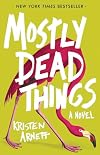
Mostly Dead Things is a weird and funny and sad book about grief and family, with one of the strongest senses of place (taxidermy in swampy hot Florida!) that I’ve read in a long long time. It’s also fantastically queer, in an uncomfortable “I see myself in this, it’s too good, make it stop” kind of way. I would read it all over again, right now.
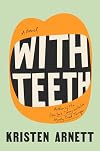
Interesting concept but was very repetitive at times. And I wasn't sure what that ending was about. Ultimately, I think this was just a glimpse into a household where everyone is really fucked up and blames each other and they're all quite awful. I think the ending is trying to show us that Samson is not really to blame for his bad acts because he's just production of Sammie's craziness. But I have a hard time with that because Sammie is going through it and seemed to be trying really hard. show more So I guess I'm supposed to be fine with that conclusion, that trying your best is not enough in parenthood. You can do everything, try to change yourself and beat stereotypes, and still may amount to nothing. My only other thought is that Samson just has some sort of social behavior disorder. How he was going to therapy for so long and that would not be discovered, I'm not sure. This didn't really remind of Arnett's debut (besides the family dynamic/all the fucked up people) that I love so much. I wasn't as impressed with this one but it wasn't bad.
While this is definitely about mother hood and queerness and growing older, the most fascinating aspect of this was the dynamic between the child and MC. I really do think this book is trying to dissect who's to blame. Who's to blame for the outbursts and the anger and disappointment. You might think it's weird to question that about a child but he did some genuinely heinous things. A lot of it involving causing harm to other people and living things. We are bound to ask how we got there. In the end, I think the END book is trying to show us that he had no hand in his own behavior. But the rest of the book feels like it's trying to show us that no one person is to blame. Or that blame doesn't need to be swapped at all? I have no clue truly.
I think this book would EAT as a horror, like "We Need to Talk About Kevin" but, of course, gay. I really think Arnett explores things here that would help separate the two if she'd gone that route. show less
While this is definitely about mother hood and queerness and growing older, the most fascinating aspect of this was the dynamic between the child and MC. I really do think this book is trying to dissect who's to blame. Who's to blame for the outbursts and the anger and disappointment. You might think it's weird to question that about a child but he did some genuinely heinous things. A lot of it involving causing harm to other people and living things. We are bound to ask how we got there. In the end, I think the END book is trying to show us that he had no hand in his own behavior. But the rest of the book feels like it's trying to show us that no one person is to blame. Or that blame doesn't need to be swapped at all? I have no clue truly.
I think this book would EAT as a horror, like "We Need to Talk About Kevin" but, of course, gay. I really think Arnett explores things here that would help separate the two if she'd gone that route. show less
Mostly Dead Things is a strange and moving summer read, about a disaffected young woman in need of a return to intimacy and love after the death of her father and the loss of her lover, who was also her brother’s wife. A disturbance comes in the form of her mother, who asserts herself by appropriating taxidermy, the family business and the art Jessa shared with her father, to create her own very arresting art which gains the attention of an attractive dealer. The book is suffused with loss show more and longing and heat and blood, and succeeds when it focuses on the battered relationship between mother and daughter and what can be done to set it right.. show less
Lists
Awards


You May Also Like


Associated Authors
Statistics
- Works
- 7
- Also by
- 1
- Members
- 1,178
- Popularity
- #21,825
- Rating
- 3.5
- Reviews
- 38
- ISBNs
- 34
- Languages
- 3
- Favorited
- 1