
Jack Matthews (1) (1925–2013)
Author of Collecting Rare Books for Pleasure and Profit
For other authors named Jack Matthews, see the disambiguation page.
About the Author
Jack Matthews is Distinguished Professor of English at Ohio University in Athens.
Image credit: Jack Matthews himself, Uploaded by Robert Nagle of Personville Press with the permission of the author.
Works by Jack Matthews
Associated Works
Rediscoveries: Informal Essays in Which Well-Known Novelists Rediscover Neglected Works of Fiction by One of Their Favorite Authors (1971) — Contributor — 27 copies
Tagged
Common Knowledge
- Legal name
- Matthews, John Harold
- Birthdate
- 1925-07-22
- Date of death
- 2013-11-28
- Gender
- male
- Education
- Ohio State University (BA ∙ Classics and English ∙ 1954)
- Occupations
- Post office clerk
United States Coast Guard, 1943-45
professor
short story writer
novelist
essayist - Awards and honors
- Florence Roberts Head award, 1967
Guggenheim grant, 1974
Ohio Arts Council award, 1989
Quill award (Massachusetts Review, Amherst), 1967 (Massachusetts Review ∙ Amherst) - Agent
- Ann Elmo Agency
- Nationality
- USA
- Birthplace
- Columbus, Ohio, USA
- Place of death
- Columbus, Ohio, USA
- Associated Place (for map)
- Columbus, Ohio, USA
Members
Reviews
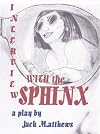
This was far more amusing than I could have imagined. The Sphinx kept giving convoluted, nonsense answers, much to the annoyance of the interviewer. When he’d try to do it back, she’d just shrug it off, which made it even more hilarious. I couldn’t stop laughing the entire time.
A big selling point of this audio play is easily the narrators. They did a superb job, it really is like listening to a real play, just without the visual aspect. I recommend this to anybody who wants a good show more laugh.
NOTE: This copy was provided to me free of charge as a digital review copy. The opinions stated in this review are mine and mine alone, I was not paid or requested to give this book a certain rating, suggestion, or approval. show less
A big selling point of this audio play is easily the narrators. They did a superb job, it really is like listening to a real play, just without the visual aspect. I recommend this to anybody who wants a good show more laugh.
NOTE: This copy was provided to me free of charge as a digital review copy. The opinions stated in this review are mine and mine alone, I was not paid or requested to give this book a certain rating, suggestion, or approval. show less
 This review was written for LibraryThing Early Reviewers.
In the model of philosophy posing as fiction, two people sit in the dark and argue about the meaning of words. A sphinx and an interviewer (who is no more a real person than the sphinx) debate the meaning of truth, reality and perception without ever doing anything more than turn on the lights. "All riddles are questions, but not all questions are riddles."
I've waded through several of these - Daniel Quinn's Ishmael, Ichiro Kishimi's The Courage to Be Disliked - both come to mind. This show more might be better than those because it is shorter and more contentious. At least this one sets aside the 'wise teacher'-'eager student' dynamic. There's conflict aplenty here (which undercuts what we're supposed to believe that the interviewer is an experienced professional from nearly the first exchange).
But what I want from a play is characters who are strongly drawn, who are really people with lives and backgrounds that brought them to this moment. I want them to interact, come into conflict, and to be changed by the resolution.
show less
This review was written for LibraryThing Early Reviewers.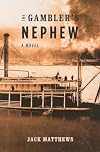
Many writers do their best work early in their careers, people like Joseph Heller or Thomas Wolfe, for example. Others don't strike gold until middle age. Consider Vladimir Nabokov, who was in his mid-50s when "Lolita" was published. You can read a fascinating account of why some artists peak early and some later in life in the "Late Bloomers" chapter of Malcolm Gladwell's "What the Dog Saw." But what do you make of a writer like Jack Matthews?
I took two creative writing classes taught by show more Matthews when I was a journalism student at Ohio University in the mid-1960s. He was about 40 then and had a book of short stories, "Bitter Knowledge," and a book of poetry, "An Almanac for Twilight," under his belt. Soon he was turning out novels like "Hanger Stout, Awake!," "Beyond the Bridge" and "The Charisma Campaigns," a favorite of mine. These were good novels, but not great, and despite a nomination for a National Book Award (for "The Charisma Campaigns"), he never achieved the literary big time. After 1983, although he continued to write both fiction and nonfiction books, these were published mostly by small presses and university presses.
Matthews died three years ago at the age of 88. His last novel, "The Gambler's Nephew" (Etruscan Press) was published in 2011, just two years before his death. So I didn't expect much when I started reading it a few days ago, yet I was blown away. This is an incredible novel that deserves more attention than it probably will ever receive.
The story begins in the 1850s in the Ohio River town of Brackenport, where a businessman named Nehemiah Dawes has such strong views about slavery and grave robbery that people tend to avoid him even if they agree with him. One day Dawes sees two men force a runaway slave into a boat to take him back to the other side of the river. Dawes has his gun with him and decides to back up his big talk by shooting one of the slavers. Instead he kills the young black man, yet doesn't receive as much as a stern talking to for his act. But when Dawes himself is found murdered, authorities are quick to hang a former employee, despite scant evidence of guilt.
Who is the protagonist in this novel? Matthews keeps us guessing. Until his death, it seems to be Nehemiah Dawes. Then the focus switches to his brother, to a young doctor and on and on to others, as main characters fade into the background. Much later we realize that the runaway slave, the "gambler's nephew" of the title, is the true protagonist, even though we never actually meet him in the story. Everything revolves around him, even when it doesn't seem to.
The novel, because of the voice of the mysterious narrator, seems lighter than it really is. We are tempted to read it with a smile, then may feel a trifle guilty when we realize where Matthews is taking us.
Whether or not "The Gambler's Nephew" is Jack Matthews's masterpiece, I will leave to the literary experts, if any of them bother to consider the question. But I will say that for a man in his 80s to produce a novel of such depth, power and grace is something amazing. show less
I took two creative writing classes taught by show more Matthews when I was a journalism student at Ohio University in the mid-1960s. He was about 40 then and had a book of short stories, "Bitter Knowledge," and a book of poetry, "An Almanac for Twilight," under his belt. Soon he was turning out novels like "Hanger Stout, Awake!," "Beyond the Bridge" and "The Charisma Campaigns," a favorite of mine. These were good novels, but not great, and despite a nomination for a National Book Award (for "The Charisma Campaigns"), he never achieved the literary big time. After 1983, although he continued to write both fiction and nonfiction books, these were published mostly by small presses and university presses.
Matthews died three years ago at the age of 88. His last novel, "The Gambler's Nephew" (Etruscan Press) was published in 2011, just two years before his death. So I didn't expect much when I started reading it a few days ago, yet I was blown away. This is an incredible novel that deserves more attention than it probably will ever receive.
The story begins in the 1850s in the Ohio River town of Brackenport, where a businessman named Nehemiah Dawes has such strong views about slavery and grave robbery that people tend to avoid him even if they agree with him. One day Dawes sees two men force a runaway slave into a boat to take him back to the other side of the river. Dawes has his gun with him and decides to back up his big talk by shooting one of the slavers. Instead he kills the young black man, yet doesn't receive as much as a stern talking to for his act. But when Dawes himself is found murdered, authorities are quick to hang a former employee, despite scant evidence of guilt.
Who is the protagonist in this novel? Matthews keeps us guessing. Until his death, it seems to be Nehemiah Dawes. Then the focus switches to his brother, to a young doctor and on and on to others, as main characters fade into the background. Much later we realize that the runaway slave, the "gambler's nephew" of the title, is the true protagonist, even though we never actually meet him in the story. Everything revolves around him, even when it doesn't seem to.
The novel, because of the voice of the mysterious narrator, seems lighter than it really is. We are tempted to read it with a smile, then may feel a trifle guilty when we realize where Matthews is taking us.
Whether or not "The Gambler's Nephew" is Jack Matthews's masterpiece, I will leave to the literary experts, if any of them bother to consider the question. But I will say that for a man in his 80s to produce a novel of such depth, power and grace is something amazing. show less

Interview with the Sphynx is a gem if you understand the source material. The play by Jack Matthews follows a one-act structure following a man sitting in the dark attempting to interview a woman who won't give a straight answer to any questions. The woman is the Sphynx. The man is, well, that's a secret.
This is a great play for mythological history buffs, with plenty of jokes, references, and an amusing reveal at the end that can only be described as the purest form of tragic comedy. show more Lovers of wordplay will appreciate some of the arguments, and the voice cast does a good job as well. As described, or forewarned, if you prefer, the play is deeply irritating and I really appreciate the effort that went into making it so.
Thanks to Robert Nagle with Personville Press for providing me with a copy in exchange for an honest review, it was very much appreciated. show less
This is a great play for mythological history buffs, with plenty of jokes, references, and an amusing reveal at the end that can only be described as the purest form of tragic comedy. show more Lovers of wordplay will appreciate some of the arguments, and the voice cast does a good job as well. As described, or forewarned, if you prefer, the play is deeply irritating and I really appreciate the effort that went into making it so.
Thanks to Robert Nagle with Personville Press for providing me with a copy in exchange for an honest review, it was very much appreciated. show less
This review was written for LibraryThing Early Reviewers.Awards

You May Also Like


Associated Authors
Statistics
- Works
- 30
- Also by
- 6
- Members
- 364
- Popularity
- #66,013
- Rating
- 3.5
- Reviews
- 41
- ISBNs
- 34
- Favorited
- 1
