
Nadia Shammas
Author of Squire
Works by Nadia Shammas
FCBD 2022: Marvel Voices 1 copy
Dead by Daylight #1 1 copy
Associated Works
Thyme Travellers: An Anthology of Palestinian Speculative Fiction (2024) — Contributor — 66 copies, 7 reviews
Tagged
Common Knowledge
Members
Reviews
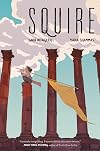
Sara Alfageeh and Nadia Shammas’ Squire follows Aiza, a girl who enlists in the Bayt-Sajjian military with the goal of becoming a squire and, eventually, a knight. Aiza is an Ornu girl, a member of a group that was conquered by the Bayt-Saijji Empire. The empire seeks to secure its place in history by forcibly assimilating outsiders, but they never trust those they take into their empire. Aiza hides her identity for her training. There, she meets Husni, who dreams of being a hero; Sahar, show more who joined for greater financial security; and Basem El-Shadid, the son of a famous knight-turned-senator. They train alongside each other, getting to know each other, but Aiza hides her identity until she has no other choice. Then, all the characters must reconcile what they’ve learned about Bayt-Saijji with the experience on the ground. Aiza learns more from Doruk, a disgraced former knight.
Alfageeh and Shammas craft a beautiful story evocative of the best fantasy, though without the magical elements. They draw upon their Jordanian heritage both in creating the cultures as well as the physical setting, with Al Khazneh from Petra featuring as a prominent location. Elements of the story resemble Tamora Pierce’s Tortall universe, specifically the knight training in the Song of the Lioness and Protector of the Small quartets. Alfageeh’s characters are all distinctive and recognizable while her attention to detail on clothing and settings brings the story to life. Her use of colors makes every page a gorgeous work of art in its own right. A section at the end of the book describes the development of character designs and taking a page from script to thumbnails to layouts and final art. Shammas and Alfageeh tell a beautiful story about the differences between the stories governments tell and the stories people experience. show less
Alfageeh and Shammas craft a beautiful story evocative of the best fantasy, though without the magical elements. They draw upon their Jordanian heritage both in creating the cultures as well as the physical setting, with Al Khazneh from Petra featuring as a prominent location. Elements of the story resemble Tamora Pierce’s Tortall universe, specifically the knight training in the Song of the Lioness and Protector of the Small quartets. Alfageeh’s characters are all distinctive and recognizable while her attention to detail on clothing and settings brings the story to life. Her use of colors makes every page a gorgeous work of art in its own right. A section at the end of the book describes the development of character designs and taking a page from script to thumbnails to layouts and final art. Shammas and Alfageeh tell a beautiful story about the differences between the stories governments tell and the stories people experience. show less

Editor Nadia Shammas conceived the idea of Corpus: A Comic Anthology of Bodily Ailments amid “the debate about healthcare” that “dehumanized the ill” (back cover). The book is divided into three sections: physical, mental, and medical. Physical discusses illnesses and ailments such as diabetes and vision problems, using brief 2-5 page vignettes to convey the lived experience of those with these physical ailments. Mental covers such topics as depression, gender dysphoria, and show more obsessive-compulsive disorder following the same format. Medical details the state of the U.S. medical system, with special emphasis on the pre-Affordable Care Act days in which a person could go bankrupt due to a sudden illness over which they had no control, as well as other topics not easily quantifiable into the first two subjects, such as death and life after a transplant. The various authors and artists speak with an authenticity rarely seen in mainstream comics, but this project encourages them to open themselves up to their unseen audience and reach out.
While reading this volume, Republicans’ continued efforts to hurt Americans recently reached a fever pitch with Texas judge Reed O’Connor’s decision to attack the Affordable Care Act in order to promote the GOP’s assault on sick Americans through their evil agenda. In light of these events, Shammas’ work is more important than ever as it allows those with a variety of illnesses to describe the experience in their own words, using the comic book medium to convey something that often evades easy description, despite the seeming universality of the body. As Mary Douglass writes, “The social body constrains the way the physical body is perceived.” This work, then, uses first-person narratives to restore the humanity to the ill and break down taboos of discussing illness, thereby healing the social body in the hopes that it will help society to care for the bodies of its members. show less
While reading this volume, Republicans’ continued efforts to hurt Americans recently reached a fever pitch with Texas judge Reed O’Connor’s decision to attack the Affordable Care Act in order to promote the GOP’s assault on sick Americans through their evil agenda. In light of these events, Shammas’ work is more important than ever as it allows those with a variety of illnesses to describe the experience in their own words, using the comic book medium to convey something that often evades easy description, despite the seeming universality of the body. As Mary Douglass writes, “The social body constrains the way the physical body is perceived.” This work, then, uses first-person narratives to restore the humanity to the ill and break down taboos of discussing illness, thereby healing the social body in the hopes that it will help society to care for the bodies of its members. show less
A little thing you may not know about me: I love a girl with a sword.
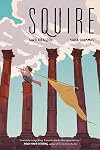
Squire is exactly that and more—a story about a girl who feels out of place due to her identity, a coming of age tale, and a deconstruction of colonialism set against the backdrop of a pseudo-medieval fantasy world inspired by Jordan and other areas of the Middle East.
I could honestly gush about the illustration for this entire review, but I will try to keep it brief in the interest of word count. The world of Squire show more is infused with a gorgeous palate and I love how the illustrations of the main character, Aiza, give her such vibrant expressiveness. There was clearly a good amount of research that went into creating this comic, particularly on the aspect of architecture, which I loved.
I appreciate the more open but hopeful ending—the problem is clearly not resolved by the conclusion, but we have witnessed these characters learn and grow and they’re on the path towards a better future. Nothing is wrapped up in a simple bow, because war is never that simple. show less
Squire is exactly that and more—a story about a girl who feels out of place due to her identity, a coming of age tale, and a deconstruction of colonialism set against the backdrop of a pseudo-medieval fantasy world inspired by Jordan and other areas of the Middle East.
I could honestly gush about the illustration for this entire review, but I will try to keep it brief in the interest of word count. The world of Squire show more is infused with a gorgeous palate and I love how the illustrations of the main character, Aiza, give her such vibrant expressiveness. There was clearly a good amount of research that went into creating this comic, particularly on the aspect of architecture, which I loved.
I appreciate the more open but hopeful ending—the problem is clearly not resolved by the conclusion, but we have witnessed these characters learn and grow and they’re on the path towards a better future. Nothing is wrapped up in a simple bow, because war is never that simple. show less
Originally posted on Just Geeking by.
Content warnings:
There are multiple battles involving wounds and blood. There are ongoing themes of xenophobia, racism, exploitation, war, and colonialism.
Squire is a beautiful graphic novel in more ways that one. Wonderfully detailed illustrations tell the story of Aiza, her family and her friends as we follow Aiza’s journey to become a Knight in the Bayt-Sajji Empire. The art corresponds well with the writing, giving shape to the emotions behind the show more words and bringing to life the struggles, desires and worries of the characters of Squires. You can feel the heart-wrenching anxiety of Aiza’s parents as they accept that they can’t stop their daughter from following her heart’s desire to become a Knight, and have to talk to her about hiding her Ornu heritage by wrapping cloth around her Ornu tattoo. They want her to be safe, they tell her, that it’s better that people get to know her without judgement. It’s only the first of many difficult scenes that exist in Squire.
Aiza’s relationship with her parents is a great example of how realistic and complicated the relationships are in Squire. Alfageeh and Shammas do not shy away from the hard truths, like having to talk to your daughter about what people think of their people, or letting her leave home, knowing how dangerous it is to be an Ornu in the Empire. This is especially true when later in Squire when Aiza begins to question her place in the Bayt-Sajji army, and her friends make comments about Ornu, not knowing her real identity. In other works of fiction I’ve seen authors try to justify it, try to make their characters not seem too bad. One of them will always try to stop the others, to play the “good guy”. In the scene in Squire everyone is making racist jokes about the Ornu, everyone believes the same rumours that have been spread by the Bayt-Sajji Empire. When Aiza questions Husni about it, he argues the point with her multiple times. It’s “just military humour” he tells her, and then gaslights the Ornu further by stating that other groups have integrated better. There is zero shame in his behaviour, however, he does deflect several times by complaining that she is never around because she’s too busy. It infuriates him further when she then storms off to train some more.
While Squire explores these themes of war and colonisation, it is very much an OwnVoices story that focuses on identity and what that means to us as individuals. It’s not just Aiza that faces the question of identity, and I loved the variety of characters that Alfageeh and Shammas introduce in Squire. There’s the son of a famous military commander who is expected to follow in his father’s footsteps, and the amount of pressure on his shoulders is something many readers of all ages will recognise. A girl who comes from a large family, who works hard but cries when she writes a letter home. Then there’s Doruk, the groundskeeper who the trainees admire because he was once a Knight. In reality, he represents the darker side of war; he survived, but he’s disabled. He lost his sword hand in battle. He acts as a balance to the wide-eyed trainees who only see him in their periphery, a reminder of the reality of war.
Each of the characters and their stories feeds into a plot that doesn’t appear to be that complex to start with. It’s a slow burner until about sixty percent when the General of the Knights sends them on an exercise on the Ornu/ Bayt-Sajji border. From there Aiza and her friends are thrown head first into a situation that will change everything. In a split second Aiza makes a decision, aware that things will change afterwards for her, but completely unaware of just how much. There are things happening that she has no knowledge of, and when she does become aware of them she realises that her dreams of becoming a Knight built on a flawed ideology. The “greater good” that the Bayt-Sajji Empire promotes didn’t include people like her, it didn’t include the Ornu. Is the citizenship she dreamed of obtaining to help her family by becoming a Knight worth it if it’s at the cost of her own people?
Squire also reminded me a bit of Tamora Pierce’s books, specifically the Protector of the Small quartet. Fans of that series will probably recognise that this graphic novel also shares the same name as one of the books in the quartet, and yet that wasn’t what made me draw the comparison. It’s a scene in chapter two where Aiza meets her best friend Husni for the first time. Husni makes a dramatic entrance in which he laments about sitting in a cart full of hay while wearing silk pants. The driver points out that it’s the only way up the mountain, he can either get in or not. Once the cart starts moving Aiza and Husni start to bond over their love for the stories of Knights, and their desire to become a Knight, to become a hero too. There was something familiar about these two young people bonding over their desire to achieve the same goal, with Aiza being stubborn and Husni having a flare for the dramatics. As I continued to read Squire other similarities appeared such as a ragtag group of friends joining together to help one another.
While the Protector of the Small quartet tackled topics such as bullying, the way in which Squire takes on themes of race and colonisation by incorporating them into a fantasy setting provides a platform for young adults to discuss topics of race and prejudice. While Squire is about Aiza and how events affect her, Alfageeh and Shammas have also included a scene between two of her friends where they discuss their racist attitudes and what that meant for Aiza. It’s a scene that opens up the possibility of discussion for young people amongst themselves. The age group guideline listed on Amazon for Squire is 14 to 17 years old, an age that I remember bringing with it a lot of questions and uncertainty. In the last few years race has become an increasing topic of discussion and debate in the media, and there is a good chance they have overheard adults in their life talk it. The problem is that many adults don’t feel comfortable talking about race; it was not discussed when they were children or if it was, it was in the form of active racism. Likewise, while a young person may instinctively seek answers online, the abundance of opposing arguments might not help them find a useful (or healthy) answer. The Books and graphic novels such as Squire provide a safe environment for young people to interact with the topic, to see the harmful toxicity of prejudice played out in a fictional situation, to be able to discuss it with their friends and learn from it.
One thing I can’t fully comment on is the artwork in the book. I mentioned how good the illustrations are, and for the most part that is based on an advanced reader copy (ARC) that was predominantly in black and white. Only the first chapter was in colour, which is understandable due to printing costs, however, it does mean that I have not seen some of the gorgeous fight scenes in full colour. They look amazing in black and white, so I can only assume how good they will look in full colour. There is a huge battle towards the end of Squire which blew me away with its detail.
Squire is a monumental publication in many ways. It’s a book about a character from a poor family and actually shows the struggles that Aiza and her family go through, rather than glossing over them. Written by two women of colour, Squire is described as their love letter to fantasy, and personally I’d agree with that statement. It embodies the classic elements of adventure, of amassing a party and completing a quest. Alfageeh and Shammas have utilised the fantasy genre to give a voice to Aiza and everyone who is/has been in her position. This is a graphic novel that people of all ages will gain something from reading.
For more of my reviews please visit my blog! show less
Content warnings:
Squire is a beautiful graphic novel in more ways that one. Wonderfully detailed illustrations tell the story of Aiza, her family and her friends as we follow Aiza’s journey to become a Knight in the Bayt-Sajji Empire. The art corresponds well with the writing, giving shape to the emotions behind the show more words and bringing to life the struggles, desires and worries of the characters of Squires. You can feel the heart-wrenching anxiety of Aiza’s parents as they accept that they can’t stop their daughter from following her heart’s desire to become a Knight, and have to talk to her about hiding her Ornu heritage by wrapping cloth around her Ornu tattoo. They want her to be safe, they tell her, that it’s better that people get to know her without judgement. It’s only the first of many difficult scenes that exist in Squire.
Aiza’s relationship with her parents is a great example of how realistic and complicated the relationships are in Squire. Alfageeh and Shammas do not shy away from the hard truths, like having to talk to your daughter about what people think of their people, or letting her leave home, knowing how dangerous it is to be an Ornu in the Empire. This is especially true when later in Squire when Aiza begins to question her place in the Bayt-Sajji army, and her friends make comments about Ornu, not knowing her real identity. In other works of fiction I’ve seen authors try to justify it, try to make their characters not seem too bad. One of them will always try to stop the others, to play the “good guy”. In the scene in Squire everyone is making racist jokes about the Ornu, everyone believes the same rumours that have been spread by the Bayt-Sajji Empire. When Aiza questions Husni about it, he argues the point with her multiple times. It’s “just military humour” he tells her, and then gaslights the Ornu further by stating that other groups have integrated better. There is zero shame in his behaviour, however, he does deflect several times by complaining that she is never around because she’s too busy. It infuriates him further when she then storms off to train some more.
While Squire explores these themes of war and colonisation, it is very much an OwnVoices story that focuses on identity and what that means to us as individuals. It’s not just Aiza that faces the question of identity, and I loved the variety of characters that Alfageeh and Shammas introduce in Squire. There’s the son of a famous military commander who is expected to follow in his father’s footsteps, and the amount of pressure on his shoulders is something many readers of all ages will recognise. A girl who comes from a large family, who works hard but cries when she writes a letter home. Then there’s Doruk, the groundskeeper who the trainees admire because he was once a Knight. In reality, he represents the darker side of war; he survived, but he’s disabled. He lost his sword hand in battle. He acts as a balance to the wide-eyed trainees who only see him in their periphery, a reminder of the reality of war.
Each of the characters and their stories feeds into a plot that doesn’t appear to be that complex to start with. It’s a slow burner until about sixty percent when the General of the Knights sends them on an exercise on the Ornu/ Bayt-Sajji border. From there Aiza and her friends are thrown head first into a situation that will change everything. In a split second Aiza makes a decision, aware that things will change afterwards for her, but completely unaware of just how much. There are things happening that she has no knowledge of, and when she does become aware of them she realises that her dreams of becoming a Knight built on a flawed ideology. The “greater good” that the Bayt-Sajji Empire promotes didn’t include people like her, it didn’t include the Ornu. Is the citizenship she dreamed of obtaining to help her family by becoming a Knight worth it if it’s at the cost of her own people?
Squire also reminded me a bit of Tamora Pierce’s books, specifically the Protector of the Small quartet. Fans of that series will probably recognise that this graphic novel also shares the same name as one of the books in the quartet, and yet that wasn’t what made me draw the comparison. It’s a scene in chapter two where Aiza meets her best friend Husni for the first time. Husni makes a dramatic entrance in which he laments about sitting in a cart full of hay while wearing silk pants. The driver points out that it’s the only way up the mountain, he can either get in or not. Once the cart starts moving Aiza and Husni start to bond over their love for the stories of Knights, and their desire to become a Knight, to become a hero too. There was something familiar about these two young people bonding over their desire to achieve the same goal, with Aiza being stubborn and Husni having a flare for the dramatics. As I continued to read Squire other similarities appeared such as a ragtag group of friends joining together to help one another.
While the Protector of the Small quartet tackled topics such as bullying, the way in which Squire takes on themes of race and colonisation by incorporating them into a fantasy setting provides a platform for young adults to discuss topics of race and prejudice. While Squire is about Aiza and how events affect her, Alfageeh and Shammas have also included a scene between two of her friends where they discuss their racist attitudes and what that meant for Aiza. It’s a scene that opens up the possibility of discussion for young people amongst themselves. The age group guideline listed on Amazon for Squire is 14 to 17 years old, an age that I remember bringing with it a lot of questions and uncertainty. In the last few years race has become an increasing topic of discussion and debate in the media, and there is a good chance they have overheard adults in their life talk it. The problem is that many adults don’t feel comfortable talking about race; it was not discussed when they were children or if it was, it was in the form of active racism. Likewise, while a young person may instinctively seek answers online, the abundance of opposing arguments might not help them find a useful (or healthy) answer. The Books and graphic novels such as Squire provide a safe environment for young people to interact with the topic, to see the harmful toxicity of prejudice played out in a fictional situation, to be able to discuss it with their friends and learn from it.
One thing I can’t fully comment on is the artwork in the book. I mentioned how good the illustrations are, and for the most part that is based on an advanced reader copy (ARC) that was predominantly in black and white. Only the first chapter was in colour, which is understandable due to printing costs, however, it does mean that I have not seen some of the gorgeous fight scenes in full colour. They look amazing in black and white, so I can only assume how good they will look in full colour. There is a huge battle towards the end of Squire which blew me away with its detail.
Squire is a monumental publication in many ways. It’s a book about a character from a poor family and actually shows the struggles that Aiza and her family go through, rather than glossing over them. Written by two women of colour, Squire is described as their love letter to fantasy, and personally I’d agree with that statement. It embodies the classic elements of adventure, of amassing a party and completing a quest. Alfageeh and Shammas have utilised the fantasy genre to give a voice to Aiza and everyone who is/has been in her position. This is a graphic novel that people of all ages will gain something from reading.
For more of my reviews please visit my blog! show less
Lists
Awards


You May Also Like


Associated Authors
Statistics
- Works
- 11
- Also by
- 5
- Members
- 680
- Popularity
- #37,180
- Rating
- 3.8
- Reviews
- 31
- ISBNs
- 16
- Languages
- 1
- Favorited
- 1