
Justus Rosenberg (1921–2021)
Author of The Art of Resistance: My Four Years in the French Underground: A Memoir
About the Author
Justus Rosenberg is a professor emeritus at Bard College. In 2017, Rosenberg was made a Commandeur in the Lgion d'honneur. France's highest decoration.
Works by Justus Rosenberg
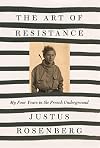
The Art of Resistance: My Four Years in the French Underground: A Memoir (2020) 144 copies, 9 reviews
Tagged
Common Knowledge
- Other names
- Guiton, Jean-Paul (false identity in the Resistance)
- Birthdate
- 1921-12-23
- Date of death
- 2021-10-30
- Gender
- male
- Education
- Sorbonne, Paris, France
University of Cincinnati (PhD)
Lycée Janson de Sailly, Paris - Occupations
- translator
resistance fighter
Holocaust survivor
professor
memoirist - Organizations
- Emergency Rescue Committee
Bard College
The New School - Awards and honors
- Commandeur de la Légion d’honneur (2017)
Bronze Star
Purple Heart - Nationality
- USA
- Birthplace
- Free City of Danzig
- Places of residence
- Paris, France
New York, New York, USA - Place of death
- Rhinebeck, New York, USA
- Associated Place (for map)
- New York, USA
Members
Reviews
Having come across Varian Fry in my reading some months ago, I've taken him up as a special interest. Fry was one of the great unsung heroes of the Second World War. He came to France in 1940, shortly after the Germans occupied France. He came representing the Emergency Rescue Committee that was based in New York. He had some money and a list of two hundred names of artists and writers who were selected because of their grave danger from the Nazis. He arrived in Marseille with no background show more in rescue work and no idea how to start.
From that beginning, Fry established a working organization that, by the time he left a little more than a year later (being expelled by the Vichy French with no help from the American State Department that also wanted him gone) his ERC had rescued close to 2000 people. Surely he is a person worth reading about.
Rosenberg has taught languages and literature at several American universities, but his own writing is mediocre: there is a sameness to it throughout -- like the clip-clopping of a horse slowly pulling a wagon. Still, what he talks about is interesting. His growing up in Danzig, coming to France, flanerie, etc. But when he came to talk about his time working for Varian Fry, I was shocked. He never once mentions Fry without insulting or demeaning him. This is true within the main part of the book as well as the epilogue where he really lets loose.
Rosenberg was a small player in Fry's ERC. He was hired by Fry to work as an office boy and was never part of the inner circle, never worked with the files mostly worked as a messenger, and thus he had no idea of what was really going on or how and what Fry had organized, nor, apparently the risks Fry was taking. He explains the trip Fry made escorting Franz Werfel and his wife Alma Mahler-Werfel, Henrich Mann and his wife, and Golo Mann, Thomas Mann's son (and Heinrich Mann's nephew) to the border and says he made the trip himself in order to show off to the office in New York. What was Fry's actual concern in making this strange trip? he asks. Maybe he should have read one of the other books on the subject in order to find the answer to that question. The whole episode is a travesty and can only be excused by the fact that Rosenberg's is a memoir and not a history.
In Fry's memoir written in 1945 (I could only find the abridged version) Rosenberg is never mentioned, as far as I recall.
In Villa Air-Bel by Rosemary Sullivan, Sullivan gives not a biography of Fry but a history of the villa where Fry and several of his collaborators and clients lived, in a suburb of Marseille. Sullivan, in her 415-page book, mentions Rosenberg briefly three times, saying that Miriam Davenport met Rosenberg in Toulouse; that she sometimes took him with her when she met with her friend Mary Jane Gold in cafes in Marseille; and that Fry hired him as an office boy.
In the 352-page biography A Quiet American: The Secret War of Varian Fry by Andy Marino (1999), Rosenberg is mentioned twice. Once he is said to be "adopted" by Miriam Davenport and Mary Jane Gold and became office boy; and later that he grew up into a fearless Resistance warrior.
In the 273-page biography A Hero of Our Own by Sheila Isenberg (2001), Rosenberg is mentioned twice: first that he was a friend of Miriam's, was in Marseille, and was trying to emigrate, and that Fry appointed him office boy; and second, that he was at the Villa Air-Bel that first weekend when members of the group moved in.
When reading Rosenberg's memoir, his hatred of Fry jumps out at you. I'm not a Fry scholar, but from my reading of the four other books, I think that all of Rosenberg's accusations and innuendos are incorrect, except that he remained mostly unrecognized. There is no one else mentioned who inspires such dislike. Why such dislike? I can only guess.
Perhaps it is that for all that Rosenberg turned out to work in the Resistance (and won a high honor for it), his first impulse was to escape -- to emigrate. When Paris was invaded, he headed for Bayonne (which he says is on the Mediterranean coast -- surely a slip that his editor missed) hoping to find a ship out, although he says so that he could join the Polish army in London. It is mentioned again in a letter he reproduces that he receives from Miriam after the war where she says that Fry had told her there was nothing they could do to help Rosenberg escape when she pressed him. Anyone reading any of these books would know that Fry suffered greatly for not being able to help more people. But his commitment, as set out by the ERC, was to help artists and writers who, because of their work, were in special danger from the Nazis. There were other organizations who took on other groups, such as labor leaders, politicians, or the The Joint to help Jews.
At the end of Rosenberg's book, he gives some information on many of the people who appear in his memoir, Fry included. Among other nasty things, he says that after the war Fry wrote a self-congratulatory memoir of his time in France. I beg to differ. Although I only managed to find the abridged edition, I saw nothing self-congratulatory in it. It seemed to me a straightforward telling of his story -- the good and the bad. Now Rosenberg's memoir on the other hand ... You'll find plenty of ego there. show less
From that beginning, Fry established a working organization that, by the time he left a little more than a year later (being expelled by the Vichy French with no help from the American State Department that also wanted him gone) his ERC had rescued close to 2000 people. Surely he is a person worth reading about.
Rosenberg has taught languages and literature at several American universities, but his own writing is mediocre: there is a sameness to it throughout -- like the clip-clopping of a horse slowly pulling a wagon. Still, what he talks about is interesting. His growing up in Danzig, coming to France, flanerie, etc. But when he came to talk about his time working for Varian Fry, I was shocked. He never once mentions Fry without insulting or demeaning him. This is true within the main part of the book as well as the epilogue where he really lets loose.
Rosenberg was a small player in Fry's ERC. He was hired by Fry to work as an office boy and was never part of the inner circle, never worked with the files mostly worked as a messenger, and thus he had no idea of what was really going on or how and what Fry had organized, nor, apparently the risks Fry was taking. He explains the trip Fry made escorting Franz Werfel and his wife Alma Mahler-Werfel, Henrich Mann and his wife, and Golo Mann, Thomas Mann's son (and Heinrich Mann's nephew) to the border and says he made the trip himself in order to show off to the office in New York. What was Fry's actual concern in making this strange trip? he asks. Maybe he should have read one of the other books on the subject in order to find the answer to that question. The whole episode is a travesty and can only be excused by the fact that Rosenberg's is a memoir and not a history.
In Fry's memoir written in 1945 (I could only find the abridged version) Rosenberg is never mentioned, as far as I recall.
In Villa Air-Bel by Rosemary Sullivan, Sullivan gives not a biography of Fry but a history of the villa where Fry and several of his collaborators and clients lived, in a suburb of Marseille. Sullivan, in her 415-page book, mentions Rosenberg briefly three times, saying that Miriam Davenport met Rosenberg in Toulouse; that she sometimes took him with her when she met with her friend Mary Jane Gold in cafes in Marseille; and that Fry hired him as an office boy.
In the 352-page biography A Quiet American: The Secret War of Varian Fry by Andy Marino (1999), Rosenberg is mentioned twice. Once he is said to be "adopted" by Miriam Davenport and Mary Jane Gold and became office boy; and later that he grew up into a fearless Resistance warrior.
In the 273-page biography A Hero of Our Own by Sheila Isenberg (2001), Rosenberg is mentioned twice: first that he was a friend of Miriam's, was in Marseille, and was trying to emigrate, and that Fry appointed him office boy; and second, that he was at the Villa Air-Bel that first weekend when members of the group moved in.
When reading Rosenberg's memoir, his hatred of Fry jumps out at you. I'm not a Fry scholar, but from my reading of the four other books, I think that all of Rosenberg's accusations and innuendos are incorrect, except that he remained mostly unrecognized. There is no one else mentioned who inspires such dislike. Why such dislike? I can only guess.
Perhaps it is that for all that Rosenberg turned out to work in the Resistance (and won a high honor for it), his first impulse was to escape -- to emigrate. When Paris was invaded, he headed for Bayonne (which he says is on the Mediterranean coast -- surely a slip that his editor missed) hoping to find a ship out, although he says so that he could join the Polish army in London. It is mentioned again in a letter he reproduces that he receives from Miriam after the war where she says that Fry had told her there was nothing they could do to help Rosenberg escape when she pressed him. Anyone reading any of these books would know that Fry suffered greatly for not being able to help more people. But his commitment, as set out by the ERC, was to help artists and writers who, because of their work, were in special danger from the Nazis. There were other organizations who took on other groups, such as labor leaders, politicians, or the The Joint to help Jews.
At the end of Rosenberg's book, he gives some information on many of the people who appear in his memoir, Fry included. Among other nasty things, he says that after the war Fry wrote a self-congratulatory memoir of his time in France. I beg to differ. Although I only managed to find the abridged edition, I saw nothing self-congratulatory in it. It seemed to me a straightforward telling of his story -- the good and the bad. Now Rosenberg's memoir on the other hand ... You'll find plenty of ego there. show less
The At of Resistance offers an interesting, if somewhat rambling, look into life in World War II France. The author originally traveled to France to attend the Sorbonne, but found himself working to help "decadent" (aka surrealist) artists and left-wing writers escape France to safer locations.
This title lacks the narrative power of novels set in occupied France, but that is clearly a result of its being based in fact, with a goal of recording actual happenings, rather than entertaining show more readers with imagined happening set in the same locale and time period. show less
This title lacks the narrative power of novels set in occupied France, but that is clearly a result of its being based in fact, with a goal of recording actual happenings, rather than entertaining show more readers with imagined happening set in the same locale and time period. show less
I wasn't left with entirely positive feelings about this book. I chose to read it because the area of France where I used to live was a Resistance hot-spot, and I was keen to understand more. But somehow, this account never got into the detail of what being in the Resistance really entailed. This non-observant Jewish boy was sent to Paris by his parents when it became clear that staying in Danzig (now Gdansk) was no longer a safe option. He completed his school education and entered the show more Sorbonne before the German occupation of France really kicked in. When it did, his career as a Resistance worker began, and saw him in various locations, in various roles at different times. His linguistic skills and Aryan appearance stood him in good stead, and he finished the war unscathed, his path to a future in American mapped out.
I realise Rosenberg was very elderly when he wrote this book, but the story seemed to lack telling detail. And though his achievements were many, and deserve to be recognised and celebrated, he did rather spell them out. There's a fuller story here that deserves to be recorded. show less
I realise Rosenberg was very elderly when he wrote this book, but the story seemed to lack telling detail. And though his achievements were many, and deserve to be recognised and celebrated, he did rather spell them out. There's a fuller story here that deserves to be recorded. show less
Fascinating look into his experiences during WWII as a resistance fighter. The story flows effortlessly, like words on ice. It was a "confluence of circumstances" that led him into that life and out of it as well.
Statistics
- Works
- 1
- Members
- 144
- Popularity
- #143,280
- Rating
- 3.4
- Reviews
- 9
- ISBNs
- 16