
Rachel Barenbaum
Author of A Bend in the Stars
About the Author
Works by Rachel Barenbaum
Associated Works
On Being Jewish Now: Reflections from Authors and Advocates (2024) — Contributor — 41 copies, 2 reviews
Tagged
Common Knowledge
- Birthdate
- 20th century
- Gender
- female
- Nationality
- USA
- Map Location
- USA
Members
Reviews
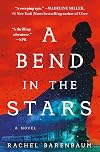
Either a) my sense of danger, my anxiousness for book characters in peril, indeed my very emotions have been shut off, or b) this book, despite much drama, high-stakes chases, etc, was incapable of eliciting any feeling from me whatsoever.
I gave it to my mother-in-law to read, along with this warning: "Many, many reviewers loved it. I wanted to love it but I found it very, very boring. I am giving it to you anyway in hopes that you are like the many other people, and not like me."
I gave it to my mother-in-law to read, along with this warning: "Many, many reviewers loved it. I wanted to love it but I found it very, very boring. I am giving it to you anyway in hopes that you are like the many other people, and not like me."
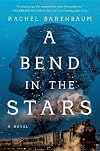
. Barenbaum has given us a sweeping epic steeped in the history of Czarist Russia, from its poverty-ridden shtels to its scientific intrigue that pits dark ambition against a passionate love of science. With the eclipse of 1914 as both backdrop and main event, Barenbaum’s characters demonstrate resilience in the face of prejudice and the ability to love even when the world is filled with hate. This heart-pounding journey across WWI era Russia about a brilliant young scientist racing show more against Einstein to solve one of the greatest mysteries of the universe is not to be missed! show less
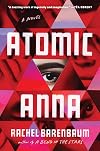
"Atomic Anna," by Rachel Barenbaum, is a saga that connects the lives of four fascinating women: Yulia Kramarova is a beautiful and passionate individual who, in the U. S. S. R., shares an apartment with a brilliant nuclear scientist, Anna Berkova. Anna's daughter, Manya (Molly), longs to be a professional cartoonist and draws female superheroes with amazing powers. Raisa, Molly's daughter, is a math prodigy like her grandmother. Anna, Molly, and Raisa face daunting challenges during their show more tumultuous lives. When the tragedy at Chernobyl occurs in 1986, Anna—the nuclear plant's chief engineer—is swept off her feet by the explosion and travels forward in time to 1992. What she sees upsets her greatly, and she begins to reconsider her decision to prioritize her loyalty to the Soviet Union and her professional responsibilities over her devotion to those who love and depend on her.
The author poignantly delves into the minds and hearts of her characters. She demonstrates that each person is a product of his or her genetic makeup and upbringing. Anna falls in love and has a baby girl, but she gives Molly to Yulia and her husband, Lazar, who sneak into America illegally. Molly pays tribute to her birth mother when she draws "Atomic Anna," and she hopes to make a living creating and selling her comic books. Yulia is a strict parent, but she is powerless to prevent Molly from behaving recklessly when a charming but irresponsible older man pursues her.
The most meaningful aspects of this ambitious novel are the complicated relationships that these women forge with one another and with the men in their lives. Although there is deep affection between them, there is also anger and miscommunication. The domestic dramas play out against the backdrop of a drab life of deprivation in the former Soviet Union as well as the struggles of Soviet Jews who try to start over in the United States. The time-travel aspect of the story does not work as well, since it is so strange and confusing. However, after reading "Atomic Anna," readers will ponder this thought-provoking dilemma: If time travel were indeed possible, what would be the consequences of trying to reshape events before they occur? show less
The author poignantly delves into the minds and hearts of her characters. She demonstrates that each person is a product of his or her genetic makeup and upbringing. Anna falls in love and has a baby girl, but she gives Molly to Yulia and her husband, Lazar, who sneak into America illegally. Molly pays tribute to her birth mother when she draws "Atomic Anna," and she hopes to make a living creating and selling her comic books. Yulia is a strict parent, but she is powerless to prevent Molly from behaving recklessly when a charming but irresponsible older man pursues her.
The most meaningful aspects of this ambitious novel are the complicated relationships that these women forge with one another and with the men in their lives. Although there is deep affection between them, there is also anger and miscommunication. The domestic dramas play out against the backdrop of a drab life of deprivation in the former Soviet Union as well as the struggles of Soviet Jews who try to start over in the United States. The time-travel aspect of the story does not work as well, since it is so strange and confusing. However, after reading "Atomic Anna," readers will ponder this thought-provoking dilemma: If time travel were indeed possible, what would be the consequences of trying to reshape events before they occur? show less
I think Kate Quinn may have ruined me for historical fiction, because this is the third book in the genre I’ve picked up this year and they’ve all kind of been disappointments. And this one even got positive comparisons to The Alice Network on the cover, so it had me excited.
First off, apologies for the slightly odd summary. I decided to go for teasing the mood and themes than the plot because the plot’s hard to summarize without giving too much away. (Basically, though, Vanya’s show more trying to beat Einstein to the relativity equations, because he can use them to save his family, but he’s got to cross Russia to do that, and his sister Miri, a surgeon, has to deal with life without him but ends up on a cross-country journey of her own.) It’s a story full of high emotion of all kinds—except that I never quite felt it. Not when homes get raided, not when they reach destinations, not when they succeed or fail in their goals.
I liked the setting, though. Russia in 1914 isn’t something I’ve read before, and the trend in historical fiction right now seems to be for World War II, so it was interesting to read something different. Barenbaum captures the sense of it well, I think—winter forests, rotting fields, Jewish slums, war in the distance—and has done enough research to make it all seem believable and to round out her protagonists. I liked that there were so many central Jewish characters too and that their Jewishness is central to the story, same with Vanya’s and Miri’s professions of physicist and surgeon. They’re properly courageous too, and survivors, and familiar and relatable despite the historical gap.
At the same time, if you’re looking for a book steeped in Jewish faith and culture, this isn’t it. This is “people being heroic in wartime while also being Jewish” more than “Jewish people being heroic in wartime”, if that makes sense. You’re not going to find a lot of stereotypes or typical jobs in the main cast either, and even the matchmaker grandmother is shown as a community leader and a pogrom survivor instead of the local busybody. I get the sense that Barenbaum’s bringing known figures or events to life instead of writing a book about Jewish people, and I liked that.
I also liked that I learned things! I didn’t know about the Jewish hospitals, for instance, and there’s stuff about trains and physics and the army too. It’s an interesting window into and realization of history, and you do get a sense of the fear and oppression and beauty and hope of Russia even before the war starts.
Unfortunately, like I said, I found writing a little less evocative than I’d hoped, so I ended up not connecting the characters much, and I found myself not caring so much about whether they succeeded, failed, or got reunited. Even the scenery There’s also a motif of superstition vs. science, which I wish had been taken a little further, and I had my usual problem with the frame story, which is that I generally don’t care for them.
In the end, this was interesting enough to hold my attention, but barely, and I’m not sure I’ll pick up another book of Barenbaum’s. Let’s hope my next historical read turns out to be more my speed.
To bear in mind: The characters face antisemitism, though it’s usually matter-of-fact, not violent, and something they’re just aware of and living with. There is also violence, including attempted sexual violence, misogyny, and war-created food shortages.
6.5/10 show less
First off, apologies for the slightly odd summary. I decided to go for teasing the mood and themes than the plot because the plot’s hard to summarize without giving too much away. (Basically, though, Vanya’s show more trying to beat Einstein to the relativity equations, because he can use them to save his family, but he’s got to cross Russia to do that, and his sister Miri, a surgeon, has to deal with life without him but ends up on a cross-country journey of her own.) It’s a story full of high emotion of all kinds—except that I never quite felt it. Not when homes get raided, not when they reach destinations, not when they succeed or fail in their goals.
I liked the setting, though. Russia in 1914 isn’t something I’ve read before, and the trend in historical fiction right now seems to be for World War II, so it was interesting to read something different. Barenbaum captures the sense of it well, I think—winter forests, rotting fields, Jewish slums, war in the distance—and has done enough research to make it all seem believable and to round out her protagonists. I liked that there were so many central Jewish characters too and that their Jewishness is central to the story, same with Vanya’s and Miri’s professions of physicist and surgeon. They’re properly courageous too, and survivors, and familiar and relatable despite the historical gap.
At the same time, if you’re looking for a book steeped in Jewish faith and culture, this isn’t it. This is “people being heroic in wartime while also being Jewish” more than “Jewish people being heroic in wartime”, if that makes sense. You’re not going to find a lot of stereotypes or typical jobs in the main cast either, and even the matchmaker grandmother is shown as a community leader and a pogrom survivor instead of the local busybody. I get the sense that Barenbaum’s bringing known figures or events to life instead of writing a book about Jewish people, and I liked that.
I also liked that I learned things! I didn’t know about the Jewish hospitals, for instance, and there’s stuff about trains and physics and the army too. It’s an interesting window into and realization of history, and you do get a sense of the fear and oppression and beauty and hope of Russia even before the war starts.
Unfortunately, like I said, I found writing a little less evocative than I’d hoped, so I ended up not connecting the characters much, and I found myself not caring so much about whether they succeeded, failed, or got reunited. Even the scenery There’s also a motif of superstition vs. science, which I wish had been taken a little further, and I had my usual problem with the frame story, which is that I generally don’t care for them.
In the end, this was interesting enough to hold my attention, but barely, and I’m not sure I’ll pick up another book of Barenbaum’s. Let’s hope my next historical read turns out to be more my speed.
To bear in mind: The characters face antisemitism, though it’s usually matter-of-fact, not violent, and something they’re just aware of and living with. There is also violence, including attempted sexual violence, misogyny, and war-created food shortages.
6.5/10 show less
Awards


You May Also Like


Associated Authors
Statistics
- Works
- 2
- Also by
- 1
- Members
- 544
- Popularity
- #45,826
- Rating
- 3.5
- Reviews
- 27
- ISBNs
- 22