
Ajit Mookerjee (1915–1990)
Author of Kali: The Feminine Force
About the Author
Image credit: Ajit Mookerjee in 1973 at Haa Retreat Center
Series
Works by Ajit Mookerjee
Indian Primitive Art 2 copies
Biren De 1 copy
Folk Art Of Bengal 1 copy
Crafts Museum — Author — 1 copy
Yoga art 1 copy
Designs in Indian textiles 1 copy
Indian dolls and toys 1 copy
Art of India — Author — 1 copy
Associated Works
Temple terracotta of Bengal — Editor — 1 copy
Tagged
Common Knowledge
- Birthdate
- 1915-12-29
- Date of death
- 1990
- Gender
- male
- Education
- University of Calcutta (MA) 1939
University of London (MA) 1942 - Occupations
- art curator
Director of the National Crafts Museum, New Delhi, India - Organizations
- Indian National Committee for ICOM (UNESCO)
Museum Association of India - Awards and honors
- Rockefeller Foundation Research Grant (1955)
Watumull Foundation Scholarship (1962) - Relationships
- Mookerjee, Sudha (wife)
Mookerjee, Prija (daughter)
Mookerjee, Parvati (daughter) - Short biography
- Ajit Mookerjee was born in Nalia, Faridpur, Bengal in 1915. He was a precocious scholar and earned his Masters Degrees at the ages of 22 and 25 respectively. At 22 he also received training in museology form the Victoria and Albert Museum and the Horseman Museum in London. Mookerjee published his first book "Folk Art of Bengal: A Study of an Art for, and of, the People" was published in 1939, when Mookerjee was 24 years old. During World War II, Mookerjee travelled extensively throughout India, Africa, and South America then began his work as the director of New Delhi's Crafts Museum. Much of Mookerjee's work focuses on Tantricism, and his first work "Tantra Art: Its Philosophy and Physics" was published in 1966. Mookerjee's personal collection of Tantric artifacts was among the finest ever assembled, and was the source of much of the content in his several books on the subject throughout the 70s and 80s.
- Nationality
- India
- Birthplace
- Nalia, Faridpur, Bengal, India
- Place of death
- India
- Associated Place (for map)
- Bengal, India
Members
Reviews

Kali, according to Indian legend, sprang forth from the brow of the Great Goddess Durga during a battle to annihilate demonic male power. With her lolling tongue and necklace of severed heads, Kali has often been represented simply as death-dealing, cruel and horrific. But as Ajit Mookerjee shows, the same goddess is creator and nurturer, feminine energy, the essence of mother-lover. As divine mother, lotus goddess, she brings worlds to birth, sustains them and absorbs them, in a show more never-ending cycle of her own opening and closing. In India, worship of the goddess in her multiple forms, and the vision of the sacred as woman, have never ceased. Now in the west, in a time when feminist views are gathering more and more importance, in an age which is seeing a shift between the sexes, Kali and all that she represents take on a new relevance. Using a collection of paintings, sculptures and original writings, this is a celebration of Kali and an exploration of the rich meanings of feminine divinity. show less
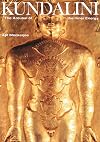
Today in the West, scientists and philosophers, mystics and seekers of higher consciousness are intensively searcing for means of releasing the vital energy (Kundalini) that lies latent in each of us. Tantra, which does not deny the body, but harnesses its energies and powers for spiritual growth, is the most detailed and authoritative teaching of this kind in existence.
In Kundalini: The Arousal fo the Inner Energy, Ajit Mookerjee writes of the core-experience of Tantra, the process in which show more the energy is awakened and rises through the energy centers (chakras) to unite with Pure Consciousness at the crown of the head.
The sacred texts of India are an indiespensable authority in the investigation of Kundalini, and of these, the author is an important scholar. Here he looks as well at modern accounts of Kundalini-experience, Eastern and Western, and describes the findings of the clinical studies and research so far undertaken in the West.
An acknowledged expert on Eastern art, Ajit Mookerjee has been able to draw for his illustrations on an extensive range of original manuscript sources, thus illuminating and enhancing his vivid text.
Contents
Preface
The tantric concept
The arousal of kundalini
Chakras-the energy centres
Transformation of energy
The kundalini experience classical and clinical
Notes on the text
Bibliography
Glossary
Index show less
In Kundalini: The Arousal fo the Inner Energy, Ajit Mookerjee writes of the core-experience of Tantra, the process in which show more the energy is awakened and rises through the energy centers (chakras) to unite with Pure Consciousness at the crown of the head.
The sacred texts of India are an indiespensable authority in the investigation of Kundalini, and of these, the author is an important scholar. Here he looks as well at modern accounts of Kundalini-experience, Eastern and Western, and describes the findings of the clinical studies and research so far undertaken in the West.
An acknowledged expert on Eastern art, Ajit Mookerjee has been able to draw for his illustrations on an extensive range of original manuscript sources, thus illuminating and enhancing his vivid text.
Contents
Preface
The tantric concept
The arousal of kundalini
Chakras-the energy centres
Transformation of energy
The kundalini experience classical and clinical
Notes on the text
Bibliography
Glossary
Index show less
Today in the West, scientists and philosophers, mystics and seekers of higher consciousness are intensively searching for means of releasing the vital energy (kundalini) that lies latent in each of us. Tantra, which does not deny the body, but harnesses its energies and powers for spiritual growth, is the most detailed and authoritative teaching of this kind in existence. In Kundalini: The Arousal of the Inner Energy, Ajit Mookerjee writes of the core experience of Tantra, the process in show more which the energy is awakened and rises throughout the energy centers (chakras) to unite with Pure Consciousness at the crown of the head.
• The author drew on an extensive range of original manuscript sources for both the text an the magnificent illustrations found throughout the book.
• Kundalini: The Arousal of the Inner Energy examines the modern accounts of the kundalini experience, both Eastern and Western, and describes the findings of the clinical studies and research so far undertaken in the West.
About the Author:
Ajit Mookerjee (1915-1990) a Bengali (India), was an acknowledged expert on Eastern art and the sacred texts of India, an art curator and passionate collector. His amazing collection, frequently exhibited throughout the world, reflects his enthusiasm and fascination with Tantric art and its deep spiritual power.
Arjit Mookerjee is the author of numerous books, including:
Tantra Art: its Philosophy and Physics
Tantra Asana: A Way to Self-realization
Yoga Art
The Tantric Way: Art, Science, Ritual
Kundalini: The Arousal of the Inner Energy
Kali, The Feminine Force show less
• The author drew on an extensive range of original manuscript sources for both the text an the magnificent illustrations found throughout the book.
• Kundalini: The Arousal of the Inner Energy examines the modern accounts of the kundalini experience, both Eastern and Western, and describes the findings of the clinical studies and research so far undertaken in the West.
About the Author:
Ajit Mookerjee (1915-1990) a Bengali (India), was an acknowledged expert on Eastern art and the sacred texts of India, an art curator and passionate collector. His amazing collection, frequently exhibited throughout the world, reflects his enthusiasm and fascination with Tantric art and its deep spiritual power.
Arjit Mookerjee is the author of numerous books, including:
Tantra Art: its Philosophy and Physics
Tantra Asana: A Way to Self-realization
Yoga Art
The Tantric Way: Art, Science, Ritual
Kundalini: The Arousal of the Inner Energy
Kali, The Feminine Force show less

"Although she is often presented (in her warrior aspect) as cruel and horrific, with her lolling red tongue and necklace of severed heads, Kali is creator and nurturer - the essence of Mother-love and feminine energy (Sakti). As Divine Mother Lotus-goddess, she brings worlds to birth, sustains them and absorbs them, in a never-ending cycle of her own opening and closing."--Back cover. Source: Publisher
You May Also Like


Associated Authors
Statistics
- Works
- 26
- Also by
- 3
- Members
- 803
- Popularity
- #31,758
- Rating
- 3.9
- Reviews
- 12
- ISBNs
- 46
- Languages
- 5