
Nicole Cuffy
Author of O Sinners!
Works by Nicole Cuffy
Tagged
Common Knowledge
There is no Common Knowledge data for this author yet. You can help.
Members
Reviews
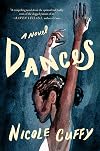
This story gets the isolating nature and constant struggles of being a Black ballerina well. Ballet in itself has always been restrictive and rigid.
The threat of being constantly replaced, a token, and having to prove your worth to others and yourself constantly are themes. Ballet can be such a rampant breeding ground for body dysmorphia, eating disorders, and internalized self-hatred.
Even more, Celine "Cece’s" lack of family and community weighs on her more heavily. She has few people show more who have her best interests in mind. There is a deep, subtle pain when your parents don’t believe in you or accept you fully.
Every moment Cece is waiting to fail. Constant stress. The reading experience was very stressful for me because every moment I was waiting for her to ruin her ballet career irreparably. Then, I was getting squeamish with her medical issues.
With added pressure, Cece becomes a prominent Black ballerina and is thrust overnight into a status symbol for young Black children and people. She wrestles with hating and understanding the value of an unasked symbolism.
Then, of course, the potential career-ending situation pops up. Bruh. she gets pregnant. How do you trust in the pull-out method??? But she was young with no guidance, so I guess. Ain’t bout ish men gon do it every time.
I don’t know how to phrase this correctly. But this felt like watching a fictional movie about enslavement. You’re always left feeling drained, but you understand the execution and the hard truths. It’s just the reality. I don’t believe every story has to make you feel good or uplifting. Sometimes, a story has to lay bare the dirt and grit of a thing, an industry.
Overall, I believe the author effectively showed the tense environments many of these dance studios operate under, but it’s a dampening read. I understood Cece but never really liked her as a character. But I liked the connection and sorrow Cece had for her brother Paul as a positive. The fifth section was my favorite when it went unexpectedly Southern.
Not enjoyable but not bad! show less
The threat of being constantly replaced, a token, and having to prove your worth to others and yourself constantly are themes. Ballet can be such a rampant breeding ground for body dysmorphia, eating disorders, and internalized self-hatred.
Even more, Celine "Cece’s" lack of family and community weighs on her more heavily. She has few people show more who have her best interests in mind. There is a deep, subtle pain when your parents don’t believe in you or accept you fully.
Every moment Cece is waiting to fail. Constant stress. The reading experience was very stressful for me because every moment I was waiting for her to ruin her ballet career irreparably. Then, I was getting squeamish with her medical issues.
With added pressure, Cece becomes a prominent Black ballerina and is thrust overnight into a status symbol for young Black children and people. She wrestles with hating and understanding the value of an unasked symbolism.
Then, of course, the potential career-ending situation pops up. Bruh.
I don’t know how to phrase this correctly. But this felt like watching a fictional movie about enslavement. You’re always left feeling drained, but you understand the execution and the hard truths. It’s just the reality. I don’t believe every story has to make you feel good or uplifting. Sometimes, a story has to lay bare the dirt and grit of a thing, an industry.
Overall, I believe the author effectively showed the tense environments many of these dance studios operate under, but it’s a dampening read. I understood Cece but never really liked her as a character. But I liked the connection and sorrow Cece had for her brother Paul as a positive. The fifth section was my favorite when it went unexpectedly Southern.
Not enjoyable but not bad! show less
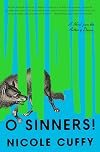
Characterizing cult behavior seems to have become a thing in America following the success of the MAGA movement. History teaches us about certain commonalities among cults: charismatic leadership, devoutly held beliefs, intense devotion to a cause, isolation from mainstream society, and potential for violence. Cuffy’s novel depicts a fictional group (“the nameless”) that seems to satisfy many of those criteria. Superficially, they appear beneficent enough, but her protagonist, Faruq show more Zaidi, questions that assumption. As an investigative journalist, Faruq seeks to uncover the true nature of the group and especially its charismatic leader—Odo—by embedding himself in their isolated commune—the Forbidden City—located in a California redwood forest.
Cuffy’s approach to examining the nameless comes in three parts. First, she follows life in the commune through the eyes of Faruq while simultaneously raising questions about his own demons and how they may be impacting his perspectives. Meanwhile, she explores Odo’s backstory as an infantryman during the Vietnam war. Despite these chapters being intensely violent, they carry a strong sense of comradery and brotherhood. Thirdly, through a faux documentary, we learn of an example of the type of community unrest and prejudice that cults frequently encounter. Each of these settings focusses on a separate element: beliefs and behaviors; origins and motivations; and challenges fitting into mainstream society.
Using this structure, Cuffy masterfully explores a rich array of themes, including belief/doubt, isolation/community, violence/emotion, prejudice/religion, and leadership/grifting. However, in the final analysis, she leaves an unsettling array questions unanswered. Is the nameless harmful to its followers or society? Is Odo a charlatan or a devout leader? Has Faruq lost his journalistic objectivity? What will the ultimate fate or the nameless be? In fairness, the novel seems to end on a note of hope. show less
Cuffy’s approach to examining the nameless comes in three parts. First, she follows life in the commune through the eyes of Faruq while simultaneously raising questions about his own demons and how they may be impacting his perspectives. Meanwhile, she explores Odo’s backstory as an infantryman during the Vietnam war. Despite these chapters being intensely violent, they carry a strong sense of comradery and brotherhood. Thirdly, through a faux documentary, we learn of an example of the type of community unrest and prejudice that cults frequently encounter. Each of these settings focusses on a separate element: beliefs and behaviors; origins and motivations; and challenges fitting into mainstream society.
Using this structure, Cuffy masterfully explores a rich array of themes, including belief/doubt, isolation/community, violence/emotion, prejudice/religion, and leadership/grifting. However, in the final analysis, she leaves an unsettling array questions unanswered. Is the nameless harmful to its followers or society? Is Odo a charlatan or a devout leader? Has Faruq lost his journalistic objectivity? What will the ultimate fate or the nameless be? In fairness, the novel seems to end on a note of hope. show less
Rating: 3.5* of five
The Publisher Says: A journalist investigates a seductive and mysterious cult and its leader, an enigmatic Vietnam War veteran, in this not-to-be-missed novel.
Faruq Zaidi, a young journalist reeling from the recent death of his father, a devout Muslim, takes the opportunity to embed in a cult called The Nameless. Based in the California redwoods and shepherded by an enigmatic Vietnam War-veteran named Odo, The Nameless adhere to the 18 Utterances, including teachings such show more as “THERE IS NO GOD BUT THE NAMELESS,” “ALL SUFFERING IS DISTORTION,” and “SEE ONLY BEAUTY.” Faruq, skeptical but committed to unraveling the mystery of The Nameless, extends his stay over months, as he gets deeper into the cult's inner workings, compassionate teachings, and closer to Odo. Faruq himself begins to unravel, forced to come-to-terms with the memories he has been running from while trying to resist Odo's spell.
Told in three seamlessly interwoven threads between Faruq’s present-day investigation, Odo’s time before the formation of the movement as a Black infantryman during the Vietnam War, alongside three other Black soldiers, and a documentary script that recounts The Nameless’ clash with a Texan fundamentalist church, O SINNERS! examines both longing and belonging. Ultimately the novel What is it that we seek from cults and, inevitably, from each other?
I RECEIVED A DRC FROM THE PUBLISHER VIA NETGALLEY. THANK YOU.
My Review: I am exactly the right audience for this story: I think cults are reprehensible, predatory horrors; I'm part of the generation defined by the Vietnam War and its aftermath; I'm a strong advocate of novels that tell stories complicated by memories a character needs to repress in order to make sense of their daily life.
After about the fifth time-switch I felt ping-ponged; after the repetitions of the 18 Utterances, I was not able to control my eyerolling. I just liked the story, yet didn't like the storytelling as much.
One World asks $13.99 for the ebook. I myownself would ask the library to get one. show less
The Publisher Says: A journalist investigates a seductive and mysterious cult and its leader, an enigmatic Vietnam War veteran, in this not-to-be-missed novel.
Faruq Zaidi, a young journalist reeling from the recent death of his father, a devout Muslim, takes the opportunity to embed in a cult called The Nameless. Based in the California redwoods and shepherded by an enigmatic Vietnam War-veteran named Odo, The Nameless adhere to the 18 Utterances, including teachings such show more as “THERE IS NO GOD BUT THE NAMELESS,” “ALL SUFFERING IS DISTORTION,” and “SEE ONLY BEAUTY.” Faruq, skeptical but committed to unraveling the mystery of The Nameless, extends his stay over months, as he gets deeper into the cult's inner workings, compassionate teachings, and closer to Odo. Faruq himself begins to unravel, forced to come-to-terms with the memories he has been running from while trying to resist Odo's spell.
Told in three seamlessly interwoven threads between Faruq’s present-day investigation, Odo’s time before the formation of the movement as a Black infantryman during the Vietnam War, alongside three other Black soldiers, and a documentary script that recounts The Nameless’ clash with a Texan fundamentalist church, O SINNERS! examines both longing and belonging. Ultimately the novel What is it that we seek from cults and, inevitably, from each other?
I RECEIVED A DRC FROM THE PUBLISHER VIA NETGALLEY. THANK YOU.
My Review: I am exactly the right audience for this story: I think cults are reprehensible, predatory horrors; I'm part of the generation defined by the Vietnam War and its aftermath; I'm a strong advocate of novels that tell stories complicated by memories a character needs to repress in order to make sense of their daily life.
After about the fifth time-switch I felt ping-ponged; after the repetitions of the 18 Utterances, I was not able to control my eyerolling. I just liked the story, yet didn't like the storytelling as much.
One World asks $13.99 for the ebook. I myownself would ask the library to get one. show less
Great book! With the audio version, the documentary script was harder to follow, but I really enjoyed all the other parts so much that it made up for it. Really cool story which weaves in so much and makes you really think. I'm definitely picking up a copy.
Awards


You May Also Like
Associated Authors
Statistics
- Works
- 3
- Members
- 153
- Popularity
- #136,479
- Rating
- 3.4
- Reviews
- 5
- ISBNs
- 10