
Miranda Davis (1)
Author of The Duke's Tattoo (Horsemen of the Apocalypse, #1)
For other authors named Miranda Davis, see the disambiguation page.
Series
Works by Miranda Davis
Tagged
Common Knowledge
- Gender
- female
Members
Reviews
The Duke's Tattoo: A Regency Romance of Love and Revenge, Though Not in That Order (Horsemen of the Apocalypse, #1) by Miranda Davis

For the longest time, I've been meaning to change my review to a unqualified FIVE PLUS STARS!
READ THIS BOOK! It's a great bargain, at only $2.99 on Amazon.
This first-time author read my (and others') reviews on Amazon and rewrote parts, addressing all of the little things that I complained about. It is now just about perfect, and it gives me great joy to see that so many others on Goodreads have enjoyed it. And don't forget to add [b:The Baron's Betrothal: An On-Again, Off-Again, On-Again show more Regency Romance|15720604|The Baron's Betrothal An On-Again, Off-Again, On-Again Regency Romance (Horsemen of the Apocalypse #2)|Miranda Davis|http://d.gr-assets.com/books/1340563415s/15720604.jpg|21393409], coming in 2013, to your TBR list.
Original Review from 12 June 2012:
I happened across this book when one of my GR friends added it as a “to read.” It’s a cheap ($2.99), self-published Amazon Kindle book, and it sounded intriguing. But what really convinced me to read it was looking at the reviews on Amazon (4.6/5 stars). This first-time author has taken the trouble to respond to several of the reviews, thanking the reviewers (gasp!), and agreeing with some of their criticisms (gasp! gasp!). What a refreshing contrast to some other authors whose well-publicized, shameful attack on GR reviewers has been much discussed of late.
Well, Miranda Davis has written a very good book here. I commend her for wanting to make it even better, and it’s in that spirit that I offer this review. First of all, she’s come up with an original enemies-to-friends/revenge plot. Jeremy (“Jem”) Maubrey, tenth Duke of Ainsworth, finds himself kidnapped, drugged, and left with a tattoo in a most personal and private place. And he has no idea why. Eventually, he traces the cause of his misfortune to a female apothecary in Bath, Miss Prudence Haversham. Setting his man of business to work, he buys her shop and her home, intending to turn her out into the streets with nothing. But first, he travels to Bath to witness her comeuppance.
Prudence is horrified to learn that her revenge has been carried out on the wrong duke; her actual target was the now-deceased ninth duke, Jem’s brother. Ten years earlier, he had attempted to debauch her, causing her odious brother to turn her out of the house in disgrace. Ever since, she has lived quietly in Bath and become a successful and well-respected apothecary. The duke likes her and comes to regret his plans for revenge. Eventually, he realizes that he’s fallen in love with her, but misunderstandings complicate their path to a happy ending.
What I Liked
• As mentioned, the plot is original and lively. Things move along briskly, and we get both the hero’s and heroine’s perspectives.
• Jem is a delicious hero – handsome, gallant, and a bit embarrassed by the notoriety of being one of the group known as the Four Horsemen of the Apocalypse.
• The other three horsemen are worked into the story quite well. Some authors tend to litter their stories with sequel-fodder, but this author did an excellent job of making them part of this story. It’s actually quite funny when they dash off to Bath to “rescue” Jem from the clutches of this conniving nobody.
• Prudence is an engaging bluestocking spinster heroine – smart, witty, industrious, and not inclined to dwell on the misfortune that brought her to Bath. (Her revenge on the duke had been nothing more than a silly dream until her devoted servants took matters into their own hands.)
• There are several well-drawn secondary characters, in addition to the Four Horsemen: the duke’s war-scarred butler and valet, Prudence’s servants, her friend Lady Abingdon, even the duke’s pack of rescued mongrels (one of which plays an important role in reuniting the couple).
• The dialogue is sprightly and fairly true to the period. I was not distracted by anachronisms, although there may have been some.
• I very much enjoyed the chapter titles – for example, “Chapter 10: In which our hero sallies forth while our heroine beats a hasty retreat.”
• The epilogue, where we finally learn what the tattoo looks like, was quite funny.
What I Didn’t Like
• There’s really only one major thing to criticize here, and it’s something the author is already addressing. The last third or so of the book revolves around the Big Misunderstanding, brought about largely because of Jem’s inability to discuss his feelings but also by Prudence’s reticence. In fact, there’s a great chapter title: “In which there is an unfortunate case of ‘he said she heard.’” This goes on too long, however, and the story really bogs down. Jem leaves Bath and plans the “perfect proposal,” but he procrastinates for reasons not clear to me and leaves Prudence in despair.
• Prudence’s brother, Sir Oswald Dabney, and his wife are what passes for villains in this story, but they are so thinly sketched as to be unbelievable. Why did Sir Oswald turn on his sister so viciously after her encounter with the ninth duke? Why did he so casually sell her out of house and home? Did he hate her? Was he merely greedy? Perhaps he was just the pawn of his grasping, jealous wife? And when Jem asks for her hand in marriage, why would he even hesitate? I would have expected him to be thrilled at the prospect of such a close connection with a powerful duke, no matter how the marriage came about.
What Bugged Me
• Sir Oswald Dabney is a baronet; therefore, he should be referred to as “Sir Oswald,” never “Sir Dabney.” His wife is “Lady Dabney.” For some reason this American is a stickler for proper usage of titles. I mean, if an author is going to write historicals set in England, the names should be correct. Wikipedia explains it all quite nicely.
• Some grammar nits: “affect” rather then “effect;” “just desserts” rather than “just deserts;” “discrete” rather than “discreet.”
• “Nymph.” Sixty-three times.
• Lady Jane Babcock. She sort of comes out of nowhere, makes a little mischief, and disappears. Why did she think Jem was even interested in her?
Conclusion
I give the first two-thirds or so of this book an unqualified five stars, but the final third disappoints. Although the book is not technically considered a work-in-progress, the author has stated that she’s rewriting parts of it and will post a new version (free) on Amazon. Her gracious, even eager, acceptance of readers’ suggestions, as well as her undoubted talent, prompt me to give The Duke’s Tattoo: A Regency Romance of Love and Revenge Though Not in That Order an enthusiastic four stars! Definitely recommended. show less
READ THIS BOOK! It's a great bargain, at only $2.99 on Amazon.
This first-time author read my (and others') reviews on Amazon and rewrote parts, addressing all of the little things that I complained about. It is now just about perfect, and it gives me great joy to see that so many others on Goodreads have enjoyed it. And don't forget to add [b:The Baron's Betrothal: An On-Again, Off-Again, On-Again show more Regency Romance|15720604|The Baron's Betrothal An On-Again, Off-Again, On-Again Regency Romance (Horsemen of the Apocalypse #2)|Miranda Davis|http://d.gr-assets.com/books/1340563415s/15720604.jpg|21393409], coming in 2013, to your TBR list.
Original Review from 12 June 2012:
I happened across this book when one of my GR friends added it as a “to read.” It’s a cheap ($2.99), self-published Amazon Kindle book, and it sounded intriguing. But what really convinced me to read it was looking at the reviews on Amazon (4.6/5 stars). This first-time author has taken the trouble to respond to several of the reviews, thanking the reviewers (gasp!), and agreeing with some of their criticisms (gasp! gasp!). What a refreshing contrast to some other authors whose well-publicized, shameful attack on GR reviewers has been much discussed of late.
Well, Miranda Davis has written a very good book here. I commend her for wanting to make it even better, and it’s in that spirit that I offer this review. First of all, she’s come up with an original enemies-to-friends/revenge plot. Jeremy (“Jem”) Maubrey, tenth Duke of Ainsworth, finds himself kidnapped, drugged, and left with a tattoo in a most personal and private place. And he has no idea why. Eventually, he traces the cause of his misfortune to a female apothecary in Bath, Miss Prudence Haversham. Setting his man of business to work, he buys her shop and her home, intending to turn her out into the streets with nothing. But first, he travels to Bath to witness her comeuppance.
Prudence is horrified to learn that her revenge has been carried out on the wrong duke; her actual target was the now-deceased ninth duke, Jem’s brother. Ten years earlier, he had attempted to debauch her, causing her odious brother to turn her out of the house in disgrace. Ever since, she has lived quietly in Bath and become a successful and well-respected apothecary. The duke likes her and comes to regret his plans for revenge. Eventually, he realizes that he’s fallen in love with her, but misunderstandings complicate their path to a happy ending.
What I Liked
• As mentioned, the plot is original and lively. Things move along briskly, and we get both the hero’s and heroine’s perspectives.
• Jem is a delicious hero – handsome, gallant, and a bit embarrassed by the notoriety of being one of the group known as the Four Horsemen of the Apocalypse.
• The other three horsemen are worked into the story quite well. Some authors tend to litter their stories with sequel-fodder, but this author did an excellent job of making them part of this story. It’s actually quite funny when they dash off to Bath to “rescue” Jem from the clutches of this conniving nobody.
• Prudence is an engaging bluestocking spinster heroine – smart, witty, industrious, and not inclined to dwell on the misfortune that brought her to Bath. (Her revenge on the duke had been nothing more than a silly dream until her devoted servants took matters into their own hands.)
• There are several well-drawn secondary characters, in addition to the Four Horsemen: the duke’s war-scarred butler and valet, Prudence’s servants, her friend Lady Abingdon, even the duke’s pack of rescued mongrels (one of which plays an important role in reuniting the couple).
• The dialogue is sprightly and fairly true to the period. I was not distracted by anachronisms, although there may have been some.
• I very much enjoyed the chapter titles – for example, “Chapter 10: In which our hero sallies forth while our heroine beats a hasty retreat.”
• The epilogue, where we finally learn what the tattoo looks like, was quite funny.
What I Didn’t Like
• There’s really only one major thing to criticize here, and it’s something the author is already addressing. The last third or so of the book revolves around the Big Misunderstanding, brought about largely because of Jem’s inability to discuss his feelings but also by Prudence’s reticence. In fact, there’s a great chapter title: “In which there is an unfortunate case of ‘he said she heard.’” This goes on too long, however, and the story really bogs down. Jem leaves Bath and plans the “perfect proposal,” but he procrastinates for reasons not clear to me and leaves Prudence in despair.
• Prudence’s brother, Sir Oswald Dabney, and his wife are what passes for villains in this story, but they are so thinly sketched as to be unbelievable. Why did Sir Oswald turn on his sister so viciously after her encounter with the ninth duke? Why did he so casually sell her out of house and home? Did he hate her? Was he merely greedy? Perhaps he was just the pawn of his grasping, jealous wife? And when Jem asks for her hand in marriage, why would he even hesitate? I would have expected him to be thrilled at the prospect of such a close connection with a powerful duke, no matter how the marriage came about.
What Bugged Me
• Sir Oswald Dabney is a baronet; therefore, he should be referred to as “Sir Oswald,” never “Sir Dabney.” His wife is “Lady Dabney.” For some reason this American is a stickler for proper usage of titles. I mean, if an author is going to write historicals set in England, the names should be correct. Wikipedia explains it all quite nicely.
• Some grammar nits: “affect” rather then “effect;” “just desserts” rather than “just deserts;” “discrete” rather than “discreet.”
• “Nymph.” Sixty-three times.
• Lady Jane Babcock. She sort of comes out of nowhere, makes a little mischief, and disappears. Why did she think Jem was even interested in her?
Conclusion
I give the first two-thirds or so of this book an unqualified five stars, but the final third disappoints. Although the book is not technically considered a work-in-progress, the author has stated that she’s rewriting parts of it and will post a new version (free) on Amazon. Her gracious, even eager, acceptance of readers’ suggestions, as well as her undoubted talent, prompt me to give The Duke’s Tattoo: A Regency Romance of Love and Revenge Though Not in That Order an enthusiastic four stars! Definitely recommended. show less
A little conflicted about this one... The idea/title of this book/series is so intriguing, and I think it could work but not in it's present state. There were so many contradictions that I never got handle on the H/H as people...
- The initial idea of the tattoo is comical, but the story itself never is.
- Hero is supposedly the most badass of this group of badasses from the war but never acts like it. In fact he seems more whiny than strong.
- The Heroine is pretty matter-of-fact and show more level-headed in most aspects of her life, but then she does the whole tattoo thing which, as the book went on, became more and more improbable for her character. It seriously felt like she should have had nothing to do with that entire scheme, or even thinking/joking about it in the first place.
The story started out cute and then by the third chapter became confusing before wading into the whole "she won't marry him even though he wants her to" thing.
I did appreciate how Jem struggled with his inability to express his feelings and wishes with Prudence. A man accustomed to action being less able to get his point across in an effective manner was totally believable to me since I've seen it several times with friends.
Won't be continuing this series... The next book has a really interesting name/premise, but so did this one and look how that turned out. show less
- The initial idea of the tattoo is comical, but the story itself never is.
- Hero is supposedly the most badass of this group of badasses from the war but never acts like it. In fact he seems more whiny than strong.
- The Heroine is pretty matter-of-fact and show more level-headed in most aspects of her life, but then she does the whole tattoo thing which, as the book went on, became more and more improbable for her character. It seriously felt like she should have had nothing to do with that entire scheme, or even thinking/joking about it in the first place.
The story started out cute and then by the third chapter became confusing before wading into the whole "she won't marry him even though he wants her to" thing.
I did appreciate how Jem struggled with his inability to express his feelings and wishes with Prudence. A man accustomed to action being less able to get his point across in an effective manner was totally believable to me since I've seen it several times with friends.
Won't be continuing this series... The next book has a really interesting name/premise, but so did this one and look how that turned out. show less
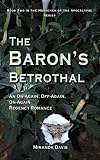
The Baron's Betrothal: An On-Again, Off-Again, On-Again Regency Romance (Horsemen of the Apocalypse #2) by Miranda Davis

Blurb: Poor William Tyler de Sayre, Lord Clun, finds true love while hoping to avoid the catastrophe altogether by arranging a marriage to someone he’s never met. At the same time, Lady Elizabeth Chapin Damogan, whose father betrothed her to the baron without so much as a ‘by your leave,’ will be damned if she marries a man she’s never met, much less a man who refuses to consider the possibility of love.
This is the story of two very determined people learning to recognize that not show more all of their preconceptions about love and marriage are necessarily correct.
Our hero is William Tyler de Sayre, Baron Clun. He is dauntingly large, with a wild mane of black hair, a gruff manner of speaking, and a habit of scowling out from under his dark brows. Ladies and gentlemen alike find him intimidating, particularly given the fame he has earned as one of the Four Horsemen of the Apocalypse, renowned for their ferocious exploits in the wars against Napoleon.
Clun has returned from the wars unscathed and is mindful of his duty to marry and beget an heir. He has no interest in subjecting himself to the “full horrors of the Marriage Mart,” so he arranges with the Earl of Morefield to marry his daughter, Lady Elizabeth Damogen. Clun has never met the lady, but he doesn’t need to. In his view, a “marriage required mutual honor, respect and wifely obedience. He wanted a sound marriage free of nincompoopery so he selected a spouse as his forebears had, based on rational considerations alone.”
Clun most assuredly does not want a marriage like his parents had. “Their marriage, begun in the heat of impulse, had curdled like fresh milk on a hot day and left a permanently sour taste in the mouths of man and wife ever after.” The final straw was when old Lord Clun insisted that his illegitimate son (born before his marriage) live with them after the boy’s mother died. Lady Clun was incensed. His father soon fled to London and lived out the rest of his life in contentment with his housekeeper; Clun rarely saw his father after that. From his mother, he received nothing but bitterness.
The closest thing to love that Clun has ever experienced is his feeling for his half-brother, who serves as steward of Clun’s estate, along with unique affection, forged in war, that he shares with his three comrades.
Lady Elizabeth Damogen meanwhile has had a different experience. Her mother and father dearly loved one another, but her mother died in childbirth. Thereafter, the earl devoted himself to his wife's memory and to the study of etymology and left Elizabeth’s upbringing to a kindly widowed cousin. Mrs. Abeel taught her all of the things a lady was expected to know but also taught her to think for herself. Lady Elizabeth is well read, highly perceptive, empathetic, pretty but no great beauty, and rather tall. She’s no busybody, but she does like to “help” her friends when she sees a need. She’s had one season, but it didn’t amount to much. Her father was concerned that she might fall prey to a fortune hunter, so Lord Clun’s proposal suited him exactly.
The arrangement did not suit Elizabeth, however, and although she is devoted to her father, she is incensed to learn that he has bound her to this unknown lord, who for all she knows is a doddering old fool who feeds the hounds from the table. She reckons there must be something awful about him if he’s unable to attract a wife from among the ladies of his acquaintance. She resents being “bartered away like a prize heifer,” so when she hears that he is in London and ready to marry, she flees London and hides out in the last place anyone would expect – a remote cottage on the vast estate of Lord Clun himself.
And there begins our tale – when Lord Clun and Lady Elizabeth meet by happenstance, neither at first knowing who the other is. Lady Elizabeth proudly tells Clun that she plans to hide out there until she reaches her majority and can do as she pleases. Clun is intrigued, and strangely attracted to this outspoken woman. Secretly, he is pleased that his bride is not the “horse-faced, ham-ankled” woman he had expected. Lady Elizabeth finds this country bumpkin, “sculpted like a Roman athlete,” rather appealing, which only reinforces her determination not to marry a foolish old baron who is too much of a spineless coward to propose marriage in person.
Clun, thinking to have a little fun, does not reveal his true identity to Lady Elizabeth. As he gets better acquainted with her, though, he learns that she is determined to marry for love or not at all. She wants a husband who will love her forever, the way her father loved her late mother. When Lady Elizabeth eventually learns who Clun really is, she is at first furious at his deception, but then she realizes that she might come to love him and he her. The rest of this book is the touching, frustrating, truly on-again, off-again story of Clun and Elizabeth figuring out whether and how they can find a happy ending together. They laugh, argue, dance, and struggle to appreciate one another's hopes and fears.
This book is quite different from the light-spirited [b:The Duke's Tattoo|13575994|The Duke's Tattoo (Horsemen of the Apocalypse, #1)|Miranda Davis|http://d.gr-assets.com/books/1341363275s/13575994.jpg|19158253]. This romance is darker, more troubled, more complicated, and ultimately more affecting than the first book. At the same time, though, it is filled with the humor and sparkling dialogue that made The Duke’s Tattoo so engaging. The secondary characters are deftly drawn – including Clun’s half-brother, Tyler Rodwell, his ghastly mother, and Lady Elizabeth’s sweet but withdrawn father.
We see more of the other three Horsemen of the Apocalypse, and I’m eager to read the stories of Lord Seelye and Mr. Percy. The (tattooed) Duke and Duchess of Ainsworth play an important role in bringing Clun and Elizabeth to their happy ending, and the Epilogue features a somber reminder of the dangers of childbirth in the early 19th century, as the Horsemen await the birth of the Ainsworths’ twins. It’s all HEA, though, of course.
By the end of the book, I liked Lady Elizabeth immensely, but I just flat fell in love with Clun. I want to time-travel back to 1815 and marry him myself!
Miranda Davis has a marvelous talent for creating fascinating characters, putting just the right words in their mouths, and setting a plot that keeps the reader engaged. This story is just lovely, and if the last paragraph doesn’t put a lump in your throat, then why are you reading romance?
Full disclosure: I’ve never met the author, but we have become friends on Goodreads. I read an earlier draft of this book, made a few observations, and helped proof the final version. show less
This is the story of two very determined people learning to recognize that not show more all of their preconceptions about love and marriage are necessarily correct.
Our hero is William Tyler de Sayre, Baron Clun. He is dauntingly large, with a wild mane of black hair, a gruff manner of speaking, and a habit of scowling out from under his dark brows. Ladies and gentlemen alike find him intimidating, particularly given the fame he has earned as one of the Four Horsemen of the Apocalypse, renowned for their ferocious exploits in the wars against Napoleon.
Clun has returned from the wars unscathed and is mindful of his duty to marry and beget an heir. He has no interest in subjecting himself to the “full horrors of the Marriage Mart,” so he arranges with the Earl of Morefield to marry his daughter, Lady Elizabeth Damogen. Clun has never met the lady, but he doesn’t need to. In his view, a “marriage required mutual honor, respect and wifely obedience. He wanted a sound marriage free of nincompoopery so he selected a spouse as his forebears had, based on rational considerations alone.”
Clun most assuredly does not want a marriage like his parents had. “Their marriage, begun in the heat of impulse, had curdled like fresh milk on a hot day and left a permanently sour taste in the mouths of man and wife ever after.” The final straw was when old Lord Clun insisted that his illegitimate son (born before his marriage) live with them after the boy’s mother died. Lady Clun was incensed. His father soon fled to London and lived out the rest of his life in contentment with his housekeeper; Clun rarely saw his father after that. From his mother, he received nothing but bitterness.
A parent’s harsh judgment of a child carries with it near-divine authority. Over time, it becomes a governing voice in that child’s head, whispering invective, raising doubts and quashing hope. Sadly, such a child might learn to ignore that belittling voice but he could not escape its corrosive effects. Thus it was with William Tyler de Sayre.
As William grew up, he still felt no love for his mother or absent father and concluded that perhaps his mother was right: he was cold and incapable of proper love. From his mother, William learned one more unforgettable lesson: no one inflicts more suffering than a woman embittered by disappointment in love. A resentful wife could drive off a husband and heap misery upon blameless children without a moment’s remorse.
The closest thing to love that Clun has ever experienced is his feeling for his half-brother, who serves as steward of Clun’s estate, along with unique affection, forged in war, that he shares with his three comrades.
Lady Elizabeth Damogen meanwhile has had a different experience. Her mother and father dearly loved one another, but her mother died in childbirth. Thereafter, the earl devoted himself to his wife's memory and to the study of etymology and left Elizabeth’s upbringing to a kindly widowed cousin. Mrs. Abeel taught her all of the things a lady was expected to know but also taught her to think for herself. Lady Elizabeth is well read, highly perceptive, empathetic, pretty but no great beauty, and rather tall. She’s no busybody, but she does like to “help” her friends when she sees a need. She’s had one season, but it didn’t amount to much. Her father was concerned that she might fall prey to a fortune hunter, so Lord Clun’s proposal suited him exactly.
The arrangement did not suit Elizabeth, however, and although she is devoted to her father, she is incensed to learn that he has bound her to this unknown lord, who for all she knows is a doddering old fool who feeds the hounds from the table. She reckons there must be something awful about him if he’s unable to attract a wife from among the ladies of his acquaintance. She resents being “bartered away like a prize heifer,” so when she hears that he is in London and ready to marry, she flees London and hides out in the last place anyone would expect – a remote cottage on the vast estate of Lord Clun himself.
And there begins our tale – when Lord Clun and Lady Elizabeth meet by happenstance, neither at first knowing who the other is. Lady Elizabeth proudly tells Clun that she plans to hide out there until she reaches her majority and can do as she pleases. Clun is intrigued, and strangely attracted to this outspoken woman. Secretly, he is pleased that his bride is not the “horse-faced, ham-ankled” woman he had expected. Lady Elizabeth finds this country bumpkin, “sculpted like a Roman athlete,” rather appealing, which only reinforces her determination not to marry a foolish old baron who is too much of a spineless coward to propose marriage in person.
Clun, thinking to have a little fun, does not reveal his true identity to Lady Elizabeth. As he gets better acquainted with her, though, he learns that she is determined to marry for love or not at all. She wants a husband who will love her forever, the way her father loved her late mother. When Lady Elizabeth eventually learns who Clun really is, she is at first furious at his deception, but then she realizes that she might come to love him and he her. The rest of this book is the touching, frustrating, truly on-again, off-again story of Clun and Elizabeth figuring out whether and how they can find a happy ending together. They laugh, argue, dance, and struggle to appreciate one another's hopes and fears.
This book is quite different from the light-spirited [b:The Duke's Tattoo|13575994|The Duke's Tattoo (Horsemen of the Apocalypse, #1)|Miranda Davis|http://d.gr-assets.com/books/1341363275s/13575994.jpg|19158253]. This romance is darker, more troubled, more complicated, and ultimately more affecting than the first book. At the same time, though, it is filled with the humor and sparkling dialogue that made The Duke’s Tattoo so engaging. The secondary characters are deftly drawn – including Clun’s half-brother, Tyler Rodwell, his ghastly mother, and Lady Elizabeth’s sweet but withdrawn father.
We see more of the other three Horsemen of the Apocalypse, and I’m eager to read the stories of Lord Seelye and Mr. Percy. The (tattooed) Duke and Duchess of Ainsworth play an important role in bringing Clun and Elizabeth to their happy ending, and the Epilogue features a somber reminder of the dangers of childbirth in the early 19th century, as the Horsemen await the birth of the Ainsworths’ twins. It’s all HEA, though, of course.
By the end of the book, I liked Lady Elizabeth immensely, but I just flat fell in love with Clun. I want to time-travel back to 1815 and marry him myself!
Miranda Davis has a marvelous talent for creating fascinating characters, putting just the right words in their mouths, and setting a plot that keeps the reader engaged. This story is just lovely, and if the last paragraph doesn’t put a lump in your throat, then why are you reading romance?
Full disclosure: I’ve never met the author, but we have become friends on Goodreads. I read an earlier draft of this book, made a few observations, and helped proof the final version. show less
The Baron's Betrothal: An On-Again, Off-Again, On-Again Regency Romance (Horsemen of the Apocalypse #2) by Miranda Davis
2.5 stars
I think this is one of those times where it is truly "It's not you, it's me."
I just cannot jive with the cadence of the author's writing; I like the humor but seem to grow weary of it as it does not sustain for the whole story. William and Elizabeth were great characters and I quite enjoyed the beginning of the book but the middle and ending dragged on and on with the will they or won't they.
Looking at ratings of my friends on here, everyone loves this book. If you're looking for a show more fresh take on historical regency and some witty left of center characters, then this could be a good series to start. For some reason I just can't connect with the writing throughout the whole book and I think I'm going to bow out of the series. show less
I think this is one of those times where it is truly "It's not you, it's me."
I just cannot jive with the cadence of the author's writing; I like the humor but seem to grow weary of it as it does not sustain for the whole story. William and Elizabeth were great characters and I quite enjoyed the beginning of the book but the middle and ending dragged on and on with the will they or won't they.
Looking at ratings of my friends on here, everyone loves this book. If you're looking for a show more fresh take on historical regency and some witty left of center characters, then this could be a good series to start. For some reason I just can't connect with the writing throughout the whole book and I think I'm going to bow out of the series. show less
Lists
Statistics
- Works
- 3
- Members
- 115
- Popularity
- #170,829
- Rating
- 3.9
- Reviews
- 6
- ISBNs
- 5