
Evie Dunmore
Author of Bringing Down the Duke
Series
Works by Evie Dunmore
Tagged
Common Knowledge
- Gender
- female
- Education
- University of Oxford
- Agent
- Kevan Lyon (Marsal Lyon Literary Agency)
- Short biography
- Evie Dunmore is the USA TODAY bestselling author of Bringing Down the Duke. Her League of Extraordinary Women is inspired by her passion for romance, women pioneers, and all things Victorian.
In her civilian life, she is a consultant with a M.Sc. in Diplomacy from Oxford. Scotland and the great outdoors have a special place in her heart and she goes up to the Highlands whenever she can. Since she cannot take the mountains back with her, she just keeps adding to her already extensive collection of woolly tartan blankets. (Author Website) - Nationality
- Germany
- Places of residence
- Berlin, Germany
- Associated Place (for map)
- Berlin, Germany
Members
Reviews
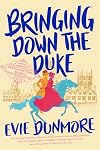
This is a book featuring suffragettes, but this is not a feminist book.
In fact, Bringing Down the Duke seems to use its thin veneer of wokeness as an excuse to revel in gender essentialism. Pretty much every encounter between the two leads mentioned "feminine warmth" and "masculine hardness", so I had strained my eyes from rolling them so hard before I was very far into the book.
The love interest—Sebastian, Duke of Montgomery—is the kind of alpha male character to whom I have an show more instant aversion. He's constantly looming over the protagonist, Annabelle, using his size against her, grabbing her by the arm to stop her from getting her away, backing her into walls. He clearly gets off on this, and spends time when he's not with her fantasising about forcing her into marriage and clapping himself on the back for having the self-control not to rape her. He is emotionally abusive towards his younger brother in a way that the narrative never recognises—and yet the narrative would have us believe that Sebastian is one of those good feudal overlords who only ever has the best interests of his tenants at heart. Please!
And then there's Annabelle, who repeatedly acts like an idiot, but whom we're told is very smart because she's read Thucydides; whose political and moral principles seem to be based on the best interests of whomever she last spoke to; and who never once seemed like the impoverished but genteel daughter of a rural Victorian clergyman whom she purported to be. Her defining personality trait, really, is that she's Not Like the Other Girls—hence why she'll go to a ball in a skintight, fashionable gown with no undergarments on underneath! Even on a practical level this wouldn't have been possible given how gowns were constructed then, but Annabelle just draws all the men's eyes with her astounding beauty, etc.
Add to this the vague but disturbing racial undertones (Annabelle is stunningly beautiful, and this is implied to be because of distant French aristocratic or even royal descent; Sebastian looks "Nordic", which means blond and square-jawed; the description of Disraeli and another Jewish-coded character made me squirm); the dialogue which far too often sounds more 21st-century American than it does 1870s upper-class British and which uses terms like "existential angst" which would not be coined for several more decades; the vicious pantomime dame caricature of Queen Victoria (look, I'm an Irishwoman with a disdain for the system of monarchy and if I think it's an unfair caricature...); the melodramatic plot; and the complete and utter lack of any historical research or understanding (Dunmore repeatedly messes up forms of address for the aristocracy on the most basic level, has someone practicing underwater archaeology in Greece in the 1870s when the first such excavations don't take place until the 1950s or '60s, etc).
Plus on the very last page, when our happy couple have overcome what we are told is crushing societal disapproval and scandal concerning a duke's decision to marry a mere gentleman's daughter (uh huh) and are making out on a yacht in the Mediterranean (sure), the verb used in Sebastian's inner monologue to describe having sex with his wife? "Mount."
Like I said: this is a book featuring suffragettes. This is not a feminist book. show less
In fact, Bringing Down the Duke seems to use its thin veneer of wokeness as an excuse to revel in gender essentialism. Pretty much every encounter between the two leads mentioned "feminine warmth" and "masculine hardness", so I had strained my eyes from rolling them so hard before I was very far into the book.
The love interest—Sebastian, Duke of Montgomery—is the kind of alpha male character to whom I have an show more instant aversion. He's constantly looming over the protagonist, Annabelle, using his size against her, grabbing her by the arm to stop her from getting her away, backing her into walls. He clearly gets off on this, and spends time when he's not with her fantasising about forcing her into marriage and clapping himself on the back for having the self-control not to rape her. He is emotionally abusive towards his younger brother in a way that the narrative never recognises—and yet the narrative would have us believe that Sebastian is one of those good feudal overlords who only ever has the best interests of his tenants at heart. Please!
And then there's Annabelle, who repeatedly acts like an idiot, but whom we're told is very smart because she's read Thucydides; whose political and moral principles seem to be based on the best interests of whomever she last spoke to; and who never once seemed like the impoverished but genteel daughter of a rural Victorian clergyman whom she purported to be. Her defining personality trait, really, is that she's Not Like the Other Girls—hence why she'll go to a ball in a skintight, fashionable gown with no undergarments on underneath! Even on a practical level this wouldn't have been possible given how gowns were constructed then, but Annabelle just draws all the men's eyes with her astounding beauty, etc.
Add to this the vague but disturbing racial undertones (Annabelle is stunningly beautiful, and this is implied to be because of distant French aristocratic or even royal descent; Sebastian looks "Nordic", which means blond and square-jawed; the description of Disraeli and another Jewish-coded character made me squirm); the dialogue which far too often sounds more 21st-century American than it does 1870s upper-class British and which uses terms like "existential angst" which would not be coined for several more decades; the vicious pantomime dame caricature of Queen Victoria (look, I'm an Irishwoman with a disdain for the system of monarchy and if I think it's an unfair caricature...); the melodramatic plot; and the complete and utter lack of any historical research or understanding (Dunmore repeatedly messes up forms of address for the aristocracy on the most basic level, has someone practicing underwater archaeology in Greece in the 1870s when the first such excavations don't take place until the 1950s or '60s, etc).
Plus on the very last page, when our happy couple have overcome what we are told is crushing societal disapproval and scandal concerning a duke's decision to marry a mere gentleman's daughter (uh huh) and are making out on a yacht in the Mediterranean (sure), the verb used in Sebastian's inner monologue to describe having sex with his wife? "Mount."
Like I said: this is a book featuring suffragettes. This is not a feminist book. show less
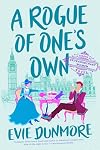
Lady Lucie Wycliffe was banished from her family years ago, but thanks to a small inheritance from an aunt, she has set herself up in Oxford and devoted herself to the Cause of women's suffrage. She will not marry - at least, until the amendment of the Married Women's Property Act.
Tristan Ballentine's abusive father, Lord Rochester, is coercing him into marriage to continue the family line, holding Tristan's mother - grieving the death of her oldest son - hostage until Tristan show more acquiesces.
Tristan and Lucie's individual success depends on owning majority shares of the same publishing house, London Print: Lucie and her fellow suffragists want to use it to publish a report, and Tristan needs the income stream to support himself and his mother. This puts the two on a collision course.
Quotes
"...the weapons of men and women are not quite the same." (Lady Salisbury, 37)
"Ma'am, I'm afraid the idea that a woman is a person, whether married or not, is so inherently radical..." (Lucie, 37)
"I understand how being pleasant can keep the peace, but how will it win a war?" (42)
"I suppose I don't rate truths that last only for a moment. Truth should be more durable." (Lucie, on romantic poetry, 144)
If it was truly in a woman's nature to be an ever demure and pleasant sunbeam in the gloom, why then, it took an awful lot of ink and instructions to keep reminding woman of this nature of hers... (183)
Nothing thrived, or even survived, unless it could continue to grow... (303)
He had not made the rules, but he had never set out to change them, either. He had wasted a lot of time fighting the wrong wars. (381)
"I had not taken you for a woman who runs."
"And I had not taken you for a woman who fights."
(Lady Wycliffe and Lucie, 388) show less
Tristan Ballentine's abusive father, Lord Rochester, is coercing him into marriage to continue the family line, holding Tristan's mother - grieving the death of her oldest son - hostage until Tristan show more acquiesces.
Tristan and Lucie's individual success depends on owning majority shares of the same publishing house, London Print: Lucie and her fellow suffragists want to use it to publish a report, and Tristan needs the income stream to support himself and his mother. This puts the two on a collision course.
Quotes
"...the weapons of men and women are not quite the same." (Lady Salisbury, 37)
"Ma'am, I'm afraid the idea that a woman is a person, whether married or not, is so inherently radical..." (Lucie, 37)
"I understand how being pleasant can keep the peace, but how will it win a war?" (42)
"I suppose I don't rate truths that last only for a moment. Truth should be more durable." (Lucie, on romantic poetry, 144)
If it was truly in a woman's nature to be an ever demure and pleasant sunbeam in the gloom, why then, it took an awful lot of ink and instructions to keep reminding woman of this nature of hers... (183)
Nothing thrived, or even survived, unless it could continue to grow... (303)
He had not made the rules, but he had never set out to change them, either. He had wasted a lot of time fighting the wrong wars. (381)
"I had not taken you for a woman who runs."
"And I had not taken you for a woman who fights."
(Lady Wycliffe and Lucie, 388) show less
A thoroughly enjoyable book, the author proves she can indeed write very strong and yet distinct characters with aplomb. BDTD was one of my absolute favorites last year and despite the characters are still so vivid even a year later.
Luce and Tristan are no different. I love Lucie. She is a tough woman who knows what she is fighting for and is good at it. I so love the sismances (can't wait for the next two books!) and I appreciated them quite a bit here. I so loved reading about how Lucie show more learnt to let down her walls and start trusting. Tristan is that "almost" cliche HisRom lead who is a "rake but not really one" but he was still so freshly written that I absolutely rooted for him. Case in point one of my favorite scenes of his was his last scene with Arthur. There is nothing I enjoy reading more than a ML that supports the FL and I was cheering with Lucie when he did just that. Their chemistry was so scorching and that's another thing that the author does so well. I do not want to go into specifics but I also really liked the ending that was not out of character of each lead and yet gave me a real sense of HEA. show less
Luce and Tristan are no different. I love Lucie. She is a tough woman who knows what she is fighting for and is good at it. I so love the sismances (can't wait for the next two books!) and I appreciated them quite a bit here. I so loved reading about how Lucie show more learnt to let down her walls and start trusting. Tristan is that "almost" cliche HisRom lead who is a "rake but not really one" but he was still so freshly written that I absolutely rooted for him. Case in point one of my favorite scenes of his was his last scene with Arthur. There is nothing I enjoy reading more than a ML that supports the FL and I was cheering with Lucie when he did just that. Their chemistry was so scorching and that's another thing that the author does so well. I do not want to go into specifics but I also really liked the ending that was not out of character of each lead and yet gave me a real sense of HEA. show less
Annabelle Archer is studying at the first female college at Oxford on scholarship. Funding her studies is a suffragette group who expects that in addition to her scholarly work, she'll also aid in their work to improve women's rights. As the women strive to change the minds of various men in power, Annabelle is assigned Sebastian Devereaux, the Duke of Montgomery. The Duke however, has no interest in expanding women's rights and has his own agenda to push as he strives to regain all of the show more properties the dukedom lost under his father's mismanagement. As events push Annabelle and Sebastian together, they find a spark that could turn into a passionate romance. If only their social standings and political views weren't a major barrier to a relationship.
I picked up this historical romance at my local romance bookstore last year and I'm so pleased to finally get around to reading it. Dunmore crafts an excellent novel full of strong historical detail that doesn't hesitate to depict the challenges suffragettes faced, while also setting up a compelling romance between Annabelle and Sebastian that doesn't shy away from the barriers caused by their differences in social spheres. There's also a liberal dash of humour that I thoroughly enjoyed. If you're on the hunt for a new historical romance author, I highly recommend giving Evie Dunmore a try. I'll definitely be seeking out the rest of the books in this series. show less
I picked up this historical romance at my local romance bookstore last year and I'm so pleased to finally get around to reading it. Dunmore crafts an excellent novel full of strong historical detail that doesn't hesitate to depict the challenges suffragettes faced, while also setting up a compelling romance between Annabelle and Sebastian that doesn't shy away from the barriers caused by their differences in social spheres. There's also a liberal dash of humour that I thoroughly enjoyed. If you're on the hunt for a new historical romance author, I highly recommend giving Evie Dunmore a try. I'll definitely be seeking out the rest of the books in this series. show less
Lists
Awards


You May Also Like


Associated Authors
Statistics
- Works
- 9
- Members
- 3,643
- Popularity
- #6,951
- Rating
- 3.9
- Reviews
- 127
- ISBNs
- 47
- Languages
- 4
- Favorited
- 1