
Katherine Johnson (2)
Author of Paris Savages
For other authors named Katherine Johnson, see the disambiguation page.
Katherine Johnson (2) has been aliased into Katherine Jane Johnson.
Works by Katherine Johnson
Works have been aliased into Katherine Jane Johnson.
Tagged
Common Knowledge
There is no Common Knowledge data for this author yet. You can help.
Members
Reviews
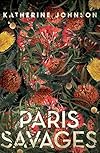
This one of those stories that need to be told and remembered but is extremely unsettling and frustrating to read. It is perhaps unsurprising that a theme in the book is the exploration of who is actually the titular savage - the Europeans or the Badtjala. Is savagery the lack of the trappings of European culture or is it the exploitation and dehumanization of the Other? Is a man who hopes to secure his people's independence, health, and safety truly more frightening than the people who show more threaten those qualities in the pursuit of luxuries?
This book is unsettling precisely because it is based on true events, because these events shaped how non-Europeans are still viewed and treated in the West. Human zoos are a horrendous fact of history that any discussion of racism and exoticism needs to remember.
I appreciate that, as a white woman herself, Johnson wrote from the point of view of a German teen whose father brought the three Badtjala to Europe, rather than from the point of view of one of the Badtjala. It's an acknowledgment of her outsider status in telling this story. But it does leave me wanting to hear directly from the Badjtala and other groups that were subjected to experiences like this. I especially plan to look up Own Voices reviews of this book to see how it was received. show less
This book is unsettling precisely because it is based on true events, because these events shaped how non-Europeans are still viewed and treated in the West. Human zoos are a horrendous fact of history that any discussion of racism and exoticism needs to remember.
I appreciate that, as a white woman herself, Johnson wrote from the point of view of a German teen whose father brought the three Badtjala to Europe, rather than from the point of view of one of the Badtjala. It's an acknowledgment of her outsider status in telling this story. But it does leave me wanting to hear directly from the Badjtala and other groups that were subjected to experiences like this. I especially plan to look up Own Voices reviews of this book to see how it was received. show less
I reserved this impressive book at the library about a month ago after I read Jennifer's review at Goodreads and was not disappointed. It's a remarkable book.
It brought three other books to mind: Jane Sullivan's Little People which is a novel about people of short stature touring as exhibits (see my review here); Paddy O'Reilly's The Wonders which exposes the morbid curiosity that lies behind not just the freak shows of the 19th century but also those contemporary ‘human interest’ show more stories that feature disabled people (see my review here); and Anouk Ride's The Grand Experiment which I read before I started this blog. A non-fiction account of real events and based on thorough research, The Grand Experiment is a different kind of Stolen Generations story, in which two young Nyungar boys were taken to Italy by a Benedictine monk from the New Norcia Monastery in WA, to become monks themselves. They went, apparently, with parental permission, and the plan was well-intentioned, the monks hoping to offer education and opportunities the boys could not have had on the mission. They met the Pope and other notables, but the extent of the education they purportedly received is dubious since neither left a written record. Conaci died in Europe, and Dirimera died soon after returning to Australia.
Paris Savages explores themes which arose from my reading of those three books. To what extent could 'exhibits' in a human zoo have any agency over the way they were represented, when the entire exercise was based on ambitions the participants did not share? In what ways could they be said to have given informed consent? How could they possibly have known what they were in for? Johnson's novel, based on thorough research, depicts the cultural shock that Anouk Ride discussed, and with the same difficulties: the documentary record is scanty, and there is no record at all of the Indigenous point-of-view. The author's note at the beginning of the book explains how she resolved this issue:
That latter date astonished me. These offensive forms of mass entertainment can't be consigned to the 19th century. They were still occurring during my childhood.
Johnson then refers the readers to the Afterword to see her sources, and then goes on to say...
Johnson's achievement is to expose the human cost of Müller's 'scientific' ambitions. Bonny, Jurano and Dorondera agree to go because the Badtjala people are in decline after the massacres which accompany being dispossessed from their land, and Bonny hopes to be able to bring their plight to Queen Victoria's personal attention so that she will intervene. The plan is that they will travel to England after being exhibited in Europe, and nobody disabuses them of the improbability of such a meeting. By narrating the story mostly from the point of view of Müller's teenage daughter Hilda, Johnson shows the journey from naïveté to full awareness of betrayal. Müller always caves in to unconscionable exploitation of the people in his care, not just because he is under financial pressure because of the costs involved, but also because he shares the prevailing pseudo-scientific ideas of the German entrepreneurs and the scientists they use to justify what they are doing.
To read the rest of my review please visit https://anzlitlovers.com/2019/10/14/paris-savages-by-katherine-johnson/ show less
It brought three other books to mind: Jane Sullivan's Little People which is a novel about people of short stature touring as exhibits (see my review here); Paddy O'Reilly's The Wonders which exposes the morbid curiosity that lies behind not just the freak shows of the 19th century but also those contemporary ‘human interest’ show more stories that feature disabled people (see my review here); and Anouk Ride's The Grand Experiment which I read before I started this blog. A non-fiction account of real events and based on thorough research, The Grand Experiment is a different kind of Stolen Generations story, in which two young Nyungar boys were taken to Italy by a Benedictine monk from the New Norcia Monastery in WA, to become monks themselves. They went, apparently, with parental permission, and the plan was well-intentioned, the monks hoping to offer education and opportunities the boys could not have had on the mission. They met the Pope and other notables, but the extent of the education they purportedly received is dubious since neither left a written record. Conaci died in Europe, and Dirimera died soon after returning to Australia.
Paris Savages explores themes which arose from my reading of those three books. To what extent could 'exhibits' in a human zoo have any agency over the way they were represented, when the entire exercise was based on ambitions the participants did not share? In what ways could they be said to have given informed consent? How could they possibly have known what they were in for? Johnson's novel, based on thorough research, depicts the cultural shock that Anouk Ride discussed, and with the same difficulties: the documentary record is scanty, and there is no record at all of the Indigenous point-of-view. The author's note at the beginning of the book explains how she resolved this issue:
According to a retrospective on the subject in Paris in 2012, worldwide, between 1800 and 1958, over a billion spectators attended such acts, marvelling at more than 35,000 individuals, significantly influencing view on 'race'.
That latter date astonished me. These offensive forms of mass entertainment can't be consigned to the 19th century. They were still occurring during my childhood.
Johnson then refers the readers to the Afterword to see her sources, and then goes on to say...
Paris Savages builds on these scant records to envisage the story of Bonny, Jurano and Dorondera, Badtjala/Butchulla people from K'gari (Fraser Island). Rather than assuming Aboriginal viewpoints, the story is told through fictional characters related in the novel to the German engineer Louis Müller, who is known to have transported the group to Europe. (p.ix)
Johnson's achievement is to expose the human cost of Müller's 'scientific' ambitions. Bonny, Jurano and Dorondera agree to go because the Badtjala people are in decline after the massacres which accompany being dispossessed from their land, and Bonny hopes to be able to bring their plight to Queen Victoria's personal attention so that she will intervene. The plan is that they will travel to England after being exhibited in Europe, and nobody disabuses them of the improbability of such a meeting. By narrating the story mostly from the point of view of Müller's teenage daughter Hilda, Johnson shows the journey from naïveté to full awareness of betrayal. Müller always caves in to unconscionable exploitation of the people in his care, not just because he is under financial pressure because of the costs involved, but also because he shares the prevailing pseudo-scientific ideas of the German entrepreneurs and the scientists they use to justify what they are doing.
To read the rest of my review please visit https://anzlitlovers.com/2019/10/14/paris-savages-by-katherine-johnson/ show less
Awards


You May Also Like
Associated Authors
Statistics
- Works
- 2
- Members
- 18
- Popularity
- #630,788
- Rating
- 4.0
- Reviews
- 2
- ISBNs
- 43
- Languages
- 1