
Andrew Lam (2)
Author of Repentance
For other authors named Andrew Lam, see the disambiguation page.
Works by Andrew Lam
Tagged
Common Knowledge
- Birthdate
- 20th Century
- Gender
- male
- Nationality
- USA
- Associated Place (for map)
- USA
Members
Reviews
“The fact that they had nothing to do with Pearl Harbor didn’t matter. They were guilty by association, by the color of their skin and the slant of their eyes. It didn’t matter that they didn’t speak Japanese, or that they were American citizens. The bottom line was that their kind had perpetrated a horrid crime that came from the land of their ancestors. The shame was a burden that all Nisei silently bore, a burden every soldier in the 442nd was fighting to be free of.”
I got show more this book for free as a win from LibraryThing’s Early Reviewers program. Thanks!
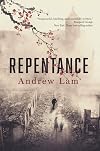
“Repentance” tells the story of Daniel Tokunaga, a successful surgeon, who is confronted with his estranged father’s past during the Second World War. Daniel’s father is of Japanese descent and fought as part of the 442nd Infantry Regiment, the most decorated unit in U.S. military history.
During (mostly) alternating chapters narrating of 1944 (Daniel’s father and his best friend) and 1998 till 1999 we learn a lot about Daniel and his own family as well.
Even though Lam doesn’t have his own style, his writing is fairly well, at times very atmospheric and – in the respective context – mostly absolutely plausible and believable. Lam’s prose at times feels even poetic:
“The house sucked up his voice, offered no return. […]
The house was a time capsule. A grave, he thought. Even a clock’s tick would have been welcome music. The dead room gave Daniel the creeps. Inside, the distant pulsation of the cicadas felt far away. Inside, time had died—life gone elsewhere. Even the past had passed on.”
Especially the war time perspective is brilliantly developed and I found ourselves immersed in the narration:
“The horror of their situation now dawned on Ray. Unable to advance, unable to retreat, six guys left against four machine guns, one of which they couldn’t see but which could see them the minute they lifted their heads or stepped out from behind a tree.”
Why then only three stars? There are two issues with this book: First of all, “Repentance” is missing the chance to tell the story of the 442nd – why did it become the most decorated unit? Why did those Nisei fight so valiantly? Lam could have elaborated on this beyond the rather simplistic direct answer he gives himself:
“The fact that they had nothing to do with Pearl Harbor didn’t matter. They were guilty by association, by the color of their skin and the slant of their eyes. It didn’t matter that they didn’t speak Japanese, or that they were American citizens. The bottom line was that their kind had perpetrated a horrid crime that came from the land of their ancestors. The shame was a burden that all Nisei silently bore, a burden every soldier in the 442nd was fighting to be free of.”
Especially in the light of Americans of Japanese descent being held in civilian internment under harsh conditions, why would people volunteer to fight and die for the country that did that to them? The book leaves us without even trying to explain that.
The story “Repentance” tells us is a powerful one and it would certainly have been possible to highlight the special challenges that the Nisei faced in the USA before, during and – in part at least – after World War II. I for one would have been interested to learn more about that.
In the author’s “Historical Notes” there is indeed additional information about the 442nd but it comes too late (it should have been interwoven in the story) and it’s too little to make any great difference.
The second issue I have is with Daniel, the protagonist, himself: When he learns about a family secret his father, Ray, has kept, Daniel is very, very quick to condemn Ray. No doubt, under the specific circumstances Daniel is sad and confused and he says so:
“He closed his eyes and exhaled deeply. “I still can’t wrap my head around the stuff with my dad. It’s just so bizarre.””
That is wholly understandable and believable. Nevertheless, he completely condemns his father and is generally awfully quick to judge:
“No wonder his father hadn’t wanted the government to investigate his medal. Because he hadn’t earned it…worse, he’d lied […]”
Not quite the next second but at most hours later, he clearly identifies with his father again:
“Celeste, I would love to tell you about my dad. I’m very proud of him.”
Daniel actually “oscillates” between blaming his father for everything gone wrong in both their lives and blaming himself. Both with equal vigour and both implausibly quickly, often in the course of hours:
“As Daniel perused his dad’s archive of his life, he felt a deep sense of regret. Was it my fault for keeping us apart all those years? Was it me who robbed both him and my children of a relationship they could have shared? And Daniel realized, it was.”
“No, Daniel”, I want to shout, “it’s at most partly your fault but mostly your father who tried to mould you into the unrealistic picture he imagined someone else would have been having of you.” (Yes, the convoluted wording has a very good reason.)
In the relationship between the parent and a child, it’s extremely rarely the child to blame for the major failures.
Neither is it possible for anyone burdened like Daniel is to follow his wife’s - Beth - trivial advice:
“You can do it differently. Start right now. Just start by being a person who’s not carrying a burden. Now that we know where that burden came from, why don’t you put it down and leave it there?”
No, Beth, you can’t just put such a burden down and move on. If things were so easy, a lot of shrinks would be out of a job.
All in all, “Repentance”, in spite of the shortcomings I mentioned, is a well-written, interesting book that could have achieved more but can still be recommended to anyone with an interest in historical fiction and especially those interested in World War II. show less
I got show more this book for free as a win from LibraryThing’s Early Reviewers program. Thanks!
“Repentance” tells the story of Daniel Tokunaga, a successful surgeon, who is confronted with his estranged father’s past during the Second World War. Daniel’s father is of Japanese descent and fought as part of the 442nd Infantry Regiment, the most decorated unit in U.S. military history.
During (mostly) alternating chapters narrating of 1944 (Daniel’s father and his best friend) and 1998 till 1999 we learn a lot about Daniel and his own family as well.
Even though Lam doesn’t have his own style, his writing is fairly well, at times very atmospheric and – in the respective context – mostly absolutely plausible and believable. Lam’s prose at times feels even poetic:
“The house sucked up his voice, offered no return. […]
The house was a time capsule. A grave, he thought. Even a clock’s tick would have been welcome music. The dead room gave Daniel the creeps. Inside, the distant pulsation of the cicadas felt far away. Inside, time had died—life gone elsewhere. Even the past had passed on.”
Especially the war time perspective is brilliantly developed and I found ourselves immersed in the narration:
“The horror of their situation now dawned on Ray. Unable to advance, unable to retreat, six guys left against four machine guns, one of which they couldn’t see but which could see them the minute they lifted their heads or stepped out from behind a tree.”
Why then only three stars? There are two issues with this book: First of all, “Repentance” is missing the chance to tell the story of the 442nd – why did it become the most decorated unit? Why did those Nisei fight so valiantly? Lam could have elaborated on this beyond the rather simplistic direct answer he gives himself:
“The fact that they had nothing to do with Pearl Harbor didn’t matter. They were guilty by association, by the color of their skin and the slant of their eyes. It didn’t matter that they didn’t speak Japanese, or that they were American citizens. The bottom line was that their kind had perpetrated a horrid crime that came from the land of their ancestors. The shame was a burden that all Nisei silently bore, a burden every soldier in the 442nd was fighting to be free of.”
Especially in the light of Americans of Japanese descent being held in civilian internment under harsh conditions, why would people volunteer to fight and die for the country that did that to them? The book leaves us without even trying to explain that.
The story “Repentance” tells us is a powerful one and it would certainly have been possible to highlight the special challenges that the Nisei faced in the USA before, during and – in part at least – after World War II. I for one would have been interested to learn more about that.
In the author’s “Historical Notes” there is indeed additional information about the 442nd but it comes too late (it should have been interwoven in the story) and it’s too little to make any great difference.
The second issue I have is with Daniel, the protagonist, himself: When he learns about a family secret his father, Ray, has kept, Daniel is very, very quick to condemn Ray. No doubt, under the specific circumstances Daniel is sad and confused and he says so:
“He closed his eyes and exhaled deeply. “I still can’t wrap my head around the stuff with my dad. It’s just so bizarre.””
That is wholly understandable and believable. Nevertheless, he completely condemns his father and is generally awfully quick to judge:
“No wonder his father hadn’t wanted the government to investigate his medal. Because he hadn’t earned it…worse, he’d lied […]”
Not quite the next second but at most hours later, he clearly identifies with his father again:
“Celeste, I would love to tell you about my dad. I’m very proud of him.”
Daniel actually “oscillates” between blaming his father for everything gone wrong in both their lives and blaming himself. Both with equal vigour and both implausibly quickly, often in the course of hours:
“As Daniel perused his dad’s archive of his life, he felt a deep sense of regret. Was it my fault for keeping us apart all those years? Was it me who robbed both him and my children of a relationship they could have shared? And Daniel realized, it was.”
“No, Daniel”, I want to shout, “it’s at most partly your fault but mostly your father who tried to mould you into the unrealistic picture he imagined someone else would have been having of you.” (Yes, the convoluted wording has a very good reason.)
In the relationship between the parent and a child, it’s extremely rarely the child to blame for the major failures.
Neither is it possible for anyone burdened like Daniel is to follow his wife’s - Beth - trivial advice:
“You can do it differently. Start right now. Just start by being a person who’s not carrying a burden. Now that we know where that burden came from, why don’t you put it down and leave it there?”
No, Beth, you can’t just put such a burden down and move on. If things were so easy, a lot of shrinks would be out of a job.
All in all, “Repentance”, in spite of the shortcomings I mentioned, is a well-written, interesting book that could have achieved more but can still be recommended to anyone with an interest in historical fiction and especially those interested in World War II. show less
 This review was written for LibraryThing Early Reviewers.
This was a powerful read that will have you stepping back in time alongside Daniel as he tries to uncover the secrets his father has been keeping. Both Daniel and his dad felt like real people, grappling with their own inner demons and trying to make their way through life. I like that the dad wasn't put on a pedestal, and has a realistic view of his own actions during the war. This was an emotional roller coaster from start to finish, with various obstacles and truths popping up the further show more you get into the story. A captivating read that spans generations. show less
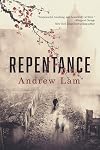
This is an incredibly intense and emotionally charged story. It hooked me from the first page. Daniel is a skilled cardiac surgeon, and well respected in his field. His personal life is a not as clean cut as in the operating room. Daniel’s relationship with his father has been strained for decades. As we get to know his father, we learn of Ray’s experience in WWII with the 442nd battalion. The battalion was made up of Japanese American soldiers and is one of the most highly decorated show more battalions in military history. Ray won’t speak of his time with the 442nd, but Daniel finds out he received an award for bravery. And the story rolls out from there. It is an emotional rollercoaster, full of deception, bravery, love, duty, honor and yes, repentance. The book kept me fully engaged with the characters and with the surprises around each corner. Highly recommended! show less
This review was written for LibraryThing Member Giveaways.
This book focuses on an American family and a strained relationship between a father and son. The father was a veteran of WWII and member of the 442nd, an army regiment of 2nd generation, Japanese-Americans. The story jumps back and forth from contemporary times to moment of the father’s time during WWII. While I enjoyed the content and story I found it somewhat lacking in the telling. The dialogue felt contrived and forced and filled with clichés. I found myself wanting more details show more related to the history of the 442nd, it felt as though the author was in a rush to get the story written without great concern for the aesthetic. Perhaps intentional, to make the story more relateable. Still, the story as a whole is interesting and there are poignant moments that I feel helped redeem the book, from its at times simplicity. It didn’t grab me until close to the end, but still worth the read for a look into an often neglected group in America’s history. show less
This review was written for LibraryThing Early Reviewers.Awards


Statistics
- Works
- 3
- Members
- 53
- Popularity
- #303,172
- Rating
- 4.0
- Reviews
- 7
- ISBNs
- 16
