
Tony Payne
Author of The Trellis and the Vine
About the Author
Works by Tony Payne
So Many Questions...: How to Answer 17 Common Questions About Christianity: Workbook (2001) — Author — 48 copies
Six Steps to Reading Your Bible 4 copies
Why We Believe The Bible 1 copy
Man Who Makes a Difference 1 copy
The Course of Your Life- DVD 1 copy
Where to Lord? Study Guide 1 copy
Associated Works
Tagged
Common Knowledge
Members
Reviews

Far too many churches get it all wrong. Their existence stems from an full calendar of social events and purposeless groups that do little to embody Christ's mandate to make disciples of all nations. They are busy, just with the wrong things.
In The Trellis and the Vine, Colin Marshall and Tony Payne put forth a model of ministry that is absolutely obsessed with the disciple-making process. Their thoughts waft like a breath of fresh air over the stale ecclesiological landscape. They show more constantly remind the reader that ministry is not about programs; it's about people.
A commitment to disciple others will require relationships. "The relational nature of training means that the best training will often occur by osmosis rather than formal instruction" (76). Furthermore, this commitment will require church leaders to focus on multiplication of their efforts through others. "By far the best way to build a congregation full of disciple-making disciples is to assemble and train a band of co-workers to labour alongside you" (116).
While I whole-heartedly agree with almost everything Marshall and Payne say, I wish they had said more about the "people worth watching." People worth watching are individuals that pastors observe, test, and recruit into vocational ministry. These individuals are affirmed through an external call from the church. My issue stems from the fact that Marshall and Payne seem to deny a sense of internal call of the Lord upon the individual. They write, "We shouldn't sit back and wait for people to 'fell called' to gospel work, any more than we should sit back and wait for people to become disciples of Christ in the first place. We should be proactive in seeking, challenging, and testing suitable people to be set apart for gospel work" (134). They conclude, "If these people are also godly servants of Christ who long for his kingdom, then why not headhunt them for a life of 'recognized gospel ministry'?" (140). This line of thinking is certainly controversial and needs more explanation.
Despite the issue over the internal call, The Trellis and the Vine is an amazing book that pastors, church leaders, and astute laymen need to read and digest. It can be a game-changer for churches who have lost the vision to build disciple-making disciples! show less
In The Trellis and the Vine, Colin Marshall and Tony Payne put forth a model of ministry that is absolutely obsessed with the disciple-making process. Their thoughts waft like a breath of fresh air over the stale ecclesiological landscape. They show more constantly remind the reader that ministry is not about programs; it's about people.
A commitment to disciple others will require relationships. "The relational nature of training means that the best training will often occur by osmosis rather than formal instruction" (76). Furthermore, this commitment will require church leaders to focus on multiplication of their efforts through others. "By far the best way to build a congregation full of disciple-making disciples is to assemble and train a band of co-workers to labour alongside you" (116).
While I whole-heartedly agree with almost everything Marshall and Payne say, I wish they had said more about the "people worth watching." People worth watching are individuals that pastors observe, test, and recruit into vocational ministry. These individuals are affirmed through an external call from the church. My issue stems from the fact that Marshall and Payne seem to deny a sense of internal call of the Lord upon the individual. They write, "We shouldn't sit back and wait for people to 'fell called' to gospel work, any more than we should sit back and wait for people to become disciples of Christ in the first place. We should be proactive in seeking, challenging, and testing suitable people to be set apart for gospel work" (134). They conclude, "If these people are also godly servants of Christ who long for his kingdom, then why not headhunt them for a life of 'recognized gospel ministry'?" (140). This line of thinking is certainly controversial and needs more explanation.
Despite the issue over the internal call, The Trellis and the Vine is an amazing book that pastors, church leaders, and astute laymen need to read and digest. It can be a game-changer for churches who have lost the vision to build disciple-making disciples! show less
The metaphor is simple: the vine is the work of disciple-making and Christian growth; the trellis is the structure (programming, events, etc.) that allow for continued growth. Marshall and Payne call the church to return to its founding charge: make disciples. This commission wasn’t just for the apostles, nor is it merely directed towards today’s “professional” clergy. Through the ministry of Word (opening the scriptures) and Spirit (praying for God’s supernatural work), all show more believers are a part of the disciple-making process (outreach, follow-up, growth, training). In short, Marshall and Payne remind us that as the church we are all disciple-making disciples. This mindset shift, however, requires that church leaders (elders, teachers, ministers) see themselves as trainers, raising up other vine-workers. Pastors must see training as an essential element of their ministries (2 Tim. 2:2), and must understand ministry as people-centered rather than program-centered. Marshall and Payne are not arguing that trelliswork is bad. Rather, it is both good and necessary. However, the contemporary church has focused on structure and programming to the detriment of our actual call. A- show less
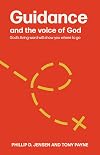
Great book for those wanting the 10,000 foot view of a biblical perspective on decision making. Jensen and Payne are wary and critical of those adopting a "secret will" approach to finding God's will, and instead advocate for more of the Compass of the Great Shepherd that guides and leads us; and leaves the choices to us.
This may rub against those arguing for Sovereignty that is probably more akin to fatalism than a true Reformed understanding of the Sovereingty of God. But Jensen and Payne show more are remembering that true sovereignty isn't found in a cold, dark fate; it's found in a person--the loving hands of a Father keeping us in his grip. Great read for laymen and pastors alike. show less
This may rub against those arguing for Sovereignty that is probably more akin to fatalism than a true Reformed understanding of the Sovereingty of God. But Jensen and Payne show more are remembering that true sovereignty isn't found in a cold, dark fate; it's found in a person--the loving hands of a Father keeping us in his grip. Great read for laymen and pastors alike. show less

"Portly didn't ask to be a hippo; he was just born that way. And frankly, he's starting to find being a hippo kind of boring — standing in the water all day up to his eyeballs, eating grass — no fun at all! So he embarks on a journey to figure out just what kind of animal to be, and along the way, meets all kinds of creatures.
As he tries to do everything they do, this heartwarming story of a youngster searching for his identity and trying to be somebody he's not will strike a chord with show more all readers. Repetitive, silly text and bright illustrations make Hippo-Not-Amus an infectiously fun read.
From the best-selling illustrator of GIRAFFES CAN'T DANCE, Guy Parker-Rees, comes a silly story about a young hippo trying to be everything he's not." show less
As he tries to do everything they do, this heartwarming story of a youngster searching for his identity and trying to be somebody he's not will strike a chord with show more all readers. Repetitive, silly text and bright illustrations make Hippo-Not-Amus an infectiously fun read.
From the best-selling illustrator of GIRAFFES CAN'T DANCE, Guy Parker-Rees, comes a silly story about a young hippo trying to be everything he's not." show less
Lists
You May Also Like


Associated Authors
Statistics
- Works
- 72
- Also by
- 5
- Members
- 6,055
- Popularity
- #4,062
- Rating
- 4.1
- Reviews
- 30
- ISBNs
- 101
- Languages
- 4