
David Ranney
Author of Living and Dying on the Factory Floor: From the Outside In and the Inside Out
About the Author
David Ranney is professor emeritus in the College of Urban Planning and Public Affairs at the University of Illinois at Chicago. His two most recent books are Global Decisions, Local Collisions: Urban Life in the New World Order and New World Disorder: The Decline of U.S. Power. In addition to show more writing, he lectures on economic policy and politics and also finds time to be an actor and director in a small community theatre. show less
Works by David Ranney
Living and Dying on the Factory Floor: From the Outside In and the Inside Out (2019) 28 copies, 1 review
Tagged
Common Knowledge
There is no Common Knowledge data for this author yet. You can help.
Members
Reviews
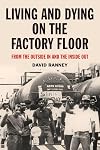
David Ranney's LIVING AND DYING ON THE FACTORY FLOOR is an unvarnished and straightforward account of the years he spent working in several different factories in Chicago's south side and neighboring Indiana in the mid and late 70s, an era when manufacturing reached its peak and then began its precipitous decline. Before he undertook this social 'experiment,' Ranney was a tenured professor of urban planning at Iowa, where for years he had been deeply involved in social and political show more activities and experiments, setting up daycare and food co-ops and protesting the Vietnam war. But those things didn't seem enough, he felt he was operating in a 'bubble' that didn't extend beyond Iowa City, so he took a leave of absence to go become a real part of the working class. And now, some forty years later, he has chosen to tell us his story of those years. He worked in a box factory, a shortening plant, and a few different steel fabrication facilities, and became a semi-skilled welder and maintenance and repair man in the process. But it was a hard life and jobs began to dry up by the early 80s, forcing him to finally go back to teaching, this time at the U of Illinois Chicago.
But the stories of his factory work are the beating heart of this book. Ranney tells of the rampant racism and discrimination in all the plants, and how he, against all the rules, became friends with the black and Hispanic workers who were at the bottom of the pecking order, did the dirtiest jobs and got the lowest pay. He witnessed the corruption and graft in the very unions that were supposed to be representing these workers, and did his best to help them. There are protests and picketing and strikes here. People are arrested and jailed, jobs are lost, but lasting friendships are forged. The title becomes most real when one of Ranney's new friends, Charles, is knifed and killed on the floor of the Chicago Shortening plant, where strikes had halted production. It is a loss which still haunts Ranney over forty years later.
In the final two chapters, Ranney attempts to anyalyze and examine those years. He looks at the continuing problem of race, racism and class in America, and determines that white supremacy and 'white skin privilege' are what got Trump elected.
I will readily admit that I can only relate peripherally to the stories Ranney tells here. I worked one summer in a factory during my college years and for another year-plus part time as a package sorter and puller for UPS, where I became a teamster. I also worked as a janitor and dishwasher. But these were all part-time and summer jobs to get me through college. Ranney gives us a close up and personal look at what it is like to be a member of the working class - or as real as he could make it, considering he always had that 'backup plan' of going back to teaching.
At less than 150 pages, this is a quick read, but it is an important one - a book which helps explain what happened to manufacturing in America and how ludicrous is Trump's claim that he will bring it all back. Bottom line: this is a compelling read and a damn good book. My highest recommendation.
- Tim Bazzett, author of the memoir, BOOKLOVER show less
But the stories of his factory work are the beating heart of this book. Ranney tells of the rampant racism and discrimination in all the plants, and how he, against all the rules, became friends with the black and Hispanic workers who were at the bottom of the pecking order, did the dirtiest jobs and got the lowest pay. He witnessed the corruption and graft in the very unions that were supposed to be representing these workers, and did his best to help them. There are protests and picketing and strikes here. People are arrested and jailed, jobs are lost, but lasting friendships are forged. The title becomes most real when one of Ranney's new friends, Charles, is knifed and killed on the floor of the Chicago Shortening plant, where strikes had halted production. It is a loss which still haunts Ranney over forty years later.
In the final two chapters, Ranney attempts to anyalyze and examine those years. He looks at the continuing problem of race, racism and class in America, and determines that white supremacy and 'white skin privilege' are what got Trump elected.
I will readily admit that I can only relate peripherally to the stories Ranney tells here. I worked one summer in a factory during my college years and for another year-plus part time as a package sorter and puller for UPS, where I became a teamster. I also worked as a janitor and dishwasher. But these were all part-time and summer jobs to get me through college. Ranney gives us a close up and personal look at what it is like to be a member of the working class - or as real as he could make it, considering he always had that 'backup plan' of going back to teaching.
At less than 150 pages, this is a quick read, but it is an important one - a book which helps explain what happened to manufacturing in America and how ludicrous is Trump's claim that he will bring it all back. Bottom line: this is a compelling read and a damn good book. My highest recommendation.
- Tim Bazzett, author of the memoir, BOOKLOVER show less
Statistics
- Works
- 4
- Members
- 37
- Popularity
- #390,571
- Rating
- 5.0
- Reviews
- 1
- ISBNs
- 9