
V. Castro
Author of The Haunting of Alejandra
About the Author
Disambiguation Notice:
Do not combine this page with any of the authors who share this surname and initial.
Series
Works by V. Castro
Associated Works
This World Belongs to Us: An Anthology of Horror Stories about Bugs (2023) — Contributor — 6 copies, 1 review
Tagged
Common Knowledge
- Birthdate
- 1979-07-14
- Gender
- female
- Nationality
- USA
UK - Birthplace
- Texas, USA
- Places of residence
- London, England, UK
- Disambiguation notice
- Do not combine this page with any of the authors who share this surname and initial.
Members
Reviews

I feel like I've read a number of sci-fi/horror colonialist stories lately, but this is the first one I've read that gives the concept of generational trauma a kind of sci-fi origin. I thought it was utterly unique. At first I was having trouble absorbing the events of this tale—I initially found the prose, which meanders, and changes perspective kind of at whim between the characters within a given scene, confusing. But something clicked for me and I found the style was very effective at show more giving the story a pretty fittingly dreamlike, out-of-body quality. show less
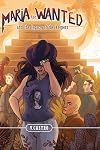
This book is full of action, seduction, and darkness. The main character, Maria, is a strong Latina character that you want to root for from the very beginning. As soon as the story starts, there is action thrown your way. Maria redefines what it means to be a hero, as she deals with a conflicted conscience, setting out on a mission for truth while taking the time to help others along the way. I love Maria because she is not perfect. She gives in to her desires, but she is so believable as a show more character and I really connected with her. Really fast paced story and I loved the seamless integration of culture mixed in, which really made the story unique. I had a lot of fun reading this and look forward to a second book in the series! show less
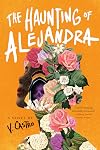
Reason for DNF (≈44%) — The Haunting of Alejandra
I chose not to finish this novel despite its many strengths. The writing is confident and controlled, the reworking of La Llorona as something older and more impersonal than the familiar infanticide myth is genuinely compelling, and the depiction of how women’s lives are constrained by marriage, motherhood, and emotional labor is sharp and unsentimental.
My difficulty was not with the themes, but with the narrative emphasis.
The novel show more devotes a significant amount of attention to the logistics of everyday life—school runs, meal planning, household routines, extended family history. While I understand that this material is meant to ground the story in realism and illustrate generational trauma, for me it diluted the tension rather than deepened it. Once the haunting is established and the family dynamics are clear, these details begin to feel repetitive rather than revelatory.
By mid-book, the core ideas are already legible: Alejandra is emotionally unseen, her marriage is structured around her husband’s comfort, and the cycle of maternal exhaustion and withdrawal stretches back through generations. I did not need further domestic detail or expanded backstory to grasp the pattern. The story continued to explain a system I already understood, rather than transforming or intensifying it.
As a reader, I tend to respond more strongly to horror that compresses the ordinary once the uncanny appears, allowing the supernatural to destabilize daily life rather than coexist alongside it. Here, the return to routine after the horror’s introduction reduced urgency and momentum for me, even though I recognize that this coexistence is a deliberate artistic choice.
This is a thoughtful, well-crafted novel whose aims I respect. My decision to stop reading reflects a mismatch between my reading preferences and the book’s structural priorities, not a failure of the work itself. show less
I chose not to finish this novel despite its many strengths. The writing is confident and controlled, the reworking of La Llorona as something older and more impersonal than the familiar infanticide myth is genuinely compelling, and the depiction of how women’s lives are constrained by marriage, motherhood, and emotional labor is sharp and unsentimental.
My difficulty was not with the themes, but with the narrative emphasis.
The novel show more devotes a significant amount of attention to the logistics of everyday life—school runs, meal planning, household routines, extended family history. While I understand that this material is meant to ground the story in realism and illustrate generational trauma, for me it diluted the tension rather than deepened it. Once the haunting is established and the family dynamics are clear, these details begin to feel repetitive rather than revelatory.
By mid-book, the core ideas are already legible: Alejandra is emotionally unseen, her marriage is structured around her husband’s comfort, and the cycle of maternal exhaustion and withdrawal stretches back through generations. I did not need further domestic detail or expanded backstory to grasp the pattern. The story continued to explain a system I already understood, rather than transforming or intensifying it.
As a reader, I tend to respond more strongly to horror that compresses the ordinary once the uncanny appears, allowing the supernatural to destabilize daily life rather than coexist alongside it. Here, the return to routine after the horror’s introduction reduced urgency and momentum for me, even though I recognize that this coexistence is a deliberate artistic choice.
This is a thoughtful, well-crafted novel whose aims I respect. My decision to stop reading reflects a mismatch between my reading preferences and the book’s structural priorities, not a failure of the work itself. show less
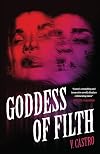
A dark look in to female rage, perceived expectations and the courage to take your own life back. This one starts with a séance. Of all the girls, the sweet and innocent one is change afterwards. As she pushes against the expectations her parents and society pushes on her, she finds her own freedom. But how much freedom can you have when something else resides within you, too.
I loved the well-done underlying horror and fear the girls felt. They were right in that difficult time, after 12 show more but before 18, when they look more grown up than they are. When older men start to notice them when they shouldn't. The very real threat was always there, under the words and the lines and I loved the ominous feel of it.
It was a story that held me and I loved every minute of it. show less
I loved the well-done underlying horror and fear the girls felt. They were right in that difficult time, after 12 show more but before 18, when they look more grown up than they are. When older men start to notice them when they shouldn't. The very real threat was always there, under the words and the lines and I loved the ominous feel of it.
It was a story that held me and I loved every minute of it. show less
Lists
Awards


You May Also Like


Associated Authors
Statistics
- Works
- 26
- Also by
- 12
- Members
- 1,099
- Popularity
- #23,376
- Rating
- 3.7
- Reviews
- 65
- ISBNs
- 48
- Favorited
- 2