
Silvia Moreno-Garcia
Author of Mexican Gothic
About the Author
Image credit: Photo: Martin Dee.
Series
Works by Silvia Moreno-Garcia
New Suns: Original Speculative Fiction by People of Color (2019) — Contributor — 343 copies, 14 reviews
Nightmare Magazine, October 2016 - People of Colo(u)r Destroy Horror special issue (2016) — Editor — 28 copies, 1 review
The Dark #028: September 2017 — Editor — 1 copy
El embrujo 1 copy
Lacrimosa {short story} 1 copy
Seeds 1 copy
The House That Ate Gothic 1 copy
Associated Works
The Year's Best Science Fiction: Thirty-Fifth Annual Collection (2018) — Contributor — 153 copies, 3 reviews
Shine: An Anthology of Near-future, Optimistic Science Fiction (2010) — Contributor — 147 copies, 7 reviews
We See a Different Frontier: A Postcolonial Speculative Fiction Anthology (2013) — Contributor — 76 copies, 3 reviews
Where Nightmares Come From: The Art of Storytelling in the Horror Genre (2017) — Interviewee — 46 copies, 3 reviews
Sunspot Jungle: The Ever Expanding Universe of Fantasy and Science Fiction (2018) — Contributor — 39 copies, 1 review
Tesseracts Thirteen: Chilling Tales of the Great White North (2009) — Contributor — 27 copies, 1 review
Imaginarium 3: The Best Canadian Speculative Writing (The Imaginarium Series) (2015) — Contributor — 22 copies
Imaginarium 4: The Best Canadian Speculative Writing (The Imaginarium Series) (2016) — Contributor — 14 copies, 1 review
Tagged
Common Knowledge
- Birthdate
- 1981-04-25
- Gender
- female
- Education
- University of British Columbia (MA) (science and technology studies)
- Occupations
- communications officer
- Organizations
- University of British Columbia
- Agent
- Eddie Schneider
- Nationality
- Mexico (birth)
Canada - Birthplace
- Baja California, Mexico
- Places of residence
- Vancouver, British Columbia, Canada
- Map Location
- Mexico
Members
Discussions
SILVER NITRATE by Silvia Moreno-Garcia in The Weird Tradition (July 2023)
Reviews
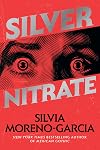
Silver Nitrate by Silvia Moreno-Garcia is a delightful surprise. I thought I was to read one story; I ended up reading something I did not expect. While a lack of knowledge about the many obscure or foreign horror films referenced throughout the story may be distracting, it does not deter you from enjoying the novel. Montserrat and Tristán are delightful in their individual stubbornness and the easy familiarity between them that comes with being long-time best friends. And the plethora of show more details about film and film editing that Montserrat and Urueta spew in various scenes adds its own sense of charm.
Don't get me wrong. Silver Nitrate is very much a horror novel, which I define as a novel that creeps me out enough to either have weird or bad dreams or makes me cautious about sticking my foot out of the covers/having my back to the edge of the mattress when trying to sleep. In this case, both occurred. While there may be moments of friendly banter and charm, Ms. Moreno-Garcia achieves the perfect balance between fun and spooky, leaning heavily towards the latter as the novel progresses.
The most surprising thing about Silver Nitrate is not how creepy it is or the charm of Montserrat's adoration of horror films, but rather it is how plausible she presents her story. There is plenty of documentation regarding Hitler's love of the paranormal. You can almost imagine Leni Riefenstahl embuing her movies with magic spells to power the Reich. Plus, the depiction of movies made with silver nitrate film sounds so ethereal as to be almost fictional. Ms. Moreno-Garcia knows how to create a fictional story that reads like fact, which only enhances the spookiness of it.
Silver Nitrate is the perfect story to bridge the gap between summer and fall. While it occurs during the December holidays, its Mexico City setting is warm enough to fool you into thinking it takes place during the summer. It's creepy enough to cause disquietude and gory enough to make any good horror film director proud. Still, I wouldn't consider it a freezer book because the discomfort feels so subtle. (I say this after finishing the novel over a month ago, so I'm sure my recollections are a little forgiving.) Horror fans looking for something to tide them over until spooky season can't go wrong with Silver Nitrate. show less
Don't get me wrong. Silver Nitrate is very much a horror novel, which I define as a novel that creeps me out enough to either have weird or bad dreams or makes me cautious about sticking my foot out of the covers/having my back to the edge of the mattress when trying to sleep. In this case, both occurred. While there may be moments of friendly banter and charm, Ms. Moreno-Garcia achieves the perfect balance between fun and spooky, leaning heavily towards the latter as the novel progresses.
The most surprising thing about Silver Nitrate is not how creepy it is or the charm of Montserrat's adoration of horror films, but rather it is how plausible she presents her story. There is plenty of documentation regarding Hitler's love of the paranormal. You can almost imagine Leni Riefenstahl embuing her movies with magic spells to power the Reich. Plus, the depiction of movies made with silver nitrate film sounds so ethereal as to be almost fictional. Ms. Moreno-Garcia knows how to create a fictional story that reads like fact, which only enhances the spookiness of it.
Silver Nitrate is the perfect story to bridge the gap between summer and fall. While it occurs during the December holidays, its Mexico City setting is warm enough to fool you into thinking it takes place during the summer. It's creepy enough to cause disquietude and gory enough to make any good horror film director proud. Still, I wouldn't consider it a freezer book because the discomfort feels so subtle. (I say this after finishing the novel over a month ago, so I'm sure my recollections are a little forgiving.) Horror fans looking for something to tide them over until spooky season can't go wrong with Silver Nitrate. show less
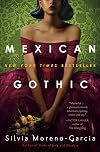
Sometimes, I walk into a building and think, 'That's a perfect example of a (pick your architectural style of choice) structure.' and I take pleasure in the building for its perfection, regardless of whether it's an art nouveau garage, a Georgian townhouse or a gothic cathedral. It's the perfection of the form that counts. Of course, my pleasure is increased if the building also contains something that gives me a reason to visit it, preferably something that complements or contrasts with its show more architectural style: an art nouveau garage transformed into a gourmet food hall or a gothic cathedral gilded with a son et lumière display.
My pleasure in 'Mexican Gothic' was like that. It first won my admiration because it's a perfect example of a gothic novel, with deeply disturbing dread seeping out of the shadows and slowly drowning your sanity in fear. The pace and tone are perfectly controlled and the fact that the form is familiar increases rather than lessens its power.
We have the once-grand now-decaying gothic mansion that quickly becomes an external sign of the corruption of the family who owns it. We have a clever, bold, fashionable young woman who sparkles in the bright lights of1950s Mexico City finding herself in the gloomy mist of the remote mountains where her cousin seems to have become mentally unstable. We have an unwelcoming family, certain of the superiority of their Anglo blood that their commitment to eugenics has preserved and a dark secret and a threat of violence housed in a brittle shell of formal hospitality, like the smell of rot from a beautiful but fractured sarcophagus.
My pleasure was increased by the modern twists in the story that cast the gothic structure of the tale in a new light, deepening rather than diminishing its menace. Noemi, our young heroine, is a rational woman and not easily frightened. When she is confronted with the strange she looks not to superstition but to science. She is knowledgeable about chemistry and deeply antagonistic to the pseudo-science of the eugenicists. She is proud of her heritage and unbowed by Anglo condescension. She does not trust easily but she will not abandon her cousin or fail in the mission her father gave her. All these things made me want to cheer for her yet none of them was enough to help her withstand the gothic threat swallowing her whole. She remained a woman alone, prey to manipulation and abuse. Her rational curiosity served mainly to increase her vulnerability rather than to evade her fate. In the end, she had to do what any gothic heroine must do, fight for her life.
'Mexican Gothic' was a very pleasurable read. It kept me nodding with approval at the expected and grinning at the surprising additions. The tension was real and unrelieved. I loved that the rational explanation, when it came, was fundamentally creepy and not at all the one I had been expecting.
The only false note for me was the final chapter, which was a little too neat and too optimistic. For me, it didn't fit with the rest of the novel. It could have been omitted and the reader would have lost nothing.
Frankie Corzo does a great job in narrating the audiobook. Click on the SoundCloud link below to hear a sample.
https://soundcloud.com/penguin-audio/mexican-gothic-by-silvia show less
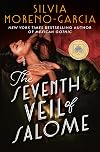
This tale of a naïve Mexican girl who finds herself cast as the lead in a mega-Hollywood “sword & sandals” epic is well researched, pulpy, and a whole lot of fun.
The setting: 1950s Hollywood – an era characterized by glamour, extravagance, and movie magic – but also rampant misogyny, unapologetic racism, mobsters, scandal, and cynicism. The dramatic personae: profiteering movie moguls, megalomaniac directors, narcissistic stars, catty starlets, jaded bit players, gossip-mongering show more journalists, hip jazz musicians, jaded Jewish screenwriters, slick mobsters, sleazy pimps, and stage parents galore. Happily, Moreno-Garcia hasn’t stinted on research: in addition to storytelling, she’s stuffed her chapters (each told from the POV of a specific narrator) with deliciously authentic detail and gossip from the period.
The story is structured around the parallel, intertwining tales of three women:
• Salome, the biblical charmer who (according to the certain Christian texts) so entranced King Herod with her dancing that he offered to grant her a boon, whereupon she requested the head of John the Baptist on a platter – because apparently a nice diamond bracelet was out of the question? (NOTE: Moreno-Garcia has chosen to lean into the Oscar Wilde version of the tale, in which Salome’s wrath is the result of unrequited love for the devoted but dishy prophet.)
• Lois Lavois, the simple Mexican actress/ingenue/opera fan who is plucked from her Mexican village by a Hollywood casting agent and thrust into the role of Salome despite her lack of acting experience or, as becomes increasingly obvious, requisite life experience.
• Nancy Hartley, a narcissistic, bitter, amoral starlet who believes that Hollywood has deprived her of her deserved fame.
What do each of these women have in common? Eventually, each of them will require the men who they have infatuated to perform an act of devotion. This doesn’t turn out well for John the Baptist, as noted above. But will Lois’s smitten, aristocratic jazz pianist find the courage to choose love over social status? Will Nancy’s devoted mobster beau placate her appetite for bloody revenge? As you’re waiting for answers, enjoy delighting in chapters stuffed full of glamorous Hollywood parties, behind-the-scenes studio shoots, and decadent doings in the halls of King Herod’s court.
This may not be literary fiction, but it’s well plotted, well written, briskly paced, and loads of fun. If it is possible to write in Technicolor, then Moreno-Garcia has surely achieved the feat! show less
The setting: 1950s Hollywood – an era characterized by glamour, extravagance, and movie magic – but also rampant misogyny, unapologetic racism, mobsters, scandal, and cynicism. The dramatic personae: profiteering movie moguls, megalomaniac directors, narcissistic stars, catty starlets, jaded bit players, gossip-mongering show more journalists, hip jazz musicians, jaded Jewish screenwriters, slick mobsters, sleazy pimps, and stage parents galore. Happily, Moreno-Garcia hasn’t stinted on research: in addition to storytelling, she’s stuffed her chapters (each told from the POV of a specific narrator) with deliciously authentic detail and gossip from the period.
The story is structured around the parallel, intertwining tales of three women:
• Salome, the biblical charmer who (according to the certain Christian texts) so entranced King Herod with her dancing that he offered to grant her a boon, whereupon she requested the head of John the Baptist on a platter – because apparently a nice diamond bracelet was out of the question? (NOTE: Moreno-Garcia has chosen to lean into the Oscar Wilde version of the tale, in which Salome’s wrath is the result of unrequited love for the devoted but dishy prophet.)
• Lois Lavois, the simple Mexican actress/ingenue/opera fan who is plucked from her Mexican village by a Hollywood casting agent and thrust into the role of Salome despite her lack of acting experience or, as becomes increasingly obvious, requisite life experience.
• Nancy Hartley, a narcissistic, bitter, amoral starlet who believes that Hollywood has deprived her of her deserved fame.
What do each of these women have in common? Eventually, each of them will require the men who they have infatuated to perform an act of devotion. This doesn’t turn out well for John the Baptist, as noted above. But will Lois’s smitten, aristocratic jazz pianist find the courage to choose love over social status? Will Nancy’s devoted mobster beau placate her appetite for bloody revenge? As you’re waiting for answers, enjoy delighting in chapters stuffed full of glamorous Hollywood parties, behind-the-scenes studio shoots, and decadent doings in the halls of King Herod’s court.
This may not be literary fiction, but it’s well plotted, well written, briskly paced, and loads of fun. If it is possible to write in Technicolor, then Moreno-Garcia has surely achieved the feat! show less
I know most people felt like the ending fell flat and that Moreno-Garcia did a lot of sidetracking into her (apparent?) special interest for film history. While I only /kind/ of agree with them about the ending, I'm equally autistic for everything she discusses about films, so it didn't bother me.
Let me say that this book is almost like a comfort-book for me now. I legitimately couldn't put it down, and it's a top 15 book for me (as of right now).
It's not at all perfect, and not to show more everyone's taste, but for me it has some of the best characterization I've ever seen. Two childhood friends who are both queer, one being a feminine health (and looks!) conscious man who is haunted by his addictions and a scruffy resting-bitch-face woman who seems to be barely coasting through life, try to unravel the mystery of an almost long-lost film, only to end up with supernatural powers and otherworldly enemies.
While the whole 'supernatural' plot is, in fact, happening, my biggest focus was on how well written these two were. Their interactions were so natural, between the fights and the 'break ups' and the quiet get-back-togethers where you ACHED for them to finally realize that, while messy, they complemented each other so intensely that they couldn't stay away from each other for very long even if they tried. They have pet names for each other, knew their habits and had the sweetest (or not) thoughts about one another even when the other was away from the scene.
This book is barely a romance, as the ending wasn't fleshed out like I dreamed it would be, but to me it's one of the most romance-y books I've read yet, and I usually don't care for romance.
Anyways, I definitely will be re-reading when I want a feel-good story. show less
Let me say that this book is almost like a comfort-book for me now. I legitimately couldn't put it down, and it's a top 15 book for me (as of right now).
It's not at all perfect, and not to show more everyone's taste, but for me it has some of the best characterization I've ever seen. Two childhood friends who are both queer, one being a feminine health (and looks!) conscious man who is haunted by his addictions and a scruffy resting-bitch-face woman who seems to be barely coasting through life, try to unravel the mystery of an almost long-lost film, only to end up with supernatural powers and otherworldly enemies.
While the whole 'supernatural' plot is, in fact, happening, my biggest focus was on how well written these two were. Their interactions were so natural, between the fights and the 'break ups' and the quiet get-back-togethers where you ACHED for them to finally realize that, while messy, they complemented each other so intensely that they couldn't stay away from each other for very long even if they tried. They have pet names for each other, knew their habits and had the sweetest (or not) thoughts about one another even when the other was away from the scene.
This book is barely a romance, as the ending wasn't fleshed out like I dreamed it would be, but to me it's one of the most romance-y books I've read yet, and I usually don't care for romance.
Anyways, I definitely will be re-reading when I want a feel-good story. show less
Lists
Magic Realism (1)
Indie Next Picks (1)
READ IN 2022 (1)
Netgalley Reads (1)
Horror Books (1)
Female Author (1)
ScaredyKIT 2021 (1)
Overdue Podcast (2)
I Love Horror (1)
Diverse Horror (2)
VBL YA (1)
Obama Reads (1)
Awards


You May Also Like


Associated Authors
Statistics
- Works
- 69
- Also by
- 51
- Members
- 20,157
- Popularity
- #1,076
- Rating
- 3.8
- Reviews
- 799
- ISBNs
- 229
- Languages
- 11
- Favorited
- 16

