
David Huebert
Author of Peninsula Sinking
Works by David Huebert
Associated Works
Tagged
Common Knowledge
- Places of residence
- Halifax, Nova Scotia, Canada
- Associated Place (for map)
- Nova Scotia, Canada
Members
Reviews
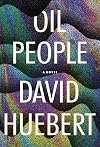
Oil People, the debut novel from David Huebert (Chemical Valley, Peninsula Sinking), follows a two-pronged narrative structure to tell a gothic-tinged tale of greed, thwarted love, madness and environmental devastation. In May 1987, 13-year-old Jade Armbruster lives with her parents and older sister Angie on what’s left of the Armbruster estate in Lambton County, Ontario, the site of Canada’s first oil gusher (established by ancestor Clyde Armbruster in 1862). Also on the property is the show more Canadian Petroleum Legacy Museum, which the family owns and operates. Business at the museum is sporadic at best and their drilling business, decades past its prime but which still produces a small amount of oil each year, is, like the house, ramshackle. Unfortunately for Jade, her parents are engaged in an ongoing dispute about whether or not to sell up and leave (her father wants to; her mother, who grew up on the estate, does not), and their raised voices provide a nightly backdrop to her attempts to sleep. The novel’s second narrative thread, set in the 1860s, depicts Clyde Armbruster’s discovery of oil in Southern Ontario and his subsequent partnership with savvy speculator Arlyss Mayweather to bring the discovery to market. These bare-bones elements support a story that encompasses all manner of eccentric behaviours, betrayals and afflictions. Jade herself is an oddity: her left eye has an extra pupil, a trait she shares with her mother’s long-dead sister, Poppy, who at age fourteen perished in the fire that burned the south wing of the Armbruster home, the remnants of which still stand. The story of Clyde Armbruster is, depending on your point of view, one of single-minded determination or unhinged obsession. Without the help of electricity or motorized apparatus, drilling for oil in the 1860s was a laborious process, and Clyde drilled deeper than anyone thought possible to reach the oil he was sure lay below. Clyde’s discovery wreaked instant ecological havoc when the gusher burst forth unconstrained, spewing raw oil across the surrounding woodlands, streams and farms, contaminating the earth and devastating wildlife. Regardless, Clyde himself stayed on site, devotedly toiling in the oil fields. However, long-term exposure to the chemicals thus unleashed affected his brain and caused his behaviour to grow increasingly erratic and unpredictable. And more: the chemical exposure likely rendered him unable to impregnate his wife, Lise. This was a problem because Lise was desperate for a child, and when she turned to the Mayweathers—Arlyss and his wife Dorothy—for help, it added an enticing wrinkle to Armbruster family lore. Toward the end of his life, after Mayweather bought him out of the oil business, Clyde was consumed by another obsession: birds and taxidermy, the dusty and disturbing evidence of which is strewn throughout Jade’s home. In 1987, Jade’s family is fractured. With her parents at odds about the family’s future on the property, Jade’s sister Angie has become a radical environmentalist, no longer bothering to conceal her disgust with the family’s toxic legacy and encouraging her journalist boyfriend to write an environmental exposé for the local paper. Jade herself is undergoing the confusing emotional and physical transformations of puberty, and at the same time has developed a crush on schoolmate Marc, whose family runs a pig farm. But Marc seems to have allied himself with Jade’s best friend turned nemesis Thea Mayweather, whose family, more than a century later, remains well off from the proceeds of Arlyss Mayweather’s business acumen. Events come to a head when a spill from a chemical plant unleashes a toxic blob into the St. Clair River (note: this actually happened), where Marc and Jade had gone swimming. And all along, Jade has been monitoring the progress of the sludge oozing slowly but steadily into the basement at home through a crack in the wall, a situation that seems to herald what occurs in the novel’s catastrophic dénouement.
Huebert’s febrile narrative makes for a jittery read. Throughout, the author’s prose retains the restless, pulsating qualities that make his first two collections of short fiction so memorable and a delight to re-read. It seems reasonable to assume though that Oil People will inspire some degree of ambivalence in the reader. The quirks and obsessive behaviours of the characters who inhabit the poisoned and poisonous terrain of this novel draw us in and repel us in almost equal measure.
This is a minor caveat. In his first novel, David Huebert writes with great urgency as he presents his singular vision of a world in peril. He is not afraid to tell us how we got to where we are, and that alone is commendable. But he goes further, by providing a potent and eloquent warning that complacency will not see us through the current environmental crisis. show less
Huebert’s febrile narrative makes for a jittery read. Throughout, the author’s prose retains the restless, pulsating qualities that make his first two collections of short fiction so memorable and a delight to re-read. It seems reasonable to assume though that Oil People will inspire some degree of ambivalence in the reader. The quirks and obsessive behaviours of the characters who inhabit the poisoned and poisonous terrain of this novel draw us in and repel us in almost equal measure.
This is a minor caveat. In his first novel, David Huebert writes with great urgency as he presents his singular vision of a world in peril. He is not afraid to tell us how we got to where we are, and that alone is commendable. But he goes further, by providing a potent and eloquent warning that complacency will not see us through the current environmental crisis. show less
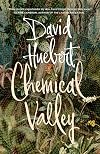
The world of David Huebert’s second collection of short fiction, Chemical Valley, is a poisonous, inhospitable place. In some respects, as we turn these pages, it’s easy to imagine we’re visiting a future world: the one that awaits our elder selves and our descendants should humans continue to obliterate CO2-absorbing flora and allow toxic effluents and emissions to pour unchecked into the land, sea and air. One might assume that the author intends these tales of struggle and longing show more in a tarnished landscape to be cautionary: prognostications of environmental cataclysm, annihilation at our own hands. But as we read, what David Huebert is really telling us becomes clear: this is the world in which we currently reside, and the confusion and desperation his characters experience as contaminants seep unseen into the earth and the biological slowly succumbs to the chemical is everyone’s here and now. This is serious business. But though the messaging is palpable, there is nothing heavy-handed in his approach: no doomsday declaration, no portentous drumbeat. In Chemical Valley, as in his previous volume of stories, Peninsula Sinking, David Huebert’s knack for creating engaging characters and finding interesting things for them to say, do and think is on abundant, boisterous display. Huebert’s characters are Every-man and -woman, people whose daily rituals, quandaries and tribulations mirror our own. The narrator of the title story, set in Sarnia—hub of Canada’s petrochemical industry and nicknamed “Chemical Valley”—works at a processing plant. His partner, Eileen, is off work, suffering from a mysterious, debilitating malady. With the indifference of his employer as a backdrop, we witness him floundering under domestic and professional pressures while grappling with manifestations of community contamination, so widespread they have infiltrated his home. “Swamp Thing” tells the story of teenage Sapphire. Bouncing between her separated parents, embroiled in a clandestine affair with her female English teacher, Sapphire and her friends Dee Dee and Jenna are members of the ultra-climate-change-conscious generation meeting the disastrous consequences of the previous generation’s environmental profligacy head on. The story, set during a punishing heatwave, chronicles Sapphire’s emotional awakening through a series of catastrophic climate/environmental incidents, culminating in “a super-flare, a major melt-down, and a death at the plant.” Elsewhere in the book we encounter Deepa, a young mother barely coping with a recalcitrant newborn, a complacent husband and a rodent infestation (“Cruelty”), a reluctant hockey enforcer whose personal life is a mess (“Six Six Two Fifty”), Zane, whose partner Geoff is obsessively preparing for the coming environmental apocalypse (“SHTF”), and fifty-year-old socially-challenged Edward, bullied all his life, afflicted with a maddening fungal skin infection, whose man-made companion (the GenuFlesh XS-4000, “a fully customizable” “anthropomorphic robobride”), named Lily, is just about done for, worn out by his constant need (“The Pit”). Throughout the book, Huebert’s prose shines, frequently catching the reader off guard with startling but memorable turns of phrase and delirious imaginative leaps. And while the manic energy, eccentric humour and wry observations on life and love keep us entertained, the book’s rich emotional core draws us in, touching us at the most profound level.
David Huebert writes in a pulsating, kinetic contemporary voice. Still at an early point in his career, he has complete command of his craft. These quirky, artfully composed stories are a gift worth savouring. show less
David Huebert writes in a pulsating, kinetic contemporary voice. Still at an early point in his career, he has complete command of his craft. These quirky, artfully composed stories are a gift worth savouring. show less
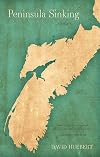
In David Huebert’s inaugural collection of short stories, we encounter a variety of characters standing on the edge of lives in the process of transformation. Huebert writes emotion like a raw wound—throbbing and bloody. With astounding and sometimes alarming ease, he peels back his characters’ protective carapace to reveal the naked, trembling flesh beneath. The CBC Short Story Prize winning “Enigma,” which opens the volume, is a powerful case in point. In this story the young show more narrator is facing the imminent loss of her beloved horse. The animal is lame, the situation is only going to worsen, and the narrator’s love is not strong enough to save either of them. In “Sitzpinkler,” Miles is heading out to sea on a submarine for 105 days, one of a crew of 58; the assignment: to defend the sovereignty of Canada’s 200-mile offshore limit. Miles comes from a family of eccentrics (his pet name for his father is “the old Nazi” and his mother has recently succumbed to Botox poisoning). For Miles, emotional support has been hard to come by and life often takes the opportunity to remind him of his shortcomings. And though he worries about what could go wrong on a vessel submerged under tons of sea water, as any right-thinking individual would, it turns out that the greatest danger he faces is not the crushing pressure of the ocean, but the risk that while confined in close quarters he will accidentally let down his guard and reveal his foolish private self. Elsewhere we encounter a lonely and mistrustful prison guard with a hopeless crush on an inmate (“Maxi”), a pregnant woman who sneaks drinks and then struggles with her guilt (“Horse People”), and a young woman who, amidst a series of minor calamities, is struggling to find direction (“How Your Life”). The centrepiece of the collection is the 60-page title story, in which we witness three snapshot episodes in the life of Gavin that extend from his teenage years to young adulthood. Like Miles, Gavin’s life is coloured by regret and dominated by a fear that his baser instincts and the fact that he has no idea what it takes to live a decent and productive life will be exposed for all to see. This story is also a heartbreaking love song to Gavin’s (and the author’s) home province of Nova Scotia, but one that doesn’t hold back when it comes to enumerating the love object’s faults and failures. Overall, the collection is a triumph. In each story Huebert creates complex characters and a complete world for them to inhabit. His writing is urgent, uninhibited, packed with minute but relevant detail, and often very funny. Peninsula Sinking is a noteworthy debut that heralds the arrival of a singular literary voice, one that many of us will be eagerly awaiting to hear from again. show less
Short Stories, all set in NS (except for sub that travels from Halifax to Arctic) and Horse People, set in Kenora ON with Nova Scotian protagonist
You're more apt to like this, I think, if you have a NS connection.
You're more apt to like this, I think, if you have a NS connection.
Awards


You May Also Like
Associated Authors
Statistics
- Works
- 5
- Also by
- 2
- Members
- 33
- Popularity
- #421,954
- Rating
- 4.0
- Reviews
- 4
- ISBNs
- 12