
Charles R. Saunders (1946–2020)
Author of Imaro
About the Author
Image credit: WorldsWithoutEnd.com
Series
Works by Charles R. Saunders
Death In Jukun 2 copies
Mai-kulala 2 copies
Jeroboam Henley's Debt 2 copies
Yashimbe's Choice 2 copies
Jeroboam Heney’s Debt 1 copy
Amma 1 copy
La legione degli eroi 1 copy
Shimenege's Mask 1 copy
Marwe's Forest 1 copy
The Last Round 1 copy
Cush 1 copy
The Bahari Mashiriki 1 copy
Mwenni 1 copy
Betrayal In Blood 1 copy
Horror In The Black Hills 1 copy
The Afua 1 copy
The Place Of Stones 1 copy
Turkhana Knives 1 copy
I Leave A Warrior Behind 1 copy
Bana-gui 1 copy
Associated Works
Dark Matter: A Century of Speculative Fiction from the African Diaspora (2000) — Contributor — 595 copies, 11 reviews
Tagged
Common Knowledge
- Legal name
- Saunders, Charles Robert
- Birthdate
- 1946-07-12
- Date of death
- 2020-05
- Gender
- male
- Education
- Lincoln University
- Occupations
- journalist
- Organizations
- Halifax Daily News
- Nationality
- USA
- Birthplace
- Elizabeth, Pennsylvania, USA
- Places of residence
- Nova Scotia, Canada
Ottawa, Ontario, Canada - Associated Place (for map)
- USA
Members
Discussions
THE DEEP ONES: "Jeroboam Henley's Debt" by Charles R. Saunders in The Weird Tradition (June 2022)
Reviews

Quality Adventure with Legendary Context
Style & Legendary Motivations:
This unique blend of Lovecraft & African mythology features a Conan-like hero. It’s pulpy style & storytelling may merit 4 stars: its uniqueness & place in literature boost it to 5.
Imaro is adventure in the vein of vintage, pulp periodicals. Expect heavy doses of sorcery & horror at a brisk pace. Unlike traditional pulp stories, these chapters are slightly less-episodic and more-chronological. In other words, Imaro is show more more of a continuing character versus Howard’s original Conan publications. Adventure tropes that could be called “cheesy” are compensated well with engrossing, visceral battle scenes and bestial sorcery. In fact, I was reminded of James Silke Frazetta’s Death Dealer series and thought Charles R. Saunders was much more effective at a milieu including jungle/savannah beasts. Saunders’ Imaro felt more Frazetta-like than Gath in Prisoner of the Horned Helmet or Tooth and Claw.
An excerpt from Saunders’s Into to Milton Davis’s Griots: A Sword and Soul Anthology best reveals the author’s passion:
"Robert E. Howard and his contemporaries were products of their time. Racism, in the form of white supremacy, was an integral part of the popular culture of the early decades of the twentieth century, and as such it pervaded pulp fiction. As a product of a later time during which the tenets of racism came under vigorous challenge, my enjoyment of fiction from past decades was often compromised by the racial attitudes I encountered in my reading. On some occasions, I simply let it slide. On others, I wrestled with resentment. Then I discovered a way to resolve my dilemma.
Interest in African history and culture surged during the 1960s, and at the same time I was reading sword-and-sorcery and fantasy fiction, I was also absorbing heretofore-unknown information about a continent that was not “dark” as its detractors made it out to be. I realized that this non-stereotypical Africa of history and legend was just as valid a setting for fantasy stories as was the ancient and medieval Europe that served as the common default setting for everything from Conan to Lord of the Rings. A character came into my head then: Imaro, a black man who could stand alongside mythical warrior-heroes like Beowulf and Hercules, as well as fictional creations such as Conan and Kull."
Saunders executed his dream very well, uniquely adding to adventure literature & steering how African mythology is conveyed with entertaining fiction. He coined the term “Sword & Soul” and effectively started a new subgenre. Wow! I would argue that he was so effective at writing that he depicted an almost darker Nyumbani continent (i.e. Africa), albeit one based more on history & substance rather than racism. Saunders’ sensitivity toward enslavement and genocide motivated him to replace his longest chapter (Book 3: Slaves of the Giant Kings) when Nightshade printed the second edition.
I tracked down this copy too and really liked how Saunder's revisted his past work and made it stronger. The Afua chapter in particular seemed more consistent with Imaro's development as an outcast and his conflict with evil forces...and the writing seemed less forced (especially with Tanisha's introduction). The candid remarks from Saunders and Syzumskyj (a loyal fan who urged him to revist Imaro) added value. In short, despite the first edition being a good-read, I would recommend future readers to grab the Nightshade Version if given the option (since it is even better).
1981 Imaro Edition Contents:
• Book 1: Turkhana Knives
• Book 2: The Place of Stones
• Book 3: Slaves Of The Giant Kings (replaced with “The Afua” in the 2006 edition)
• Book 4: Horror in the Black Hills (Cover for 1986 based from this chapter)
• Book 5: The City of Madness (this is not in the 2006 edition of “Imaro-1” from Nightshade…but does appear in the first chapter in Nightshades’ “Imaro-2” renamed Mji Ya Wzimu its original title in from a 1974 publication in Dark Fantasy...actually, the Nightshade edition offers a different chapter in its place called Betrayal in Blood.)
Imaro:
Through these five chapters, Imaro evolves from being a fatherless, abandoned child (desiring to belong to a community)… into a vengeful, tribe-less Hercules-like figure (set on destroying evil forces). An excerpt captures his presence best:
"The Illyassai was a fearsome sight. His dark skin glistened sweat-slick through garments that hung in skimpy tatters from his massive frame. Crimson-crusted wounds scored his body like glyphs inscribed by devils. Dried blood matted his wooly hair. His face was hardened into an implacable mask of hatred. Unrequited vengeance flickered like a torch In his eyes, yet beneath the lamina of that emotion lay a core of grief so bitter it threatened to consume him entirely…"
Imaro vs. Lovecraftian “Mashataan” Sorcery:
Each story compounds the conflict of Imaro versus the being Mashatann, whose minions or followers assume mythological status:
"Elephantine legs rose like wrinkled trees from the ground, Long bony arms hung like sticks from a pair of, knobby shoulders. The hands were incongruously delicate and graceful. Other than his head, those hands were the only remotely human features [spoiler’s name] had left…
…Upon the dais hunched a bizarre image sculpted from pitted, gray-green stone. From the waist up, the creature the sculpture depicted resembled Ngai the gorilla, although its skin was hairless and its wide mouth bore fangs even longer than those of the red panther Imaro had slain. It was the lower extremities of the unknown beast’s body that marked it as something alien to the world of natural beings. Its legs were the hindquarters of Mboa the buffalo: thick, muscular haunches tapering to sharp, lethal hooves."
Cover:
The 1981 cover by Ken Kelly captured the tone, but seems to have some glaring disconnects: the cover depicts Book Four Horror in the Hills, but has a hero that appears non-African and the creature approximates the primary antagonist...but is of the incorrect gender. The NightShade’s edition of Imaro-1, has a beautiful illustration by Vince Evans, but given the color-palette & the lack of magic & creatures, appears to showcase a Historical-Fiction novel rather than Fantasy-Fiction. Perhaps some of those design features were intentional marketing concepts.
Finding A Copy:
The series Imaro continues with 3 more books: Imaro 2 : The Quest for Cush, The Trail of Bohu, Imaro: The Naama War, available from Lulu.com. Mshindo Kuumba has emerged as Saunder’s go-to artist for these. Click here to go to Saunders’ website to locate books: Where to purchase new Saunders books
Imaro 2 The Quest for Cush / Imar 3 The Trail of Bohu Imaro / Imaro 4 The Naama War
Although the first two Imaro books from DAW were reprinted in ~2006 by Nightshade, they are difficult to find now (2013). Used bookstores are your best bet. Ebooks are being developed according to a very credible source, that being virtual-brother-to-Saunders, Milton Davis, who edited Griots: A Sword and Soul Anthology, the foundational Sword & Soul anthology). He recently commented on the Sword & Sorcery Group on Goodreads:
"Milton Davis: Charles's current publisher is working on e-book versions of the Imaro books. There's a new Imaro story in Griots and a new Dossouye story in the upcoming Griots: Sisters of the Spear anthology. And to top it all off, I plan to publish the first book (or two) in a new series by him entitled 'Abengoni."
Sword & Soul is highly recommended to fantasy-fiction readers! show less
Style & Legendary Motivations:
This unique blend of Lovecraft & African mythology features a Conan-like hero. It’s pulpy style & storytelling may merit 4 stars: its uniqueness & place in literature boost it to 5.
Imaro is adventure in the vein of vintage, pulp periodicals. Expect heavy doses of sorcery & horror at a brisk pace. Unlike traditional pulp stories, these chapters are slightly less-episodic and more-chronological. In other words, Imaro is show more more of a continuing character versus Howard’s original Conan publications. Adventure tropes that could be called “cheesy” are compensated well with engrossing, visceral battle scenes and bestial sorcery. In fact, I was reminded of James Silke Frazetta’s Death Dealer series and thought Charles R. Saunders was much more effective at a milieu including jungle/savannah beasts. Saunders’ Imaro felt more Frazetta-like than Gath in Prisoner of the Horned Helmet or Tooth and Claw.
An excerpt from Saunders’s Into to Milton Davis’s Griots: A Sword and Soul Anthology best reveals the author’s passion:
"Robert E. Howard and his contemporaries were products of their time. Racism, in the form of white supremacy, was an integral part of the popular culture of the early decades of the twentieth century, and as such it pervaded pulp fiction. As a product of a later time during which the tenets of racism came under vigorous challenge, my enjoyment of fiction from past decades was often compromised by the racial attitudes I encountered in my reading. On some occasions, I simply let it slide. On others, I wrestled with resentment. Then I discovered a way to resolve my dilemma.
Interest in African history and culture surged during the 1960s, and at the same time I was reading sword-and-sorcery and fantasy fiction, I was also absorbing heretofore-unknown information about a continent that was not “dark” as its detractors made it out to be. I realized that this non-stereotypical Africa of history and legend was just as valid a setting for fantasy stories as was the ancient and medieval Europe that served as the common default setting for everything from Conan to Lord of the Rings. A character came into my head then: Imaro, a black man who could stand alongside mythical warrior-heroes like Beowulf and Hercules, as well as fictional creations such as Conan and Kull."
Saunders executed his dream very well, uniquely adding to adventure literature & steering how African mythology is conveyed with entertaining fiction. He coined the term “Sword & Soul” and effectively started a new subgenre. Wow! I would argue that he was so effective at writing that he depicted an almost darker Nyumbani continent (i.e. Africa), albeit one based more on history & substance rather than racism. Saunders’ sensitivity toward enslavement and genocide motivated him to replace his longest chapter (Book 3: Slaves of the Giant Kings) when Nightshade printed the second edition.
I tracked down this copy too and really liked how Saunder's revisted his past work and made it stronger. The Afua chapter in particular seemed more consistent with Imaro's development as an outcast and his conflict with evil forces...and the writing seemed less forced (especially with Tanisha's introduction). The candid remarks from Saunders and Syzumskyj (a loyal fan who urged him to revist Imaro) added value. In short, despite the first edition being a good-read, I would recommend future readers to grab the Nightshade Version if given the option (since it is even better).
1981 Imaro Edition Contents:
• Book 1: Turkhana Knives
• Book 2: The Place of Stones
• Book 3: Slaves Of The Giant Kings (replaced with “The Afua” in the 2006 edition)
• Book 4: Horror in the Black Hills (Cover for 1986 based from this chapter)
• Book 5: The City of Madness (this is not in the 2006 edition of “Imaro-1” from Nightshade…but does appear in the first chapter in Nightshades’ “Imaro-2” renamed Mji Ya Wzimu its original title in from a 1974 publication in Dark Fantasy...actually, the Nightshade edition offers a different chapter in its place called Betrayal in Blood.)
Imaro:
Through these five chapters, Imaro evolves from being a fatherless, abandoned child (desiring to belong to a community)… into a vengeful, tribe-less Hercules-like figure (set on destroying evil forces). An excerpt captures his presence best:
"The Illyassai was a fearsome sight. His dark skin glistened sweat-slick through garments that hung in skimpy tatters from his massive frame. Crimson-crusted wounds scored his body like glyphs inscribed by devils. Dried blood matted his wooly hair. His face was hardened into an implacable mask of hatred. Unrequited vengeance flickered like a torch In his eyes, yet beneath the lamina of that emotion lay a core of grief so bitter it threatened to consume him entirely…"
Imaro vs. Lovecraftian “Mashataan” Sorcery:
Each story compounds the conflict of Imaro versus the being Mashatann, whose minions or followers assume mythological status:
"Elephantine legs rose like wrinkled trees from the ground, Long bony arms hung like sticks from a pair of, knobby shoulders. The hands were incongruously delicate and graceful. Other than his head, those hands were the only remotely human features [spoiler’s name] had left…
…Upon the dais hunched a bizarre image sculpted from pitted, gray-green stone. From the waist up, the creature the sculpture depicted resembled Ngai the gorilla, although its skin was hairless and its wide mouth bore fangs even longer than those of the red panther Imaro had slain. It was the lower extremities of the unknown beast’s body that marked it as something alien to the world of natural beings. Its legs were the hindquarters of Mboa the buffalo: thick, muscular haunches tapering to sharp, lethal hooves."
Cover:
The 1981 cover by Ken Kelly captured the tone, but seems to have some glaring disconnects: the cover depicts Book Four Horror in the Hills, but has a hero that appears non-African and the creature approximates the primary antagonist...but is of the incorrect gender. The NightShade’s edition of Imaro-1, has a beautiful illustration by Vince Evans, but given the color-palette & the lack of magic & creatures, appears to showcase a Historical-Fiction novel rather than Fantasy-Fiction. Perhaps some of those design features were intentional marketing concepts.
Finding A Copy:
The series Imaro continues with 3 more books: Imaro 2 : The Quest for Cush, The Trail of Bohu, Imaro: The Naama War, available from Lulu.com. Mshindo Kuumba has emerged as Saunder’s go-to artist for these. Click here to go to Saunders’ website to locate books: Where to purchase new Saunders books
Imaro 2 The Quest for Cush / Imar 3 The Trail of Bohu Imaro / Imaro 4 The Naama War
Although the first two Imaro books from DAW were reprinted in ~2006 by Nightshade, they are difficult to find now (2013). Used bookstores are your best bet. Ebooks are being developed according to a very credible source, that being virtual-brother-to-Saunders, Milton Davis, who edited Griots: A Sword and Soul Anthology, the foundational Sword & Soul anthology). He recently commented on the Sword & Sorcery Group on Goodreads:
"Milton Davis: Charles's current publisher is working on e-book versions of the Imaro books. There's a new Imaro story in Griots and a new Dossouye story in the upcoming Griots: Sisters of the Spear anthology. And to top it all off, I plan to publish the first book (or two) in a new series by him entitled 'Abengoni."
Sword & Soul is highly recommended to fantasy-fiction readers! show less
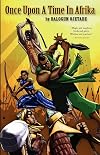
"Sword and Soul" is a sub-genre I had yet to explore -- had yet even to have heard of -- before my good friend and fellow bookfreak EssJay mentioned it, and this book, to me. Ever ready to try something new, especially if it's cheap, I decided to take a chance on Once Upon a Time in Afrika.
I'm very glad I did.
Written like a fairy tale, densely plotted like the conventional epic fantasies it's riffing on, Once Upon a Time in Afrika is a hell of a lot of fun to read. Set in an alternate show more pre-white-contact version of Africa in which the magic and the gods and demigods of folk tale and legend are real and part of everyday life, the story of badass Princess Esuseeke and her equally badass suitors is packed with action, combat, empowerment and intrigue. Ojetade is a student of African martial arts and it shows; his fight scenes are intricate, plausible, visceral and absolutely breathtaking, but he's writer enough to keep the reader's attention between battles.*
Refreshingly for this reader, Esuseeke is not rebelling when she takes up a sword or drops into an unarmed combat stance, but partaking fully of a culture that expects women to be able to defend themselves and boasts of a proud tradition of women warriors who often outshine the men. Her gender is important only because of her royalty; someone's got to breed successors to the crown, and for that she needs, at some point, a husband.
But her husband can't just be any old blue-blood type; he has to be her equal. And there aren't many of those.
Enter the time-honored device of the tournament. The winner gets to marry Esuseeke -- all nice and straightforward. But it isn't; Esuseeke's father, a politician rather than a warrior, doesn't trust the mechanism to produce a satisfactory result. He has someone in mind for her that will probably win, but daddy wants to be sure, you see. In other words, daddy starts gaming the system even before the system is in place, just to make sure that his daughter marries the right guy.
Of course the right guy is kind a jerk. More than a jerk, actually, a terrifying warlord whose fixation on the Law brings him to commit acts of extreme cruelty towards those less fortunate than he, rather than bend the rules a little.
But wait, there's more! Chiefly one Akin, the son of the unspeakably badass warrior woman who trained Esuseeke, but whom the princess somehow never met. He is the best student at his parents' school but has yet to prove himself anywhere else, but oh is he ready. Packing a pair of wooden swords that once slew a dragon and sporting a bristling mohawk, he is every inch a hero-in-waiting, but the way he finds himself fighting for Esuseeke's hand isn't quite what he might expect.
There's also a magician of intimidating power and wiliness, who just happens to be the sworn enemy of the Jerk. And a vast and skeletal monster only half of which, the left side, exists in our world. And a freaky witch that tricks her way into Akin's stomach. And a giant, pasty warrior who rides an armored albino rhinocerus into battle. And much, much more.
I haven't had this much sheer fun with a book since the first Crown of the Blood novel, if you couldn't tell.
So if you love pulp fantasy but don't love the racism, or the sexism, this may be your new favorite novel, or perhaps novella, for my one complaint about Once Upon a Time in Afrika, it's that it's just too short! But like they say, you want to leave 'em hankering for more.
Mission accomplished, Mr. Ojetade.
*Although there is a bit of tedium in the middle as he sends the kingdom's Prime Minister on a tour of the continent, recruiting warriors for the tournament. It's only a bit tedious, though, because Ojetade's considerable imagination gets free reign on the journey. And he does like a badass warrior-woman, does Ojetade. Oh, yes. show less
I'm very glad I did.
Written like a fairy tale, densely plotted like the conventional epic fantasies it's riffing on, Once Upon a Time in Afrika is a hell of a lot of fun to read. Set in an alternate show more pre-white-contact version of Africa in which the magic and the gods and demigods of folk tale and legend are real and part of everyday life, the story of badass Princess Esuseeke and her equally badass suitors is packed with action, combat, empowerment and intrigue. Ojetade is a student of African martial arts and it shows; his fight scenes are intricate, plausible, visceral and absolutely breathtaking, but he's writer enough to keep the reader's attention between battles.*
Refreshingly for this reader, Esuseeke is not rebelling when she takes up a sword or drops into an unarmed combat stance, but partaking fully of a culture that expects women to be able to defend themselves and boasts of a proud tradition of women warriors who often outshine the men. Her gender is important only because of her royalty; someone's got to breed successors to the crown, and for that she needs, at some point, a husband.
But her husband can't just be any old blue-blood type; he has to be her equal. And there aren't many of those.
Enter the time-honored device of the tournament. The winner gets to marry Esuseeke -- all nice and straightforward. But it isn't; Esuseeke's father, a politician rather than a warrior, doesn't trust the mechanism to produce a satisfactory result. He has someone in mind for her that will probably win, but daddy wants to be sure, you see. In other words, daddy starts gaming the system even before the system is in place, just to make sure that his daughter marries the right guy.
Of course the right guy is kind a jerk. More than a jerk, actually, a terrifying warlord whose fixation on the Law brings him to commit acts of extreme cruelty towards those less fortunate than he, rather than bend the rules a little.
But wait, there's more! Chiefly one Akin, the son of the unspeakably badass warrior woman who trained Esuseeke, but whom the princess somehow never met. He is the best student at his parents' school but has yet to prove himself anywhere else, but oh is he ready. Packing a pair of wooden swords that once slew a dragon and sporting a bristling mohawk, he is every inch a hero-in-waiting, but the way he finds himself fighting for Esuseeke's hand isn't quite what he might expect.
There's also a magician of intimidating power and wiliness, who just happens to be the sworn enemy of the Jerk. And a vast and skeletal monster only half of which, the left side, exists in our world. And a freaky witch that tricks her way into Akin's stomach. And a giant, pasty warrior who rides an armored albino rhinocerus into battle. And much, much more.
I haven't had this much sheer fun with a book since the first Crown of the Blood novel, if you couldn't tell.
So if you love pulp fantasy but don't love the racism, or the sexism, this may be your new favorite novel, or perhaps novella, for my one complaint about Once Upon a Time in Afrika, it's that it's just too short! But like they say, you want to leave 'em hankering for more.
Mission accomplished, Mr. Ojetade.
*Although there is a bit of tedium in the middle as he sends the kingdom's Prime Minister on a tour of the continent, recruiting warriors for the tournament. It's only a bit tedious, though, because Ojetade's considerable imagination gets free reign on the journey. And he does like a badass warrior-woman, does Ojetade. Oh, yes. show less
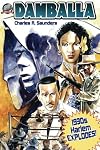
A perfect homage to a classic era with the genre’s first 1930s African American pulp hero. Easily rivals the greats like The Shadow and The Spider amongst others
Intelligent, fast paced with cool characters, boxing, secret hideouts, voodoo, mad scientists and Nazis getting punched!
What more could you want?
Intelligent, fast paced with cool characters, boxing, secret hideouts, voodoo, mad scientists and Nazis getting punched!
What more could you want?
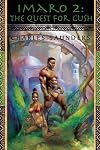
Birth of a Genre
Charles Saunders is a legend, founder of the sword and soul genre! Imaro is a journey of war, darkness and betrayal as our hero strides toward greatness. I love how the story of Imaro connects to our lives today, with colorism and the ever present lure of the darker path to accomplish our goals. Mixed with magic and it's uniquely African vibe Saunders has created the world of Nyumbani and it's one I would love to walk!
Charles Saunders is a legend, founder of the sword and soul genre! Imaro is a journey of war, darkness and betrayal as our hero strides toward greatness. I love how the story of Imaro connects to our lives today, with colorism and the ever present lure of the darker path to accomplish our goals. Mixed with magic and it's uniquely African vibe Saunders has created the world of Nyumbani and it's one I would love to walk!
Lists
Awards

You May Also Like


Associated Authors
Statistics
- Works
- 39
- Also by
- 23
- Members
- 684
- Popularity
- #36,990
- Rating
- 3.9
- Reviews
- 23
- ISBNs
- 26
- Languages
- 2
- Favorited
- 3