
Harold Lamb (1892–1962)
Author of Genghis Khan and the Mongol Horde
About the Author
Image credit: Courtesy of the NYPL Digital Gallery (image use requires permission from the New York Public Library)
Series
Works by Harold Lamb
The March of Muscovy: Ivan the Terrible and the Growth of the Russian Empire, 1400-1648 (1948) 75 copies, 2 reviews
Nagy Károly 1 copy
Historia de las Cruzadas 1 copy
Ghengis Khan 1 copy
Sirus the Great 1 copy
Associated Works
The Big Book of Swashbuckling Adventure: Classic Tales of Dashing Heroes, Dastardly Villains, and Daring Escapes (2014) — Contributor — 64 copies, 2 reviews
Tagged
Common Knowledge
- Birthdate
- 1892-09-01
- Date of death
- 1962-04-09
- Gender
- male
- Education
- Columbia University
- Nationality
- USA
- Birthplace
- Alpine, New Jersey, USA
- Places of residence
- New York, New York, USA
- Place of death
- Rochester, New York, USA
- Associated Place (for map)
- New York, USA
Members
Discussions
Robert E. Howard - the OTHER Stuff! in The Weird Tradition (March 2019)
Reviews

Here is a surprise for you - the greatest conqueror in the history of mankind, the most brutal menace, warlord, and empire builder, man most feared under the beds of children the world around - it turns out you have never heard of him. He has been forgotten by western civilization because he effectively ignored Europe as not worth his time. He was from modern Uzbekistan. Uzbekistan? Where is that? This book will make you yearn to see the ruins of Samarkand. I have plans to visit myself.
I show more love pop history books written by the generations before WW1 - this is a modernly researched history, but their concept of 'glory' has this romantic element that has been stamped out since. This is a way of saying that when Timor assembles a pyramid of human skulls after crushing the last remnants of the golden hoard the author apologizes on behalf of the past for the vulgar display - but admits under his breath that its amazing. Modern histories try not to judge the past, and often try to describe it from the perspective of the common person, as I this reviewer I am myself common, i will never be important, none of us will. This book tells the most amazing tale in history that you have never heard from the perspective of the tyrant himself. Thrilling, adventurous, horrible, and I learned so much. I will see you in Samarkand. show less
I show more love pop history books written by the generations before WW1 - this is a modernly researched history, but their concept of 'glory' has this romantic element that has been stamped out since. This is a way of saying that when Timor assembles a pyramid of human skulls after crushing the last remnants of the golden hoard the author apologizes on behalf of the past for the vulgar display - but admits under his breath that its amazing. Modern histories try not to judge the past, and often try to describe it from the perspective of the common person, as I this reviewer I am myself common, i will never be important, none of us will. This book tells the most amazing tale in history that you have never heard from the perspective of the tyrant himself. Thrilling, adventurous, horrible, and I learned so much. I will see you in Samarkand. show less
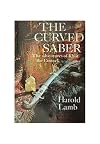
These were not bad stories set in a period of Central Asian life when warring tribes clash around isolated cities, where our wandering hero can have vacations, and then venture back into the wilds and deal with worse bandits, damsels(more or Less) in distress, and possible sorcerers. A restrained group of Conanesque adventures written by a man who had done research for his sensational biography of Genghis Khan. His later work in prose was a series of reasonably competent histories of such show more sensational historical periods as the crusades. Lamb was a better writer than Robert Howard, and his work provided him with a good living. He fell in with a Hollywood producer, Cecil B. DeMille and his scripts provided De Mille's epics with such scraps of authenticity that they possessed. I think that Lamb's fictional works deserve a revival. show less
The March of Muscovy: Ivan the Terrible and the Growth of the Russian Empire, 1400 - 1648 by Harold Lamb

So far the book is really a history of the town of Moscow. I am hoping it changes a bit more towards a biography of Ivan the Terrible. :)
This book talks about one of the most interesting economic warefares I have read about. Moscow started out as a city and ended up becoming Russia. Much of the control was established bit by bit through economic means. Russians moved out of Moscow and into towns along the river Volga and ended up outnumbering the original inhabitants. The tax gatherers and show more administrators out of Moscow followed hard on their heels. Whole towns and stretches of the river were conquored in this fashion.
Ivan the Terrible is dealt with more towards the middle of the book and even after his death his legacy overshadows the rest of the book. He is terrible not as in bad, but as in awesome and dread toward the enemies of Moscow. The common people loved him. Well versed in the Bible but living not by its best precepts and ideals. He was responsible for murder and torture and frankly though very clever was an evil and unhappy man.
The spread of Moscow to the east is interesting in that it was not planned by Moscow but was a result of people moving out to the East searching for economic gain and freedom from high taxes. However, the tax collectors from Moscow followed and they never quite were able to escape the rule of Moscow in the end. show less
This book talks about one of the most interesting economic warefares I have read about. Moscow started out as a city and ended up becoming Russia. Much of the control was established bit by bit through economic means. Russians moved out of Moscow and into towns along the river Volga and ended up outnumbering the original inhabitants. The tax gatherers and show more administrators out of Moscow followed hard on their heels. Whole towns and stretches of the river were conquored in this fashion.
Ivan the Terrible is dealt with more towards the middle of the book and even after his death his legacy overshadows the rest of the book. He is terrible not as in bad, but as in awesome and dread toward the enemies of Moscow. The common people loved him. Well versed in the Bible but living not by its best precepts and ideals. He was responsible for murder and torture and frankly though very clever was an evil and unhappy man.
The spread of Moscow to the east is interesting in that it was not planned by Moscow but was a result of people moving out to the East searching for economic gain and freedom from high taxes. However, the tax collectors from Moscow followed and they never quite were able to escape the rule of Moscow in the end. show less
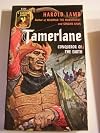
On a list of the worst men to have ever walked the face of the Earth, Tamerlane would fall in about the ninth or tenth slot (depending on whether you'd like to count the Emperor Hongwu for the Fall of the Yuan Dynasty), just after Stalin. From 1370 through 1405, across a gyre of slaughter stretching from Delhi to the Mongolian border, to Moscow and the Mediterranean, he pillaged, raped, buried alive, beheaded and wrought general havoc to the tune of some 15 to 20 million dead. This is his show more biography.
Amir Timur Gurigan – Lord Timur the Splendid – rose to power in the fourteenth century, the son of a monk and cattle farmer, in what is today Uzbekistan, and what was then the last dying vestiges of the Chagatai Khanate of the fractured Mongol Empire. “Out there in the limbo of things he built a Rome of his own in the desert.” Wounded by an arrow, he became Timur the Lame – Tamerlane, as we know him today.
This is an excellent history of the fourteenth century conqueror. It's a little hard to follow in the beginning, because there's so many names to become associated with and (given that I knew little of Tamerlane before this) wasn't sure which ones to pay attention to, but once the story get's going, it becomes riveting. This covers nearly every aspect of his life, from the towers of human heads and the absolute razing of Baghdad, to the dome he stole from Syria and the pleasure palace her had built in twenty days, all poetically written in that early twentieth century melodious prose, and it reads like a novel.
There were a few things I found slightly lacking. First, the whole India episode is told in passing, largely in snippets of news received by the princesses back in Samarkand. The relevant details are there, I suppose, but I think India was a significant enough campaign (Lamb himself denotes about 200,000 dead) that it deserves a chapter of its own. Next, Witold of Lithuania and the Poles, whom get a mere page or so in the Notes section at the end. Granted, the note informs us that it was Timur Kutluk, not Tamerlane, that chased the Mad Witold all the way into Poland.
This brings me to my next point. If you look up the Timurid Dynasty on Wikipedia (most of the rest of the internets follow Wikipedia), you'll find borders covering Central Asia and Persia, about a million square miles less in area than Alexander's. However, even a cursory reading of Wikipedia's own articles shows his conquests greater than their map details, from India to Asia Minor to the Golden Horde. I naturally came to the conclusion that he'd attacked these locations, but hadn't annexed them for whatever reason. This is not the case, as Lamb demonstrates. Timur's own heir was ruling in Delhi as governor when Timur died. He had multiple governors in Turkey, and loyal Tartar followers settled in the steppes of Russia. The Mamluks of Egypt promptly surrendered and offered submission (paying tribute and reading his name in the public prayers) when Bayezid fell in Turkey. (One should remember, Egypt was also surrendered to Alexander without a fight, and it's included on his map.) Lamb includes his own map, without borders, merely giving a general description based upon the cities at the fringes – Delhi, Zaisan (Kazakh-Mongol border), Moscow, Constantinople.
Lamb wrote this in 1928. That means it was written prior to one of the more interesting elements of Tamerlane's story unfolding – Timur's Curse. Inscribed in his tomb was the message “Who ever opens my tomb, shall unleash an invader more terrible than I.” No one touched the mausoleum until June of 1941, when a Soviet archeologist finally cracked the lid, just two days before the Nazi invasion of the Soviet Union. He was reburied with full Islamic rites in November of 1942, just days before the Soviet victory at Stalingrad.
One question I'm left with that I felt Lamb didn't address as thoroughly as he could have was the role of Timur's faith throughout his life. Certainly his faith played a role – he seemed almost fatalist with the news of his son, Omar Skaikh's death – and yet Lamb notes that he never much cared for the imams and their schemes. When he devastated Baghdad, he left the mosques standing, yet never seemed to act on any tenents of Islam. I would have liked this question to have been addressed directly, but unfortunately we're left to gleam it from inference.
This is an excellent biography of the Lame conqueror, but alas is written almost as a novel and thus is not as comprehensive as it could be. Nonetheless, I learned a tremendous amount and consider this a great resource. show less
Amir Timur Gurigan – Lord Timur the Splendid – rose to power in the fourteenth century, the son of a monk and cattle farmer, in what is today Uzbekistan, and what was then the last dying vestiges of the Chagatai Khanate of the fractured Mongol Empire. “Out there in the limbo of things he built a Rome of his own in the desert.” Wounded by an arrow, he became Timur the Lame – Tamerlane, as we know him today.
This is an excellent history of the fourteenth century conqueror. It's a little hard to follow in the beginning, because there's so many names to become associated with and (given that I knew little of Tamerlane before this) wasn't sure which ones to pay attention to, but once the story get's going, it becomes riveting. This covers nearly every aspect of his life, from the towers of human heads and the absolute razing of Baghdad, to the dome he stole from Syria and the pleasure palace her had built in twenty days, all poetically written in that early twentieth century melodious prose, and it reads like a novel.
There were a few things I found slightly lacking. First, the whole India episode is told in passing, largely in snippets of news received by the princesses back in Samarkand. The relevant details are there, I suppose, but I think India was a significant enough campaign (Lamb himself denotes about 200,000 dead) that it deserves a chapter of its own. Next, Witold of Lithuania and the Poles, whom get a mere page or so in the Notes section at the end. Granted, the note informs us that it was Timur Kutluk, not Tamerlane, that chased the Mad Witold all the way into Poland.
This brings me to my next point. If you look up the Timurid Dynasty on Wikipedia (most of the rest of the internets follow Wikipedia), you'll find borders covering Central Asia and Persia, about a million square miles less in area than Alexander's. However, even a cursory reading of Wikipedia's own articles shows his conquests greater than their map details, from India to Asia Minor to the Golden Horde. I naturally came to the conclusion that he'd attacked these locations, but hadn't annexed them for whatever reason. This is not the case, as Lamb demonstrates. Timur's own heir was ruling in Delhi as governor when Timur died. He had multiple governors in Turkey, and loyal Tartar followers settled in the steppes of Russia. The Mamluks of Egypt promptly surrendered and offered submission (paying tribute and reading his name in the public prayers) when Bayezid fell in Turkey. (One should remember, Egypt was also surrendered to Alexander without a fight, and it's included on his map.) Lamb includes his own map, without borders, merely giving a general description based upon the cities at the fringes – Delhi, Zaisan (Kazakh-Mongol border), Moscow, Constantinople.
Lamb wrote this in 1928. That means it was written prior to one of the more interesting elements of Tamerlane's story unfolding – Timur's Curse. Inscribed in his tomb was the message “Who ever opens my tomb, shall unleash an invader more terrible than I.” No one touched the mausoleum until June of 1941, when a Soviet archeologist finally cracked the lid, just two days before the Nazi invasion of the Soviet Union. He was reburied with full Islamic rites in November of 1942, just days before the Soviet victory at Stalingrad.
One question I'm left with that I felt Lamb didn't address as thoroughly as he could have was the role of Timur's faith throughout his life. Certainly his faith played a role – he seemed almost fatalist with the news of his son, Omar Skaikh's death – and yet Lamb notes that he never much cared for the imams and their schemes. When he devastated Baghdad, he left the mosques standing, yet never seemed to act on any tenents of Islam. I would have liked this question to have been addressed directly, but unfortunately we're left to gleam it from inference.
This is an excellent biography of the Lame conqueror, but alas is written almost as a novel and thus is not as comprehensive as it could be. Nonetheless, I learned a tremendous amount and consider this a great resource. show less
Lists
Awards


You May Also Like


Associated Authors
Statistics
- Works
- 155
- Also by
- 13
- Members
- 4,232
- Popularity
- #5,937
- Rating
- 3.8
- Reviews
- 67
- ISBNs
- 170
- Languages
- 11
- Favorited
- 8