
Talbot Mundy (1879–1940)
Author of King—of the Khyber Rifles
About the Author
Disambiguation Notice:
born William Lancaster Gribbon, also wrote as Walter Galt
Series
Works by Talbot Mundy
Associated Works
The Steampunk Megapack: 26 Modern and Classic Steampunk Stories (2013) — Contributor — 42 copies, 1 review
Famous Fantastic Mysteries Combined with Fantastic Novels Magazine, Vol. 14, No. 2, February 1953 (1953) — Contributor — 2 copies
My Most Exciting Story: A Collection of Stories Chosen by Their Own Authors (1936) — Contributor — 1 copy
Tagged
Common Knowledge
- Legal name
- Gribbon, William Lancaster
- Other names
- Galt, Walter
- Birthdate
- 1879-04-23
- Date of death
- 1940-08-05
- Gender
- male
- Education
- Rugby College
- Occupations
- writer
- Nationality
- UK
- Birthplace
- Hammersmith, London, England, UK
- Places of residence
- Hammersmith, London, England, UK
Bombay, India
Kisumu, Kenya
New York, New York, USA
Jerusalem, Israel
San Diego, California, USA (show all 7)
Anna Maria Island, Florida, USA - Place of death
- Anna Maria Island, Manatee County, Florida, USA
- Burial location
- Cremated, location of ashes unknown.
- Disambiguation notice
- born William Lancaster Gribbon, also wrote as Walter Galt
Members
Discussions
Talbot Mundy in The Chapel of the Abyss (August 2023)
Reviews
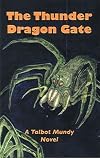
Control of the Thunder Dragon Gate means control over Asia. Located on the Roof of the World, in the shadow of Mt. Everest, the gate draws participants in intrigue from Japan, America, the Soviet Union, China, and the British Raj. It is also the site of a vicious war between Tibet's two religious strains, the established Buddhism of the monasteries and the ancient practitioners of Bön, which predated Buddhism. And all sides seek to manipulate the newly appointed Keeper of the Gate.
That show more Talbot could so effectively bring off a discussion of the vying traditions of Tibetan Buddhism and the Bön is yet another indication of the depth of his knowledge and ability to bring sophisticated cultural perspectives to his adventure fiction. Yes, he may have gone overboard with some aspects of the Buddhist Red Hat and Yellow Hat sects. And he may have embellished the magic and what he considered the sinister leanings of Bön. But the atmosphere he creates rings with authenticity. Has any other popular writer ever approached these sects and religions in such detail? Maybe Mundy in some of his other works.
Otherwise, this is another marvelous adventure. From London to Delhi to Tibet. the reader shares the clammy fog that envelopes the British capital, the sweaty heat that lies over India, and the bone chilling freeze that wraps around Tibet and the Himalayas.
Written in the late 1930s, in 1937 to be exact, The Thunder Dragon Gate, for the first time in the series of novels I have so far read, incorporates Japanese villainy into Mundy's work. Mundy knows a World War is approaching. Few people alive at the time didn't realize the world was on the brink of war. But Mundy is getting the participants and their goals depicted correctly, here. No mention of Hitler or the Germans, although there is an acknowledgment of Mussolini's threat. Strange, that, because the Germans were always the featured behind the scenes manipulators of violence and the threat to world peace in Mundy's earlier books.
Yes, Mundy gets the upcoming worldwide conflict rightly drawn in this novel. But he would never live to see his premonitions come to the fore. He would die in August 1940, just a few months after the Fall of France and a few more months before the fall of European and American outposts in Asia and the Pacific to Japan. show less
That show more Talbot could so effectively bring off a discussion of the vying traditions of Tibetan Buddhism and the Bön is yet another indication of the depth of his knowledge and ability to bring sophisticated cultural perspectives to his adventure fiction. Yes, he may have gone overboard with some aspects of the Buddhist Red Hat and Yellow Hat sects. And he may have embellished the magic and what he considered the sinister leanings of Bön. But the atmosphere he creates rings with authenticity. Has any other popular writer ever approached these sects and religions in such detail? Maybe Mundy in some of his other works.
Otherwise, this is another marvelous adventure. From London to Delhi to Tibet. the reader shares the clammy fog that envelopes the British capital, the sweaty heat that lies over India, and the bone chilling freeze that wraps around Tibet and the Himalayas.
Written in the late 1930s, in 1937 to be exact, The Thunder Dragon Gate, for the first time in the series of novels I have so far read, incorporates Japanese villainy into Mundy's work. Mundy knows a World War is approaching. Few people alive at the time didn't realize the world was on the brink of war. But Mundy is getting the participants and their goals depicted correctly, here. No mention of Hitler or the Germans, although there is an acknowledgment of Mussolini's threat. Strange, that, because the Germans were always the featured behind the scenes manipulators of violence and the threat to world peace in Mundy's earlier books.
Yes, Mundy gets the upcoming worldwide conflict rightly drawn in this novel. But he would never live to see his premonitions come to the fore. He would die in August 1940, just a few months after the Fall of France and a few more months before the fall of European and American outposts in Asia and the Pacific to Japan. show less

A very creditable book, Talbot Mundy's Om: The Secret of Ahbor Valley is nevertheless hard to quantify. An inspiration for James Hilton's Lost Horizon, which was released nearly a decade later and is one of my favourite novels, Om follows the improbably-named protagonist Cottswold Ommony in British India in the 1920s, as he sets out to discover a mystical hidden valley and learn its secrets, not least that of the 'Jade of Ahbor' gemstone, of which he has encountered a stolen fragment. show more Throughout this story, Mundy laces his narrative heavily with spiritual and philosophical digressions, all of which are robust and a rung deeper than your usual East-meets-West mysticism.
Om exists in two worlds, and this shifting foundation is perhaps why I found it difficult to love, for all its qualities. It recalls Kim, a novel I did not like, but while it has one hand in the past in echoing Kipling's story, it also reaches out to the future, not only in suggesting the path which Hilton would later follow in Lost Horizon, but acknowledging the challenges of the coming years. "The men of the West are studying the construction of the atom, and have guessed at the force imprisoned in it," Mundy writes here, in 1924, more than two decades before Hiroshima. "Wait until they have learned how to explode the atom, and then see what they will do to one another" (pg. 363). Adventure stories rarely have this depth of wisdom, this metaphysical underpinning, and Mundy's is a genuine depth. Each chapter begins, Dune-like, with excerpts from a fictional Lama's book of teachings, and Mundy's professed following of Theosophy finds great airing through the characters' dialogue throughout. Many won't like philosophy mixed in with their fiction-reading, but for thoughtful and intelligent readers there is much to ponder here and the ideas are a fine complement to the story.
However, while the philosophical side is sound, the adventure story itself is found wanting. Mundy's characterisation of Ommony lacks the inner spiritual wanderlust which made Hilton's later protagonist Conway so relatable (even though 'Ommony' is surely meant to hint at 'Om', the meditative word). The underlying mystery of how Ommony's sister went missing in the Ahbor valley some years earlier is poorly-seeded and almost an after-thought. Characters leave the story when they are no longer convenient, rather than when their arcs are completed. After a promising start, with action, intrigue and exotic mystery, the story starts to drag: rather than heading out on a ripping adventure, Ommony becomes part of a kind of travelling circus which puts on a transcendental play in the villages it passes. The reader's interest fizzles out and when we finally arrive at our mystical valley of Ahbor, we've been off the tracks for so long we've forgotten why we were headed there.
The scene in which Ommony and his companions trek through to the hidden city, and the lost valley opens up before us, is a fine one, but in truth the exciting ingredients of a lost city and a powerful treasure are undersold. We are told that the natives of Ahbor "guard the valley as cobras guard ancient ruins" (pg. 367), but they are never really encountered in the story. Much of the threat, peril and excitement is informed second-hand through the characters' dialogue with one another, rather than being exampled in the narrative. A character explains the magical value of the Ahbors' jade gemstone, but we never see its effects in the story. The intelligence and depth underneath is often wise ("men fight to the death over the Golden Rule [of the Sermon on the Mount]," one character says on page 365, "What would they not do with the Jade of Ahbor?") but the story overlaying it is thin and stretched. It's to Mundy's great credit that he didn't rely on cheap thrills but instead utilised (and, in some ways, subverted) the adventure-story format to deliver a deeper, more satisfying message: there are adventurers and treasure-hunters of "the sort who hunt miracles and seek to make themselves superior by short-cuts. Whereas there are no short-cuts, and there is no superiority of the sort they crave, but only a gradual increase of responsibility, which is attained by earned self-mastery" (pg. 389). I am happy to follow a good author like Mundy, eschewing short-cuts; I only wish there had been a little more payoff on the adventure itself. show less
Om exists in two worlds, and this shifting foundation is perhaps why I found it difficult to love, for all its qualities. It recalls Kim, a novel I did not like, but while it has one hand in the past in echoing Kipling's story, it also reaches out to the future, not only in suggesting the path which Hilton would later follow in Lost Horizon, but acknowledging the challenges of the coming years. "The men of the West are studying the construction of the atom, and have guessed at the force imprisoned in it," Mundy writes here, in 1924, more than two decades before Hiroshima. "Wait until they have learned how to explode the atom, and then see what they will do to one another" (pg. 363). Adventure stories rarely have this depth of wisdom, this metaphysical underpinning, and Mundy's is a genuine depth. Each chapter begins, Dune-like, with excerpts from a fictional Lama's book of teachings, and Mundy's professed following of Theosophy finds great airing through the characters' dialogue throughout. Many won't like philosophy mixed in with their fiction-reading, but for thoughtful and intelligent readers there is much to ponder here and the ideas are a fine complement to the story.
However, while the philosophical side is sound, the adventure story itself is found wanting. Mundy's characterisation of Ommony lacks the inner spiritual wanderlust which made Hilton's later protagonist Conway so relatable (even though 'Ommony' is surely meant to hint at 'Om', the meditative word). The underlying mystery of how Ommony's sister went missing in the Ahbor valley some years earlier is poorly-seeded and almost an after-thought. Characters leave the story when they are no longer convenient, rather than when their arcs are completed. After a promising start, with action, intrigue and exotic mystery, the story starts to drag: rather than heading out on a ripping adventure, Ommony becomes part of a kind of travelling circus which puts on a transcendental play in the villages it passes. The reader's interest fizzles out and when we finally arrive at our mystical valley of Ahbor, we've been off the tracks for so long we've forgotten why we were headed there.
The scene in which Ommony and his companions trek through to the hidden city, and the lost valley opens up before us, is a fine one, but in truth the exciting ingredients of a lost city and a powerful treasure are undersold. We are told that the natives of Ahbor "guard the valley as cobras guard ancient ruins" (pg. 367), but they are never really encountered in the story. Much of the threat, peril and excitement is informed second-hand through the characters' dialogue with one another, rather than being exampled in the narrative. A character explains the magical value of the Ahbors' jade gemstone, but we never see its effects in the story. The intelligence and depth underneath is often wise ("men fight to the death over the Golden Rule [of the Sermon on the Mount]," one character says on page 365, "What would they not do with the Jade of Ahbor?") but the story overlaying it is thin and stretched. It's to Mundy's great credit that he didn't rely on cheap thrills but instead utilised (and, in some ways, subverted) the adventure-story format to deliver a deeper, more satisfying message: there are adventurers and treasure-hunters of "the sort who hunt miracles and seek to make themselves superior by short-cuts. Whereas there are no short-cuts, and there is no superiority of the sort they crave, but only a gradual increase of responsibility, which is attained by earned self-mastery" (pg. 389). I am happy to follow a good author like Mundy, eschewing short-cuts; I only wish there had been a little more payoff on the adventure itself. show less
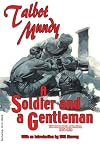
Mundy's first Yasmini adventure is quite short, easily finished in one sitting. It's also an unfocused effort, with a stuffy British colonel, an over eager British captain, a sly native officer, and an exotic seductress from "the north." Its villain is a simple outlaw. Of these characters, the two most interesting are the colonel, Stapleton, and Yasmini the seductress.
A Soldier and a Gentleman intends to introduce Yasmini. Beautiful and treacherous, in later volumes we find her pictured as show more a golden-haired woman of mixed racial ancestry. Indian, part Russian, and perhaps partly from the peoples inhabiting the Caucuses. Lithe and strong, she is a match for any man, physically and intellectually. A few decades later and she would have been featured in American hard-boiled detective fiction as a femme fatale. In Mundy's world, where he first imagined her right before World War I, she is a figure unique for her deviousness and physical threats.
Colonel Stapleton, however, is another matter. He is not a love interest for Yasmini. To the extent there is one in this novel, that role goes to Captain Boileau. But Stapleton is "the Gentleman" to which the title refers. And his values, firmly fixed in the Victorian era, are not so effective in the year 1914. In fact, there is a bit of Colonel Blimp in him. Blimp would later come to personify outdated, reactionary elements of fossilized imperial military incompetence, unsuited for the twentieth century. Colonel Stapleton gets a jump on him, allowing his courtly manners and actions almost to make possible the escape of the murderous outlaw, Gopi Lall.
Had I read this novel first, I'm not sure I would have pursued the series. But I read King of the Khyber Rifles right before. It is a much more detailed and nuanced work, with far better characterizations and even ideas to explore. There isn't much of that in A Soldier and a Gentleman. At best, it is pure adventure magazine material, which, not coincidentally, is where it first appeared. show less
A Soldier and a Gentleman intends to introduce Yasmini. Beautiful and treacherous, in later volumes we find her pictured as show more a golden-haired woman of mixed racial ancestry. Indian, part Russian, and perhaps partly from the peoples inhabiting the Caucuses. Lithe and strong, she is a match for any man, physically and intellectually. A few decades later and she would have been featured in American hard-boiled detective fiction as a femme fatale. In Mundy's world, where he first imagined her right before World War I, she is a figure unique for her deviousness and physical threats.
Colonel Stapleton, however, is another matter. He is not a love interest for Yasmini. To the extent there is one in this novel, that role goes to Captain Boileau. But Stapleton is "the Gentleman" to which the title refers. And his values, firmly fixed in the Victorian era, are not so effective in the year 1914. In fact, there is a bit of Colonel Blimp in him. Blimp would later come to personify outdated, reactionary elements of fossilized imperial military incompetence, unsuited for the twentieth century. Colonel Stapleton gets a jump on him, allowing his courtly manners and actions almost to make possible the escape of the murderous outlaw, Gopi Lall.
Had I read this novel first, I'm not sure I would have pursued the series. But I read King of the Khyber Rifles right before. It is a much more detailed and nuanced work, with far better characterizations and even ideas to explore. There isn't much of that in A Soldier and a Gentleman. At best, it is pure adventure magazine material, which, not coincidentally, is where it first appeared. show less
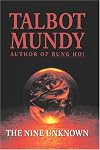
With The Nine Unknown, Talbot Mundy seems to be picking up on ideas present in the last of his Yasmini series, Caves of Terror. This novel, however, has an elaborate plot with a mystery cult whose origins stretch far back beyond any recorded human history. Needless to say, with references to Atlantis and speculation on magic sources of energy and superhuman intellects, this is also Mundy's most serious foray into fantasy, rather than just adventure, in the Jimgrim series.
The special treat in show more this novel is that it brings together just about every one of Mundy's Jimgrim heroes, Jim Grim, Ramsden, Singh, Ross, Athelston King, Ali and sons, and the babu. Only Ommony is missing. And where was he? For this Jimgrim novel has also moved its setting to India, away from the Middle East. And India is also the setting of Ommony's stories. I'm willing to bet that Cotswold Ommony has just the place for those hidden books of secret knowledge belonging to the Unknown Nine.
As with all Mundy's books set in India, his sense of atmosphere is superb. You are there. More than Palestine and Egypt, Mundy is at home in India. He's more familiar with its details, its very essence, than any other place he writes about.
Mundy is a fine literary stylist when he wants to be. And, here, he wants to be. His work can be elevated in tone as well as content, too, as it is in The Nine.
Finally, although unnecessary, it is so much more rewarding to read these stories and novels in their published sequence. You can see Mundy grow along with the new ideas he is importing into his fiction. show less
The special treat in show more this novel is that it brings together just about every one of Mundy's Jimgrim heroes, Jim Grim, Ramsden, Singh, Ross, Athelston King, Ali and sons, and the babu. Only Ommony is missing. And where was he? For this Jimgrim novel has also moved its setting to India, away from the Middle East. And India is also the setting of Ommony's stories. I'm willing to bet that Cotswold Ommony has just the place for those hidden books of secret knowledge belonging to the Unknown Nine.
As with all Mundy's books set in India, his sense of atmosphere is superb. You are there. More than Palestine and Egypt, Mundy is at home in India. He's more familiar with its details, its very essence, than any other place he writes about.
Mundy is a fine literary stylist when he wants to be. And, here, he wants to be. His work can be elevated in tone as well as content, too, as it is in The Nine.
Finally, although unnecessary, it is so much more rewarding to read these stories and novels in their published sequence. You can see Mundy grow along with the new ideas he is importing into his fiction. show less
You May Also Like


Associated Authors
Statistics
- Works
- 123
- Also by
- 39
- Members
- 1,459
- Popularity
- #17,608
- Rating
- 3.6
- Reviews
- 72
- ISBNs
- 419
- Languages
- 3
- Favorited
- 5