
S. T. Joshi
Author of American Supernatural Tales
About the Author
S. T. Joshi is a freelance writer, a scholar, and an editor. He is the author of The Unbelievers: The Evolution of Modern Atheism and God's Defenders: What They Believe and Why They Are Wrong, and the editor of Atheism: A Reader, The Agnostic Reader, H. L Mencken on Religion; Documents of American show more Prejudice; In Her Place: A Documentary History of Prejudice against Women; and What Is Man? And Other Irreverent Essays. He is also the editor of the American Rationalist. show less
Series
Works by S. T. Joshi
Black Wings of Cthulhu: Tales of Lovecraftian Horror (2010) — Editor; Introduction — 301 copies, 9 reviews
The Last Oblivion: Best Fantastic Poetry of Clark Ashton Smith (2002) — Editor — 75 copies, 2 reviews
The Lovecraft Letters Vol 1: Mysteries of Time & Spirit: Letters of H.P. Lovecraft & Donald Wandrei (v. 1) (2005) — Editor — 55 copies
In Her Place: A Documentary History of Prejudice Against Women (2006) — Editor — 43 copies, 1 review
Civil War Memories: Nineteen Stories of Battle, Bravery, Love, and Tragedy (2000) — Editor — 38 copies, 1 review
Warnings to the Curious: A Sheaf of Criticism on M. R. James (Hippocampus Press Library of Criticism) (2007) — Editor — 32 copies
Documents Of American Prejudice: An Anthology Of Writings On Race From Thomas Jefferson To David Duke (1999) 28 copies
The Ghost of Fear and Others: H. P. Lovecraft's Favorite Stories Vol.1 (2014) — Editor; Introduction — 27 copies
Collected Fiction Volume 4 (Revisions and Collaborations): A Variorum Edition (2017) — Editor — 24 copies
The Dead Valley and Others: H. P. Lovecraft's Favorite Horror Stories Vol. 2 (2014) — Editor; Introduction — 22 copies
H.P. Lovecraft and Lovecraft Criticism: An Annotated Bibliography (Serif Series : Bibliographies and Checklists, No. 38) (1981) 20 copies
Essential Solitude: The Letters of H. P. Lovecraft and August Derleth, Volume 1 (2013) — Editor — 14 copies
Essential Solitude: The Letters of H. P. Lovecraft and August Derleth, Volume 2 (2013) — Editor — 14 copies
Ramsey Campbell and Modern Horror Fiction (Liverpool University Press - Liverpool Science Fiction Texts & Studies) (2001) 14 copies
Alas tenebrosas: 21 nuevos cuentos de horror lovecraftiano (Gótica) (Spanish Edition) (2014) 8 copies, 1 review
Icons of Horror and the Supernatural: An Encyclopedia of Our Worst Nightmares, Volume 1 (Greenwood Icons) (2006) 8 copies
Lord Dunsany: Master of the Anglo-Irish Imagination (Contributions to the Study of Science Fiction and Fantasy) (1995) 7 copies
Icons of Horror and the Supernatural: An Encyclopedia of Our Worst Nightmares, Volume 2 (Greenwood Icons) (2006) 6 copies
Dead Reckonings #3 5 copies
Dead Reckonings #2 5 copies
Studies in Weird Fiction 7 4 copies
Studies in Weird Fiction 18 4 copies
Dead Reckonings - No. 5 4 copies
Dead Reckonings #8 4 copies
Lovecraft Studies 42/43 Fall 2001 4 copies
Lovecraft Studies 40 Fall 1998 3 copies
Dead Reckonings - No. 9 3 copies
Lovecraft Studies 21 Spring 1990 3 copies
Conspiracy of Silence: A Joe Scintilla Mystery / Tragedy at Sarsfield Manor: A Joe Scintilla Mystery (Wildside Mystery Double #1) (2010) 3 copies
Lovecraft Studies 30 Spring 1994 3 copies
Dead Reckonings - No. 7 3 copies
Dead Reckonings - No. 6 3 copies
Lovecraft Studies 29 Fall 1993 3 copies
Lovecraft Studies 27 Fall 1992 3 copies
Ambrose Bierce: An Annotated Bibliography of Primary Sources (Bibliographies and Indexes in American Literature) (1999) 2 copies
H. P. Lovecraft Writings In The Tryout Including: the Winter Wish, Bells, the Rutted Road, Old Christmas, Etc. (1977) 2 copies
Coś Spod Spodu 2 copies
Studies in Weird Fiction 8 — Editor — 2 copies
The Raven: Tales and Poems 2 copies
Lovecraft Studies 28 Spring 1993 2 copies
Lovecraft Studies 22/23 Fall 1990 2 copies
Lovecraft Studies 45 Spring 2005 2 copies
Lovecraft Studies 25 Fall 1991 2 copies
Lovecraft Studies 26 Spring 1992 2 copies
The Downfall of God: A History of Atheism in the West: Volume 1: From Prehistory to 1600 (2024) 1 copy
Horrores indecibles, Vol I 1 copy
Aspects of the Weird Tale 1 copy
Studies in Weird Fiction 24 1 copy
Unutterable Horror 1 copy
Studies in Weird Fiction 13 1 copy
Suicide in Brooklyn 1 copy
Cthulhu Cymraeg 1 copy
Je suis Providence, T2 1 copy
Classical Papers 1 copy
What Is Anything? 34:2 1 copy
What Is Anything? 35:2 1 copy
Nuclear Chaos 207 1 copy
Studies in Weird Fiction 14 1 copy
Nuclear Chaos #202 1 copy
Nuclear Chaos #203 1 copy
Associated Works
The Legend of Sleepy Hollow [short story] (1819) — Introduction, some editions — 5,064 copies, 144 reviews
The Call of Cthulhu and Other Weird Stories (1999) — Editor, some editions; Introduction, some editions — 4,366 copies, 71 reviews
The H. P. Lovecraft Omnibus 2: Dagon and Other Macabre Tales (1985) — Editor — 1,452 copies, 19 reviews
The H. P. Lovecraft Omnibus 1: At the Mountains of Madness and Other Novels (1985) — Editor, some editions — 1,110 copies, 14 reviews
The Thing on the Doorstep and Other Weird Stories (2001) — Editor, some editions — 1,078 copies, 13 reviews
The Dreams in the Witch House and Other Weird Stories (2004) — Editor, some editions; Introduction, some editions — 813 copies, 15 reviews
Ancient Sorceries and Other Weird Stories [9 stories, ed. Joshi] (2002) — Editor, some editions — 664 copies, 3 reviews
Count Magnus and Other Ghost Stories (2005) — Introduction, some editions; Editor — 496 copies, 11 reviews
The Haunted Doll's House and Other Ghost Stories (2000) — Editor, some editions — 330 copies, 7 reviews
The Collected Jorkens, Vol. 1: The Travel Tales of Mr. Joseph Jorkens and Jorkens Remembers Africa (2005) — Editor — 89 copies, 1 review
The Collected Jorkens, Vol. 2: Jorkens Has a Large Whiskey and The Fourth Book of Jorkens (2005) — Editor — 73 copies
The Collected Jorkens, Vol. 3: Jorkens Borrows Another Whiskey, The Last Book of Jorkens, Uncollected Tales (2005) — Editor — 67 copies
Lovecraft at Last: The Master of Horror in His Own Words (1975) — Introduction, some editions — 60 copies, 2 reviews
Collected Essays of H. P. Lovecraft: Philosophy; Autobiography and Miscellany (2005) — Editor — 57 copies
A Means to Freedom: The Letters of H. P. Lovecraft and Robert E. Howard (TWO VOLUME SET) (2009) — Editor — 49 copies
Dawnward Spire, Lonely Hill: The Letters of H. P. Lovecraft and Clark Ashton Smith (2017) — Editor — 37 copies
The Complete Poetry and Translations Volume 3: The Flowers of Evil and Others (2007) — Editor — 37 copies
Thirty Hours with a Corpse: and Other Tales of the Grand Guignol (2016) — Editor, some editions — 26 copies, 1 review
The Freedom of Fantastic Things: Selected Criticism on Clark Ashton Smith (2006) — Contributor, some editions — 26 copies
A Means to Freedom: The Letters of H. P. Lovecraft and Robert E. Howard (Volume 1) (2017) — Editor — 26 copies
Dear Dead Women: The Weird Stories of Edna W. Underwood (2010) — Introduction, some editions — 25 copies, 2 reviews
A Means to Freedom: The Letters of H. P. Lovecraft and Robert E. Howard (Volume 2) (2017) — Editor — 24 copies
The Shadow of the Unattained: The Letters of George Sterling and Clark Ashton Smith (2005) — Editor — 22 copies, 1 review
That Is Not Dead: Tales of the Cthulhu Mythos Through the Centuries (2015) — Contributor — 19 copies
The Lady Who Came to Stay & the Elixir of Life (Lovecraft's Library) (1915) — Introductions, some editions — 10 copies
Avatars of Wizardry: Poetry Inspired by George Sterling's "A Wine of Wizardry" and Clark Ashton Smith's "The Hashish-Eater" (2012) — Introduction — 6 copies
Collected Stories, Volume 1: 1922-1924: Edited by S. T. Joshi — Editor — 4 copies
Collected Stories, Volume 2: 1924-1925: Edited by S. T. Joshi — Editor — 4 copies
From Baltimore to Bohemia: The Letters of H. L. Mencken and George Sterling (2001) — Editor — 2 copies
H.P. Lovecraft Letters to Robert Bloch with the Supplement — Editor — 2 copies
Dark Discoveries Issue Number 15, Fall 2009 — Interview — 1 copy
H.P. Lovecraft: Letters to Alfred Galpin — Editor — 1 copy
Tagged
Common Knowledge
- Canonical name
- Joshi, S. T.
- Legal name
- Joshi, Sunand Tryambak
- Birthdate
- 1958-06-22
- Gender
- male
- Education
- Brown University (B.A.|Classics ∙ 1980)
Brown University (M.A. ∙ 1982)
Princeton University (Ph.D. program DNF) - Occupations
- literary critic
novelist
editor - Organizations
- Mencken Society
- Awards and honors
- IAFA Distinguished Scholarship (2003)
- Relationships
- Krawczak, Mary (wife)
- Short biography
- S.T. Joshi has edited the standard editions of H.P. Lovecraft's fiction (1984-89, 4 vols) and many other editions of Lovecraft's work. He is the founder and editor of Lovecraft Studies, Studies in Weird Fiction, and Lovecraft Annual. He has also published editions of works by Clark Ashton Smith, Arthur Machen, Algernon Blackwood, H.L. Mencken and many other writers.
- Nationality
- USA
- Birthplace
- Pune, India
- Places of residence
- Pune, India
Urbana, Illinois, USA
Jersey City, New Jersey, USA
Hoboken, New Jersey, USA
New York, New York, USA
Seattle, Washington, USA - Associated Place (for map)
- USA
Members
Discussions
Lovecraftian Criticism in The Weird Tradition (November 2017)
New S.T. Joshi Interview in The Weird Tradition (November 2017)
THE DEEP ONES: "The Girl With the Hungry Eyes" by Fritz Leiber in The Weird Tradition (April 2016)
I Am Providence: The Life and Times of H. P. Lovecraft in The Weird Tradition (August 2014)
Lovecraftian Donnybrook in The Weird Tradition (October 2013)
Reviews
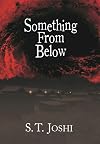
I've read quite a bit of Joshi's commentaries and reviews concerning the horror genre, and, when I noticed this book while browsing, I became curious to see what kind of fictional story he would write. I wondered what kind of Lovecraftian novel a scholar of Lovecraft would produce.
I must say that I was pleasantly surprised and impressed by the excellent quality of the tale. This is exactly how a modern Lovecraftian work should be done. The story combines cosmic horror with flawed, very show more believable characters who have realistic interactions. The tale is very effective at combining the cosmic horror elements with emotional content, and, by using a slow accumulation of details to incrementally increase the dread factor, and a great sense of atmosphere and place, and an immensely disturbing denouement, Joshi really knocks this one out of the park.
To give you an example of the fine prose, here is one of my favorite quotes from the book, a gorgeous cosmic horror sentence:
"I am aware that the earth holds many strange things within itself, whether it be in the remote reaches of the untenanted wilderness or in the inky depths of the sea; but I instinctively sensed that this entity was in no way earthly, and that its purpose, motivations, and very existence were beyond the comprehension of our little minds." show less
I must say that I was pleasantly surprised and impressed by the excellent quality of the tale. This is exactly how a modern Lovecraftian work should be done. The story combines cosmic horror with flawed, very show more believable characters who have realistic interactions. The tale is very effective at combining the cosmic horror elements with emotional content, and, by using a slow accumulation of details to incrementally increase the dread factor, and a great sense of atmosphere and place, and an immensely disturbing denouement, Joshi really knocks this one out of the park.
To give you an example of the fine prose, here is one of my favorite quotes from the book, a gorgeous cosmic horror sentence:
"I am aware that the earth holds many strange things within itself, whether it be in the remote reaches of the untenanted wilderness or in the inky depths of the sea; but I instinctively sensed that this entity was in no way earthly, and that its purpose, motivations, and very existence were beyond the comprehension of our little minds." show less
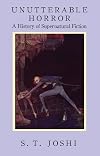
This lengthy history of supernatural fiction is an incredible combination of good and bad. First, Joshi is the most opinionated critic I have ever read. Even when I tend to agree with him--such as about the worthiness of bestsellers--his incredible vitriol is just way over the top. Consider, "DuMaurier's work is not, on the whole, notably distinguished for its supernatural imaginativeness, and her general lack of skill in portrayal of character, for all her valiant attempts, renders her show more tales only slightly above the usual crop of bestselling writers; but now and again she is capable of vivid horrific effects, and her work is not to be entirely despised."
This is kind, however, compared to his feelings about Dean Koonce: "...indeed, the only genuine virtue to Koontz's existence is to prove that an even worse writer than Stephen King can become popular."
Ray Garton, who, at best, is excellent, receives this: "Garton has returned to vampires in a few of his dreary plethora of novels, but neither they nor any other of his works, short or long, are worth a moment's attention."
I won't bother you with more. At least I can say this, Joshi's book is not written in academic gibberish. He states things very clearly, and thus, even when you disagree with him and are deciding he would not be a pleasant drinking companion, you may still learn something.
He is also inconsistent, sometimes damning an author for not explaining something and other times praising an author for the same thing. And he can never stop talking about "the determinism paradox" which means that if you see something in the future, you can't change it, because then what you saw wasn't the future! Mr. Joshi has come up with altogether too many rules to define what qualifies as supernatural fiction, but whether a book qualifies or not, if he has taken the time to read it, he is going to tell you about it.
So who does he like? Ramsay Campbell, mainly. Not something many horror readers would want to argue with. He also loves Thomas Tryon's "The Other" and "Harvest Home". Even though, as I recall, they were both bestsellers. And, of course, he adores H.P. Lovecraft, whom he has written several books about. To his credit, he also finds Lovecraft disciple August Derleth's work pretty worthless.
I'm sure no editor asked Joshi to actually reconcile or justify any of the inconsistencies in this book. They probably figured it wasn't worth the trouble. Sometimes you just have to take things as they are.
I bought this as a pretty cheap ebook after seeing author Stephen Gresham mention it on his blog as an interesting work, though not one he agreed with all the time. This was putting it mildly, as I have found out. If you're interested, I suggest you also pick up the cheap ebook version. 800 or so pages of this isn't something you would want taking up space around your house. show less
This is kind, however, compared to his feelings about Dean Koonce: "...indeed, the only genuine virtue to Koontz's existence is to prove that an even worse writer than Stephen King can become popular."
Ray Garton, who, at best, is excellent, receives this: "Garton has returned to vampires in a few of his dreary plethora of novels, but neither they nor any other of his works, short or long, are worth a moment's attention."
I won't bother you with more. At least I can say this, Joshi's book is not written in academic gibberish. He states things very clearly, and thus, even when you disagree with him and are deciding he would not be a pleasant drinking companion, you may still learn something.
He is also inconsistent, sometimes damning an author for not explaining something and other times praising an author for the same thing. And he can never stop talking about "the determinism paradox" which means that if you see something in the future, you can't change it, because then what you saw wasn't the future! Mr. Joshi has come up with altogether too many rules to define what qualifies as supernatural fiction, but whether a book qualifies or not, if he has taken the time to read it, he is going to tell you about it.
So who does he like? Ramsay Campbell, mainly. Not something many horror readers would want to argue with. He also loves Thomas Tryon's "The Other" and "Harvest Home". Even though, as I recall, they were both bestsellers. And, of course, he adores H.P. Lovecraft, whom he has written several books about. To his credit, he also finds Lovecraft disciple August Derleth's work pretty worthless.
I'm sure no editor asked Joshi to actually reconcile or justify any of the inconsistencies in this book. They probably figured it wasn't worth the trouble. Sometimes you just have to take things as they are.
I bought this as a pretty cheap ebook after seeing author Stephen Gresham mention it on his blog as an interesting work, though not one he agreed with all the time. This was putting it mildly, as I have found out. If you're interested, I suggest you also pick up the cheap ebook version. 800 or so pages of this isn't something you would want taking up space around your house. show less
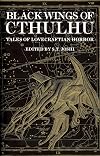
My heart generally sinks when I pick up a genre anthology - I usually end up severely disappointed and not a little resentful at the pot-boilers I have had to wade through - but this is a wonderful exception.
Not that it is perfect. Lovecraftian stories do not easily translate to the American South West and California and it is usually, though not always, a mistake to set such stories in deserts and sunshine.
We can also do without literary experimentation in a genre where the forms are well show more set, and everything depends on clarity of story line and on an atmosphere that must not need too much hard work to take in.
But there are surprisingly few lapses of this type and I must put this down to superb editing by the estimable S T Joshi who has made Lovecraftian studies his own over several decades.
Of course, Lovecraftian is not Lovecraft. Derleth is not Lovecraft. Anything that follows is going to be derivative so our judgment has to be solely on what gives new insight into cosmic horror.
Perhaps the best way forward is to give praise where praise is due. There are 21 stories and most of them are excellent.
Caitlin Kernan's opening 'Pickman's Other Model (1929)', which is not exclusive to this anthology, is perhaps closest to Lovecraft himself though clearly comes from another type of mind - it is no pastiche.
Pickman also appears in an offering from that stalwart Brian Stapleford who gives us a finely tuned and allusive piece soaked in his knowledge of the literature.
Another genre master Ramsey Campbell also takes his mission seriously in what amounts to a masterfully learned piece, not without humour, brilliantly showing a descent into madness and a horrible fate.
Michael Cisco's 'Violence, Child of Trust' gets away with a bit of narrative experimentation, saying little that is not suggestive, but what is being suggested is the stuff of our deepest nightmares.
The anthology really gets going with Michael Shea's 'Passing Spirits' which is more existential than cosmic horror. We cannot be sure if the Lovecraftian elements are caused by a brain tumour.
Laird Barron's 'The Broadsword' is genuinely horrific with Lovecraftian themes being directed at bloody effects that cause genuine discomfort.
'Tunnels' by Philip Haldeman makes similar effective use of place as unstable. Barron gives us that American meme, the sinister hotel, and Haldeman forces us to worry about instinctual forces beneath us.
The murder of a child and their fear will always tug at us. Barron's tale and 'Howling in the Dark' by Darrell Schweitzer play here with the borderline between madness and psychopathy to great effect.
W H Pugmire's Gothic fantasy is also genuinely disturbing in the way we find in some East European symbolic literature or the works of Ligotti. It is indescribably mournful and sinister. I strongly recommend it.
Nicholas Royle's 'Rotterdam' is deceptively pedestrian compared to the other tales and is perhaps only indirectly Lovecraftian but it still works as a picture of murderous psychosis in a frustrated man.
Jonathan Thomas' 'Tempting Providence' has moments of excessive literariness and description but it builds up to an exciting climax that does what cosmic horror should do - unsettle us about reality.
Norman Partidge's 'Lesser Demons' was probably my favourite because of its creative subversion of the all-conquering zombie meme into an invasion of ghouls and lesser demons. It works. I wanted more.
Perhaps my second favourite was a wry and very British tale of English town life by Michael Marshall Smith that beautifully suggested the monstrous beneath the normal and our preference for simply not knowing.
None of these stories represent pastiche and some manage to do something very difficult - show a wry humour about the horrible without making the horrible any less horrible. Very twenty-first century.
Just because I have not mentioned something does not mean that it is not good. This is a superb collection and Joshi, the authors and Titan Books are to be congratulated. show less
Not that it is perfect. Lovecraftian stories do not easily translate to the American South West and California and it is usually, though not always, a mistake to set such stories in deserts and sunshine.
We can also do without literary experimentation in a genre where the forms are well show more set, and everything depends on clarity of story line and on an atmosphere that must not need too much hard work to take in.
But there are surprisingly few lapses of this type and I must put this down to superb editing by the estimable S T Joshi who has made Lovecraftian studies his own over several decades.
Of course, Lovecraftian is not Lovecraft. Derleth is not Lovecraft. Anything that follows is going to be derivative so our judgment has to be solely on what gives new insight into cosmic horror.
Perhaps the best way forward is to give praise where praise is due. There are 21 stories and most of them are excellent.
Caitlin Kernan's opening 'Pickman's Other Model (1929)', which is not exclusive to this anthology, is perhaps closest to Lovecraft himself though clearly comes from another type of mind - it is no pastiche.
Pickman also appears in an offering from that stalwart Brian Stapleford who gives us a finely tuned and allusive piece soaked in his knowledge of the literature.
Another genre master Ramsey Campbell also takes his mission seriously in what amounts to a masterfully learned piece, not without humour, brilliantly showing a descent into madness and a horrible fate.
Michael Cisco's 'Violence, Child of Trust' gets away with a bit of narrative experimentation, saying little that is not suggestive, but what is being suggested is the stuff of our deepest nightmares.
The anthology really gets going with Michael Shea's 'Passing Spirits' which is more existential than cosmic horror. We cannot be sure if the Lovecraftian elements are caused by a brain tumour.
Laird Barron's 'The Broadsword' is genuinely horrific with Lovecraftian themes being directed at bloody effects that cause genuine discomfort.
'Tunnels' by Philip Haldeman makes similar effective use of place as unstable. Barron gives us that American meme, the sinister hotel, and Haldeman forces us to worry about instinctual forces beneath us.
The murder of a child and their fear will always tug at us. Barron's tale and 'Howling in the Dark' by Darrell Schweitzer play here with the borderline between madness and psychopathy to great effect.
W H Pugmire's Gothic fantasy is also genuinely disturbing in the way we find in some East European symbolic literature or the works of Ligotti. It is indescribably mournful and sinister. I strongly recommend it.
Nicholas Royle's 'Rotterdam' is deceptively pedestrian compared to the other tales and is perhaps only indirectly Lovecraftian but it still works as a picture of murderous psychosis in a frustrated man.
Jonathan Thomas' 'Tempting Providence' has moments of excessive literariness and description but it builds up to an exciting climax that does what cosmic horror should do - unsettle us about reality.
Norman Partidge's 'Lesser Demons' was probably my favourite because of its creative subversion of the all-conquering zombie meme into an invasion of ghouls and lesser demons. It works. I wanted more.
Perhaps my second favourite was a wry and very British tale of English town life by Michael Marshall Smith that beautifully suggested the monstrous beneath the normal and our preference for simply not knowing.
None of these stories represent pastiche and some manage to do something very difficult - show a wry humour about the horrible without making the horrible any less horrible. Very twenty-first century.
Just because I have not mentioned something does not mean that it is not good. This is a superb collection and Joshi, the authors and Titan Books are to be congratulated. show less
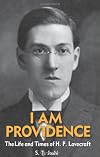
S. T. Joshi produced a two volume definitive biography of HP Lovecraft in the mid-1990s but was forced to cut around 150,000 words for reasonable commercial reasons at the time. This later 2013 edition from Hippocampus Press returns the lost text and adds new scholarly findings.
To say this work is magisterial does not do it justice. It is the result of decades of scholarship by the foremost academic interpreter of the weird in English literature. It seems unlikely that it will ever be show more bettered as a guide to the facts of the matter.
It took a very long time to read. Perhaps the full version is almost too detailed (one would not be too surprised at the appearance of a breakfast menu on a particular date) but I would not have wanted anything else.
Joshi paints a very different picture of Lovecraft from the mythology that has surrounded him from people who assume that the works are the person and who project their own eldritch fantasies on someone they can barely know. His legacy was also victim as much as beneficiary of Arkham Press.
This is a man who lived for well over forty years in straitened circumstances and yet managed to have a full and interesting life, who was far more complex than we might expect and who, like everyone, changed over time whilst retaining an essentially unchanged core of personality.
This is relevant in particular in relation to his 'racism' (we have a similar problem with, say, Heidegger's Nazism) - the detachment of a person from their time, the imposition of absolute moral standards and the failure to realise that the 'crime' in question was localised and temporary.
In fact, Lovecraft comes across as, well, a really nice guy, essentially kind, thoughtful, intellectually curious, loyal to his many friends who were largely loyal to him, perhaps self-doubting at times, asexual and more than a little unworldly - far more saint than devil.
Where Joshi scores is in positioning Lovecraft as a man of his place and time - small town East Coast America when it could still be seen (just) in traditional Anglo-Saxon terms and where an educationally aspiring popular culture created keen opportunities for friendly correspondence.
Lovecraft managed to combine an early nostalgia for Britain and pre-colonial America which made him an instinctive traditionalist (although this moderated with the years) with a startlingly modern scientific materialist concept of the cosmos.
All small towns tend to have coteries of aspirant writers, poets and artists, mostly of limited capacity. It is Lovecraft's luck that history allowed a mind clearly more interesting than most the opportunity to craft a unique approach to genre fiction thanks to the appearance of 'Weird Tales'.
Amateur writers from across the country connected through what we would call fandom today and the correspondence columns of commercial pulp fiction (the same phenomenon helped kick start America's contribution to science fiction and fantasy).
This was not the highly lucrative popular cultural phenomenon of today, dependent on big capital and modern technology, but a networked pan-American culture of enthusiasts writing in hand or in very basic forms of print with the commercial pulps and 'journalistic' societies acting as the glue.
When someone visited another writer, travelling across country, they might stay for a few days or more seeing the sites, exchanging ideas and putting a face to a letter, much as we might drop in on someone known only from Facebook if we happened to be in their town.
Lovecraft was generous and people, often in just as much a straitened circumstance as himself, would be generous to him. He travelled quite widely on the East Coast of his country as well as to the Deep South and could be called reasonably cosmopolitan if we add his Anglophile literary knowledge.
His sense of location is part of the appeal of his stories. This sense of location derived from an active fascination with historical topography - an antiquarian approach that allows us often to identify the buildings in stories with buildings that existed, at least in his time.
Although Joshi is a scholar of texts, this work is restrained in dealing with Lovecraft's output (indeed, I found Joshi often curt and quite critical of the man's work) but this is right. This is a book about a man, his life and his connections. It is also a reference work as much as a biography.
Although we care about the work, the effect of Joshi's intelligent, caring, restrained and thoughtful approach is to make it clear that Lovecraft was a lot more than his more obvious output and that it is the man that matters. You leave the book with a very different conception of who HPL actually was.
There is a concluding chapter which reviews the subsequent construction of the Lovecraft mythos and assesses Lovecraft most honestly in the light of the preceding story of his life. One conclusion is that perhaps his letters may become, in literary terms, as or more important than his stories.
So, all praise to this fine scholar who seems to have abandoned youthful enthusiasm for restrained scholarly assessment of a significant figure in Western popular culture and who has single-handedly recovered him both from those who manipulated his image for gain and from the over-enthusiastic.
After Joshi's magnum opus, it is impossible to take Derlethian fantasies, or indeed a lot of early Lovecraftian pastiches, quite so seriously and perfectly possible to see Lovecraft's menacing style and cosmic approach to horror as of literary and cultural consequence on its own terms. show less
To say this work is magisterial does not do it justice. It is the result of decades of scholarship by the foremost academic interpreter of the weird in English literature. It seems unlikely that it will ever be show more bettered as a guide to the facts of the matter.
It took a very long time to read. Perhaps the full version is almost too detailed (one would not be too surprised at the appearance of a breakfast menu on a particular date) but I would not have wanted anything else.
Joshi paints a very different picture of Lovecraft from the mythology that has surrounded him from people who assume that the works are the person and who project their own eldritch fantasies on someone they can barely know. His legacy was also victim as much as beneficiary of Arkham Press.
This is a man who lived for well over forty years in straitened circumstances and yet managed to have a full and interesting life, who was far more complex than we might expect and who, like everyone, changed over time whilst retaining an essentially unchanged core of personality.
This is relevant in particular in relation to his 'racism' (we have a similar problem with, say, Heidegger's Nazism) - the detachment of a person from their time, the imposition of absolute moral standards and the failure to realise that the 'crime' in question was localised and temporary.
In fact, Lovecraft comes across as, well, a really nice guy, essentially kind, thoughtful, intellectually curious, loyal to his many friends who were largely loyal to him, perhaps self-doubting at times, asexual and more than a little unworldly - far more saint than devil.
Where Joshi scores is in positioning Lovecraft as a man of his place and time - small town East Coast America when it could still be seen (just) in traditional Anglo-Saxon terms and where an educationally aspiring popular culture created keen opportunities for friendly correspondence.
Lovecraft managed to combine an early nostalgia for Britain and pre-colonial America which made him an instinctive traditionalist (although this moderated with the years) with a startlingly modern scientific materialist concept of the cosmos.
All small towns tend to have coteries of aspirant writers, poets and artists, mostly of limited capacity. It is Lovecraft's luck that history allowed a mind clearly more interesting than most the opportunity to craft a unique approach to genre fiction thanks to the appearance of 'Weird Tales'.
Amateur writers from across the country connected through what we would call fandom today and the correspondence columns of commercial pulp fiction (the same phenomenon helped kick start America's contribution to science fiction and fantasy).
This was not the highly lucrative popular cultural phenomenon of today, dependent on big capital and modern technology, but a networked pan-American culture of enthusiasts writing in hand or in very basic forms of print with the commercial pulps and 'journalistic' societies acting as the glue.
When someone visited another writer, travelling across country, they might stay for a few days or more seeing the sites, exchanging ideas and putting a face to a letter, much as we might drop in on someone known only from Facebook if we happened to be in their town.
Lovecraft was generous and people, often in just as much a straitened circumstance as himself, would be generous to him. He travelled quite widely on the East Coast of his country as well as to the Deep South and could be called reasonably cosmopolitan if we add his Anglophile literary knowledge.
His sense of location is part of the appeal of his stories. This sense of location derived from an active fascination with historical topography - an antiquarian approach that allows us often to identify the buildings in stories with buildings that existed, at least in his time.
Although Joshi is a scholar of texts, this work is restrained in dealing with Lovecraft's output (indeed, I found Joshi often curt and quite critical of the man's work) but this is right. This is a book about a man, his life and his connections. It is also a reference work as much as a biography.
Although we care about the work, the effect of Joshi's intelligent, caring, restrained and thoughtful approach is to make it clear that Lovecraft was a lot more than his more obvious output and that it is the man that matters. You leave the book with a very different conception of who HPL actually was.
There is a concluding chapter which reviews the subsequent construction of the Lovecraft mythos and assesses Lovecraft most honestly in the light of the preceding story of his life. One conclusion is that perhaps his letters may become, in literary terms, as or more important than his stories.
So, all praise to this fine scholar who seems to have abandoned youthful enthusiasm for restrained scholarly assessment of a significant figure in Western popular culture and who has single-handedly recovered him both from those who manipulated his image for gain and from the over-enthusiastic.
After Joshi's magnum opus, it is impossible to take Derlethian fantasies, or indeed a lot of early Lovecraftian pastiches, quite so seriously and perfectly possible to see Lovecraft's menacing style and cosmic approach to horror as of literary and cultural consequence on its own terms. show less
Lists
Favourite Books (1)
Awards


Supernatural Literature of the World [Three Volumes]: An Encyclopedia (Nominee – Special Award – Professional – 2006)


You May Also Like


Associated Authors
Statistics
- Works
- 343
- Also by
- 91
- Members
- 5,826
- Popularity
- #4,227
- Rating
- 4.0
- Reviews
- 91
- ISBNs
- 353
- Languages
- 6
- Favorited
- 19
