
M. R. James (1862–1936)
Author of Collected Ghost Stories
About the Author
Disambiguation Notice:
DO NOT combine with M. R. James, as there are multiple authors called M. R. James.
Works by M. R. James
The Apocryphal New Testament: Being the Apocryphal Gospels, Acts, Epistles, and Apocalypses with Other Narratives and Fragments Newly Translated by Montague Rhodes James (1924) — Translator — 314 copies, 1 review
The Conception of Terror: Tales Inspired by M. R. James - Volume 1: An Audible Original Drama (2019) 109 copies, 6 reviews
Ghost Stories 36 copies
Old Testament Legends being stories out of some of the less-known apochryphal books of the old testament (2011) 33 copies
Suffolk and Norfolk : a perambulation of the two counties with notices of their history and their ancient buildings (1987) 24 copies
The PLPR2:Whistle and the Dead Men's Eyes' (Penguin Readers (Graded Readers)) (2007) 14 copies, 4 reviews
The Classic Ghost Stories Collection: Chilling Tales from Guy de Maupassant, M. R. James, Edith Wharton, E. F. Benson, Sheridan Le Fanu, Henry James (Arcturus Retro Classics, 6) (2020) — Author — 12 copies
Nineteen Ghost Stories of M. R. James to Keep You Up At Night The Complete Three Volume Collection (2009) 8 copies
A Little Jasmine Book of M.R. James 5 copies
The Game Of Bear 3 copies
The Fenstanton Witch [short story] 3 copies
Delphi Works of M. R. James 3 copies
The Unquiet Grave Short Stories 2 copies
Es spukt nicht nur um Mitternacht 2 copies
A Descriptive Catalogue of the Manuscripts in the Library of St. Catharine's College, Cambridge 2 copies
A descriptive catalogue of the manuscripts in the library of Corpus Christi college, Cambridge (2010) 2 copies
The bestiary: 2 copies
A Descriptive Catalogue of the Western Manuscripts in the Library of Clare College, Cambridge 2 copies
A Descriptive Catalogue of the Western Manuscripts: In the Library of Christ's College, Cambridge (Classic Reprint) (2017) 2 copies
A Descriptive Catalogue of the Manuscripts in the Library of Pembroke College, Cambridge (Classic Reprint) (2017) 2 copies
Giếng Thở Than 2 copies
A descriptive catalogue of the manuscripts in the library of Lambeth Palace: the mediaeval manuscripts (1932) 2 copies
A descriptive catalogue of the manuscripts in the college library of Magdalene College, Cambridge 1 copy
Address at the unveiling of the roll of honour of the Cambridge Tipperary Club, July 12, 1916 1 copy
The gospel of Thomas 1 copy
The Dublin Apocalypse 1 copy
The Testament of Abraham 1 copy
[Pamphlets] 1 copy
Complete Ghost Stories 1 copy
"Opuscula" 1 copy
Collected Ghost Stories 1 copy
(all) 1 copy
Opowieści o duchach 1 copy
Ullstein-Kriminalmagazin 1 1 copy
Racconti di fantasmi 1 copy
Assovie que virei 1 copy
Der Todesbote 1 copy
Apocrypha Anecdota II: Second Series Number 1 (Texts and Studies: Contributions to Biblical and Patristic L) (2004) 1 copy
The Western Manuscripts in the Library of Trinity College, Cambridge, Vol. 1: A Descriptive Catalogue (Classic Reprint) (2017) 1 copy
Apocrypha Anecdota: Number 3 (Texts and Studies: Contributions to Biblical and Patristic L) (2004) 1 copy
From 'A School Story' 1 copy
The Works of M. R. James 1 copy
Merfield House [short story] 1 copy
Bibliotheca Pepysiana: A descriptive catalogue of the library of Samuel Pepys. Part 3: Medieval manuscripts (2010) 1 copy
John Humphreys [short story] 1 copy
Het onofficiële gebedenboek 1 copy
The sculptured bosses in the roof of the Bauchun Chapel of Our Lady of Pity in Norwich Cathedral 1 copy
The Apocalypse in Art 1 copy
De es 1 copy
Il conte Magnus 1 copy
Canon Alberic's scrap-book ; The mezzotint ; The rose garden ; The stalls of Barchester Cathedral (2011) 1 copy
Associated Works
The Haunted Looking Glass: Ghost Stories Chosen by Edward Gorey (1959) — Contributor — 751 copies, 7 reviews
In the Stacks: Short Stories about Libraries and Librarians (2002) — Contributor — 547 copies, 13 reviews
Dracula's Guest: A Connoisseur's Collection of Victorian Vampire Stories (2010) — Contributor — 318 copies, 39 reviews
Ghostly Tales: Spine-Chilling Stories of the Victorian Age (2017) — Contributor — 264 copies, 15 reviews
The Vampire Archives: The Most Complete Volume of Vampire Tales Ever Published (2007) — Contributor — 217 copies, 5 reviews
Alfred Hitchcock Presents: 12 Stories for Late at Night (1962) — Contributor — 190 copies, 2 reviews
The Penguin Book of Ghost Stories: From Elizabeth Gaskell to Ambrose Bierce (2010) — Contributor — 186 copies, 4 reviews
Alfred Hitchcock Presents : Stories They Wouldn't Let Me Do on TV (1957) — Contributor — 179 copies, 7 reviews
The Mammoth Book of Victorian and Edwardian Ghost Stories (1995) — Contributor — 174 copies, 4 reviews
In the Shadow of Edgar Allan Poe: Classic Tales of Horror, 1816-1914 (2015) — Contributor — 107 copies, 3 reviews
Ghosts from the Library: Lost Tales of Terror and the Supernatural (2023) — Contributor — 75 copies, 1 review
Chamber of Horrors: Great Tales of Terror and the Supernatural (1984) — Contributor — 71 copies, 1 review
The Moons at Your Door: An Anthology of Hallucinatory Tales (Strange Attractor Press) (2016) — Contributor — 53 copies, 1 review
The Weiser Book of Horror and the Occult: Hidden Magic, Occult Truths, and the Stories That Started It All (2014) — Contributor — 52 copies
Great Horror Stories: Tales by Stoker, Poe, Lovecraft and Others (2008) — Contributor — 46 copies, 2 reviews
The Haunted Library: Tales of Cursed Books and Forbidden Shelves (British Library Tales of the Weird) (2025) — Contributor — 36 copies
Deadly Dolls: Midnight Tales of Uncanny Playthings: 50 (British Library Tales of the Weird) (2024) — Contributor — 33 copies, 1 review
Strange Relics: Stories of Archaeology and the Supernatural, 1895-1954 (Handheld Weirds, 7) (2022) — Contributor — 30 copies
The Weiser Book of the Fantastic and Forgotten: Tales of the Supernatural, Strange, and Bizarre (2016) — Contributor — 30 copies
The Rivals of Dracula: Stories from the Golden Age of Gothic Horror (2016) — Contributor — 24 copies, 2 reviews
The Dead Valley and Others: H. P. Lovecraft's Favorite Horror Stories Vol. 2 (2014) — Contributor — 22 copies
Homefront Horrors: Frights Away from the Front Lines, 1914-1918 (2016) — Contributor — 16 copies, 1 review
The Second Ghost Story Megapack: 25 Classic Ghost Stories (2013) — Contributor — 15 copies, 2 reviews
Bewitched Beings: Phantoms, Familiars, and the Possessed in Stories from Two Centuries (1974) — Contributor — 15 copies, 1 review
The Haunted and the Haunters: Tales of Ghosts and Other Apparitions (1975) — Contributor — 12 copies
Masters of Shades and Shadows: An Anthology of Great Ghost Stories (1978) — Contributor — 12 copies, 1 review
Tales of the Undead: Vampires and Visitants (1947) — Contributor, some editions — 10 copies, 1 review
Classic Ghost Stories: By Charles Dickens, M.R. James, Washington Irving, Lewis Carroll, Oscar Wilde and more (2019) — Contributor — 7 copies
Flotsam Fantasique The Souvenir Book of World Fantasy Convention 2013 (2013) — Contributor — 6 copies
Ghosts in country villages : stories of mystery and the supernatural (1983) — Contributor — 6 copies
Henry the Sixth : a reprint of John Blacman's memoir with translation and notes by M.R. James (2012) — Translator, some editions — 5 copies
Bruin's Midnight Reader: Strange and Engaging Stories for the Curious (2022) — Contributor — 3 copies
Die Hexen-Esche: 10 ernsthafte Gruselgeschichten, zum Schmökern und Vorlesen (1975) — Contributor — 3 copies
Invertebrata Enigmatica: Giant Spiders, Dangerous Insects, and Other Strange Invertebrates in Classic Science Fiction and Fantasy (2008) — Contributor — 2 copies
Shadows from a Veiled Creation: Classic Tales of Supernatural Fiction in the Christian Tradition (2006) — Contributor — 2 copies
The London Mercury and Bookman, November 1936 — Contributor — 1 copy
Twelve medieval ghost-stories — Editor, some editions — 1 copy
The Wimbourne Book of Victorian Ghost Stories (Annotated): Volume 22 — Contributor — 1 copy
Great Ghost Stories — Contributor — 1 copy
Short Ghost and Horror Collection 026 — Contributor — 1 copy
Short Ghost and Horror Collection 072 — Contributor — 1 copy
BBC Proms 2025 : Mahler’s Seventh : Monday 21 July {sound recording} (2025) — Original writer — 1 copy
BBC Proms 2025 : Mahler’s Seventh : Monday 21 July 2025 {programme} (2025) — Original writer — 1 copy
Tagged
Common Knowledge
- Canonical name
- James, M. R.
- Legal name
- James, Montague Rhodes
- Birthdate
- 1862-08-01
- Date of death
- 1936-06-12
- Gender
- male
- Education
- Temple Grove School, East Sussex
Eton College
King's College, Cambridge - Occupations
- author
provost
museum director - Organizations
- Fitzwilliam Museum
Eton College
King's College, Cambridge - Awards and honors
- Order of Merit
Fellow of the British Academy - Relationships
- Rhodes James, Robert (nephew)
Rhodes James, Richard (nephew)
James, M. H. (first cousin) - Short biography
- As a boy, Montague Rhodes James demonstrated precocious skill in reading and languages, and learned Greek, Latin, Hebrew, French, and Italian. He studied at University of Cambridge and was made a Fellow of King's College. He became one of the world's leading authorities on medieval manuscripts, and catalogued the manuscript collections at libraries throughout Britain. He's considered by many to be the father of the modern ghost story.
- Nationality
- UK
- Birthplace
- Goodnestone Parsonage, Kent, England, UK
- Place of death
- Eton, Buckinghamshire, England, UK
- Burial location
- Eton Parish Cemetery, Eton, England
- Map Location
- England, UK
- Disambiguation notice
- DO NOT combine with M. R. James, as there are multiple authors called M. R. James.
Members
Discussions
THE DEEP ONES: "A View from a Hill" by M. R. James in The Weird Tradition (March 2022)
THE DEEP ONES: "The Mezzotint" by M.R. James in The Weird Tradition (December 2021)
THE DEEP ONES: "Count Magnus" by M.R. James in The Weird Tradition (March 2019)
Reading Group #9 ('Canon Alberic's Scrapbook') in Gothic Literature (September 2018)
Reviews

Christmas Ghost Stories: Classic Victorian Tales for Cold Winter Nights
Rating: 4.5 / 5
This is an exceptionally well-curated and well-framed collection. I enjoyed it far more than I expected, and I read it quickly—one of those books where the momentum sneaks up on you.
Wells’s introduction does real work, not just scene-setting. It clearly explains why Christmas became a season for ghost stories: long nights, enforced domestic closeness, cold, ritual, memory, and the tension between show more comfort and unease. That framing carries through the whole book. Each story is preceded by its own introduction, and those are just as valuable—brief but intelligent discussions of the author, the historical moment, and what kind of horror you’re about to encounter.
What I appreciated most is the range Wells highlights without flattening it. There’s domestic horror, where the threat is inside the home and the family structure itself. There’s horror of the unseen, horror of the half-seen, and horror that relies on implication rather than spectacle. There’s even room for a lighter, almost comic piece—something to relieve the pressure so the evening doesn’t become relentlessly grim. That balance feels very true to how these stories were originally told and consumed.
The standout for me was The Nurse’s Story, which remains one of the most chilling Christmas ghost stories ever written, precisely because the person in danger is a lonely child rather than a reckless adult. The collection as a whole reinforces how often Victorian ghost stories are about neglect, moral coldness, and quiet failures of care, rather than monsters.
The only story that did not work for me was The Brown Hand. The problem isn’t the premise—it’s the ending. After setting up a haunting rooted in colonial exploitation and bodily violation, the resolution feels evasive. The ghost is effectively tricked, which undermines the story’s own moral argument. Instead of reckoning, the narrative opts for reassurance, and that sits badly alongside the book’s broader themes about consequence and responsibility.
That single misfire aside, this is an excellent anthology. Wells respects the reader, trusts the material, and gives just enough context to deepen the experience without explaining the fear away. It’s thoughtful, unsettling, and very satisfying to read in winter, when darkness comes early and the house feels a little too quiet.
Highly recommended for readers who like their ghost stories intelligent, historically grounded, and morally sharp. show less
Rating: 4.5 / 5
This is an exceptionally well-curated and well-framed collection. I enjoyed it far more than I expected, and I read it quickly—one of those books where the momentum sneaks up on you.
Wells’s introduction does real work, not just scene-setting. It clearly explains why Christmas became a season for ghost stories: long nights, enforced domestic closeness, cold, ritual, memory, and the tension between show more comfort and unease. That framing carries through the whole book. Each story is preceded by its own introduction, and those are just as valuable—brief but intelligent discussions of the author, the historical moment, and what kind of horror you’re about to encounter.
What I appreciated most is the range Wells highlights without flattening it. There’s domestic horror, where the threat is inside the home and the family structure itself. There’s horror of the unseen, horror of the half-seen, and horror that relies on implication rather than spectacle. There’s even room for a lighter, almost comic piece—something to relieve the pressure so the evening doesn’t become relentlessly grim. That balance feels very true to how these stories were originally told and consumed.
The standout for me was The Nurse’s Story, which remains one of the most chilling Christmas ghost stories ever written, precisely because the person in danger is a lonely child rather than a reckless adult. The collection as a whole reinforces how often Victorian ghost stories are about neglect, moral coldness, and quiet failures of care, rather than monsters.
The only story that did not work for me was The Brown Hand. The problem isn’t the premise—it’s the ending. After setting up a haunting rooted in colonial exploitation and bodily violation, the resolution feels evasive. The ghost is effectively tricked, which undermines the story’s own moral argument. Instead of reckoning, the narrative opts for reassurance, and that sits badly alongside the book’s broader themes about consequence and responsibility.
That single misfire aside, this is an excellent anthology. Wells respects the reader, trusts the material, and gives just enough context to deepen the experience without explaining the fear away. It’s thoughtful, unsettling, and very satisfying to read in winter, when darkness comes early and the house feels a little too quiet.
Highly recommended for readers who like their ghost stories intelligent, historically grounded, and morally sharp. show less
 This review was written for LibraryThing Early Reviewers.
Based on the classic M. R. James ghost story “Casting the Runes”, Jacques Tourneur’s "Night of the Demon" is one of the all-time great British horror films. The film begins with an American psychologist John Holden (Dana Andrews) visiting a London symposium aimed at exposing the fraudulent nature of the occult with a particular focus on cult leader Julian Karswell (Niall MacGinnis). When symposium leader, Henry Harrington (Maurice Denham) dies in mysterious circumstances his niece show more Joanna (Peggy Cummins) tries to convince Holden that Karswell killed Harrington via a runic curse. She persuades Holden to look at a mysterious old tome and they visit Karswell at his country estate. Both Karswell and his mother warn Holden off, but his analytical scientific mind is not willing to hear any warnings. When he begins to suffer strange aural and visual hallucinations and discovers a mysterious runic parchment slipped to him by Karswell, Holden begins to realise that he is in real danger and has to contrive a way to pass the runes back to Karswell before the appointed hour.
"Night of the Demon" is a brilliantly effective film, full of stunning photography and superb visual touches from master director Jacques Tourneur of "Cat People" (1942) and "I Walked With a Zombie" (1943) fame. The brilliance of the film is all the more impressive given the massive disagreements between producer Hal E. Chester and Tourneur and writer Charles Bennett. Both Tourneur and Bennett wanted the focus to be ambiguous and psychologically based, but Bennett was adamant that a literal monster or demon required to be shown. Chester got his way and a demon was inserted into the film and it features heavily at the climax. Personally I would have preferred the film without the literal demon being shown, but it does not distract from the overall impact of the film – the demon, based visually on traditional demonic woodcuts has it's own strangely chilling quality. Where the film stands out, however, is in the unsettling psychological aspects where it is never clear whether events are real or not; whether they have a rational or demonic explanation. Tourneur avoids simple scares and instead concentrates on developing an atmosphere of dread and unease which begins to blur reality. The film is full of individually creepy sequences: a bleak, ancient Stonehenge with an overlying doom-laden narration; Holden being "pursued" through the woods; a children's party that descends into stormy chaos; a cat that takes on a demonic aspect; a séance that runs out of control. Even empty corridors take on a strangely sinister aspect, which is symbolic of the overall stunning production design – Karswell's oddly designed country house and its strange geometry and spiral staircases being possibly the epitome of beautiful but disquieting design. The high contrast monochrome photography by cinematographer Ed Scaife is stunning and cleverly adds to the disquieting feel developed by Tourneur. All these elements appear overlaid by Freudian analytics with the demon offering huge potential for metaphorical interpretation. Dana Andrews’s portrayal of John Holden in particular appears a textbook case of a hyper-rational character, unwilling or unable to see beyond the surface. His stubborn grasp on one and only one rationalist explanation of life and reality makes him a cold and smug character. His unwillingness to countenance any other explanations for his plight places him in huge danger and its only when he admits his fears and doubts that he finds a way to fight Karswell – indeed going beneath the surface veneer was the only way he could battle his own demons. Niall MacGinnis is excellent as Karswell, a smoothly genial warlock who is warm, intelligent, articulate and likeable – MacGinnis brilliantly portraying the warm and seductive qualities of evil. Peggy Cummins is also very good as an intelligent and proactive young woman determined to find her way to the truth. "Night of the Demon" is a brilliant film – the powerfully suspenseful direction, the doomy narrative feel of unease, the superb individual set pieces, the stylish black and white photography and the excellent all round performances make this a masterpiece of both horror and British cinema. show less
"Night of the Demon" is a brilliantly effective film, full of stunning photography and superb visual touches from master director Jacques Tourneur of "Cat People" (1942) and "I Walked With a Zombie" (1943) fame. The brilliance of the film is all the more impressive given the massive disagreements between producer Hal E. Chester and Tourneur and writer Charles Bennett. Both Tourneur and Bennett wanted the focus to be ambiguous and psychologically based, but Bennett was adamant that a literal monster or demon required to be shown. Chester got his way and a demon was inserted into the film and it features heavily at the climax. Personally I would have preferred the film without the literal demon being shown, but it does not distract from the overall impact of the film – the demon, based visually on traditional demonic woodcuts has it's own strangely chilling quality. Where the film stands out, however, is in the unsettling psychological aspects where it is never clear whether events are real or not; whether they have a rational or demonic explanation. Tourneur avoids simple scares and instead concentrates on developing an atmosphere of dread and unease which begins to blur reality. The film is full of individually creepy sequences: a bleak, ancient Stonehenge with an overlying doom-laden narration; Holden being "pursued" through the woods; a children's party that descends into stormy chaos; a cat that takes on a demonic aspect; a séance that runs out of control. Even empty corridors take on a strangely sinister aspect, which is symbolic of the overall stunning production design – Karswell's oddly designed country house and its strange geometry and spiral staircases being possibly the epitome of beautiful but disquieting design. The high contrast monochrome photography by cinematographer Ed Scaife is stunning and cleverly adds to the disquieting feel developed by Tourneur. All these elements appear overlaid by Freudian analytics with the demon offering huge potential for metaphorical interpretation. Dana Andrews’s portrayal of John Holden in particular appears a textbook case of a hyper-rational character, unwilling or unable to see beyond the surface. His stubborn grasp on one and only one rationalist explanation of life and reality makes him a cold and smug character. His unwillingness to countenance any other explanations for his plight places him in huge danger and its only when he admits his fears and doubts that he finds a way to fight Karswell – indeed going beneath the surface veneer was the only way he could battle his own demons. Niall MacGinnis is excellent as Karswell, a smoothly genial warlock who is warm, intelligent, articulate and likeable – MacGinnis brilliantly portraying the warm and seductive qualities of evil. Peggy Cummins is also very good as an intelligent and proactive young woman determined to find her way to the truth. "Night of the Demon" is a brilliant film – the powerfully suspenseful direction, the doomy narrative feel of unease, the superb individual set pieces, the stylish black and white photography and the excellent all round performances make this a masterpiece of both horror and British cinema. show less

I enjoyed the collection overall. I thought the stories were interesting, well constructed, and in a few cases even eerie, if not actually frightening, and the humor worked for me.
Unfortunately, I found the running thread of...I'm not even sure what to call it, Christian supremacy, maybe? Pro-Christian propaganda? Anti-non-Christian bigotry? Well, whatever it was, I found it incredibly off-putting.
It noticeably detracted from my enjoyment of the stories, enough so that it brought my rating show more down from 4 stars to 3.5.
For anyone not bothered by that sort of thing, this collection will probably be a solid read. I will note that I was able to read several stories by phone on my balcony after dark without trouble, and I've gotten spooked watching Criminal Minds alone on sunny afternoons, so those looking for the truly frightening should probably look elsewhere. show less
Unfortunately, I found the running thread of...I'm not even sure what to call it, Christian supremacy, maybe? Pro-Christian propaganda? Anti-non-Christian bigotry? Well, whatever it was, I found it incredibly off-putting.
It noticeably detracted from my enjoyment of the stories, enough so that it brought my rating show more down from 4 stars to 3.5.
For anyone not bothered by that sort of thing, this collection will probably be a solid read. I will note that I was able to read several stories by phone on my balcony after dark without trouble, and I've gotten spooked watching Criminal Minds alone on sunny afternoons, so those looking for the truly frightening should probably look elsewhere. show less
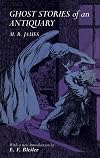
I love the BBC Ghost Stories for Christmas adaptations that Lawrence Gordon Clark directed back in the 1970s; they're atmospheric, creepy, folksy, and have a touch of the esoteric. The original stories, however, are rather dry. M.R. James was a scholar first, and a writer of ghost stories second, and that reflects in the stories here. They're more like reading scholarly articles than stories, and he wasn't an author like Borges who could use these techniques in a literary way.
Lists
Ghosts (1)
Folio Society (1)
100 Hemskaste (1)
Awards


You May Also Like


Associated Authors
Statistics
- Works
- 330
- Also by
- 250
- Members
- 8,499
- Popularity
- #2,832
- Rating
- 3.9
- Reviews
- 237
- ISBNs
- 581
- Languages
- 19
- Favorited
- 3

