
Algernon Blackwood (1869–1951)
Author of The Willows (short story)
About the Author
Image credit: Courtesy of The Literary Gothic
Series
Works by Algernon Blackwood
Ancient Sorceries, Deluxe Edition: The most eerie and unnerving tales from one of the greatest proponents of supernatural fiction (2022) 76 copies, 1 review
Three Supernatural Classics: "The Willows," "The Wendigo" and "The Listener" (2008) 35 copies, 4 reviews
The Collected Works of Algernon Blackwood (Unexpurgated Edition) (Halcyon Classics) (2010) 29 copies
The Whisperers and Other Stories: A Lifetime of the Supernatural (British Library Hardback Classics) (2022) 25 copies
The Magic Mirror: Lost Supernatural and Mystery Stories by Algernon Blackwood (1989) 19 copies, 2 reviews
The Empty House & Other Ghost Stories / The Listener & Other Stories (Stark House Supernatural Classics) (2014) 9 copies, 1 review
Algernon Blackwood Volume One 7 copies
Selected short stories of Algernon Blackwood: (ghost and supernatural stories) (Armed Services edition) (1943) 6 copies
The Nemesis of Fire and Others: Collected Short Fiction of Algernon Blackwood, Volume 2 (2023) 5 copies
The Complete Works of Algernon Blackwood: Novels, Short Stories, Horror Classics, Occult & Supernatural Tales, Plays (2020) 4 copies
LibriVox Horror Story Collection 005 3 copies
John Silence Stories 3 copies
The Doll 3 copies
SHORT STORIES OF TODAY & YESTERDAY 2 copies
LibriVox Ghost Story Collection 004 2 copies
Short Science Fiction Collection 057 2 copies
13 Tales of Terror 2 copies
Aventuras increibles 1 copy
Zwielicht 22: DE 1 copy
I dannati 1 copy
Vrby 1 copy
Aventuras increíbles. Vol II 1 copy
Aventuras increíbles. Vol I 1 copy
Horror Stories 1 copy
微睡みの街 1 copy
Migrations 1 copy
ウェンディゴ 1 copy
Mr. Cupboard 1 copy
Lure of the Unknown 1 copy
Short Stories 1 copy
The Sacrifice / Wayfarers 1 copy
Associated Works
The Haunted Looking Glass: Ghost Stories Chosen by Edward Gorey (1959) — Contributor — 751 copies, 7 reviews
Devils & Demons: A Treasury of Fiendish Tales Old & New (1991) — Contributor — 289 copies, 2 reviews
The Vampire Archives: The Most Complete Volume of Vampire Tales Ever Published (2007) — Contributor — 217 copies, 5 reviews
Masterpieces of Terror and the Unknown: A Treasury of Bizarre Tales Old and New (1993) — Contributor — 213 copies, 2 reviews
The Colour Out of Space: Tales of Cosmic Horror by Lovecraft, Blackwood, Machen, Poe, and Other Masters of the Weird (-0001) — Contributor — 110 copies, 1 review
Weird Tales : a selection in facsimile, of the best from the world's most famous fantasy magazine (1976) — Contributor — 82 copies
Circles of Stone: Weird Tales of Pagan Sites and Ancient Rites (2023) — Contributor — 74 copies, 2 reviews
Dangerous Dimensions: Mind-Bending Tales of the Mathematical Weird (2021) — Contributor — 70 copies, 1 review
Our Haunted Shores: Tales from the Coasts of the British Isles (2022) — Contributor — 67 copies, 2 reviews
Wild: Stories of Survival from the World's Most Dangerous Places (Adrenaline) (1999) — Contributor — 65 copies, 1 review
There Is a Graveyard That Dwells in Man: More Strange Fiction and Hallucinatory Tales (2020) — Contributor — 65 copies
The Moons at Your Door: An Anthology of Hallucinatory Tales (Strange Attractor Press) (2016) — Contributor — 53 copies, 1 review
Great Horror Stories: Tales by Stoker, Poe, Lovecraft and Others (2008) — Contributor — 46 copies, 2 reviews
The Haunted Library: Tales of Cursed Books and Forbidden Shelves (British Library Tales of the Weird) (2025) — Contributor — 36 copies
Strange Relics: Stories of Archaeology and the Supernatural, 1895-1954 (Handheld Weirds, 7) (2022) — Contributor — 30 copies
The Weiser Book of Occult Detectives: 13 Stories of Supernatural Sleuthing (2017) — Contributor — 26 copies, 1 review
The Dead Valley and Others: H. P. Lovecraft's Favorite Horror Stories Vol. 2 (2014) — Contributor — 22 copies
Homefront Horrors: Frights Away from the Front Lines, 1914-1918 (2016) — Contributor — 16 copies, 1 review
The Haunted and the Haunters: Tales of Ghosts and Other Apparitions (1975) — Contributor — 12 copies
More ghosts and marvels,: A selection of uncanny tales from Sir Walter Scott to Michael Arlen, (The World's classics) (1934) — Contributor — 10 copies
Giving Up the Ghosts: Short-Lived Occult Detective Series by Six Renowned Authors (2015) — Contributor — 8 copies
Flora Curiosa: Cryptobotany, Mysterious Fungi, Sentient Trees, and Deadly Plants in Classic Science Fiction and Fantasy (2008) — Contributor — 7 copies
Out of the Sand: Mummies, Pyramids, and Egyptology in Classic Science Fiction and Fantasy (2008) — Contributor — 5 copies
Fantastic Imaginings: A Journey Through 3500 Years of Imaginative Writing, Comprising Fantasy, Horror, and Science Fiction (2012) — Contributor — 4 copies
Bruin's Midnight Reader: Strange and Engaging Stories for the Curious (2022) — Contributor — 3 copies
Die Hexen-Esche: 10 ernsthafte Gruselgeschichten, zum Schmökern und Vorlesen (1975) — Contributor — 3 copies
Georgian Stories 1924 — Contributor — 2 copies
LibriVox Short Ghost and Horror Collection 028 — Contributor — 2 copies
About Time: The Forerunners of Time Travel and Temporal Anomalies in Science Fiction and Fantasy (2008) — Contributor — 2 copies
Millemondi inverno 1994 — Author — 2 copies
Cats of Shadow, Claws of Darkness: Stories of Were-Cats, Ghost Cats, and Other Supernatural Felines (2012) — Contributor — 2 copies
Invertebrata Enigmatica: Giant Spiders, Dangerous Insects, and Other Strange Invertebrates in Classic Science Fiction and Fantasy (2008) — Contributor — 2 copies
Weird Tales Volume 32 Number 3, September 1938 — Contributor — 2 copies
The Ancient Sorceries / The Vanguard of Venus / A Hand from the Deep / Dialogue with the Dead (1973) — Contributor — 1 copy
Number 12a Joy Street — Contributor — 1 copy
小説幻妖 壱 (1) 新春 妖女コレクシオン — Contributor — 1 copy
Short Ghost and Horror Collection 074 — Contributor — 1 copy
Tchnienie Grozy — Contributor — 1 copy
Friendly Aliens: Thirteen Stories of the Fantastic Set in Canada by Foreign Authors (1981) — Contributor — 1 copy
The Wendigo / The Ghostly Rental / The House of the Worm / Lords of the Ghostlands — Contributor — 1 copy
Short Ghost and Horror Collection 072 — Contributor — 1 copy
Macmillan's Magazine, Vol. LXXXIV: May to October, 1901: Issues 499 to 504 (1901) — Contributor — 1 copy, 1 review
Strange Stories: The Last Seven — Contributor — 1 copy
Tagged
Common Knowledge
- Legal name
- Blackwood, Algernon Henry
- Birthdate
- 1869-03-14
- Date of death
- 1951-12-10
- Gender
- male
- Education
- Wellington College
Edinburgh University - Occupations
- author
writer
broadcaster - Organizations
- Ghost Club Society
Hermetic Order of the Golden Dawn
Theosophical Society - Awards and honors
- Order of the British Empire (Commander, 1949)
Television Society Silver Medal (1948) - Cause of death
- cerebral thrombosis
- Nationality
- UK
- Birthplace
- Shooter's Hill, Kent, England, UK
- Places of residence
- London, Middlesex, England, UK
New York, New York, USA
Toronto, Ontario, Canada - Place of death
- Bishopsteighton, Kent, England, UK
- Burial location
- Cremated and ashes scattered at Saanenmöser Pass, Switzerland
- Map Location
- England, UK
Members
Discussions
THE DEEP ONES: "Roman Remains" by Algernon Blackwood in The Weird Tradition (May 2024)
THE DEEP ONES: "The Heath Fire" by Algernon Blackwood in The Weird Tradition (January 2024)
THE DEEP ONES: "The Wolves of God" by Algernon Blackwood in The Weird Tradition (January 2023)
THE DEEP ONES: "A Victim of Higher Space" by Algernon Blackwood in The Weird Tradition (October 2022)
THE DEEP ONES: "A Touch of Pan" by Algernon Blackwood in The Weird Tradition (December 2021)
THE DEEP ONES: "The Willows" by Algernon Blackwood in The Weird Tradition (March 2021)
Reading Group #24 ('The Wendigo') in Gothic Literature (October 2018)
THE DEEP ONES: "Smith: An Episode in a Lodging House" by Algernon Blackwood in The Weird Tradition (April 2015)
Opinions on Algernon Blackwood in Thing(amabrarian)s That Go Bump in the Night (January 2012)
Reviews
*Spoilers ahead*
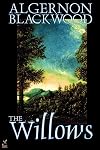
I'm sure it's due to some obscure perverseness that I can't consciously pinpoint, but I've never quite warmed up to "The Willows." Despite its esteemed reputation, despite the fact that I've reread it many times during the past thirty-five years in hopes that I would appreciate some nuance which previously had eluded me, I'm left essentially unmoved by the story. With just two characters in a single setting, and action that remains almost entirely ambiguous to the end, it's show more too spare to justify its length (a little over fifty pages). Not much happens: two outdoorsmen, one of them the story's narrator, are paddling a canoe up the Danube; they make camp on one of the river's numerous small islands, where the willow bushes seem to take on a threatening aspect. Are the willows really occupied/manipulated by some intelligent lifeform from another plane of existence, or are the men so overwhelmed by the loneliness and remoteness of the island that they (one of them, in particular) suffer a psychotic break? It's never made clear. The missing oar, the damage to the canoe and the loss of provisions arguably can be blamed on the narrator's eccentric traveling companion. Even the ghastly corpse that turns up at the end may have been a victim of the Swede.
Here emerges an inescapable parallel with the age-old critical debate over Henry James's "The Turn of the Screw" (which Blackwood greatly admired): is it really a ghost story, or isn't it? But "The Willows" is even less plainly a tale of the supernatural. Read it carefully and you'll realize how consistent the psychological interpretation is. With a single exception (a visual phenomenon which the narrator witnesses alone, and is easily attributable to imagination), all the strange events of the story could have been wrought by human hands. What "The Willows" is actually about, in my view, is the narrator's dawning realization that his traveling companion is not the stable, unimaginative, trustworthy type he had first appeared to be.
I understand the effect that Blackwood was aiming for, but the execution is labored. Again and again, the narrator describes the uncanny atmosphere of the island, the rustling of the willows, the anxiety that overtakes him as escape begins to look impossible...and the more he describes it, the less I'm able to feel it. Blackwood is too insistent, and because the story is so long yet so lacking in substance, he has no choice but to go on insisting. All that the narrator can do is sit around and wait for something bad to happen. It just doesn't work for me. I'm not sure how "The Willows" came to be regarded as the greatest horror story in the English language; I'll take Arthur Machen's "The Great God Pan" (which is, unambiguously and unapologetically, a horror story) any day of the week. And this, I assure you, is coming from someone who admires much of Algernon Blackwood's work. He conveyed an atmosphere of supernatural wonder far more effectively in "Ancient Sorceries," and of creeping dread and horror in "The Occupant of the Room." show less
I'm sure it's due to some obscure perverseness that I can't consciously pinpoint, but I've never quite warmed up to "The Willows." Despite its esteemed reputation, despite the fact that I've reread it many times during the past thirty-five years in hopes that I would appreciate some nuance which previously had eluded me, I'm left essentially unmoved by the story. With just two characters in a single setting, and action that remains almost entirely ambiguous to the end, it's show more too spare to justify its length (a little over fifty pages). Not much happens: two outdoorsmen, one of them the story's narrator, are paddling a canoe up the Danube; they make camp on one of the river's numerous small islands, where the willow bushes seem to take on a threatening aspect. Are the willows really occupied/manipulated by some intelligent lifeform from another plane of existence, or are the men so overwhelmed by the loneliness and remoteness of the island that they (one of them, in particular) suffer a psychotic break? It's never made clear. The missing oar, the damage to the canoe and the loss of provisions arguably can be blamed on the narrator's eccentric traveling companion. Even the ghastly corpse that turns up at the end may have been a victim of the Swede.
Here emerges an inescapable parallel with the age-old critical debate over Henry James's "The Turn of the Screw" (which Blackwood greatly admired): is it really a ghost story, or isn't it? But "The Willows" is even less plainly a tale of the supernatural. Read it carefully and you'll realize how consistent the psychological interpretation is. With a single exception (a visual phenomenon which the narrator witnesses alone, and is easily attributable to imagination), all the strange events of the story could have been wrought by human hands. What "The Willows" is actually about, in my view, is the narrator's dawning realization that his traveling companion is not the stable, unimaginative, trustworthy type he had first appeared to be.
I understand the effect that Blackwood was aiming for, but the execution is labored. Again and again, the narrator describes the uncanny atmosphere of the island, the rustling of the willows, the anxiety that overtakes him as escape begins to look impossible...and the more he describes it, the less I'm able to feel it. Blackwood is too insistent, and because the story is so long yet so lacking in substance, he has no choice but to go on insisting. All that the narrator can do is sit around and wait for something bad to happen. It just doesn't work for me. I'm not sure how "The Willows" came to be regarded as the greatest horror story in the English language; I'll take Arthur Machen's "The Great God Pan" (which is, unambiguously and unapologetically, a horror story) any day of the week. And this, I assure you, is coming from someone who admires much of Algernon Blackwood's work. He conveyed an atmosphere of supernatural wonder far more effectively in "Ancient Sorceries," and of creeping dread and horror in "The Occupant of the Room." show less
“I want to see mountains again, Gandalf, mountains,” said Bilbo in the Fellowship of the Ring, and one cannot but touch the craving, the dramatic yearning for the high, snow-crested peaks, the pillars of the Sky, and all adventures hiding amidst these ranges and beyond them. Mountains are deeply embedded with epic feeling, magically so – there is something uncanny in their majestic countenance.
In the first two stories of his 1914 book “Incredible Adventures” Algernon Blackwood show more brings to life such mountains as we have only gazed upon through great storms and deep snow, in dreams and songs. Great awe and enchantment lie upon their slopes, waiting to be communed by the wanderer, yet never yielding their secrets to one who comes with conquest in heart.
The Regeneration of Lord Ernie
A tutor travels with his student around the world, ending up in the mountains of Switzerland, where the vast majority of this story takes place. The student, Lord Ernie, is a youth seemingly devoid of Will and lust for life, a sluggish being. All this changes up there, at the pagan peaks of western Switzerland, where fires roar at night like the Gondor beacons of yore. In this, the best story of the book, Algernon Blackwood masterfully evokes the spirit of the mountains, of pagan nature, of the terrible, beautiful majesty of the occult working. And what bursts forth from this grandeur is a celebration of vigorous and colorful pagan life, a ritual that blends all participating mortal units in an omnipotent current:
“He saw the human faces, symbols of spiritual dominion over all lesser orders, each one possessed of belief, intelligence and will. Singly so feeble, together so invincible, this assemblage, unscorched by the fire and by the wind unmoved, seemed to him impressive beyond all possible words. And a further inkling of the truth flashed on him as he stared: that a group of humans, a crowd, combining upon a given object with concentrated purpose, possessed of that terrific power, certain faith, may know in themselves the energy to move great mountains.”
Here enchantment is praised, not feared; it doesn’t evoke horror but wonderful awe – and that is where the magic of Blackwood writing really shines: in the fact that he embraces the occult from inside, not alienating it. Here lies the acceptance of the Other, the revelry in Its weirdness and otherness, a vast contrast to the majority of horror and occult fiction writers who use the occult as a menacing Other that must be either overcome (thus re-establishing banality and routine) or be a herald of Doom. Algernon Blackwood’s Golden Dawn training was crucial for this outcome – one can trace in here the descriptions of the fire and air elements in the magical society’s papers, though in the story the implementation of said characteristics and nature is done with infinitely more poetic and effective language. This is the rejoicing of occult ecstasy, a view towards a new paradigm.
The Sacrifice
Paysage d’Hiver’s namesake release is graced with an evocative and minimalistic cover art, of a figure going down a slope. Now multiply the scale by the hundreds, reverse the direction, and you get a glimpse of this story’s iconography. This is less a story than a poetics of ritual working and transcendence, for the premise is extremely simple: a man who thinks that he has lost his gods undertakes a mountain expedition before dawn, an expedition which is slowly revealed to be doubling over as a ritual. Mountains again, more unapproachable and cosmic in nature this time, more black and white one could say (it is pre-dawn after all). The long-winded ascent is set with mastery, reminiscent of a vast, divine game board. And in a short paragraph Algernon Blackwood manages to capture what is probably the essence of magick, corporality:
“That knowledge arises from action; that to do the thing invites the teaching and explains it. Action, moreover, is symbolical; a group of men, a family, an entire nation, engaged in those daily movements which are the working out of their destiny, perform a Ceremony which is in direct relation somewhere to the pattern of greater happenings which are the teachings of the Gods. Let the body imitate, reproduce—in a bedroom, in a wood —anywhere—the movements of the stars, and the meaning of those stars shall sink down into the heart. The movements constitute a script, a language. To mimic the gestures of a stranger is to understand his mood, his point of view—to establish a grave and solemn intimacy. Temples are everywhere, for the entire earth is a temple, and the body, House of Royalty, is the biggest temple of them all.”
Unfortunately, the three remaining stories are somewhat lesser in execution, though not in ideas. “The Damned” is a brooding haunted house story with some amazing descriptions of environment (the goblin garden for instance) and the overlapping of past genius locii in the house, yet is quite tiring due to the slowness of unraveling, the scarcity of events, the laden language, and the absence of a climax, (which nevertheless was intentional). “A Descent into Egypt” is a story that examines Time, contrasts the unmoving and eternal Past with the ever-fleeting Present, a play upon the themes of Cyclical and Linear Time one could say. Unfortunately, it also suffers from garrulity, especially from never-ending monologues, though it does get better, at least image-wise, at the second half. Finally the little story, “Wayfarers”, also deals with the matter of time and the conquering of it by Wills, yet it also suffers from heavy language and a thinness of plot.
In his momentous essay, “Supernatural Horror in Literature,” Lovecraft wrote that “It may be well to remark here that occult believers are probably less effective than materialists in delineating the spectral and the fantastic, since to them the phantom world is so commonplace a reality that they tend to refer to it with less awe, remoteness, and impressiveness than do those who see in it an absolute and stupendous violation of the natural order.” He may be right as far as the remoteness department is concerned, but not the awe and impressiveness ones are a different matter. For the phantom world can never be considered commonplace. In this collection, Algernon Blackwood is revealed as a writer for those of us searching a glorious contact with the occult Other, full of awe and longing, leaving alienating fear aside. A shining if somewhat uneven demonstration of The Magician-Writer casting a spell. show less
In the first two stories of his 1914 book “Incredible Adventures” Algernon Blackwood show more brings to life such mountains as we have only gazed upon through great storms and deep snow, in dreams and songs. Great awe and enchantment lie upon their slopes, waiting to be communed by the wanderer, yet never yielding their secrets to one who comes with conquest in heart.
The Regeneration of Lord Ernie
A tutor travels with his student around the world, ending up in the mountains of Switzerland, where the vast majority of this story takes place. The student, Lord Ernie, is a youth seemingly devoid of Will and lust for life, a sluggish being. All this changes up there, at the pagan peaks of western Switzerland, where fires roar at night like the Gondor beacons of yore. In this, the best story of the book, Algernon Blackwood masterfully evokes the spirit of the mountains, of pagan nature, of the terrible, beautiful majesty of the occult working. And what bursts forth from this grandeur is a celebration of vigorous and colorful pagan life, a ritual that blends all participating mortal units in an omnipotent current:
“He saw the human faces, symbols of spiritual dominion over all lesser orders, each one possessed of belief, intelligence and will. Singly so feeble, together so invincible, this assemblage, unscorched by the fire and by the wind unmoved, seemed to him impressive beyond all possible words. And a further inkling of the truth flashed on him as he stared: that a group of humans, a crowd, combining upon a given object with concentrated purpose, possessed of that terrific power, certain faith, may know in themselves the energy to move great mountains.”
Here enchantment is praised, not feared; it doesn’t evoke horror but wonderful awe – and that is where the magic of Blackwood writing really shines: in the fact that he embraces the occult from inside, not alienating it. Here lies the acceptance of the Other, the revelry in Its weirdness and otherness, a vast contrast to the majority of horror and occult fiction writers who use the occult as a menacing Other that must be either overcome (thus re-establishing banality and routine) or be a herald of Doom. Algernon Blackwood’s Golden Dawn training was crucial for this outcome – one can trace in here the descriptions of the fire and air elements in the magical society’s papers, though in the story the implementation of said characteristics and nature is done with infinitely more poetic and effective language. This is the rejoicing of occult ecstasy, a view towards a new paradigm.
The Sacrifice
Paysage d’Hiver’s namesake release is graced with an evocative and minimalistic cover art, of a figure going down a slope. Now multiply the scale by the hundreds, reverse the direction, and you get a glimpse of this story’s iconography. This is less a story than a poetics of ritual working and transcendence, for the premise is extremely simple: a man who thinks that he has lost his gods undertakes a mountain expedition before dawn, an expedition which is slowly revealed to be doubling over as a ritual. Mountains again, more unapproachable and cosmic in nature this time, more black and white one could say (it is pre-dawn after all). The long-winded ascent is set with mastery, reminiscent of a vast, divine game board. And in a short paragraph Algernon Blackwood manages to capture what is probably the essence of magick, corporality:
“That knowledge arises from action; that to do the thing invites the teaching and explains it. Action, moreover, is symbolical; a group of men, a family, an entire nation, engaged in those daily movements which are the working out of their destiny, perform a Ceremony which is in direct relation somewhere to the pattern of greater happenings which are the teachings of the Gods. Let the body imitate, reproduce—in a bedroom, in a wood —anywhere—the movements of the stars, and the meaning of those stars shall sink down into the heart. The movements constitute a script, a language. To mimic the gestures of a stranger is to understand his mood, his point of view—to establish a grave and solemn intimacy. Temples are everywhere, for the entire earth is a temple, and the body, House of Royalty, is the biggest temple of them all.”
Unfortunately, the three remaining stories are somewhat lesser in execution, though not in ideas. “The Damned” is a brooding haunted house story with some amazing descriptions of environment (the goblin garden for instance) and the overlapping of past genius locii in the house, yet is quite tiring due to the slowness of unraveling, the scarcity of events, the laden language, and the absence of a climax, (which nevertheless was intentional). “A Descent into Egypt” is a story that examines Time, contrasts the unmoving and eternal Past with the ever-fleeting Present, a play upon the themes of Cyclical and Linear Time one could say. Unfortunately, it also suffers from garrulity, especially from never-ending monologues, though it does get better, at least image-wise, at the second half. Finally the little story, “Wayfarers”, also deals with the matter of time and the conquering of it by Wills, yet it also suffers from heavy language and a thinness of plot.
In his momentous essay, “Supernatural Horror in Literature,” Lovecraft wrote that “It may be well to remark here that occult believers are probably less effective than materialists in delineating the spectral and the fantastic, since to them the phantom world is so commonplace a reality that they tend to refer to it with less awe, remoteness, and impressiveness than do those who see in it an absolute and stupendous violation of the natural order.” He may be right as far as the remoteness department is concerned, but not the awe and impressiveness ones are a different matter. For the phantom world can never be considered commonplace. In this collection, Algernon Blackwood is revealed as a writer for those of us searching a glorious contact with the occult Other, full of awe and longing, leaving alienating fear aside. A shining if somewhat uneven demonstration of The Magician-Writer casting a spell. show less
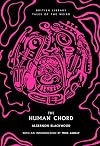
This has become one of my favourite reissues in the Tales of the Weird series. A gripping, powerful and chilling novel of a group attempting to tap into the Word of God.
What impresses me most about Blackwood's writing is always how he marries an original, imaginative idea with slow build crescendo that is almost perfect in its craftmanship. The basic premise involves four people coming together under the leadership of the dominant personality of Reverend Slake who has discovered a way to show more divinely control all things by uttering their "true name". By bringing together four people who tune together as a "chord", they dare to capture even a part of the greatest of all powers. It's a big, bold idea and is told secondhand from the point of view of susceptible adventurer Robert Spinrobin, focusing strongly on the spectrum of emotions that he is put through.
In Blackwood's (shamefully) lesser known work here, it becomes largely clear early on the scope of where the book is leading such a group of disparate individuals to - even if it isn't apparent to themselves. That sort of character ignorance and idiocy is normally a bugbear of mine, but here the unreliable narrator plays its card well as the focus keeps on how Robert Spinrobin tries to describe aural concepts beyond our comprehension, whilst trying to balance his own conflicting emotions of increasing terror and divine aura of his companions - particularly towards his mentor Slake who he is both in awe of and yet afraid of due to increasingly manic, otherworldy behaviour.
As you'd expect with something dealing with both biblical mythology and pseudo-science, the imageries and explanations of how this system of divine magic works is steeped in dreamlike sentences which rely on plentiful supplies of metaphor and simile, but it helps offset the otherwise basic presentation of the ideas to produce something that is both legible and incomprehensible at the same time. It's what makes Blackwood such a great compositor of the weird that he can harmonise in this way and pull it off. It's not flawless, but his rich personal knowledge of the various subjects it explores provides credibility even when stretched to these levels.
With a pacing that is deliberate and builds slowly to its frightening crescendo, it wont chime with everyone who wants action or a slideshow of big events happening all around. I certainly think it suits this story much better in this way as I increasingly felt unable to turn away as each stage unfolded in teasing fashion. But readers of more modern styles may feel unsatisfied for much of the story.
For me though, this is a stunning ‘weird’ novel of the grandest scope that I didn't know previously existed, but has cemented a place firmly amongst my favourites in the genre. show less
What impresses me most about Blackwood's writing is always how he marries an original, imaginative idea with slow build crescendo that is almost perfect in its craftmanship. The basic premise involves four people coming together under the leadership of the dominant personality of Reverend Slake who has discovered a way to show more divinely control all things by uttering their "true name". By bringing together four people who tune together as a "chord", they dare to capture even a part of the greatest of all powers. It's a big, bold idea and is told secondhand from the point of view of susceptible adventurer Robert Spinrobin, focusing strongly on the spectrum of emotions that he is put through.
In Blackwood's (shamefully) lesser known work here, it becomes largely clear early on the scope of where the book is leading such a group of disparate individuals to - even if it isn't apparent to themselves. That sort of character ignorance and idiocy is normally a bugbear of mine, but here the unreliable narrator plays its card well as the focus keeps on how Robert Spinrobin tries to describe aural concepts beyond our comprehension, whilst trying to balance his own conflicting emotions of increasing terror and divine aura of his companions - particularly towards his mentor Slake who he is both in awe of and yet afraid of due to increasingly manic, otherworldy behaviour.
As you'd expect with something dealing with both biblical mythology and pseudo-science, the imageries and explanations of how this system of divine magic works is steeped in dreamlike sentences which rely on plentiful supplies of metaphor and simile, but it helps offset the otherwise basic presentation of the ideas to produce something that is both legible and incomprehensible at the same time. It's what makes Blackwood such a great compositor of the weird that he can harmonise in this way and pull it off. It's not flawless, but his rich personal knowledge of the various subjects it explores provides credibility even when stretched to these levels.
With a pacing that is deliberate and builds slowly to its frightening crescendo, it wont chime with everyone who wants action or a slideshow of big events happening all around. I certainly think it suits this story much better in this way as I increasingly felt unable to turn away as each stage unfolded in teasing fashion. But readers of more modern styles may feel unsatisfied for much of the story.
For me though, this is a stunning ‘weird’ novel of the grandest scope that I didn't know previously existed, but has cemented a place firmly amongst my favourites in the genre. show less

El horror de Algernon Blackwood linda más con lo existencial que con lo meramente monstruoso. Blackwood es conocido por su famoso cuento ‘El Wendigo’, sin duda un cuento excepcional, que se incluye siempre como uno de los precursores de los Mitos de Cthulhu. Resulta interesante contrastar el terror que se estilaba a principios del siglo pasado, con todos esos grandes autores de las Weird Tales, donde lo extraño se va desmenuzando paulatinamente y la tensión aumentando progresivamente, show more con el que se hace actualmente, donde prima más la sangre y los higadillos, y donde el retirar la cara y cerrar los ojos no significa necesariamente miedo, sino más bien asqueo.
Estos son los tres relatos y las dos novelas cortas que se incluyen en ‘Culto secreto y otros relatos’:
‘El hombre al que amaban los árboles’ (*****), donde se relata la obsesión que un pintor de árboles transmite al matrimonio Bittacy. El señor Bittacy se ve imbuido por los bosques que rodean su vivienda, le llaman, literalmente. Mientras, la señora Bittacy, que tiene fobia por los árboles, debe intentar luchar por que estos no se apoderen de su marido. Destaca la descripción de ambientes, con todas esas fuerzas de la naturaleza presentes en todo momento. Magnífica novela corta, la mejor narración de la antología, puro Blackwood.
‘El ocupante de la habitación’ (***), donde un turista inglés en Suiza, hace noche en una posada, ocupando la única habitación libre. El protagonista no tardará en darse cuenta de que algo extraño sucede. Buen relato.
‘Culto secreto’ (***), donde el protagonista, inglés, decide visitar el viejo internado católico alemán en el que estudió de joven, pese a la recomendación de no hacerlo que le dan. Buen relato, estupendamente narrado, en el que hace su aparición John Silence, investigador de lo oculto.
‘Complicidad previa al hecho’ (**), donde, de nuevo, un turista inglés de viaje por Alemania, tiene extrañas visiones. Flojo.
‘Descenso a Egipto’ (***), novela corta en la que el protagonista narra la obsesión por el antiguo Egipto de su amigo George Isley. Buen relato, mezcla de metafísica, viaje onírico y realidad. show less
Estos son los tres relatos y las dos novelas cortas que se incluyen en ‘Culto secreto y otros relatos’:
‘El hombre al que amaban los árboles’ (*****), donde se relata la obsesión que un pintor de árboles transmite al matrimonio Bittacy. El señor Bittacy se ve imbuido por los bosques que rodean su vivienda, le llaman, literalmente. Mientras, la señora Bittacy, que tiene fobia por los árboles, debe intentar luchar por que estos no se apoderen de su marido. Destaca la descripción de ambientes, con todas esas fuerzas de la naturaleza presentes en todo momento. Magnífica novela corta, la mejor narración de la antología, puro Blackwood.
‘El ocupante de la habitación’ (***), donde un turista inglés en Suiza, hace noche en una posada, ocupando la única habitación libre. El protagonista no tardará en darse cuenta de que algo extraño sucede. Buen relato.
‘Culto secreto’ (***), donde el protagonista, inglés, decide visitar el viejo internado católico alemán en el que estudió de joven, pese a la recomendación de no hacerlo que le dan. Buen relato, estupendamente narrado, en el que hace su aparición John Silence, investigador de lo oculto.
‘Complicidad previa al hecho’ (**), donde, de nuevo, un turista inglés de viaje por Alemania, tiene extrañas visiones. Flojo.
‘Descenso a Egipto’ (***), novela corta en la que el protagonista narra la obsesión por el antiguo Egipto de su amigo George Isley. Buen relato, mezcla de metafísica, viaje onírico y realidad. show less
Lists
Awards


You May Also Like


Associated Authors
Statistics
- Works
- 291
- Also by
- 233
- Members
- 6,220
- Popularity
- #3,941
- Rating
- 3.9
- Reviews
- 145
- ISBNs
- 979
- Languages
- 14
- Favorited
- 49