
Tom Pomplun
Author of Graphic Classics: H. P. Lovecraft
Series
Works by Tom Pomplun
Tagged
Common Knowledge
- Gender
- male
- Nationality
- USA
- Birthplace
- Whitewater, Wisconsin, USA
- Associated Place (for map)
- Wisconsin, USA
Members
Reviews
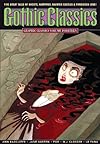
I snatched this one up at Half Price Books because the last story was illustrated by the great Shary Flenniken, creator of National Lampoon's "Trots and Bonnie." The story did not disappoint me. I read "Carmilla", and the others.... not yet.
"At the Gate" is a gorgeously sentimental Victorian-era story about dogs awaiting their people at the gates of heaven. It was just the sort of thing I needed to read when my old cat Squeaky left this world on the morning of the summer solstice, which was show more probably his 18th birthday. I cried happy tears and was comforted in my grief. I hope the Rainbow Bridge is kind to him.
I am one of the kids whose parents always said NO to a dog... and now I am assured that I have only to wait for the great hereafter, and I'll be matched up with the dog who has always needed me. Balm to my soul.
This whole series of illustrated classics: my cuppa tea. Better than Cliff's Notes, and better than wading through the grandiose multipage verbiosity of the original books. show less
"At the Gate" is a gorgeously sentimental Victorian-era story about dogs awaiting their people at the gates of heaven. It was just the sort of thing I needed to read when my old cat Squeaky left this world on the morning of the summer solstice, which was show more probably his 18th birthday. I cried happy tears and was comforted in my grief. I hope the Rainbow Bridge is kind to him.
I am one of the kids whose parents always said NO to a dog... and now I am assured that I have only to wait for the great hereafter, and I'll be matched up with the dog who has always needed me. Balm to my soul.
This whole series of illustrated classics: my cuppa tea. Better than Cliff's Notes, and better than wading through the grandiose multipage verbiosity of the original books. show less
Graphic Classics Volume 1: Edgar Allan Poe - 2nd Edition (Graphic Classics (Graphic Novels)) by Tom Pomplun
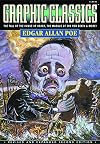
This work adapts some of Poe's better stories to illustrated format, ranging from adding a few illustrations to his unabridged text to full-on visual adaptations. Poe was an amazingly inventive writer, and it appears the editor of this work followed his lead and opted for a good amount of experimentation with the adaptations.
Only two stories--"Hop Frog" and "The Black Cat"--are given the minimalist text-plus-illustrations treatment, though they get the most out of the pictures provided, show more especially "Hop Frog" in which Lisa Weber's drawings really play off of the grotesquery of the story.
The collection is especially strong in its treatment of some of Poe's most famous works: The Tell-Tale Heart, The Cask of Amontillado, The Masque of the Red Death, and the Fall of the House of Usher. Matt Howarth's shadowed and angular figures do a good job of expressing the doomed faces of the last of the line of Usher. Pedro Lopez' use of shadows in Amontillado reflects the claustrophobia and dark humor of the original tale.
J.B. Bonivert's treatment of "The Raven" is probably one of the more inventive pieces, utilizing a style that suggests some form of cyberspace nightmare. The adaptation of "The Bells" by Rafael Nieves and Juan Gomez was particularly fascinating, as it transforms a fairly straightforward poem into a typical Poe tale of lost love, murder, and revenge.
Finally, I was pleasantly surprised to see "Never Bet the Devil Your Head," which is a tale which shows Poe at his most humorous. (Although as the title suggests, it's a very dark humor.) The cartoonish style is a good fit for this very tongue-in-cheek story.
A really good, solid collection of Poe adaptations. show less
Only two stories--"Hop Frog" and "The Black Cat"--are given the minimalist text-plus-illustrations treatment, though they get the most out of the pictures provided, show more especially "Hop Frog" in which Lisa Weber's drawings really play off of the grotesquery of the story.
The collection is especially strong in its treatment of some of Poe's most famous works: The Tell-Tale Heart, The Cask of Amontillado, The Masque of the Red Death, and the Fall of the House of Usher. Matt Howarth's shadowed and angular figures do a good job of expressing the doomed faces of the last of the line of Usher. Pedro Lopez' use of shadows in Amontillado reflects the claustrophobia and dark humor of the original tale.
J.B. Bonivert's treatment of "The Raven" is probably one of the more inventive pieces, utilizing a style that suggests some form of cyberspace nightmare. The adaptation of "The Bells" by Rafael Nieves and Juan Gomez was particularly fascinating, as it transforms a fairly straightforward poem into a typical Poe tale of lost love, murder, and revenge.
Finally, I was pleasantly surprised to see "Never Bet the Devil Your Head," which is a tale which shows Poe at his most humorous. (Although as the title suggests, it's a very dark humor.) The cartoonish style is a good fit for this very tongue-in-cheek story.
A really good, solid collection of Poe adaptations. show less
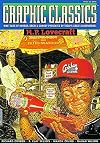
(This review covers the first edition of Graphic Classics: H. P. Lovecraft, the one featuring HPL as a seafood vendor on the cover.)
As Gahan Wilson points out in his introduction, Lovecraft is one of the most illustrator-friendly authors of fantastic fiction. Not only do his works feature countless atmospheric settings and outre monstrosities, but he can also be quite detailed in his discription of said places and things. So, he's a pretty natural choice for a collection of illustrated show more adaptations.
As if to underline this fact, the first thing after the introduction is a one-page excerpt of John Coulhart's 'The Dunwich Horror' showing the death of Wilbur Whateley. It's a great scene, and Coulhart really brings out the full morbid ickiness of it. Sadly, it's all we see of that work, which underlines some of the weaknesses of this collection.
While it has some great, fun adaptations (though more on that below), it often feels a bit of a scattershot effort which seems to flirt with being a better work. Along with the single page of Dunwich, there is a selection of six beautiful pages from Tom Sutton's adaptation of 'The Dream Quest of Unknown Kaddath.'
Other items are somewhat amusing but flawed. One of the first items is a brief HPL biography, which leans a bit too closely on the de Camp image of Lovecraft as sexually neurotic. (Although I was amused by George Kuchar's fascination with breasts; even one of Lovecraft's aunts has serious cleavage on display.) Another piece, called 'The Chaos Rapant' features a rapping, tenticular Nyarlathotep awakening a cranky Cthulhu. It's funny, but seems like it be better off in a compliation of silly Cthulhu parodies.
And though I was happy to see the Fungi From Yuggoth featured--HPL's poetry isn't generally great, but I think Fungi is an exception--the adpatation left a lot to be desired. Every other poem in the cycle features an illustration, each done by a different artist. Some of the illustrations are quite striking, but too many see to bear little connection to the corresponding poem and opt instead for a sort of general surrealism.
As for the good illustrations, the first story after the bio is an adaptation of 'Herbert West - Reanimator.' The stories been trimmed down to four parts from six, with each part given its own illustrator. My favorite was the third section, done by J.B. Bonivert, which really plays up the twisted humor of the original; but all of the chapters were quite good.
I also really enjoyed the adaptation of 'The Cats of Ulthar,' by Lisa Weber who's done good work in other volumes of the Graphics Classics series. Her art is cartoonish but manages to adapt itself quite successfully to the work she's illustrating, such as the way the figures in 'Hop Frog' embody the grotesquerie of that story or how she represents the atmosphere of Gothic sexuality in 'Carmilla.' Here, her art nicely captures the sense of dark fable that HPL was going for.
There are several other good pieces, including the adaptations of 'The Shadow Out of Time' and 'The Terrible Old Man.' Luckily, it appears these were retained in the second edition, along with Cats and Herbert West, so I'd more strongly recommend checking out the second edition, which features Cthulhu on the cover. show less
As Gahan Wilson points out in his introduction, Lovecraft is one of the most illustrator-friendly authors of fantastic fiction. Not only do his works feature countless atmospheric settings and outre monstrosities, but he can also be quite detailed in his discription of said places and things. So, he's a pretty natural choice for a collection of illustrated show more adaptations.
As if to underline this fact, the first thing after the introduction is a one-page excerpt of John Coulhart's 'The Dunwich Horror' showing the death of Wilbur Whateley. It's a great scene, and Coulhart really brings out the full morbid ickiness of it. Sadly, it's all we see of that work, which underlines some of the weaknesses of this collection.
While it has some great, fun adaptations (though more on that below), it often feels a bit of a scattershot effort which seems to flirt with being a better work. Along with the single page of Dunwich, there is a selection of six beautiful pages from Tom Sutton's adaptation of 'The Dream Quest of Unknown Kaddath.'
Other items are somewhat amusing but flawed. One of the first items is a brief HPL biography, which leans a bit too closely on the de Camp image of Lovecraft as sexually neurotic. (Although I was amused by George Kuchar's fascination with breasts; even one of Lovecraft's aunts has serious cleavage on display.) Another piece, called 'The Chaos Rapant' features a rapping, tenticular Nyarlathotep awakening a cranky Cthulhu. It's funny, but seems like it be better off in a compliation of silly Cthulhu parodies.
And though I was happy to see the Fungi From Yuggoth featured--HPL's poetry isn't generally great, but I think Fungi is an exception--the adpatation left a lot to be desired. Every other poem in the cycle features an illustration, each done by a different artist. Some of the illustrations are quite striking, but too many see to bear little connection to the corresponding poem and opt instead for a sort of general surrealism.
As for the good illustrations, the first story after the bio is an adaptation of 'Herbert West - Reanimator.' The stories been trimmed down to four parts from six, with each part given its own illustrator. My favorite was the third section, done by J.B. Bonivert, which really plays up the twisted humor of the original; but all of the chapters were quite good.
I also really enjoyed the adaptation of 'The Cats of Ulthar,' by Lisa Weber who's done good work in other volumes of the Graphics Classics series. Her art is cartoonish but manages to adapt itself quite successfully to the work she's illustrating, such as the way the figures in 'Hop Frog' embody the grotesquerie of that story or how she represents the atmosphere of Gothic sexuality in 'Carmilla.' Here, her art nicely captures the sense of dark fable that HPL was going for.
There are several other good pieces, including the adaptations of 'The Shadow Out of Time' and 'The Terrible Old Man.' Luckily, it appears these were retained in the second edition, along with Cats and Herbert West, so I'd more strongly recommend checking out the second edition, which features Cthulhu on the cover. show less
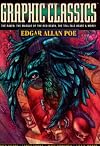
Graphics classics present an innovative twist: a series of graphic novels based on well-established literary works, this time a selection of poetry and short stories from Edgar Allan Poe. This selection focuses on the horror-based works of E.A. Poe. Some of the titles included (The Tell-Tale Heart, The Premature Burial, The Masque of the Red Death, and The Fall of the House of Usher in particular) were incredibly well done in terms of textual adaptation and appropriate, well-drawn visuals. A show more few, such as The Raven and Hop-Frog, merely re-print Poe’s text with a couple of illustrations included (not even in the classic comic strip panel format), which would be fine if this weren’t billed as a graphic novel. One in particular, King Pest, was badly done both in textual adaptation and the garishly cartoonish drawings. Overall, it’s an interesting way of looking at classic texts but somewhat disappointing in execution. show less
Awards

You May Also Like


Associated Authors
Statistics
- Works
- 26
- Members
- 1,065
- Popularity
- #24,175
- Rating
- 3.3
- Reviews
- 31
- ISBNs
- 76
- Languages
- 4